El lector quedará recompensado con los casi doscientos artículos de este quinto volumen de la obra periodística de Gabriel García Márquez.
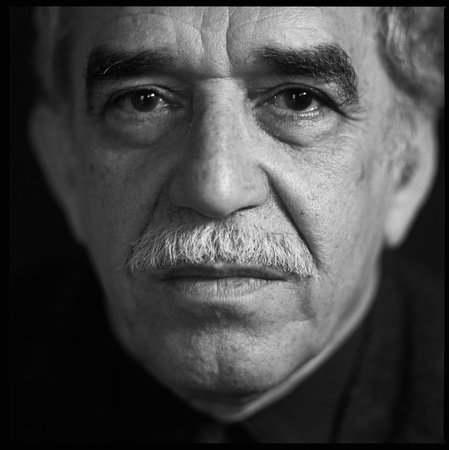
Personajes de la política, de la cultura o, simplemente, de la vida; libros, películas, ciudades visitadas y vividas; denuncias, recuerdos, miedos confesables —como a los aviones—, y la pregunta a la que se enfrenta todo escritor: ¿cómo se escribe una novela? Abra por donde abra estas Notas de prensa (1961-1984), el lector quedará recompensado con la lectura de los casi doscientos artículos breves que integran el quinto volumen de la obra periodística de Gabriel García Márquez. Porque cada uno de ellos es una pequeña pieza magistral donde brilla la pluma ágil, a la que nada escapa, de uno de los grandes escritores de la literatura contemporánea.
La presente edición incorpora seis nuevas notas de prensa, escritas entre 1961 y 1973.
ENGLISH DESCRIPTION
Readers will be rewarded with the nearly two hundred articles in this fifth volume of Gabriel García Márquez’s journalistic work.
Figures from politics, culture, or simply everyday life; books, movies, cities visited and experienced; complaints, memories, confessable fears—such as a fear of flying—and the question every writer faces: How does one write a novel? No matter where you open these Press Notes (1961-1984), readers will be rewarded by the nearly two hundred short articles that make up the fifth volume of Gabriel García Márquez’s journalistic work. For each one is a small masterpiece in which the agile pen—from which nothing escapes—of one of the great writers in contemporary literature shines.
This edition includes six new press notes, written between 1961 and 1973.
Este cuarto volumen de la obra periodística del autor contiene dos decenios de la historia del mundo y de América Latina.
Por la libre (1974-1995) constituye el cuarto volumen de la obra periodística de Gabriel García Márquez. Entre el análisis de Chile en el golpe de estado, con el que se abre este libro, y el perfil de Federico Mayor Zaragoza, director general de la UNESCO, que lo cierra, el lector encontrará veintiséis reportajes más que son otras tantas teselas del mosaico de dos decenios de historia del mundo y, en particular, de América Latina. Salvador Allende, Philip Agee, Fidel Castro, Alberto Camps, el general Torrijos, Juan Pablo II o Felipe González, entre otros, han configurado una época y son contemplados bajo la luz sólida, profunda y experimentada del premio Nobel latinoamericano.
ENGLISH DESCRIPTION
This fourth volume of the author’s journalistic works spans two decades of world and Latin American history.
On the Loose (1974-1995) is the fourth volume of Gabriel García Márquez’s journalistic works. Between the analysis of Chile during the coup d’état, which opens this book, and the profile of Federico Mayor Zaragoza, Director-General of UNESCO, which closes it, the reader will find twenty-six additional profiles that serve as individual pieces in the mosaic of two decades of world history and, in particular, Latin American history. Salvador Allende, Philip Agee, Fidel Castro, Alberto Camps, General Torrijos, John Paul II, and Felipe González, among others, have shaped an era and are examined through the solid, profound, and seasoned lens of the Latin American Nobel laureate.
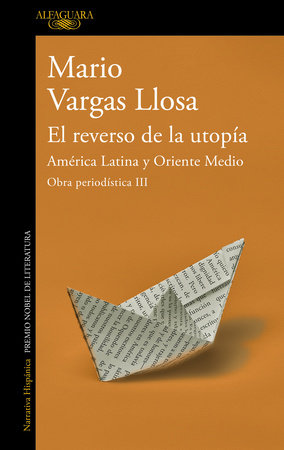
«Que, entendidas en términos extremos, la libertad y la igualdad sean opciones alérgicas la una a la otra no puede querer decir que estemos condenados a la injusticia. Sino, más sencillamente, que hay que renunciar a las utopías, a las opciones extremas».
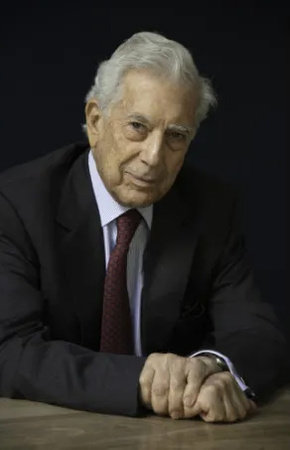
Firme defensor de ideales como la libertad y la democracia, durante más de cinco décadas Mario Vargas Llosa ha reflexionado en su obra literaria y en sus textos periodísticos sobre los problemas que conlleva la utopía política. Las piezas reunidas en este volumen colocan en el foco tres contextos que el autor conoce de primera mano.
«A pesar de que América Latina, Israel e Irak son lugares distantes, con historias culturales y políticas difícilmente equiparables, no es tan difícil encontrar un hilo invisible que los une. […] Aquel periodo de tranquilidad ideológica que parecía haber llegado con la caída del comunismo demostró ser una ilusión. La historia seguía viva, más que nunca. El radicalismo islámico, el nacionalismo y el populismo no han dejado en estos años de ser amenazas serias para la libertad y la democracia. Estos ideales se han alejado un poco más, lamentablemente. América Latina no se convirtió en un oasis purgado de todos los vicios modernos, ni en la región donde surgiría un socialismo humanista y libertario. Al contrario, ha sido la política del resto de Occidente la que ha terminado pareciéndose a la latinoamericana: los demonios incubados en el reverso de la utopía —el fanatismo, el nacionalismo, el odio sectario, el populismo— andan sueltos, y ahora acechan a la humanidad entera». — Del prólogo de Carlos Granés
ENGLISH DESCRIPTION
“That freedom and equality as options, understood in extreme terms, are allergic to one another cannot mean that we are doomed to injustice. But more plainly, that we must renounce utopias, extreme options.”
Firm defender of such ideals as freedom and democracy for over five decades, Mario Vargas Llosa has reflected in his literary and journalistic works on the problems that political utopias entail. The pieces gathered in this volume turn the spotlight to three contexts the author knows first hand.
“Even though Latin America, Israel, and Iraq are distant places, with cultural and political histories that are hardly equivalent, it is not so difficult to find an invisible thread binding them… That period of ideological tranquility that seemed to have arrived with the end of communism proved to be an illusion. History was still alive, more than ever. Islamic radicalism, nationalism, and populism have not stop being serious threats to freedom and democracy this past few years. These ideals have drifted further away, unfortunately. Latin America did not become an oasis purged of all modern vice, nor in the region where a humanist and libertarian socialism could arise. On the contrary, politics from the rest of the Western world ended up resembling the Latin-American: the demons incubated at the reverse of this utopia—fanatism, nationalism, sectarian hatred, populism—are on the loose, and now threaten humanity at large.” —From the prologue, by Carlos Granés
De Europa y América (1955-1960) cierra el periodo más activo de García Márquez en el campo del periodismo: etapa de intensas experiencias políticas, de dinamismo ideológico, de enriquecimiento estilístico.
De hecho, estaba todo dispuesto para el esfuerzo creativo que inmediatamente había de traducirse en las páginas de La mala hora (1962) y, un lustro más tarde, en las de su obra maestra, Cien años de soledad. En las crónicas y reportajes que García Márquez enviaba allende el Atlántico, desde Ginebra, Roma, Venecia, Viena, París, el lector perspicaz hallará innumerables presagios de la gran obra literaria que incubaba el consagrado narrador colombiano.
ENGLISH DESCRIPTION
From Europe and America (1955-1960) brings to a close García Márquez’s most active period in the field of journalism: a time of intense political experiences, ideological dynamism, and stylistic enrichment.
In fact, everything was in place for the creative effort that would immediately find expression in the pages of In Evil Hour (1962) and, five years later, in those of his masterpiece, One Hundred Years of Solitude. In the chronicles and reports that García Márquez sent from across the Atlantic—from Geneva, Rome, Venice, Vienna, and Paris—the discerning reader will find an endless foreshadowing of the great literary work that the acclaimed Colombian novelist was incubating.
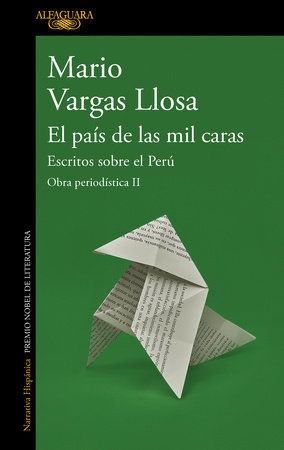
«El Perú es para mí una especie de enfermedad incurable y mi relación con él es intensa, áspera, llena de la violencia que caracteriza a la pasión».
Las más de cinco décadas durante las que se ha desarrollado la labor periodística de Mario Vargas Llosa están jalonadas de textos imprescindibles sobre la cultura, la política, la historia y la realidad social de Perú cuya lectura en este volumen revela al lector la profunda vinculación del Premio Nobel de Literatura con su país natal.
«Éste es el Perú de Mario Vargas Llosa, el que recorrió, vivió y vio evolucionar social, cultural y políticamente. El país en el que se inspiró para escribir sus novelas, el que incubó sus demonios literarios y el que despertó su inconformismo y su curiosidad intelectual. Éste es el Perú en el que proyectó sus ilusiones y con el que se enfrascó en más de una escaramuza; la sociedad que quiso transformar desde la acción política y que finalmente ayudó a moldear desde el debate público. Si como novelista Vargas Llosa logró fijar una imagen del Perú que hoy es mundialmente reconocida —una imagen ficticia, mítica, que sin embargo resume de manera fiel los conflictos, dilemas, frustraciones y anhelos de la vida peruana—, como intelectual logró contagiar a la sociedad con sus preocupaciones, ideas, gustos y valores. No es exagerado decir que la conversación publica en el Perú actual es la que es, en gran medida, porque a lo largo del último medio siglo Vargas Llosa ha publicado determinados artículos y determinados ensayos, y porque con ellos logró abrir debates económicos, morales, ideológicos y estéticos de enorme impacto en los distintos ámbitos de la vida peruana».
Del prólogo de Carlos Granés
ENGLISH DESCRIPTION
“Peru is to me a sort of incurable disease, and my relationship with it is intense, rough, full of the characteristic violence in passion.”
The more than five decades during which Mario Vargas Llosa’s journalistic work has been developing are dotted by essential works on culture, politics, history, and Peru’s social reality, and in this volume, he reveals to the reader the deep bond the Nobel Prize winner has with his native country.
“This is Mario Vargas Llosa’s Peru, the one he traveled, lived, and watched evolve socially, culturally, and politically. The country that inspired him to write his novels, the one that incubated his literary demons, and the one that sparked his nonconformity and his intellectual curiosity. This is the Peru where Vargas Llosa cast his illusions, and the one he skirmished with more than once; the society he wanted to transform through political action and which he finally got to mold through public debate. If, as a novelist, Vargas Llosa managed to set an image of Peru today that is known worldwide—a fictitious, mythical image, that nevertheless faithfully summarizes the conflicts, dilemmas, frustrations, and yearnings of Peruvian life—as an intellectual he managed to spread his concerns, ideas, tastes, and values through society. It is no exaggeration to say that public dialogue in current Peru largely is what it is because Vargas Llosa has been publishing certain articles and certain essays for the last half a century, and because through them he managed to open financial, moral, ideological, and artistic debates of great impact in the different spheres of Peruvian life.”
Esta segunda entrega de la obra periodística de García Márquez reúne los artículos aparecidos durante los años 1954 y 1955.
El segundo volumen de la obra periodística de Gabriel García Márquez, Entre cachacos, reúne —recopilados y prologados por Jaques Gilard— los artículos aparecidos en El Espectador de Bogotá durante los años 1954 y 1955, textos que desentrañan los signos que configuran los temas predilectos del gran novelista colombiano. Aparecen ya las consecuencias de ciertas lecturas, particularmente las de Camus y Hemingway, con reflexiones y análisis de hechos investigados en caliente, donde la forma delata preocupaciones literarias fundamentales y preexistentes y donde el rigor narrativo —la ambición de contar bien— supera al mero afán inicial de información para alcanzar un alto valor literario.
ENGLISH DESCRIPTION
This second volume of García Márquez’s journalistic work brings together articles published during 1954 and 1955.
The second volume of Gabriel García Márquez’s journalistic work, Among the Cachacos, brings together—compiled and with a foreword by Jaques Gilard—the articles published in El Espectador de Bogotá during 1954 and 1955, texts that unravel the signs that shape the favorite themes of the great Colombian novelist. The influence of certain readings—particularly those of Camus and Hemingway—is already evident, with reflections and analyses of events investigated in the heat of the moment, where the form reveals fundamental and preexisting literary concerns, and where narrative rigor—the ambition to tell a story well—transcends the mere initial desire to inform, thereby achieving high literary value.
Los artículos que componen Textos costeños, primer volumen de la obra periodística de Gabriel García Márquez, abarcan el periodo que va de mayo de 1948 a diciembre de 1952.
Por un lado, constituyen los primeros escritos de un joven de veinte años que llegaría a ser el novelista hispánico más importante de la actualidad y, por otro, son el testimonio del convulsionado mundo colombiano tras la muerte del caudillo Jorge Eliécer Gaitán, el 9 de abril de 1948.
Los comienzos de Gabriel García Márquez como redactor de El Universal supondrían el punto de partida de una conmoción literaria que ha influido profundamente en la literatura contemporánea. El hecho fundamental más puntual, la noticia más cotidiana, se inscriben en el universo de magia literaria privativo del gran creador de Cien años de soledad, El otoño del patriarca y Crónica de una muerte anunciada.
En muchos casos, estos impecables textos —recopilados y prologados por Jacques Gilard— se convierten en la explicación de ámbitos que en sus novelas están en forma alusiva. En ellos se encontrarán ecos de la temática de su obra literaria, modificados mil veces por el golpe de luces nuevas.
Cronológicamente contemporáneos —como contrapunto y ritmo— de sus novelas y cuentos, advierten que el pensamiento y la pasión —en unos momentos— son los mismos, y el tema en literatura es tan único —y tan diverso— como la vida.
ENGLISH DESCRIPTION
The articles that make up Coastal Texts, the first volume of Gabriel García Márquez’s journalistic work, span the period from May 1948 to December 1952.
On the one hand, they represent the earliest writings of a twenty-year-old who would go on to become the most important Hispanic novelist of our time; on the other, they bear witness to the turbulent state of Colombia following the death of the political leader Jorge Eliécer Gaitán on April 9, 1948.
Gabriel García Márquez’s early days as a reporter for El Universal marked the starting point of a literary upheaval that has profoundly influenced contemporary literature. Even the most mundane event, the most ordinary news story, becomes part of the unique literary magic of the great creator of One Hundred Years of Solitude, The Autumn of the Patriarch, and Chronicle of a Death Foretold. In many cases, these impeccable texts—compiled and with a foreword by Jacques Gilard—serve to elucidate themes that are only alluded to in his novels. In them, readers will find echoes of the themes of his literary work, transformed a thousand times over by the play of new light.
Chronologically contemporary—as a counterpoint and rhythm—to his novels and short stories, they reveal that thought and passion—at certain moments—are the same, and that the subject matter in literature is as unique—and as diverse—as life itself.