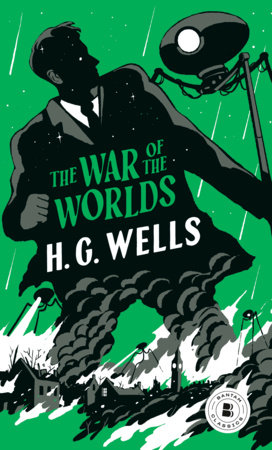
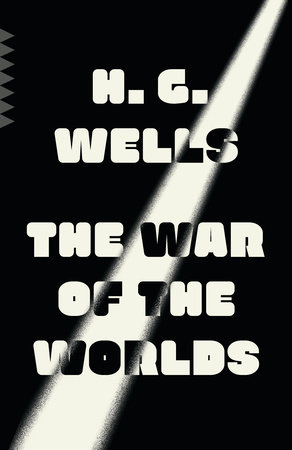
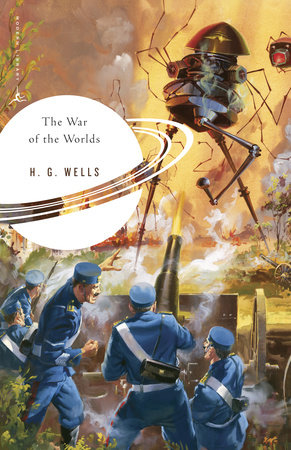
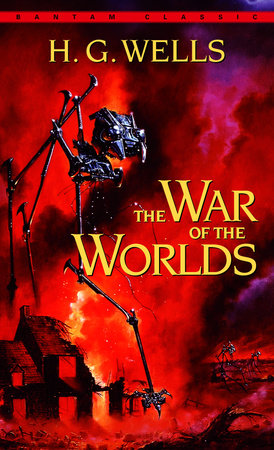
H. G. Wells’s science fiction classic—the first novel to explore the possibilities of intelligent life from other planets—follows a man’s quest to survive after Martians land on English soil.
No one would have believed in the last years of the nineteenth century that this world was being watched keenly and closely by intelligences greater than man’s . . .
Thus begins H. G. Wells’s startling and vivid The War of the Worlds. In the early twentieth century, Mars has been all but destroyed by intense global cooling, and so the Martians set their sights on conquering the lush greenery of Earth. Faced with the Martians’ superior weaponry and bloodthirsty nature, all seems lost for humanity . . .
The daring portrayal of aliens landing on Earth, with its themes of interplanetary imperialism, technological holocaust, and chaos, is central to the career of H. G. Wells, who died at the dawn of the atomic age. The survival of mankind in the face of “vast and cool and unsympathetic” scientific powers spinning out of control was a crucial theme throughout his work. Visionary, shocking, and chilling, The War of the Worlds has lost none of its impact since its first publication in 1898, nor its infamous 1938 radio adaptation.







 QUICK VIEW