Best Seller
Paperback
$20.00
Published on Aug 19, 2003 | 224 Pages
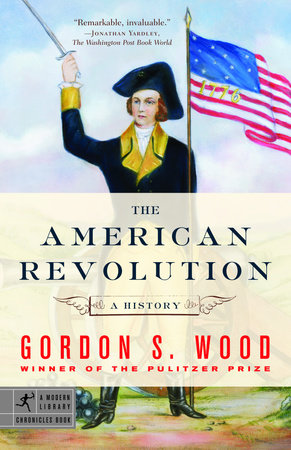
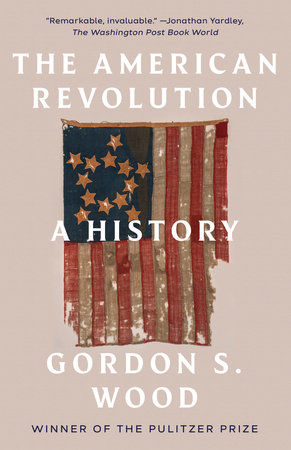
NEW YORK TIMES BESTSELLER • From the Pulitzer Prize–winning author of The Radicalism of the Revolution comes “an elegant, concise, and lucid summary of the Revolution’s origins, the war itself, and the social and political changes wrought by the struggle for American independence” (The Wall Street Journal).
“This slim book tells a big story: one that invites the reader to contemplate the relationships between liberty, power, rights, and the unpredictable outcomes of human action.”—Los Angeles Times Book Review
When Abraham Lincoln sought to define the significance of the United States, he naturally looked back to the American Revolution. He knew that the Revolution not only had legally created the United States, but also had produced all of the great hopes and values of the American people. Our noblest ideals and aspirations-our commitments to freedom, constitutionalism, the well-being of ordinary people, and equality-came out of the Revolutionary era. Lincoln saw as well that the Revolution had convinced Americans that they were a special people with a special destiny to lead the world toward liberty. The Revolution, in short, gave birth to whatever sense of nationhood and national purpose Americans have had.
No doubt the story is a dramatic one: Thirteen insignificant colonies three thousand miles from the centers of Western civilization fought off British rule to become, in fewer than three decades, a huge, sprawling, rambunctious republic of nearly four million citizens. But the history of the American Revolution, like the history of the nation as a whole, ought not to be viewed simply as a story of right and wrong from which moral lessons are to be drawn. It is a complicated and at times ironic story that needs to be explained and understood, not blindly celebrated or condemned. How did this great revolution come about? What was its character? What were its consequences? These are the questions this short history seeks to answer. That it succeeds in such a profound and enthralling way is a tribute to Gordon Wood’s mastery of his subject, and of the historian’s craft.

“This slim book tells a big story: one that invites the reader to contemplate the relationships between liberty, power, rights, and the unpredictable outcomes of human action.”—Los Angeles Times Book Review
When Abraham Lincoln sought to define the significance of the United States, he naturally looked back to the American Revolution. He knew that the Revolution not only had legally created the United States, but also had produced all of the great hopes and values of the American people. Our noblest ideals and aspirations-our commitments to freedom, constitutionalism, the well-being of ordinary people, and equality-came out of the Revolutionary era. Lincoln saw as well that the Revolution had convinced Americans that they were a special people with a special destiny to lead the world toward liberty. The Revolution, in short, gave birth to whatever sense of nationhood and national purpose Americans have had.
No doubt the story is a dramatic one: Thirteen insignificant colonies three thousand miles from the centers of Western civilization fought off British rule to become, in fewer than three decades, a huge, sprawling, rambunctious republic of nearly four million citizens. But the history of the American Revolution, like the history of the nation as a whole, ought not to be viewed simply as a story of right and wrong from which moral lessons are to be drawn. It is a complicated and at times ironic story that needs to be explained and understood, not blindly celebrated or condemned. How did this great revolution come about? What was its character? What were its consequences? These are the questions this short history seeks to answer. That it succeeds in such a profound and enthralling way is a tribute to Gordon Wood’s mastery of his subject, and of the historian’s craft.
Author
Gordon S. Wood
Gordon S. Wood is the Alva O. Way University Professor and professor of history emeritus at Brown University. His 1969 book, The Creation of the American Republic, 1776–1787, received the Bancroft and John H. Dunning prizes and was nominated for the National Book Award. Wood’s 1992 book, The Radicalism of the American Revolution, won the Pulitzer Prize and the Emerson Prize. His 2009 book, Empire of Liberty: A History of the Early Republic, 1789–1815, won the New-York Historical Society American History Book Prize. In 2010, Wood was awarded a National Humanities Medal by President Obama.
Learn More about Gordon S. WoodYou May Also Like
The Haunted Wood
Paperback
$27.00
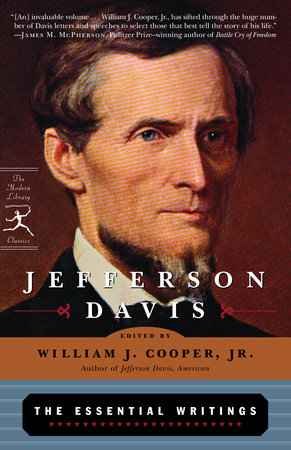
Jefferson Davis: The Essential Writings
Paperback
$25.00
On the Natural History of Destruction
Paperback
$21.00
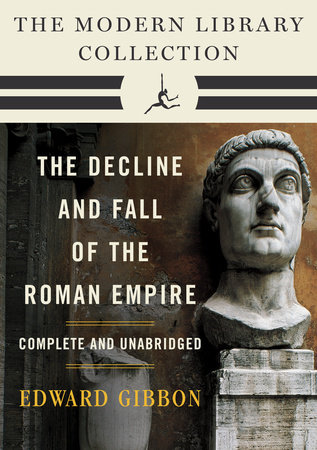
Decline and Fall of the Roman Empire: The Modern Library Collection (Complete and Unabridged)
Ebook
$15.99
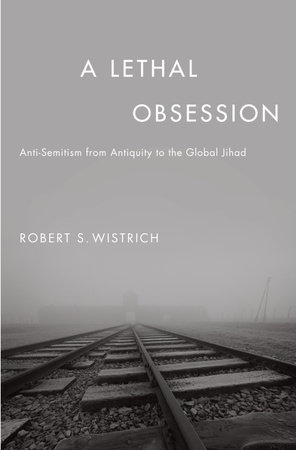
A Lethal Obsession
Ebook
$10.99
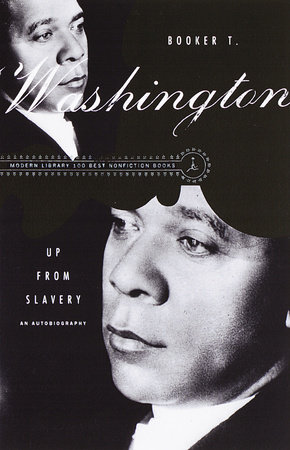
Up from Slavery
Paperback
$18.00
Power Game
Paperback
$25.00
Peter the Great: His Life and World
Hardcover
$30.00
Here to Stay
Ebook
$15.99
×