
-
Published on Jul 24, 2013 | 560 Pages
Best Seller
Ebook
Published on Jul 24, 2013 | 560 Pages

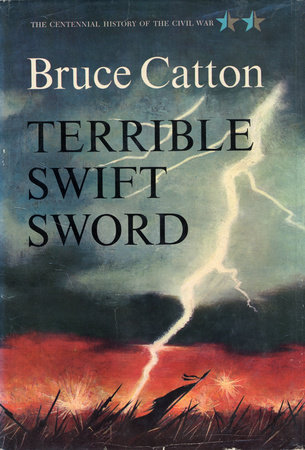
The second episode in this award-winning trilogy impressively shows how the Union and Confederacy, slowly and inexorably, reconciled themselves to an all-out war—an epic struggle for freedom.
In Terrible Swift Sword, Bruce Catton tells the story of the Civil War as never before—of two turning points which changed the scope and meaning of the war. First, he describes how the war slowly but steadily got out of control. This would not be the neat, short, “limited” war both sides had envisioned. And then the author reveals how the sweeping force of all-out conflict changed the war’s purpose, in turning it into a war for human freedom.
It was not initially a war against slavery. Instead, this was, Mr. Lincoln kept insisting, a fight to reunite the United States. At first, it was not even much of a fight. Cautious generals; inexperienced, incompetent, or jealous administrators; shortages of good people and supplies; excess of both gloom and optimism, kept each side from swinging into decisive action. As the buildup began, there were maddening delays. The earliest engagements were halting and inconclusive. After these first tests at arms, reputations began to crumble. Buell, Halleck, Beauregard Albert Sidney Johnston. Failed to drive ahead—for reasons good and bad. General McClellan (impaled in these pages on the arrogant words of his letters) captured more imaginations than enemies, and continued to accept serious over estimates of Confederate strength while becoming more and more fatally estranged from his own government.
In Terrible Swift Sword, Bruce Catton tells the story of the Civil War as never before—of two turning points which changed the scope and meaning of the war. First, he describes how the war slowly but steadily got out of control. This would not be the neat, short, “limited” war both sides had envisioned. And then the author reveals how the sweeping force of all-out conflict changed the war’s purpose, in turning it into a war for human freedom.
It was not initially a war against slavery. Instead, this was, Mr. Lincoln kept insisting, a fight to reunite the United States. At first, it was not even much of a fight. Cautious generals; inexperienced, incompetent, or jealous administrators; shortages of good people and supplies; excess of both gloom and optimism, kept each side from swinging into decisive action. As the buildup began, there were maddening delays. The earliest engagements were halting and inconclusive. After these first tests at arms, reputations began to crumble. Buell, Halleck, Beauregard Albert Sidney Johnston. Failed to drive ahead—for reasons good and bad. General McClellan (impaled in these pages on the arrogant words of his letters) captured more imaginations than enemies, and continued to accept serious over estimates of Confederate strength while becoming more and more fatally estranged from his own government.
Author
Bruce Catton
Bruce Catton was born in Petoskey, Michigan, in 1899. A United States journalist and writer, Catton was one of America’s most popular Civil War historians. He worked as a newspaperman in Boston, Cleveland, and Washington, and also held a position at the US Department of Commerce in 1948. Catton’s bestselling book, A Stillness at Appomattox, earned him a Pulitzer Prize and National Book Award in 1954. Before his death in 1978, Catton wrote a total of 10 books detailing the Civil War.
Learn More about Bruce CattonYou May Also Like
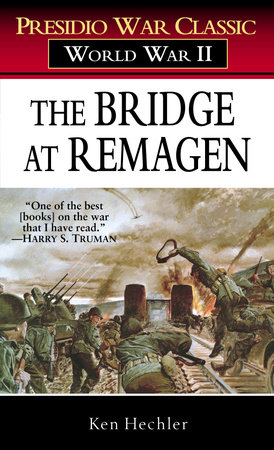
The Bridge at Remagen
Paperback
$9.99
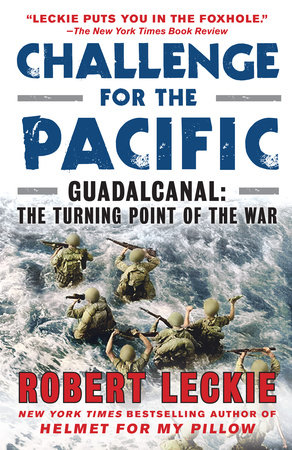
Challenge for the Pacific
Paperback
$21.00
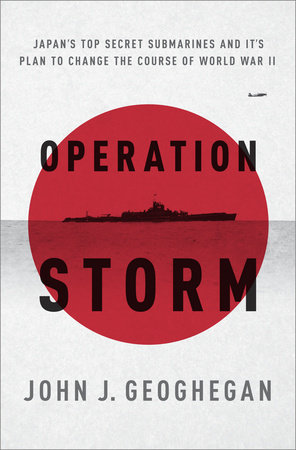
Operation Storm
Paperback
$23.00
Infamy
Ebook
$13.99
The Battle of Arnhem
Paperback
$20.00
The Old Revolutionaries
Ebook
$4.99
Patton at the Battle of the Bulge
Paperback
$24.00
Battle Stations
Ebook
$8.99
The Flying Tigers
Paperback
$19.00
×