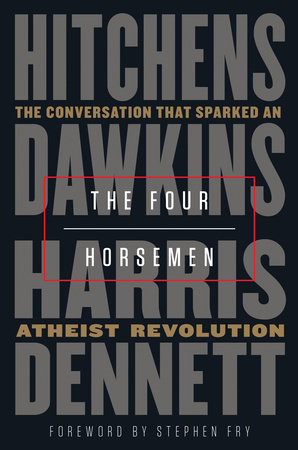
In 2007, Christopher Hitchens, Richard Dawkins, Sam Harris, and Daniel Dennett filmed a landmark discussion about modern atheism. The video went viral. Now in print for the first time, the transcript of their conversation is illuminated by new essays from three of the original participants and an introduction by Stephen Fry.
At the dawn of the new atheist movement, the thinkers who became known as “the four horsemen,” the heralds of religion’s unraveling—Christopher Hitchens, Richard Dawkins, Sam Harris, and Daniel Dennett—sat down together over cocktails. What followed was a rigorous, pathbreaking, and enthralling exchange, which has been viewed millions of times since it was first posted on YouTube. This is intellectual inquiry at its best: exhilarating, funny, and unpredictable, sincere and probing, reminding us just how varied and colorful the threads of modern atheism are.
Here is the transcript of that conversation, in print for the first time, augmented by material from the living participants: Dawkins, Harris, and Dennett. These new essays, introduced by Stephen Fry, mark the evolution of their thinking and highlight particularly resonant aspects of this epic exchange. Each man contends with the most fundamental questions of human existence while challenging the others to articulate their own stance on God and religion, cultural criticism, spirituality, debate with people of faith, and the components of a truly ethical life.
Praise for The Four Horsemen
“This bracing exchange of ideas crackles with energy. It’s fascinating to watch four first-class minds explore a rugged intellectual terrain. . . . The text affords a different, more reflective way of processing the truly vital exchange of ideas. . . . I commend the book to those seeking an honest reckoning with their religion—and those curious about how the world looks from a rigorously naturalistic and atheistic point of view.”—Pittsburgh Post-Gazette
“The full, electrifying transcript of the one and only conversation between the quartet of luminaries dubbed the ‘four horsemen’ of the New Atheism, which took place in Washington, D.C., in 2007. Among the vast range of ideas and questions they discuss: Is it ever possible to win a war of ideas? Is spirituality the preserve of the religious? And, are there any truths you would rather not know?”—The Bookseller (UK) (starred review)






 QUICK VIEW