


READERS GUIDE
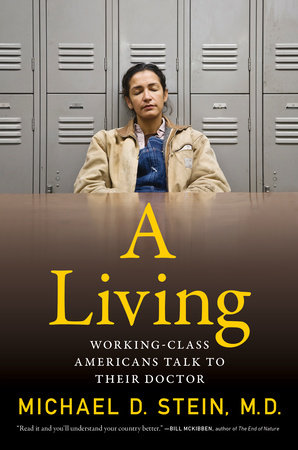
I work as a primary care doctor in a mid-sized industrial city. I have learned that there can be no meaningful discourse about health divorced from where people work, how many hours, which shift, the nature of the work, the amount of money they make. I often see people who work with their hands; they are experts at things I have no aptitude for; I’ve always admired people who are good at things I am not. I have seen my patients hurt and bloodied from work in factories, nursing homes, boat yards, warehouses, on trucks and train tracks. But I’ve also seen my patients hurt by not working; not to work is its own affliction with a particular emotional toll. Work can heal too.—Michael Stein, MD
Questions and Topics for Discussion
- Define a working-class life. The way you live, the amount of money you make, or the nature of the work, the culture you are part of? What does “work ethic” mean now?
- The reasons people work. The simplest answer is: “For the money.” But what are other reasons and which might be important to you?
- Different kinds of work. What are the differences between our virtual lives led in the blue glow of screens and the reality of embodied labor (digging, harvesting, soldering, sewing, scrubbing, hauling, delivering)?
- Worker Protections. The United States alone among peer high-income nations has no guaranteed maternity leave and no legal right to sick leave or vacation time. What is the impact on families?
- Shame and honor. One of the oldest prejudices, at least among the upper classes in many societies, has been against physical work. What have been the historical biases against manual labor? Which groups have explicitly affirmed manual labor’s value?
- Wages. Why have blue-collar wages stagnated in the last fifty years?
- What was once considered work is now considered fun. We enjoy laboring in our homes and gardens, creating beautiful spaces, or growing plants, while the resurgence of crafts and hobbies sees an army of unpaid workers making their own clothes. What has changed in our ideas about work?
- Medical visits. Should a doctor ask their patients about what they do all day in detail? What are the pros and cons of asking in a medical office? Who else asks about work in people’s lives?
- Above- and below-the-neck learning. With most work, you need a blend of formal training with hands-on experience. Is working with your hands a kind of thinking?
- Retirement. The national retirement age has crept past sixty-five. If our national policies ask people to work longer, will this have an inequitable effect on those doing manual work?
- Essential work. During COVID-19, “essential” work implied low-wage labor that was taken for granted, mostly invisible to those who could work remotely from home. How would you define essential work now that the pandemic is past?
- Health. Which jobs are most dangerous to one’s health? What is the relationship between work and pain? How can work heal people?
- Artificial Intelligence. One great promise of AI has been to obviate the need for certain kinds of labor. How will jobs involving physical labor fare in an AI-centered economy?
- College. What are the costs of vocational and technical education compared to a traditional four-year college degree? What about if those who enter college never graduate, a common occurrence? How much have traditional college and trade school enrollment changed during the 21st century?
- Choices. If you didn’t have to work, would you?