From the Editor’s Desk: Becky Cole, Editor of Stir
Editors get very passionate about books they work on – the Editor’s Desk series is his or her place to write in-depth about what makes a certain title special. Get the real inside-scoop on how books are shaped by the people who know them best.
When the proposal for Stir came in, it was subtitled “How My Brain Exploded and I Got Cooking.” What I found in those pages just about made my own brain explode. Here was a memoir by a first-time writer who had survived a traumatic brain injury, a Harvard Ph.D candidate who lost sight in one eye, her sense of smell, and a chunk of her skull so large that she had to wear a hockey helmet to protect her brain, impressive enough, but what made the proposal a standout was not her injury, but the way she wrote about how food and the simple everyday acts of cooking, baking, stirring, sautéing, and sharing it, helped her to heal. As she writes in the book, getting well meant finding her everyday, and she found hers in the kitchen. This stunning book didn’t fit neatly into any category in the bookstore, but everyone at Penguin Random House who read it loved it, and we knew we had to publish Stir.
Every author takes an approach to writing that makes sense to them. Some outline, others write set pieces to be stitched together later. Some write almost in a fugue state, getting the book down on paper from beginning to end, barely stopping to put in commas. Jessica was not that kind of writer. She was careful, precise. Every word worked at the sentence level. The challenge with Stir was broader—we didn’t want the book to be pigeon-holed as a recovery memoir, but we also knew that her illness was the natural beginning of her story. During editorial talks, we spent much of our time discussing how to weave various strands together. First, of course, there was the aneurysm. Then, there was the food—the facts of cooking it and eating it and recovering because of it. Beyond those two main threads, there was a love story between Jessica and her unflappable husband, Eli, including their attempts to start a family (spoiler: they do! as anyone who follows her wonderful blog, sweetamandine.com knows from the pictures of her two adorable daughters she posts there); an ode to the constellation of women in her life—her mother, stepmother, grandmothers, her Aunt Fran, and close friends—whose influence she feels strongly in the kitchen; and, finally, the story of how she came to a new understanding of the link between food and identity.
As we’d talk, Jessica would occasionally ask me, “How do you think I should…?” We’d mull it over and then she would go off and come up with a perfect solution. When I said as much, more often than not, she’d respond that she had simply looked at a memoir she admired to see how that writer succeeded in doing whatever it was Jessica herself was trying to do. She was applying the skills she’d honed as an academic to the process of writing a memoir. She read and dissected every memoir she could get her hands on —Wild, The Liar’s Club, Eat, Pray, Love, and My Stroke of Insight, and dozens of others– to pick them apart and learn how they performed different feats of narrative and storytelling. She marked her copy of Wild with a “Pivot!” in the margins next to the places Cheryl Strayed switched from one subject to another without losing the reader, and then figured out a way to make the technique her own in Stir. It was as if she was reading to defend her dissertation and her dissertation was how to tell the story of her life. Again and again, I could see her incorporating the lessons she’d gleaned from the writers she loved into her own book.
One day, she sent me a document I’m not sure I was meant to see. It was an eleven page spreadsheet with columns delineating plot, characters, conflict, what we learn (general), what we learn (food), and “to do.” It showed an awareness of how the book was working—or not—from a structural perspective, which helped to keep everything in balance. Another time, she sent me a file that had all of the material dealing with Eli in one document so she could make sure the story hung together, which it did. This all sounds terribly clinical, but the book that came out of it is anything but, despite a good part of it taking place in and out of hospitals after brain surgery.
What I love about Jessica’s writing, especially her writing about food, is how unfussy it is—the opposite of academic writing with its particular conventions, and different, too, from a certain type of food writing, the kind with sumptuous descriptions of dishes that sound like menu items at a restaurant where almost no one can afford to eat. Jessica, however, writes every bit as much for the person who swoons over grass-fed butter as she does for someone who savors a Ritz cracker melting on her tongue. She writes exquisitely but without pomp about how the way we prepare food and who we eat it with connects us to our past, our future, and our true selves.
The moments where she connects to food shine brightly on the page. She writes about the smell of cucumber when her olfactory nerves kick in again, the mushrooms chopped for a favorite pasta dish when she first returns to the kitchen, and an almond cake resting on a counter that acts as a Proust’s madeleine of sorts as it lets her know, as she writes, that food had something to teach her, and that it felt good to listen. I am glad that she did.
Read more about Stir here.

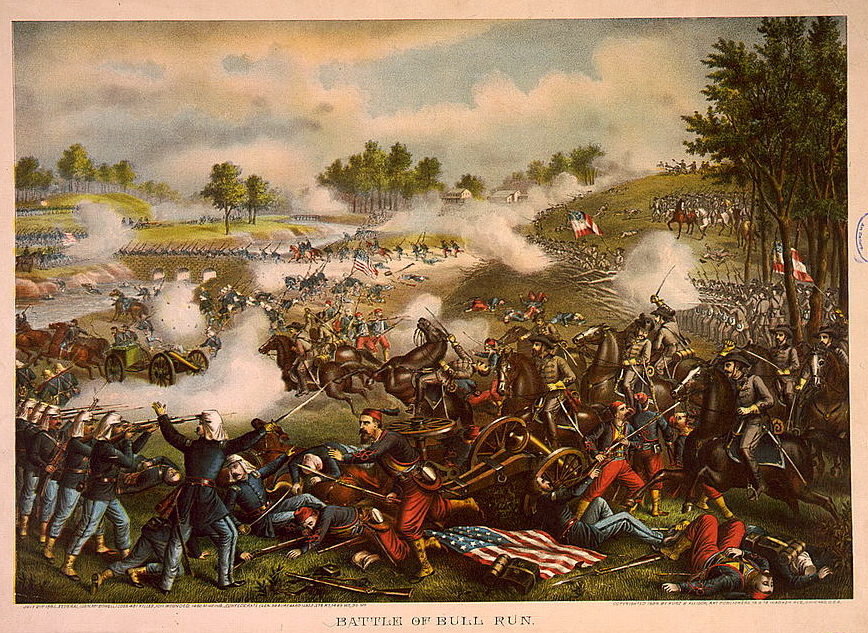 Not until midday did Russell finally get close enough to the fighting to hear “the thudding noise, like taps with a gentle hand upon a muffled drum” of artillery in action. Among congressmen and other dignitaries, many of them accompanied by their wives, he watched from atop a hill above Centreville as distant wisps of smoke marked the opposing lines. He ate a sandwich. He drank some Bordeaux he’d packed in his case. By the time he drew closer to the fighting, the Union forces were pulling back; then, suddenly, they were fleeing in a rout so complete that he could hardly believe his eyes.
Russell was on a borrowed nag threading his way toward the action when he heard loud shouts ahead of him and saw several wagons coming from the direction of the battlefield. The drivers were trying to force their way past the ammunition carts coming up the narrow road. A thick cloud of dust rose behind them. Men were running beside the carts, between them. “Every moment the crowd increased, drivers and men cried out with the most vehement gestures, ‘Turn back! Turn back! We are whipped.’ They seized the heads of the horses and swore at the opposing drivers.” A breathless officer with an empty scabbard dangling by his side got wedged for a second between a wagon and Russell’s horse.
“What is the matter, sir?” Russell asked. “What is all this about?
“Why, it means we are pretty badly whipped,” said the officer, “and that’s the truth.” Then he scrambled away.
The heat, the uproar, and the dust were “beyond description,” Russell wrote afterward. And it all got worse when some cavalry soldiers, flourishing their sabers, tried to force their way through the mob, shouting, “Make way for the general!”
Russell had made it to a white house where two field guns were positioned, when suddenly troops came pouring out of the nearby forest. The gunners were about to blast away when an officer or a sergeant shouted, “Stop! Stop! They are our own men.” In a few minutes a whole battalion had run past in utter disorder. “We are pursued by their cavalry,” one told Russell. “They have cut us all to pieces.”
After a while there was nothing the world’s greatest war correspondent could do but fall in with the tide of men fleeing the fighting. In all his battles, he had never seen anything like this: “Infantry soldiers on mules and draught horses, with the harness clinging to their heels, as much frightened as their riders; Negro servants on their masters’ chargers; ambulances crowded with unwounded soldiers; wagons swarming with men who threw out the contents in the road to make room; grinding through a shouting, screaming mass of men on foot, who were literally yelling with rage at every halt and shrieking out, ‘Here are the cavalry! Will you get on?’” They talked “prodigious nonsense,” Russell said, “describing batteries tier over tier, and ambuscades, and blood running knee-deep.” As he rode through the crowd, men grabbed at Russell’s stirrups and saddle. He kept telling them over and over again not to be in such a hurry. “There’s no enemy to pursue you. All the cavalry in the world could not get at you.” But, as he soon realized, he “might as well have talked to the stones.”
It was a long way back to Washington that day. But after several brushes with violent deserters, drunken soldiers, and more panic-stricken officers, Russell made his way in the moonlight to the Long Bridge across the Potomac and into the capital. He told anyone who asked him that the Union commander would regroup and resume the battle the next morning. But when he awoke in his boardinghouse on Pennsylvania Avenue, he found the city full of uniformed rabble. “The great Army of the Potomac,” he wrote, “is in the streets of Washington instead of on its way to Richmond.”
The Federal capital was essentially defenseless. “The inmates of the White House are in a state of the utmost trepidation,” Russell wrote, “and Mr. Lincoln, who sat in the telegraph operator’s room with General Scott and Mr. Seward, listening to the dispatches as they arrived from the scene of the action, left in despair when the fatal words tripped from the needle and the defeat was already revealed to him.”
For the South, “here is a golden opportunity,” said Russell. “If the Confederates do not grasp that which will never come again on such terms, it stamps them with mediocrity.” But the rebels stayed where they were, and the fact that they did not march on Washington suggested this would be a long war.
As Russell studied the city, its politicians, and its dispositions in the aftermath of the battle, he did not agree with “many who think the contest is now over.” He figured the Northerners had learned a lesson about “the nature of the conflict on which they have entered” and would be roused to action. But when the Times ran Russell’s article on the battle, his balanced judgment about the lessons learned got no play. The whole effect of his account of the rout was to reinforce the editors’ image of a South that not only would fight, but that could fight better than the North and, therefore, should soon be free of it.
Read more about the American Civil War and the untold story of the Robert Bunch: an unlikely Englishman who hated the slave trade and whose actions helped determine the fate of our nation in
Not until midday did Russell finally get close enough to the fighting to hear “the thudding noise, like taps with a gentle hand upon a muffled drum” of artillery in action. Among congressmen and other dignitaries, many of them accompanied by their wives, he watched from atop a hill above Centreville as distant wisps of smoke marked the opposing lines. He ate a sandwich. He drank some Bordeaux he’d packed in his case. By the time he drew closer to the fighting, the Union forces were pulling back; then, suddenly, they were fleeing in a rout so complete that he could hardly believe his eyes.
Russell was on a borrowed nag threading his way toward the action when he heard loud shouts ahead of him and saw several wagons coming from the direction of the battlefield. The drivers were trying to force their way past the ammunition carts coming up the narrow road. A thick cloud of dust rose behind them. Men were running beside the carts, between them. “Every moment the crowd increased, drivers and men cried out with the most vehement gestures, ‘Turn back! Turn back! We are whipped.’ They seized the heads of the horses and swore at the opposing drivers.” A breathless officer with an empty scabbard dangling by his side got wedged for a second between a wagon and Russell’s horse.
“What is the matter, sir?” Russell asked. “What is all this about?
“Why, it means we are pretty badly whipped,” said the officer, “and that’s the truth.” Then he scrambled away.
The heat, the uproar, and the dust were “beyond description,” Russell wrote afterward. And it all got worse when some cavalry soldiers, flourishing their sabers, tried to force their way through the mob, shouting, “Make way for the general!”
Russell had made it to a white house where two field guns were positioned, when suddenly troops came pouring out of the nearby forest. The gunners were about to blast away when an officer or a sergeant shouted, “Stop! Stop! They are our own men.” In a few minutes a whole battalion had run past in utter disorder. “We are pursued by their cavalry,” one told Russell. “They have cut us all to pieces.”
After a while there was nothing the world’s greatest war correspondent could do but fall in with the tide of men fleeing the fighting. In all his battles, he had never seen anything like this: “Infantry soldiers on mules and draught horses, with the harness clinging to their heels, as much frightened as their riders; Negro servants on their masters’ chargers; ambulances crowded with unwounded soldiers; wagons swarming with men who threw out the contents in the road to make room; grinding through a shouting, screaming mass of men on foot, who were literally yelling with rage at every halt and shrieking out, ‘Here are the cavalry! Will you get on?’” They talked “prodigious nonsense,” Russell said, “describing batteries tier over tier, and ambuscades, and blood running knee-deep.” As he rode through the crowd, men grabbed at Russell’s stirrups and saddle. He kept telling them over and over again not to be in such a hurry. “There’s no enemy to pursue you. All the cavalry in the world could not get at you.” But, as he soon realized, he “might as well have talked to the stones.”
It was a long way back to Washington that day. But after several brushes with violent deserters, drunken soldiers, and more panic-stricken officers, Russell made his way in the moonlight to the Long Bridge across the Potomac and into the capital. He told anyone who asked him that the Union commander would regroup and resume the battle the next morning. But when he awoke in his boardinghouse on Pennsylvania Avenue, he found the city full of uniformed rabble. “The great Army of the Potomac,” he wrote, “is in the streets of Washington instead of on its way to Richmond.”
The Federal capital was essentially defenseless. “The inmates of the White House are in a state of the utmost trepidation,” Russell wrote, “and Mr. Lincoln, who sat in the telegraph operator’s room with General Scott and Mr. Seward, listening to the dispatches as they arrived from the scene of the action, left in despair when the fatal words tripped from the needle and the defeat was already revealed to him.”
For the South, “here is a golden opportunity,” said Russell. “If the Confederates do not grasp that which will never come again on such terms, it stamps them with mediocrity.” But the rebels stayed where they were, and the fact that they did not march on Washington suggested this would be a long war.
As Russell studied the city, its politicians, and its dispositions in the aftermath of the battle, he did not agree with “many who think the contest is now over.” He figured the Northerners had learned a lesson about “the nature of the conflict on which they have entered” and would be roused to action. But when the Times ran Russell’s article on the battle, his balanced judgment about the lessons learned got no play. The whole effect of his account of the rout was to reinforce the editors’ image of a South that not only would fight, but that could fight better than the North and, therefore, should soon be free of it.
Read more about the American Civil War and the untold story of the Robert Bunch: an unlikely Englishman who hated the slave trade and whose actions helped determine the fate of our nation in