

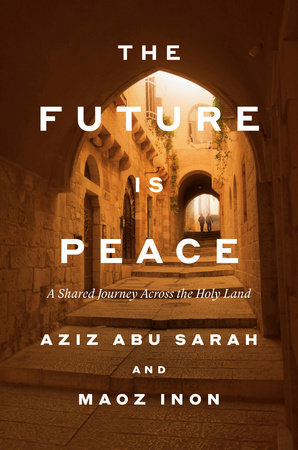
The Future Is Peace Reader’s Guide
By Aziz Abu Sarah Maoz Inon



1. What was your understanding of the conflict between Israel and Palestine prior to reading The Future Is Peace?
2. What were some of the media sources that shaped your perspective?
3. How did your relationship to your community, your family, or your faith shape your opinions?
4. How were Abu Sarah and Inon able to build a close friendship across a divide that often produces enemies? What specific moments demonstrate how they practiced vulnerability in their relationship? How did their shared experience of losing loved ones shape their ability to listen to each other? In your own life, when have you witnessed loss either deepen a connection or create a divide?
5. Each of the cities on Abu Sarah and Inon’s journey hold different stories for Palestinians and Israelis. How did the authors model telling dual narratives of the same place without erasing or flattening the other’s perspective?
6. Consider a place you call home. Whose stories are frequently told and who are the storytellers? Whose stories are often missing or marginalized?
7. Have you ever had to rethink a story you were taughtabout your country, your community, or your family? What helped you hold more than one truth at the same time?
8. What did Abu Sarah and Inon learn by visiting sites of pain and suffering? Why do they see peace as the only moral response to violence? What are some of the sacrifices that the authors had to make in order to be peacemakers? How did they navigate the complexities of having supportive family members who also shared real concerns for their safety and well-being?
9. What are some examples of how the “architecture of occupation” (which includes checkpoints, permits, walls, and restrictions) impacts the daily lives of Palestinians? In what ways does this same architecture create a sense of security for many Israelis? What are some of the surveillance and bureaucratic systems that exist in your community? How are different members of your community impacted by these structures?
10. Many of the sites that Abu Sarah and Inon explored are sacred to Jews, Muslims, and Christians yet are also symbolic of conflict in the region. How has your own religious, spiritual, or philosophical background shaped the way you think about forgiveness and justice?
11. What are some ways that the authors demonstrate how hosting, guiding, and traveling through conflict zones can be a tool for transformation for both visitors and locals? What are some of the limitations of doing this work within the tourism industry? Have you had an experience with travel or hosting a visitor that significantly changed how you saw another culture, group, or issue?
12. What is an interaction in the text that stood out to you as an example of peace in action? What similarities did you notice between the activists, doctors, rabbis, imams, business owners, and families who resisted the status quo while committing to peace? What is a small act of kindness that helped you feel a sense ofbelonging in your community?
13. Abu Sarah and Inon insist that we must seek peace in our hearts and minds while working to build peace in the world. How did they each experience the emotional toll of peace work? What practices, people, or beliefs helped them navigate their grief, rage, and exhaustion?
14. When you encounter conflict or violence, what are your default reactions? What practices, resources, teachers, or guides can help you stay engaged while cultivating internal peace?
15. The book ends with a vision for the future that imagines land, relationships, and communities on the other side of conflict. How did Abu Sarah and Inon balance realism with visionary thinking when engaging with ideas about the region’s future?
16. Can you think of an example from your own life that demonstrates Abu Sarah and Inon’s formula for hope? Consider what a peaceful future would look like in your community. What harms would be healed? What repair practices would exist? How would differences be resolved?
17. How has your view of the conflict between Israel and Palestine changed after reading this book? What perspectives or narratives challenged or expanded your thinking?
18. What actions can you commit to taking in order to deepen your understanding of this conflict? How can you actively practice empathy, listening, and respectful dialogue when engaging with people who hold different perspectives from your own?
19. How can understanding global conflicts help you better understand tensions or divisions in your community, country, and relationships? What similarities or patterns do you notice in how power dynamics, identity, history, and misunderstandings shape conflict? What practical tools, communication strategies, or approaches to repair from the book can you apply in your own life moving forward? How might these tools help you navigate disagreements more thoughtfully and constructively?
20. What assumptions did you previously hold that the book complicated, confirmed, or challenged?