



 Learn more about Green Island here.

An Essay from Carole Baron, editor of Green Island by Shawna Yang Ryan
Editors get very passionate about books they work on – the Editor’s Desk series is his or her place to write in-depth about what makes a certain title special. Get the real inside-scoop on how books are shaped by the people who know them best.
Green Island arrived in an email on January 29th 2014—just over two years ago—along with the usual enthusiasm of an agent doing his job. It was one of six manuscripts waiting for me to read. It turned out to be the best birthday present ever.
It was the end of January, and out of the blue I received a note from the agent extolling Green Island’s virtues. “Put in on the pile,” I said to myself. But something in the letter piqued my interest. Maybe the subject: Taiwan, otherwise known as “Formosa.” A place that I vaguely remembered from my history classes and from current events. Chiang Kai-shek, the ruler in exile from mainland China, run off by communists. Or maybe the fact that the author had published a book called Water Ghosts that came with exquisite reviews… But those two things that intrigued me could also be negatives: Would American readers care about Taiwan? It was also the author’s second novel, often a difficult sell to the booksellers. It would all depend on the writing, the story, the book.
I printed it out and promised to read it within a week or two, but I couldn’t help taking a peek. I read a few of the opening pages and immediately put aside all my other work. I had to find out about the unnamed narrator, whose birth coincides with history being made with that famous day: February 28, 1947. I wanted to know more about her baba, who was one of many thousands who were disappeared by the KMT, and who eventually returns to his wife and children but discovers that survival comes at a cost. And I especially wanted to see how these issues followed the narrator as she journeys to America as a married woman. E.L. Doctorow once said that there is no difference between fiction and non-fiction, there’s only narrative. And Green Island is a perfect example of an excellent narrative that combines history that foreshadows current events with a family that you really care about, whose lives are entwined with the fate of their country.
The writing took me into a world that I had no idea existed. It brought me into a period that I had only learned about in high school history and geography classes. Not since reading about the disappeared of Argentina have I been so drawn to the horrors of living in a place and time where one word spoken to the wrong person could result in death. Shawna received a Fulbright and used it to travel to Taiwan, where her mother had grown up, and became fluent in Mandarin to conduct research for this book. She uncovered the naked truth of how people had to live there for all those years under martial law, mostly unreported by the western press. But most importantly, she wrote a story of family, of love, of hard decisions, and of loyalty that simply tears your heart out. So I learned, I wept, and I couldn’t wait to speak to Shawna and find out more about her. I couldn’t wait to share this extraordinary book with others. Of course, as an editor, I had some comments: “Transitions need tweaking, some of the history could be clearer” But the emotional core the book was there, and Shawna was thoughtful, careful, and in command of her work. My assistant, Ruthie Reisner, and I worked with Shawna by email and dealt with complicated time difference between New York and Hawaii.
Finally, there was a manuscript that we could share with the publishing world. The response has been extraordinary. From a rave blurb from Viet Thanh Nguyen, author of The Sympathizer (“a tough, unsentimental and moving novel that is a memorial not only to the heroes, but also to the survivors”), to excellent pre-reviews (“epic” —Kirkus, “engrossing… absorbing and affecting” —Booklist) to bookseller support that resulted in an Indie Next Pick to an Amazon Top 10 Book of the Month pick for February. In addition, our international sales team selected the novel for their first ever “global title wave” campaign. It is a stealth publication where the book itself is driving the enthusiasm and on February 23rd, it will be available for the world to read. I can’t wait.
P.S. The finished copies just arrived at my desk. This is one of the best moments in an editor’s life, to see those manuscript pages in my inbox turn into a “real book.” Even more thrilling is to get this picture from a happy author.
Learn more about Green Island here.
Learn more about Green Island here.


 It’s been such a joy to watch the excitement build for this one-of-a-kind novel, with sales falling under its spell, and booksellers singing its praises. Along with being an


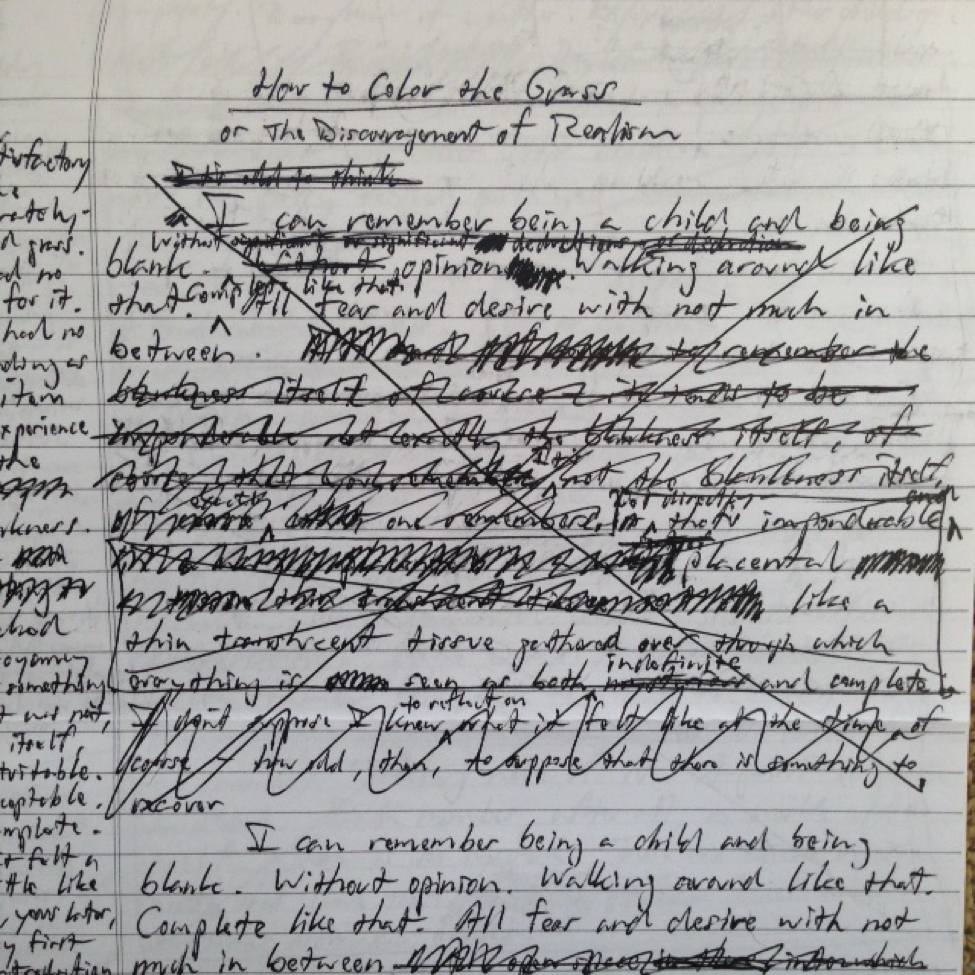 Here’s what his second or third draft looks like, i.e. when clarity begins to assert itself:
 And here’s what happens when he puts his pen down and commits to a final draft, which he commemorates via a Swiss-made Hermes 3000 typewriter, circa l959, with standard serif pica font. As David says, “It’s like typing on a Steinway – just the right mechanical resistance to make you mean what you say.”
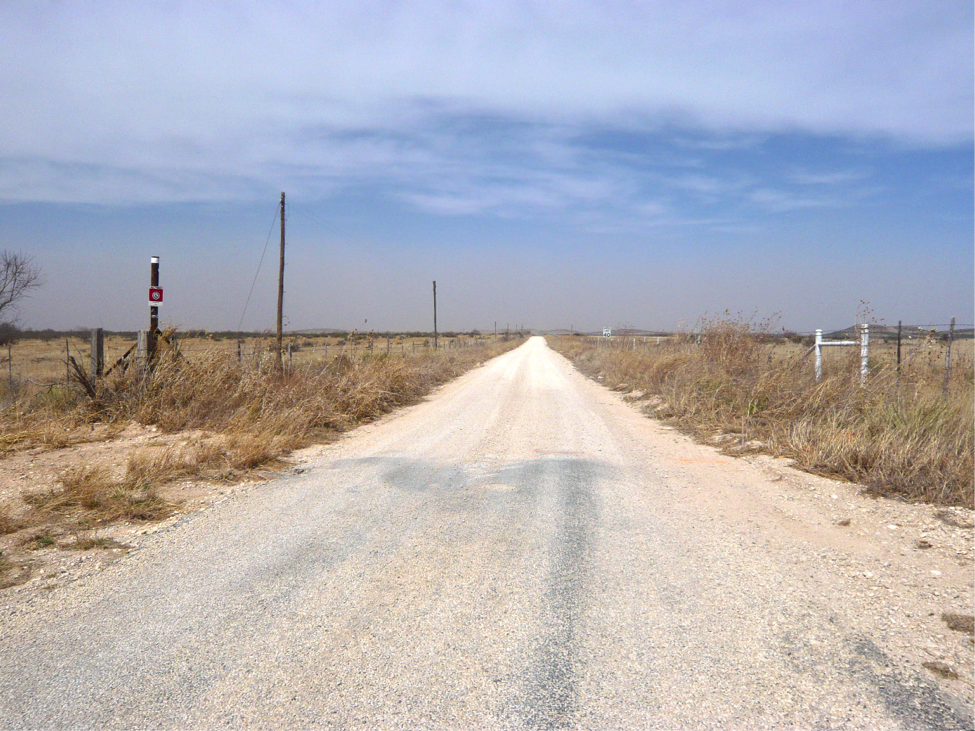
 Finally, David also takes photos of the things he writes about, and several of these photos appear in the book. Think W.G. Sebald… if W.G. Sebald lived in Dallas… and drove a truck… and said things like “holy crap”… and spent a lot of time thinking about the venality of Scrooge McDuck. Though I love the title, the overall effect is: no shame, all wonder.
 Find out more about Shame and Wonder here:

 Seeing the book laid out this way brought me even deeper into the material–and was a lot of fun. By the end of the process, I knew we had a book that effectively draws readers into Tyler’s world, one moment at a time.
As the book hits stores, I’ll go back to my hurried ways, and my mad dash to collect facts and insights and cocktail party topics will continue apace. But I’ll try to hold on to that sense of wonder, and to find the courage to open my eyes just a little bit to the mystery and beauty all around us.
And I’ll look forward to working with Tyler on his third collection, coming out a year from now—another chance to learn, grow, and be inspired by an author who has the courage to share his true voice on every page.
Read more about All the Words Are Yours
Seeing the book laid out this way brought me even deeper into the material–and was a lot of fun. By the end of the process, I knew we had a book that effectively draws readers into Tyler’s world, one moment at a time.
As the book hits stores, I’ll go back to my hurried ways, and my mad dash to collect facts and insights and cocktail party topics will continue apace. But I’ll try to hold on to that sense of wonder, and to find the courage to open my eyes just a little bit to the mystery and beauty all around us.
And I’ll look forward to working with Tyler on his third collection, coming out a year from now—another chance to learn, grow, and be inspired by an author who has the courage to share his true voice on every page.
Read more about All the Words Are Yours