Archives
Priest of Bones Author Peter McLean Picks His Five Favorite Fantasy Debuts
This article was written by Peter McLean and originally appeared on Unbound Worlds.
Priest of Bones isnât my first novelâitâs actually my fourthâbut it is my first real fantasy book. In changing genres from contemporary crime fantasy to proper âswords and horsesâ fantasy, Iâm reaching a whole new audience, and I now feel like a debut author all over again, with all the excitement and nerves that brings with it.
With that in mind, Iâd like to celebrate four of my favorite fantasy debuts from the last couple of years, and a forthcoming book for you to look forward to as well. All of these great debuts have been enormous successes and now have equally excellent sequels available, too. Iâm a great believer in supporting debut authors, and letâs just hope some of their success will rub off on me too!
The four books below are from 2017, and Iâve also included a new book which is going to come out in February 2019. With this one I had the pleasure and privilege of reading an advance copy, which is one of the great perks of being an author.
So, in no particular order, here are my favorite âfellowâ debuts:
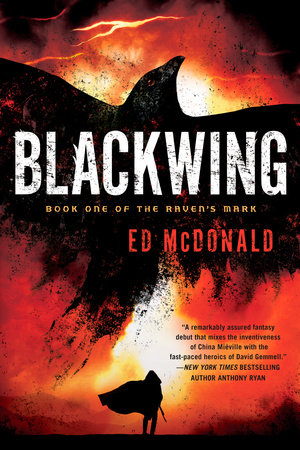
Blackwing
ED MCDONALD
Welcome to the Misery, a blasted land that resulted from the fallout of a magical super-weapon built by a living god who has since disappeared. Here walks Captain Galharrow of Blackwing, bounty hunter and secret agent of a living god. Facing traitors, flesh-eating monsters, reluctant heroes and willing villains, Galharrow and his band of cut-throats must save the Republic from the horror of the Deep Kings and their endless army of the dead. McDonald throws you straight into the action, and some of his creations are really quite disturbing. The pace is fast, the fight scenes extremely realistic and the dialogue sharp and often witty. This is a book with heart, that despite its violence is really about the power of love and friendship. Itâs not grimdark, itâs grimheart. The sequel, Ravencry, is, if anything, even better! Iâm avidly looking forward to Crowfall, the final book in the Ravenâs Mark trilogy, which is scheduled for release in June 2019.
The Court of Broken Knives
ANNA SMITH SPARK
The Empires of Dust lie dreaming, but their dream is about to become a nightmare as Marith, disowned prince-turned-mercenary, sets events in motion that will unleash a storm of war across an entire continent.
This is a truly extraordinary book, literary in a way that almost demands that it be read out loud. Some peopleâs prose is poetic, but Smith Sparkâs is positively operatic. This is a bleak and bloody story of lust and addiction, regicide and madness, that feels partly like a Greek tragedy and partly like a black metal opera. I have honestly never read a grimdark fantasy quite like this before.
The Tower of Living and Dying, the second in the Empires of Dust trilogy is equally magnificent in its mythological tone.
Kings of the Wyld
NICHOLAS EAMES
This was a really fun read, with a great story driven by Eamesâs very particular brand of humor. Itâs like what you might end up with if Joe Abercrombie and Terry Pratchett sat down to write a book together while listening to Spinal Tap and early Black Sabbath on endless repeat.
The humor is absolutely on point, mixing classic rock analogies with gentle pokes at the fantasy genre in general, and yet this is far more than just a funny book. Thereâs a really engaging story here, and moments of surprising tenderness.
The sequel, Bloody Rose, is on my to-read list.
Godblind
ANNA STEPHENS
The Red Gods are rising, and no one is safe. Godblind is among the grimmest of grimdark fantasy, written in a style reminiscent of George R R Martinâs A Game of Thrones. The growing sense of despair as the story progresses and everything goes from bad to worse to oh-so-much worse is almost stifling in its intensity. One character in particular is dragged bodily across one of the most brutal character arcs I think Iâve ever read, and itâs extremely well done. And then thereâs THAT scene, the one with the hammerâŠ
Dark and bleak yet utterly compelling, this may not be a book for the squeamish but itâs definitely a thrill-ride for all grimdark fans.
The sequel, Darksoul, has just been released.
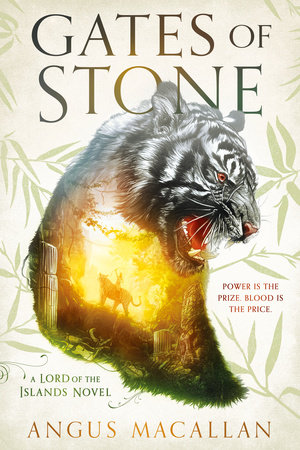
Gates of Stone
ANGUS MACALLAN
This is the one that is forthcoming, and you have a treat in store here!
A ferocious emperorâs daughter who will not be denied her birthright, an indolent prince forced to take a stand for the first time in his life, and an ancient and terrifying sorcerer with the power to destroy the world all collide in the lush, tropical islands of a fantasy world reminiscent of ancient Indonesia.
With its tense political drama and rip-roaring action on both land and on the high seas of a fresh and believable Asian-inspired setting, Gates of Stone reads like a collaboration between Joe Abercrombie and James Clavell.
Add feuding sorcerers and a queen who would eat Cersei Lannister for breakfast, and you have a truly fantastic fantasy debut. Angus Macallan is a compelling new voice in epic fantasy, and this is definitely a book to pre-order right now.
Photo by Samuel Zeller on Unsplash
Edugyan, Robertson Man Booker Finalists
A Visitorâs Guide to Danteâs Nine Circles of Hell
This article was written by Matt Staggs and originally appeared on Unbound Worlds.
Divine Comedy author Dante Alighieri died on this day in 1321. In honor of the great poetâs life, we offer this short guide to the nine circles of Hell, as described in Danteâs Inferno.
First Circle: Limbo
The first circle is home to the unbaptized and virtuous pagans. Itâs not Heaven, but as far as Hell goes, it isnât too bad: Itâs the retirement community of the afterlife. Hippocrates and Aristotle will be your neighbors, so any attempt at small talk will probably turn into Big Talk in a hurry. Youâll have television, but all of the channels will be set to CSPAN.
Second Circle: Lust
The wind-buffeted second circle of Hell is the final destination of the lustful and adulterous â basically anyone controlled by their hormones. Cleopatra and Helen of Troy were among its most famous residents during Danteâs day, but you can expect this place to be full of angsty teenagers and reality television stars by the time you arrive.
Third Circle: Gluttony
Todayâs forecast calls for plenty of icy rain and slush â a âwintery mixâ for all eternity. You know those people whose Instagram feeds are full of carefully lit photos of artfully arranged entrees? Youâll probably find them here, plus anyone whose response is âIâm kind of a foodieâ when asked where theyâd like to go eat.
Fourth Circle: Greed
This section of Hell is reserved for the money-grubbers and overly materialistic among us. According to Dante, those condemned to the fourth circle spend eternity fighting over money and valuables, so be prepared to meet all of your distant cousins who show up out of nowhere with empty U-Haul trucks moments the moment after a well-to-do great aunt or uncle dies.
Fifth Circle: Anger
Dante tells us that the wrathful and angry souls of this circle spend eternity waging battle on the River of Styx. If playing pirates forever sounds like your idea of a good time, then the fifth circle canât be too bad. Be prepared to hoist the Jolly Roger and go to war against that one guy in line who yelled at your favorite barista, and the road rage-possessed driver who very nearly rear-ended you last week.
Sixth Circle: Heresy
Dante wrote that heretics spent eternity entombed in flaming crypts in the sixth circle, but heresy is kind of an obscure sin in modern times. Thereâs probably plenty of vacancies now, so letâs fill this one with anyone who goes bananas whenever âtheirâ movie franchise or comic book changes in a way they donât like. The air in the sixth circle is probably choked with ashes and anguished cries of â[X] ruined my childhood!â
Seventh Circle: Violence
Iâll be honest with you, dear reader: Dante was being kind of a dick when it came to designing this level. It is composed of three rings. The outer ring is filled with blood and fire and reserved for murderers and thugs. Thatâs fine, but it gets sketchier from here. The middle ring is where, according to Dante, suicide victims go. Theyâre transformed into trees and fed upon by harpies (which I guess are somehow related to termites?). The inner ring, a place of burning sand, is reserved for âblasphemersâ and âsodomites.â Like I said, Dante was a bit of a dick. How about we ret-con this one (Sorry, residents of the sixth circleâŠ) and reserve it for the likes of the Westboro Baptist Church? If that makes me kind of a dick, well, Iâll live with that.
Eighth Circle: Fraud
The eighth circle is subdivided into ten trenches. We wonât get into the specifics of who goes where (Too bad, Dante. Thatâs what you get for making me write abut the seventh circle) but here youâll find con artists of all sorts. Dante described ditches, but I prefer to think of the eight circle as being a giant cubicle farm full of phone and internet fraudsters. Welcome, so-called Nigerian princes and supposed âIRS agentsâ who insist on being paid in iTunes cards.
Ninth Circle: Treachery
The final circle is a frozen wasteland occupied by historyâs greatest traitors. So ⊠Washington, DC in February?
Photo by Ian Stauffer on Unsplash
Congratulations to our 2018 National Book Award Semi-Finalists
Fiction
Nonfiction
Poetry
Translated Literature
Young Adult Fiction and Nonfiction
How to Write Short Stories (Hint: Itâs Not That Simple)
This article was written by Laura Furman and originally appeared on Signature Reads.
As the series editor who chooses the stories in the annual O. Henry Prize Stories, I read hundreds of short stories every year. I also have the benefit and pleasure of asking each yearâs twenty winners to write a short piece about how and why they wrote their stories. Along with my own experience as a short story writer, Iâm in a good position to ponder a question often posed by aspiring writers: What are the essential elements of a good short story?
As I set out to answer that question, however, I found myself instead enumerating what is not essential. The first thing you should set aside is any explicit or guiding notion of what your story is âabout.â Readers often ask writers what their stories mean, but if the writer has a ready answer, that is a problem. A good writer knows where and when the first hint of a story appeared, and how she wrote it. She knows what the process was from draft to finish â but a storyâs âmeaningâ is often as much a mystery to writer as to reader, and thatâs as it should be. Writing a short story is an intuitive activity driven by the writerâs wonderful subconscious and itâs as far from meaning as dreaming is from being awake. Conscious logical planning will get you from Point A to Point B in the shortest time but the subconscious excels at fortuitous invention. A writer must learn to trust the startling images and characters that come up in the course of composition. Her subconscious, if she trusts it, will guide her through the beginning, background, and development to the ending, which is often the most difficult part to write, and to understand. The next most important thing is grasping the particular demands of this form. In bringing to life the world of a short story, it is crucial to know what to leave out. Despite some superficial resemblance to the novel, the short story differs from it in important ways; a story must draw the reader in without attempting to imitate the enveloping completeness or epic sweep of a novel. A short story also isnât a song or a poem, forms that express their world of meaning through extreme compression and abstraction. Some very terse stories do resemble a poem or song, for example Michael Parkerâs âStop ânâ Goâ in The O. Henry Prize Stories 2018. Whatever its length, though, and however elaborate or simple its language, the short story is rooted in its own unique deployment of quotidian details, which must feel real and convincing. In all stories, even the most starkly written, the storyâs world must be recognizable, however eccentric or fantastical or hyper-realistic it may be. Characters sit on uncomfortable chairs or walk on graveled paths, and the reader must be able to sit on those chairs and walk on those paths. Frequent O. Henry winner William Trevorâs conflicted Irish and English characters feel as real and important to the fond reader as her own friends. The main character in Jo Ann Beardâs âThe Tomb of Wrestling,â in The O. Henry Prize Stories 2018, confronts an intruder who means her harm, and the reader is as terrified as she is. The thousands of decisions a writer makes in editing a story boil down to trusting the reader to make connections. That trust dominates the writerâs decisions as she moves from draft to draft and decides what the reader needs in order to understand plot, sequence, setting, and character â without spelling out those elements. Explaining is unnecessary when the story is right; in fact, too much explanation feels to the attentive reader like an annoying interruption, a breaking of the spell. Never underestimate your readerâs intelligence. At a magical point, the writerâs subconscious inventions connect with the readerâs intelligence and emotions, and the reader understands why the story ends where it does; how the ending is an illuminated version of the beginning; that the storyâs secret has been revealed without words. The trust that has guided the writer to get rid of all but the right details has paid off and the reader has everything she needs to make the storyâs meaning her own. Photo by Da Kraplak on UnsplashTwo Book Tango: The World in a Grain and Dune
This article was written by Matt Staggs and originally appeared on Unbound Worlds.
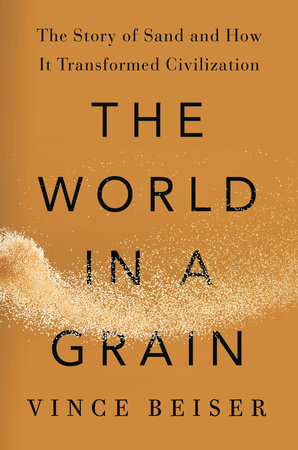
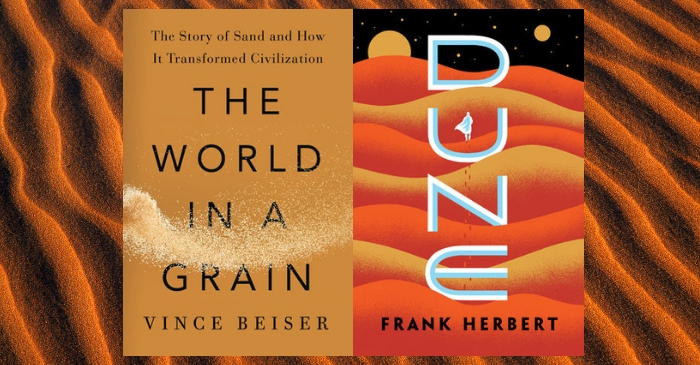
The World in a Grain
The Story of Sand and How It Transformed Civilization
VINCE BEISER
After water and air, sand is the natural resource that we consume more than any otherâeven more than oil. Every concrete building and paved road on Earth, every computer screen and silicon chip, is made from sand. From Egyptâs pyramids to the Hubble telescope, from the worldâs tallest skyscraper to the sidewalk below it, from Chartresâ stained-glass windows to your iPhone, sand shelters us, empowers us, engages us, and inspires us. Itâs the ingredient that makes possible our cities, our science, our livesâand our future. And, incredibly, weâre running out of it. The World in a Grain is the compelling true story of the hugely important and diminishing natural resource that grows more essential every day, and of the people who mine it, sell it, build with itâand sometimes, even kill for it. Itâs also a provocative examination of the serious human and environmental costs incurred by our dependence on sand, which has received little public attention. Not all sand is created equal: Some of the easiest sand to get to is the least useful. Award-winning journalist Vince Beiser delves deep into this world, taking readers on a journey across the globe, from the United States to remote corners of India, China, and Dubai to explain why sand is so crucial to modern life. Along the way, readers encounter world-changing innovators, island-building entrepreneurs, desert fighters, and murderous sand pirates. The result is an entertaining and eye-opening work, one that is both unexpected and involving, rippling with fascinating detail and filled with surprising characters.Dune
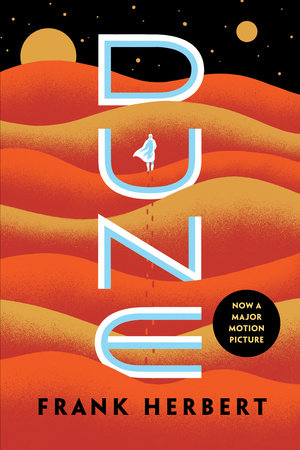
FRANK HERBERT
Frank Herbertâs classic masterpieceâa triumph of the imagination and one of the bestselling science fiction novels of all time. Set on the desert planet Arrakis, Dune is the story of the boy Paul Atreidesâwho would become known as MuadâDibâand of a great familyâs ambition to bring to fruition humankindâs most ancient and unattainable dream. A stunning blend of adventure and mysticism, environmentalism and politics, Dune won the first Nebula Award, shared the Hugo Award, and formed the basis of what is undoubtedly the grandest epic in science fiction.Writing is Work, and You Need to Make Time for It
This article was written by Karen White and originally appeared on Signature Reads.
I always get a little squirmy when Iâm asked to give advice on writing. I mean, what makes me an authority on the subject? Sure, Iâve written a bunch of books, but the only âtrainingâ Iâve had in my chosen vocation is the thousands of books Iâve read in my lifetime so far.
Iâd like to think that despite not having a lot of experience or knowledge about the whole writing thing when I started, surely Iâve learned something along the way. And I have. In that vein, here are a few nuggets of wisdom Iâve gleaned in my nearly twenty years of being a published author. No, I havenât figured out the magic formula that will grant a writer instant success. But I have accumulated a nice list of what not to do if youâre planning on having a career as a writer. Do not spend all your writing time making excuses as to why you canât write instead of actually writing. Excuses will not write a book. Finding the perfect time to finally start a book is like choosing the right time to move to another country and start a new life. There will never be a perfect time, as there will always be reasons why the timing isnât optimal. If you have a burning desire to write a book (or move to another country), make it a priority. The rest will fall into place, and youâll be a lot happier with yourself. Do not take to heart everyone elseâs writing style/advice/methods before youâve given yourself a chance to figure out your own. Writing is incredibly personal. There are as many writing techniques and styles as there are writers. Itâs what gives us our individual writerâs voice. Itâs precious and unique and you need to own it and not dilute it with external influences before youâve given it a chance to sprout. If Iâd listened to all the well-meaning advice when I started (donât write in first person, never start a sentence with âand,â outline everything before you write the first sentence), I would never have written my first book. Do not surround yourself with naysayers. For whatever reason, there will always be people in our lives who will attempt to discourage us from our pursuits. Either family members, friends, or other writers will have negative things to say about our talent (or lack thereof). Donât listen to them. Itâs always easier to be a critic than the warrior fighting the battle. Just remember that itâs not about them. Your writing is between you and the words on the page. And nobody else. Do not wait until the muse strikes before you sit down to write.This one always makes me laugh. I would have written exactly three pages in my entire career if this were true. In my previous life in the business world, I donât imagine I would have lasted in any job very long if my attitude had been that Iâd only show up for work when I felt like it. There are usually about a million other things Iâd rather be doing than gluing myself to my chair and getting to work. Since I consider writing my career and not just a hobby, I treat it with respect. Do not say my family/job/life isnât conducive to writing a book.News flash: unless youâre independently wealthy and your family is entirely self-sufficient, this will never change. I wrote my first books in my SUV at the football field and horse barn while my children practiced. My husband traveled about ninety percent of the time for his job so I was basically a single mom for most of the week. Instead of chatting with the other mothers, or reading a magazine, or napping, I used that time to write. There are pockets of time in each of our lives that we can prioritize as writing time. Expect to let go of a few things (binge watching on Netflix, hanging out on Facebook, sleeping in on weekends) to find the time. But the time is there if youâre willing to make your writing happen. Do not expect that the hard work is over after you sell your first book. Itâs only just beginning. To prepare yourself for your writing career, start thinking about your next book as soon as you send your first book proposal to prospective agents and editors. Youâve got momentum so make the most of it. Writers write. Itâs what we do. We turn off the negative voices, we create the time and the place, and we write. To borrow words from Nike, Just Do It. Writing/Photo by Lubomyr Myronyuk on Unsplash
Penguin Random House Ranks #1 on Forbes List of Americaâs Best Midsize Employers
Forbes further recognized that âthe entrepreneurial spirit that shapes the employee experience at Penguin Random House has proven key to the publisherâs recruiting efforts, much of which focus on college campus outreach and the companyâs internship program. It has played an important role in retention, too. Access to online courses and a mentoring program allow Penguin Random Houseâs 5,000 North American workers to take career development into their own hands, as do events like Company Week, an annual series that invites employees and authors to gather for days of panels, presentations and community service. This culture of empowermentâcoupled with unique benefits like a sabbatical program, student loan repayment assistance and, yes, free booksâhelps turn entry-level hires into lifetime employees. âSo many have risen through the ranks,â says Madeline. âI was an assistant 24 years ago, and Iâm not an unusual case.ââ
Penguin Random Houseâs commitment to the communities it serves was also acknowledged, including literacy sponsorships and the more than $2 million in creative writing scholarships our company awarded to New York City public high school students over the past 25 years. Looking globally, Forbes referenced our ongoing partnerships with worldwide organizations like Save the Children, and employee volunteers who journeyed to Rwanda in January.
In addition, Penguin Random House was on Forbesâ Best Employers for Diversity list for the first time this year, placing at #64 overall for both large and midsize employers.
The Forbes feature concludes with these words from Madeline: âWeâre not just a bunch of people who like to read. We believe books have the power not just to help peopleâs days through entertainment or inspiration, but to really change the conversation and the culture at large.â
In compiling this list, Forbes worked with market research company Statista, which surveyed 30,000 Americans working for businesses with at least 1,000 employees. All the surveys were anonymous, allowing participants to openly share their opinions. The respondents were asked to rate, on a scale of zero to 10, how likely theyâd be to recommend their employer to others. Statista then asked respondents to nominate organizations in industries outside their own.
To view the complete Forbes list and article, click here.

PRH Summer Giving: We Gift Our Books to Shakespeare-in-the-Park Ticketholders