Who’s Afraid of Mercury Retrograde? Or Why Astrology’s Most-Feared Cycle May be Just What You Need

This July Fourth my family traveled to Hilton Head Island in South Carolina for a vacation. Getting there was no easy trip. We traveled during the astrological period called Mercury Retrograde: a thrice-yearly phase when the planet Mercury appears to move backwards – and travel, communication, and commerce (all things associated with the ancient god Mercury) are thought to go awry. And so they did. But there were deeper lessons in store. We began our travels just a few days after the current cycle began on June 26 (it ends July 20). As astrological tradition holds, it is an especially ill-fated time for travel. True to lore, my wife and our sons, ages 6 and 9, discovered that our outbound flight from New York was severely delayed, causing us to miss our connection in D.C. and leaving us stranded overnight. For added measure, our luggage got lost in transfer limbo. “Now do you believe in Mercury Retrograde?” I asked my wife. She fixed me with a don’t-even-ask look. This kind of travel snafu is considered typical during Mercury Retrograde. But an interesting wrinkle occurred – the type of thing that gets overlooked when people speak with trepidation of Mercury Retrograde. When we returned to New York, upon deplaning we re-encountered the same (very humorous) gate attendant who had seen us off at the start of our trip. He not only remembered us but resumed a joke with our youngest son, Tobias, which he had made at the start of our trip days earlier. This minor light on our journey points toward an under-appreciated facet of Mercury Retrograde: We get the chance to repeat things. People can surprisingly re-merge from our past. Old projects can get revived. Relationships and endeavors we were certain we had left behind, or lost items (and not just lost luggage), can reappear. Mercury Retrograde cycles last about three to four weeks and occur when the planet Mercury traverses furthest from the sun in its highly elliptical orbit. At its point of curvature Mercury visually appears to be moving backwards when viewed from Earth. Optically this is somewhat like when you’re on a train and another train on a parallel track slows, but does not stop, and from your seat appears to be reversing. Everything has its hour and Mercury Retrograde is not just a cycle of missed flights and botched transit: it can also become a time of revisiting, revising, and reconsidering. During this year’s first Mercury Retrograde cycle early in 2013 I heard from a network television executive who had been discussing a show with me the previous year, but talks had dropped off. Now she wanted to talk anew. Signing contracts and selling homes is considered a big no-no during Mercury Retrograde. But even in this area interesting developments can occur. About six years ago, my wife and I reluctantly committed to selling a lake house we own in upstate New York. We were uncertain it was the right move. But we went ahead and signed a deal with a local real-estate agent. I knew that signing deals was considered verboten during Mercury Retrograde, but the agent was understandably eager – and I didn’t feel that I could tell him: “Well, you see Mike, in about four weeks the god Mercury will be more inclined to shine favorably upon our undertaking, so
” One weekend we went to prepare the house for sale and unexpectedly found that our three-year-old son was enchanted with the place. Seeing his newfound excitement, we reversed our decision and decided to keep the house – later to our great relief. This was a decision that had needed reconsidering. Enter Mercury Retrograde. Western astrology has ancient roots extending to the Babylonian and Hellenic civilizations. Yet in its contemporary practice, astrology (as with many aspects of modern life) takes on forms that are actually more recent than we realize. The earliest references to Mercury Retrograde as an astrological phenomenon began in the mid-1700s in British agricultural almanacs read by farmers who believed that the motions of the stars affected planting seasons. “Mercury is turn’d retrograde in Sagittarius, which brings him back to meet the Sun in Conjunction,” went a reading for December 9, 1754 in Vox Stellarum: Or, a Loyal Alamack. In the twentieth century, Franklin Roosevelt’s agricultural secretary and second vice president, Henry A. Wallace, himself a farmer and almanac publisher, felt that the study of zodiacal cycles could aid scientific agriculture. Even today zodiacal charts remain a regular feature of planting almanacs. Mercury Retrograde has currency among many people who don’t follow astrology. Although you won’t find Mercury’s cycles tacked up on the bulletin boards of air-traffic control centers or search-engine offices, lots of people in those fields and others talk or (often uneasily) joke about it. Anecdotally, Mercury Retrograde is considered prime time for internet crashes and travel mishaps, or even disasters. But we cannot sit things out during Mercury Retrograde. Contemporary life is fast moving, and certain things, including signing contracts and taking trips, cannot be placed on hold during Mercury’s thrice-yearly visual reversal. My advice is: Don’t even attempt to hunker down during its cycle. Depending on your outlook, you might have to brace for a few reversals and snafus. But there is another dimension to the matter. You might also find that Mercury Retrograde – contrary to the apprehension it stirs online and in coffee-break rooms – is a period of revisiting or happily reversing situations that you had once imagined set in stone. Mercury Retrograde may place a speed bump into your plans, but it can also loosen things up and unwind knots. So sit back for the ride. It will be an unexpected one.

# # #

  Mitch Grand Central Web ResMitch Horowitz is vice-president and editor-in-chief at Tarcher/Penguin. He is the author of Occult America (Bantam), which received the 2010 PEN Oakland/ Josephine Miles Award for literary excellence. His new book, One Simple Idea: How Positive Thinking Reshaped Modern Life, is forthcoming from Crown in January 2014. Horowitz frequently writes about and discusses alternative spirituality in the national media, including CBS Sunday Morning, Dateline NBC, All Things Considered, The Wall Street Journal, The Washington Post, and CNN.com. He is online at: www.MitchHorowitz.com.

Jonathan Unleashed by Meg Rosoff is a summery read for dog lovers

“A humorous tale of a young New Yorker’s search for happiness, and the two dogs who help him find it” is Marie Claire’s take on Jonathon Unleashed by Meg Rosoff, published by Viking on Tuesday (7/5). Two more buzz lines about this beach bag-ready summer read: “With whip-smart dialogue, Rosoff explores how twenty-somethings find their feet in the big city, face up to the horror of entry-level employment and figure out who they really love” and “Funny, smart writing from a novelist with such an assured voice that you can’t resist accompanying her on the novel’s journey.” Ms. Rosoff, National Book Award finalist and Printz Award winner, describes the inspiration behind the writing of Jonathon Unleashed: “I woke up one morning with the line ‘Jonathan came home from work one day to find the dogs talking about him’ in my head. I knew instantly it was the next book, even though I didn’t know who Jonathan was, and why the dogs were talking about him. I thought, ‘I must write that line down,’ but also knew that I wouldn’t forget it. The process of writing a book is made up of a thousand micro-decisions, and I think one of them with this book was that the news was depressing me quite a lot, and I thought a comedy might cheer me up.” Jonathon Unleashed is a romantic comedy that follows Jonathan Trefoil, a twenty-something New Yorker who feels stuck and helpless, and the two dogs, Dante, a border collie and Sissy, a spaniel, that inspire him to lead a different life. Film rights for the novel have been optioned by Qwerty Films, with Michael Kuhn as producer (Being John Malkovich, The Duchess, Florence Foster Jenkins) and Ms. Rosoff writing the screenplay. Learn more about the book here:

Anna Bradley, author of A Season of Ruin on her favorite Scottish Romance novels

One Hot Scot, Please What do you get when you take a wicked smolder, a sexy Scottish burr, and an unruly mass of tousled red curls and roll it up in a kilt? This is not a trick question. Every romance-lover with a kilt fetish knows Jamie Fraser is the hottest thing to roam the Highlands since Mel Gibson’s William Wallace. But even though he may have seduced us all with that muscled chest and the adorable way he says Sassenach, we were all onto the sexy Scot well before Jamie swept us off our feet. Readers have been clamoring for Celts for years, and romance writers have obliged with a clans’ worth of kilted heroes, from Rowan Keats’ brawny Bran MacLean in What a Lass Wants to Julie Garwood’s sexy Alec Kincaid in The Bride. And that’s just the tip of the crag. There’s a hot Scot out there for every reader. How about a mad chase across the moors with Tracy Ann Warren’s Daniel MacKinnon, the devastating laird in Her Highness and the Highlander? If you fancy some espionage, there’s Teri Brisbin’s fearless William de Brus, the daring knight who takes on the forces of good and evil and earns the everlasting love of his fire-magic heroine in Rising Fire. Is time-travelling romance your thing? Take it old school with Lynn Kurland’s hero Jake Kilchurn in Dreams of Stardust. My personal weakness is mad, decadent Scots with dark scandals in their past. Jennifer Ashley’s Lord Ian from The Madness of Lord Ian Mackenzie is one of my all-time favorite Scottish heroes, but all of the Mackenzie brothers make ruination look enticing. Now that’s my idea of a clan! Lovers and Fighters Whether they’re mad earls, spies, ghost-hunters or a princess’s bodyguard, the Scottish hero is a man of action. He doesn’t just wear that sword because it looks great with his kilt. He’s a lover and a fighter, and that’s a hero we can get behind. And let’s be honest—who doesn’t want to get behind a man wearing a kilt? But if it takes a real man to pull off a skirt, it also takes a real heroine to pull a skirt off her Scot. Every romance novel needs an unforgettable hero, but it also needs a remarkable heroine to keep him in line, even if it means she has to blacken his eye, as Hannah Howard does in Kimberly Bell’s A Convenient Engagement (if you haven’t read this one yet, a hint: he deserves it!). It takes a strong-willed lass to tame these pirates of the Highlands, but the Scottish romance heroine can handle her man. Don’t Mess with Scotland But the hot heroes are only part of the recipe for a sizzling Scottish historical. These epic love stories are set against a backdrop of sweeping moors, rugged crags and crumbling stone castles. In other words, Scotland herself is as untamed as her heroes. The wildly romantic settings are a perfect fit for tales of enduring love, and our warrior rebels give their country the same fierce love they give their heroines. Scotland may have a few downsides (damp weather and mashed turnips and haggis come to mind), but it’s difficult to focus on her shortcomings when there’s a plaid-clad hero waiting to share sips of whiskey from his flask and give you a peek up his kilt. Celts in Kilts Who could have imagined a few yards of thick wool could be so sexy? But though the kilt may be to women what black lace lingerie is to men, it isn’t the only thing at the heart of our fascination with Scottish heroes. Of course, it doesn’t hurt that a blessedly bare-assed Jamie Fraser proved once and for all in Season 1 of Outlander that a true Scot really does go commando, but our lust for Celts goes deeper than that. The Scottish clans are the ultimate alpha male group, and the Scottish romance novel hero is the wicked London rake, the arrogant CEO, and the ferocious Navy Seal all rolled into one tempting package. And if that package happens to be wrapped in a kilt? Well, so much the better. Anna Bradley writes sexy, steamy Regency romance. Her book A Season of Ruin, the second book in the Sutherland Scandals series, is out from Berkley on August 2, 2016.  

Why Would a Woman Join the Military? by Tanya Biank

undauntedI’ve done dozens of interviews since Undaunted launched in early February and am occasionally asked: Why in the world would a woman want to go into combat? The question always surprises me since the answer seems obvious, but perhaps that’s because I’ve been around military people all my life. The military is a traditional place. Throw into the mix nonconventional women and things get interesting.  These women believe they can fight, lead and defend, despite conventional wisdom. I answer the question by pointing out women serve for the same reasons as men, which ranges from patriotic duty, family tradition, money for college, or simply because it’s a steady paycheck in a poor economy. The performance of this generation of servicewomen is not only revolutionizing the military, but as evidenced by my talk radio discussions, is testing social views of traditional gender roles and norms. It helps to keep society’s broader context in mind. A century and a half ago married women couldn’t own property in America. They achieved the right to vote only 93 years ago. The first female didn’t become CEO of a Fortune 500 company until 1972, and two years before that women finally obtained the right to have credit cards in their own name. Meanwhile, in the military, women couldn’t exceed 2 percent of the armed forces and couldn’t be promoted beyond the ranks of lieutenant colonel or commander until Congress changed the law in 1967. By 1973 the Supreme Court ruled unconstitutional a law that denied servicewomen’s dependents (her children and spouse) basic benefits such as housing and medical care—all the things authorized to military men’s families. And by 1975 pregnant women were no longer kicked out of the service. We’ve come a long way as a military and a society. Yet, being asked on live radio why any woman would want to join the combat arms branches is a reminder that societal gender norms aren’t always in line with official policy changes. It’s not unusual for the pushback to come from other women. Since the book came out, one of the main subjects in Undaunted, Major Candice O’Brien, has been accused by some for putting her career before her family. A few days ago while visiting Fort Leavenworth, Kansas, I met a female officer who shared a similar story. A neighbor felt it was her business to tell the major: “You’re failing your kids.” How did she respond? With more tact than I could have mustered. She told the woman she saw herself as a role model for her children, a person they could look up to and admire, knowing that they, too, through hard work, could aspire to achieve and be whatever they set their minds to accomplish. Such scrutiny is a reminder of just how courageous these women have to be off the battlefield. The challenges, choices, and successes encountered by women throughout their military careers, from issues of discrimination to juggling family and a job, have far-reaching implications for all women in contemporary American society. Women in the military are on the cutting edge of gender debates. Their struggles and triumphs and the price they pay may point the way to the future.

Quiz: What Type of Reader Are You?

Take our quiz and share your results witH US!

Interview with C.J. Box, author of the Joe Pickett novels

Off the Grid, the sixteenth Joe Pickett novel by New York Times bestselling author C.J. Box, is being published by G.P. Putnam’s Sons on March 8.  Strong advance buzz has been building for this book, which revolves around how terror is found – and fought – in the wild expanses of Wyoming.  Game warden Joe Pickett, his best friend Nate Romanowksi, and Joe’s daughter Sheridan are embroiled in multiple plot lines that unfurl with urgency, harrowing suspense and surprising twists.  The Joe Pickett character entered the literary world in 2001 and a reviewer for The New York Times once wrote, “ 
 Box introduced us to his unlikely hero 
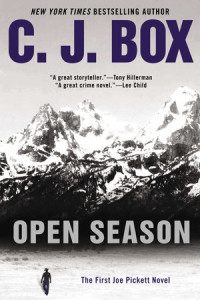
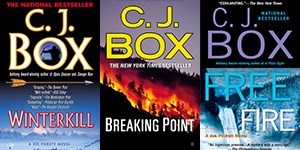
 a decent man who lives paycheck to paycheck and who is deeply fond of his wife and his three daughters. Pickett isn’t especially remarkable except for his honesty and for a quality that Howard Bloom attributes to Shakespeare – the ability to think everything through for himself.”  Fellow Penguin Random House author Lee Child has called Box “one of today’s solid-gold, A-list, must-read writers.” Read on for a Q&A with C.J. Box.  C.J.  Box agreed to respond to the following questions for Igloo:  Sixteen novels in, what do you think accounts for the wealth of themes, storylines and characters that have kept your Joe Pickett series fresh and filled with surprises? OpenSeasonAlthough the first Joe Pickett novel (Open Season) was written as a one-off at the time, the characters, themes, location, and style introduced in that book provided a great framework for the series to grow.  I’ve never had to regret the foundation laid in that book.  Also, because the books take place in real time the characters mature and change from book to book.  For example, Joe Pickett’s daughter Sheridan is seven years old in Open Season and now 22 in Off the Grid.  Because the characters get older and benefit (or not) from previous situations in the books I think that helps keep the series fresh.  Plus, since each book includes a theme or controversy unique to the story (endangered species, alternative energy, the ethics of hunting, or in the case of Off the Grid — domestic terrorism) they are all stand-alones in their own way. A lot of your longtime fans will be happy that your character Nate Romanowski features prominently in Off the Grid.  From a writer’s standpoint, what is involved in making Nate so interesting and unpredictable?  Unlike just about every other character in the series, Nate Romanowski is based on a friend of mine although I’ve exaggerated (Thank God) his personality. The buddy I grew up with was a big blonde middle linebacker who later went on to join the military and special forces.  He took me falconry hunting and through him I was introduced to the very strange and fascinating world of falconers and the mindset that goes with it.  And, of course, Nate carries one of the largest handguns in the world and he’s good with it. For a reader coming to your Joe Pickett novels for the first time, which  of your backlist titles, from Open Season onward, would you recommend they check out first and why? CJBox3booksTnailTough question, since in their way each book stands alone.  No reader would be hopelessly lost starting with any book in the series.  Of course, those who’ve read them all say it’s important to start with OPEN SEASON so the reader can experience Joe’s family growing and changing, and I probably lean that direction.  But there are certain books —Winterkill,  Free Fire,  Breaking Point, andOff the Grid   – that I think could be good entry points into the series. Find out more about C.J. Box’s books below.  

Celebrating Thirty Years of Nora Roberts

This is a very exciting year for romance fans – Nora Roberts, one of the best-known and most beloved authors of our time, is celebrating her thirty year publishing career.  From Irish Thouroughbred, her first book, to Stars of Fortune, the hit of Fall 2015, Roberts has earned every bit of her success and fandom. In the coming months, we’ll look back at Nora Roberts’ impressive career and talk with readers and Penguin Random House employees who love her books. nora

“For the kind of books I write, character is key. Character is plot. Make them accessible to the reader. They may be a billionaire or they may be a half demon or they may be a gym teacher, but something about them has to relate so the reader can say, ‘I understand them.'”

–  Nora Roberts The New Yorker

Do you have a favorite Nora Roberts or J.D. Robb book? Let us know by tweeting @penguinrandom.

Catch up with Nora Roberts’ newest books below:

Enter for a chance to win a copy of Cure: A Journey into the Science of Mind Over Body, by Jo Marchant

Have you ever felt a surge of adrenaline after narrowly avoiding an accident? Salivated at the sight, or thought, of a sour lemon? If so, then you’ve experienced how dramatically the workings of your mind can affect your body. 

Jo Marchant
Jo Marchant, author of CURE: A Journey into the Science of Mind Over Body.
 

Discover why placebos, hypnosis, meditation, and prayer can help keep you healthy in Cure: A Journey into the Science of Mind Over Body.

Enter the CURE SWEEPSTAKES to win a free copy of the book! The sweepstakes runs until Friday, February 12th, so don’t miss your chance!Â