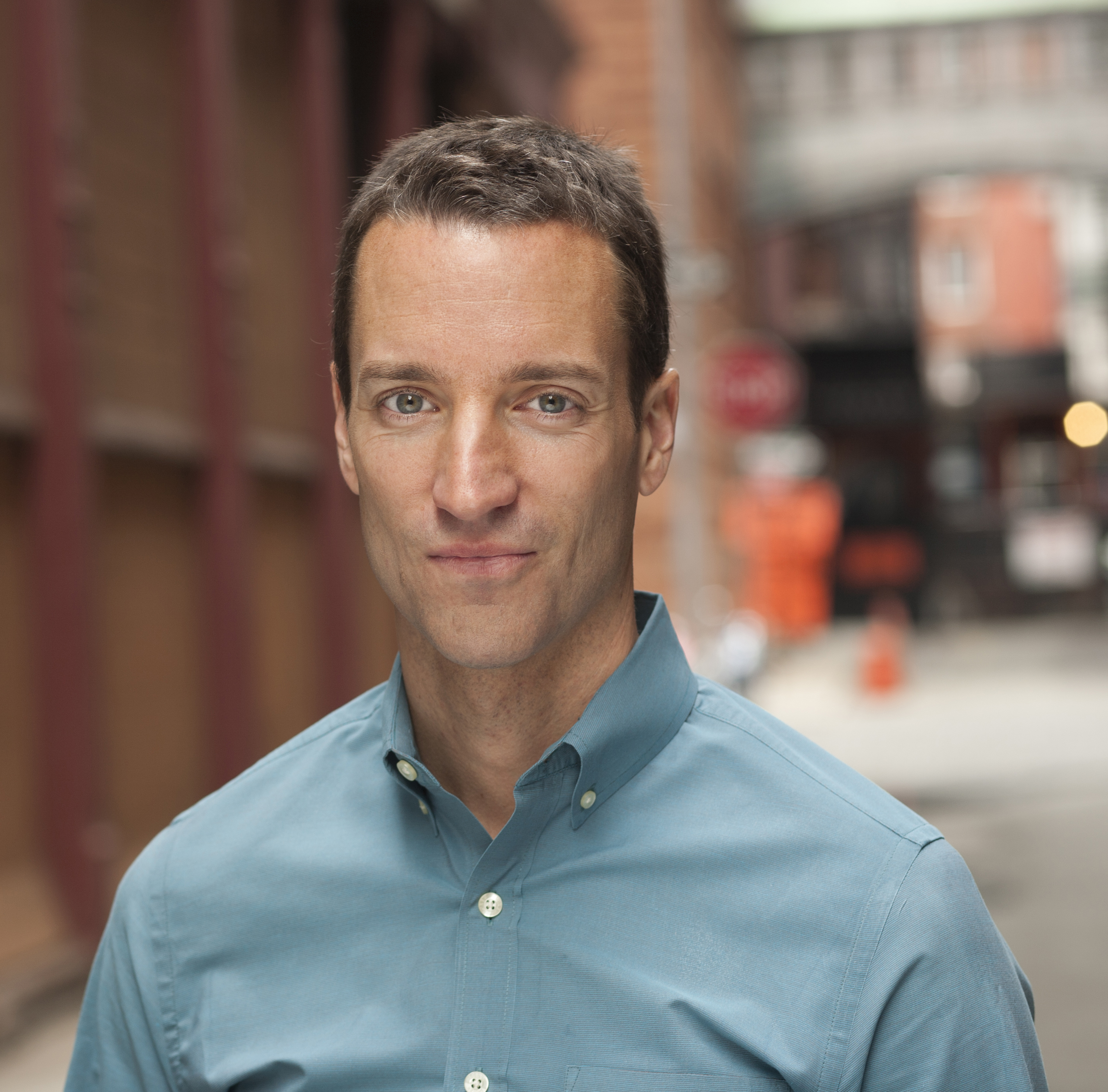




I have the great fortune of being a Sales Manager for Penguin Adult books! In this role, I present all of the upcoming titles from Penguin Books to independent bookstores in the New York metropolitan area. In other words, I’m a bookseller to booksellers! During the course of a year, I meet with various book buyers to discuss and select the titles that will eventually be on their shelves for readers to purchase. The part about these meetings that I love so much is that I get to be involved in curating the store along with the buyer. Every independent bookstore is unique, and it is my responsibility to learn as much as I can about the stores so that the books I sell them will reflect their personalities.
I also work extensively with the other departments in publishing like editorial and publicity. Editors will often let sales people read manuscripts so that we can offer feedback or let them know about a store that will be particularly excited about the book. And then there is publicity! Publicists are dear friends to Sales Managers because we work together to setup author readings and signings at different bookstores across the whole country. In my opinion, there is no better way to spend a weekday evening than to attend a reading at your local bookshop.

When you describe But What if We’re Wrong? to bookbuyers, what is your hook? What is memorable or unique about the book? Why would they want it in their store?
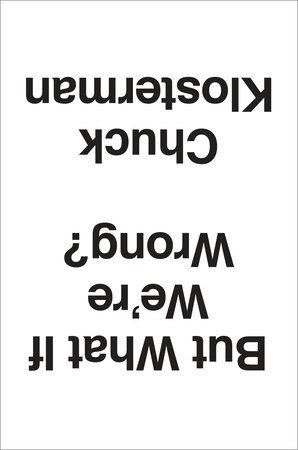
You would probably laugh at how little of a hook I need for Chuck Klosterman a lot of the time! His reputation precedes him, and I often sell the book well by simply saying, “Look, it’s the new Chuck Klosterman!” But there is so much more that I get to tell my booksellers about. When it comes to But What If We’re Wrong?, I feel like Klosterman has explored a question that covers an impressive number of topics. From a conversation with Neil deGrasse Tyson about the multiverse to reasons why the NFL could potentially fail, But What If We’re Wrong? is genius in its breadth, and that is going to bring an entirely new audience to Klosterman.
There are so many different reasons for why independent bookstores love Chuck Klosterman! One thing I’ve heard that cracked me up is that many view Chuck Klosterman as a hipper Malcolm Gladwell. Now while I personally think that Gladwell is plenty hip, I also feel like I understand the deeper sentiment underneath that opinion. There is a level of access that every Klosterman book achieves, and it results in a sincere investigation about a topic. Reading Klosterman doesn’t feel like reading an author who is analyzing something from the outside; it feels like reading the carefully considered meditations of someone who is intimately involved with what they write about. That sincerity can’t be faked in a reading experience because it is simply the result of skillful writing.
What’s your favorite thing about your job? What would surprise a layman to know?
What continues to strike me about my job is that I get to connect people who all love books. My publishing house considers me a specialist on the bookstores I work with, and in turn, my bookstores view me as a specialist about the publishers and all of the different titles we bring out. It is a singular role, and I love the opportunity to continue learning from the books and the people that participate in the world of literature.
You’re a fan of Chuck Klosterman – what do you like about his writing? What do you like about this new book? Do you have a favorite moment or line?
I love that Klosterman always feels like he is writing directly to me. It creates an experience that not many authors can bring to the page. Sometimes this occurs through those passages that directly address the reader, but more often I feel addressed by a line of thought. It’s as if a good friend of mine is laying out an issue before me with perfect pacing and allowing me to fully grasp his point of view.
My favorite part of But What If We’re Wrong? is this amazing section about television’s ability to capture and portray a time period. The quick take away from the chapter is that while everyone might love Mad Men and think of it as crowning accomplishment that captured the 1960s, many historians of the future would probably disagree. The perceptions that created Mad Men came from people living in the early 2000s instead of the actual 1960s. Everything about Mad Men is too perfectly considered and too meticulously constructed with hindsight to be genuinely natural. Instead, a show like Roseanne offers a much more realistic portrayal of its time period. Like many families living in the 1990s, Roseanne showed a chubby American family trying to get by with okay jobs while living in a kind of messy house. For many, that is an accurate picture of life in the 1990s, and Roseanne was able to capture all of this unknowingly. The show was just created in the very same time period its characters lived in!
Read the first post in this series here, and part one and part two of the Q&A with Klosterman’s editor.
 Q: Do you have a favorite part of the editorial and publishing process?
A: I have a few. First, there’s the moment when you realize that you want to work on a book. It’s not unlike the beginning of a romance, minus all of the untoward activities, of course. Then there’s the editing. It’s definitely work, and sometimes it’s more work than anticipated, but, when you can shut out the world and really interact with what someone has written—ask them more questions, challenge them a bit, and just enjoy it like any reader would—that’s entertaining. It’s a heightened form of reading. And, last but not least, there are moments when you can tell that a reader (other than yourself) has genuinely loved a book. Whether it’s a rave review or a crowd of people at an author’s event who are obviously enjoying themselves, or someone on the subway reading one of your books with an intent (but not displeased) look on his or her face. I have a cynical side, like anyone else, but those are the things that have a way of eroding it, at least until the next moment of pain and disappointment comes along.
Q: Do you have a favorite part of the editorial and publishing process?
A: I have a few. First, there’s the moment when you realize that you want to work on a book. It’s not unlike the beginning of a romance, minus all of the untoward activities, of course. Then there’s the editing. It’s definitely work, and sometimes it’s more work than anticipated, but, when you can shut out the world and really interact with what someone has written—ask them more questions, challenge them a bit, and just enjoy it like any reader would—that’s entertaining. It’s a heightened form of reading. And, last but not least, there are moments when you can tell that a reader (other than yourself) has genuinely loved a book. Whether it’s a rave review or a crowd of people at an author’s event who are obviously enjoying themselves, or someone on the subway reading one of your books with an intent (but not displeased) look on his or her face. I have a cynical side, like anyone else, but those are the things that have a way of eroding it, at least until the next moment of pain and disappointment comes along.
 Q: Do you have a favorite section or quote from But What if We’re Wrong?

 Q: How would you describe this book to someone who’s never read Chuck?
A: Imagine you’re about to meet up at a bar (or any other kind of location where you can relax and enjoy yourself) with several of your best friends. You’re going to discuss both important and completely unimportant subjects. You’re going to play some songs on the jukebox, which might lead you to ponder the career of Gerry Rafferty. You’re going to casually watch whatever games are on. You’ll argue, you’ll laugh—both with and at each other—and you might be surprised by a good friend’s revelation or news. And, unless someone loses a tooth or a credit card, you’ll have a good time, living in a world where not all times are good.
Reading Chuck is the literary equivalent of that night out. There’s part of me that hesitates to characterize his work in that way because I fear it implies, to some people, a lack of quality, which is not what I’m trying to convey at all. In fact, if that’s what you think it implies, then maybe you need some new best friends.
This book, specifically, asks—in every which way—what we, as individuals and as a society, might be wrong about. We look back in history and it’s obvious to us that people have always been wrong about major facts or issues at any given time, yet it’s difficult to apply that same scrutiny to the present. Chuck tries. He looks at art, science, politics, sports, dreaming, the fabric of reality, and just about everything else. He consults experts in each field, and he draws some fascinating conclusions about how we think about what we know, or don’t know.
Q: How would you describe this book to someone who’s never read Chuck?
A: Imagine you’re about to meet up at a bar (or any other kind of location where you can relax and enjoy yourself) with several of your best friends. You’re going to discuss both important and completely unimportant subjects. You’re going to play some songs on the jukebox, which might lead you to ponder the career of Gerry Rafferty. You’re going to casually watch whatever games are on. You’ll argue, you’ll laugh—both with and at each other—and you might be surprised by a good friend’s revelation or news. And, unless someone loses a tooth or a credit card, you’ll have a good time, living in a world where not all times are good.
Reading Chuck is the literary equivalent of that night out. There’s part of me that hesitates to characterize his work in that way because I fear it implies, to some people, a lack of quality, which is not what I’m trying to convey at all. In fact, if that’s what you think it implies, then maybe you need some new best friends.
This book, specifically, asks—in every which way—what we, as individuals and as a society, might be wrong about. We look back in history and it’s obvious to us that people have always been wrong about major facts or issues at any given time, yet it’s difficult to apply that same scrutiny to the present. Chuck tries. He looks at art, science, politics, sports, dreaming, the fabric of reality, and just about everything else. He consults experts in each field, and he draws some fascinating conclusions about how we think about what we know, or don’t know.
 Q: What would surprise a layman about the editing and publishing process?
A: People who are unfamiliar with the publishing industry probably don’t realize the extent to which editors are involved in a book at every step from signing it up to editing it (they probably can guess about that part) to publishing it to finding ways to promote it years later. Editors depend on countless colleagues in production, design, sales, publicity, marketing, rights, and legal—not to mention booksellers and media and partners outside of the publishing house—but an editor is generally involved throughout the entire process. An editor is the author’s primary connection to the publishing house. Maybe a layman knows all of this. Sometimes that guy is smarter than we think.
Q: What do you look for when you acquire a book? How does that apply to But What if We’re Wrong?
A: It’s relatively simple: I look for books I love to read. Of course, I have particular interests in music, pop culture, sports, counterculture, and quirky/weird/wild subjects, so most of the books I look for relate to one or more of those realms, but I also love a writer who can pull me into a subject I was never expecting to want to read about. That takes a distinct voice and command of language, and usually some sense of levity, which can range from subtle to outlandish.
As for Chuck, I’ve been working with him since the beginning of his literary career, which was essentially the beginning of my career as an editor. In 1999, I was a novice editor, but I’d been trained to look for writers and books, applying the aforementioned principles, and I’m extremely fortunate to have been in the right place at the right time to start working with Chuck. The way in which he typifies the kind of writer I enjoy reading cannot be overstated.
Q: What would surprise a layman about the editing and publishing process?
A: People who are unfamiliar with the publishing industry probably don’t realize the extent to which editors are involved in a book at every step from signing it up to editing it (they probably can guess about that part) to publishing it to finding ways to promote it years later. Editors depend on countless colleagues in production, design, sales, publicity, marketing, rights, and legal—not to mention booksellers and media and partners outside of the publishing house—but an editor is generally involved throughout the entire process. An editor is the author’s primary connection to the publishing house. Maybe a layman knows all of this. Sometimes that guy is smarter than we think.
Q: What do you look for when you acquire a book? How does that apply to But What if We’re Wrong?
A: It’s relatively simple: I look for books I love to read. Of course, I have particular interests in music, pop culture, sports, counterculture, and quirky/weird/wild subjects, so most of the books I look for relate to one or more of those realms, but I also love a writer who can pull me into a subject I was never expecting to want to read about. That takes a distinct voice and command of language, and usually some sense of levity, which can range from subtle to outlandish.
As for Chuck, I’ve been working with him since the beginning of his literary career, which was essentially the beginning of my career as an editor. In 1999, I was a novice editor, but I’d been trained to look for writers and books, applying the aforementioned principles, and I’m extremely fortunate to have been in the right place at the right time to start working with Chuck. The way in which he typifies the kind of writer I enjoy reading cannot be overstated.
 Q: What’s the first thing you do after acquiring a book? How do you start the editing process? How do you collaborate with Chuck? How has it changed since his first book?
A: Usually, in the process of acquiring a book, an editor has had some kind of conversation with the author. So, the first step is usually an extension of that conversation, and just getting to know each other a little bit. If the writer is in New York, I take him or her to lunch. We talk about logistics of the project and the general approach the writer is going to take with the book.
With Chuck, this is the eighth book we’ve worked on together, and we know each other well. We’re pals who’ve watched approximately fifty college football games while sitting in the same room. But I still take him to lunch sometimes. We usually have three big conversations about a given book—one before he starts writing, one after he’s been writing for a while, and one before he delivers the first complete draft. Then we have lots of little conversations and email exchanges until the book is ready to go to the printer. That hasn’t changed a lot over the years.
Check back soon for Part 2., in which Rumble describes his favorite parts of the editorial process and the most striking chapters of But What If We’re Wrong?.
Read the first post in this series
Q: What’s the first thing you do after acquiring a book? How do you start the editing process? How do you collaborate with Chuck? How has it changed since his first book?
A: Usually, in the process of acquiring a book, an editor has had some kind of conversation with the author. So, the first step is usually an extension of that conversation, and just getting to know each other a little bit. If the writer is in New York, I take him or her to lunch. We talk about logistics of the project and the general approach the writer is going to take with the book.
With Chuck, this is the eighth book we’ve worked on together, and we know each other well. We’re pals who’ve watched approximately fifty college football games while sitting in the same room. But I still take him to lunch sometimes. We usually have three big conversations about a given book—one before he starts writing, one after he’s been writing for a while, and one before he delivers the first complete draft. Then we have lots of little conversations and email exchanges until the book is ready to go to the printer. That hasn’t changed a lot over the years.
Check back soon for Part 2., in which Rumble describes his favorite parts of the editorial process and the most striking chapters of But What If We’re Wrong?.
Read the first post in this series 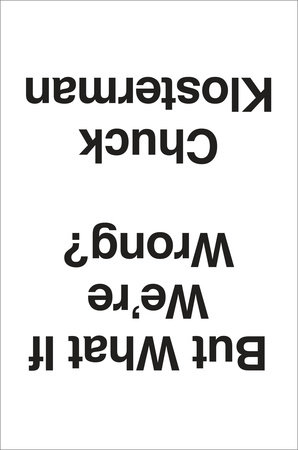
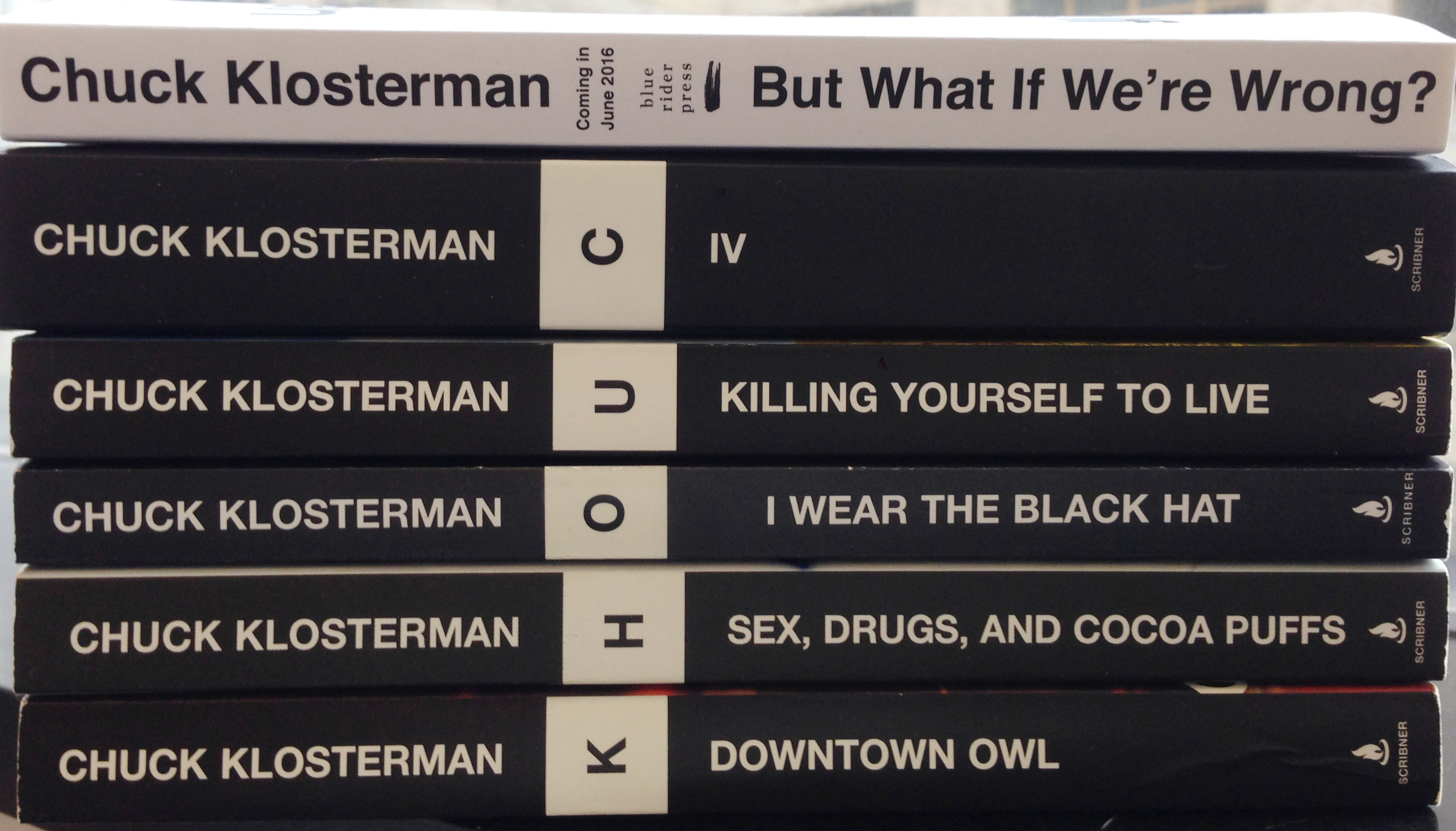 Chuck Klosterman is an author and essayist known for his books (Sex, Drugs, and Cocoa Puffs, Eating the Dinosaur, and Fargo Rock City, among others), and his columns and articles for GQ, Esquire, Grantland, Spin, and The New York Times Magazine. His newest book,
  Read more about But What If We’re Wrong? below.

 What have been some of your most rewarding achievements over the course of your career as a publisher?
Right from the beginning I wanted to publish books that made kids feel good and that made all kinds of kids feel represented. One of my early books at Viking was a picture book called I Like Me! by Nancy Carlson, about a confident pig, and I adored its message. When I became the publisher of Putnam in the mid-1990s, I signed up Jacqueline Woodson because I loved her extraordinary, lyrical voice, and I was thrilled when so many of her books won major awards. Her most recent picture book with E. B. Lewis,
What have been some of your most rewarding achievements over the course of your career as a publisher?
Right from the beginning I wanted to publish books that made kids feel good and that made all kinds of kids feel represented. One of my early books at Viking was a picture book called I Like Me! by Nancy Carlson, about a confident pig, and I adored its message. When I became the publisher of Putnam in the mid-1990s, I signed up Jacqueline Woodson because I loved her extraordinary, lyrical voice, and I was thrilled when so many of her books won major awards. Her most recent picture book with E. B. Lewis,