





 William E. Butterworth III was the #1 bestselling author of over 250 books, the majority of them published by G. P. Putnam’s Sons, with over 50 million copies in print in more than ten languages, including Hebrew, Chinese, Japanese, and Hungarian. As W.E.B. Griffin, he was the author of 61 epic novels in seven series: The Corps, Brotherhood of War, Badge of Honor, Men at War, Honor Bound, Presidential Agent, and Clandestine Operations. Known for his historical accuracy, richly drawn characters, thrilling adventure, crackling wit, and astute aptitude for the heart and mind of a military hero, Griffin delighted readers for decades with his electrifying novels about the military, police, spies, and counterspies. Under other pseudonyms, he wrote over 100 other books, both for adults and children, including twelve of the thirteen M*A*S*H novels.
He has been praised as “a writer of true virtuosity and talent” (Fort Worth Star-Telegram), “a truly impressive storyteller” (Midwest Book Review), and “unrivaled” in the realm of military fiction (Ralph Peters, author of Cain at Gettysburg and Lines of Fire). “If God is truly in the details, then Griffin must be the pop of police procedurals,” wrote Publishers Weekly. As The Philadelphia Inquirer put it simply, “Griffin has the knack.”
His passion for writing about the military and other branches of law enforcement carried him through his distinguished career. “Nothing honors me more than a serviceman, veteran, or cop telling me he enjoys reading my books,” he said.
W.E.B. Griffin grew up in the suburbs of New York City and Philadelphia. He began an illustrious military career in 1946, when he enlisted in the United States Army. After basic training, he received counterintelligence training at Fort Holabird, Maryland. He was assigned to the Army of Occupation in Germany and ultimately to the staff of then-Major General I.D. White, Commander of the U.S. Constabulary. In 1951, Griffin was recalled to active duty for the Korean War, interrupting his education at the Philipps University of Marburg an der Lahn, Germany.
Among his many awards for service, Griffin was the recipient of the 1991 Brigadier General Robert L. Dening Memorial Distinguished Service Award of the U.S. Marine Corps and the 1999 Veterans of Foreign Wars News Media Award, which was presented at the 100th National Convention in Kansas City. He has been vested into the Order of St. George of the U.S. Armor Association and the Order of St. Andrew of the U.S. Army Aviation Association.
A longtime resident of both Alabama’s Gulf Coast and Buenos Aires, Argentina, Griffin is survived by his four children, including son Bill Butterworth IV, his co-writer on 21 novels.
William E. Butterworth III was the #1 bestselling author of over 250 books, the majority of them published by G. P. Putnam’s Sons, with over 50 million copies in print in more than ten languages, including Hebrew, Chinese, Japanese, and Hungarian. As W.E.B. Griffin, he was the author of 61 epic novels in seven series: The Corps, Brotherhood of War, Badge of Honor, Men at War, Honor Bound, Presidential Agent, and Clandestine Operations. Known for his historical accuracy, richly drawn characters, thrilling adventure, crackling wit, and astute aptitude for the heart and mind of a military hero, Griffin delighted readers for decades with his electrifying novels about the military, police, spies, and counterspies. Under other pseudonyms, he wrote over 100 other books, both for adults and children, including twelve of the thirteen M*A*S*H novels.
He has been praised as “a writer of true virtuosity and talent” (Fort Worth Star-Telegram), “a truly impressive storyteller” (Midwest Book Review), and “unrivaled” in the realm of military fiction (Ralph Peters, author of Cain at Gettysburg and Lines of Fire). “If God is truly in the details, then Griffin must be the pop of police procedurals,” wrote Publishers Weekly. As The Philadelphia Inquirer put it simply, “Griffin has the knack.”
His passion for writing about the military and other branches of law enforcement carried him through his distinguished career. “Nothing honors me more than a serviceman, veteran, or cop telling me he enjoys reading my books,” he said.
W.E.B. Griffin grew up in the suburbs of New York City and Philadelphia. He began an illustrious military career in 1946, when he enlisted in the United States Army. After basic training, he received counterintelligence training at Fort Holabird, Maryland. He was assigned to the Army of Occupation in Germany and ultimately to the staff of then-Major General I.D. White, Commander of the U.S. Constabulary. In 1951, Griffin was recalled to active duty for the Korean War, interrupting his education at the Philipps University of Marburg an der Lahn, Germany.
Among his many awards for service, Griffin was the recipient of the 1991 Brigadier General Robert L. Dening Memorial Distinguished Service Award of the U.S. Marine Corps and the 1999 Veterans of Foreign Wars News Media Award, which was presented at the 100th National Convention in Kansas City. He has been vested into the Order of St. George of the U.S. Armor Association and the Order of St. Andrew of the U.S. Army Aviation Association.
A longtime resident of both Alabama’s Gulf Coast and Buenos Aires, Argentina, Griffin is survived by his four children, including son Bill Butterworth IV, his co-writer on 21 novels. W.E.B. Griffin: 1929-2019
It is with sadness that we share that prolific military fiction author William E. Butterworth III, known the world over as W.E.B. Griffin, died on Tuesday, February 12. He was 89.
William E. Butterworth III was the #1 bestselling author of over 250 books, the majority of them published by G. P. Putnam’s Sons, with over 50 million copies in print in more than ten languages, including Hebrew, Chinese, Japanese, and Hungarian. As W.E.B. Griffin, he was the author of 61 epic novels in seven series: The Corps, Brotherhood of War, Badge of Honor, Men at War, Honor Bound, Presidential Agent, and Clandestine Operations. Known for his historical accuracy, richly drawn characters, thrilling adventure, crackling wit, and astute aptitude for the heart and mind of a military hero, Griffin delighted readers for decades with his electrifying novels about the military, police, spies, and counterspies. Under other pseudonyms, he wrote over 100 other books, both for adults and children, including twelve of the thirteen M*A*S*H novels.
He has been praised as “a writer of true virtuosity and talent” (Fort Worth Star-Telegram), “a truly impressive storyteller” (Midwest Book Review), and “unrivaled” in the realm of military fiction (Ralph Peters, author of Cain at Gettysburg and Lines of Fire). “If God is truly in the details, then Griffin must be the pop of police procedurals,” wrote Publishers Weekly. As The Philadelphia Inquirer put it simply, “Griffin has the knack.”
His passion for writing about the military and other branches of law enforcement carried him through his distinguished career. “Nothing honors me more than a serviceman, veteran, or cop telling me he enjoys reading my books,” he said.
W.E.B. Griffin grew up in the suburbs of New York City and Philadelphia. He began an illustrious military career in 1946, when he enlisted in the United States Army. After basic training, he received counterintelligence training at Fort Holabird, Maryland. He was assigned to the Army of Occupation in Germany and ultimately to the staff of then-Major General I.D. White, Commander of the U.S. Constabulary. In 1951, Griffin was recalled to active duty for the Korean War, interrupting his education at the Philipps University of Marburg an der Lahn, Germany.
Among his many awards for service, Griffin was the recipient of the 1991 Brigadier General Robert L. Dening Memorial Distinguished Service Award of the U.S. Marine Corps and the 1999 Veterans of Foreign Wars News Media Award, which was presented at the 100th National Convention in Kansas City. He has been vested into the Order of St. George of the U.S. Armor Association and the Order of St. Andrew of the U.S. Army Aviation Association.
A longtime resident of both Alabama’s Gulf Coast and Buenos Aires, Argentina, Griffin is survived by his four children, including son Bill Butterworth IV, his co-writer on 21 novels.
William E. Butterworth III was the #1 bestselling author of over 250 books, the majority of them published by G. P. Putnam’s Sons, with over 50 million copies in print in more than ten languages, including Hebrew, Chinese, Japanese, and Hungarian. As W.E.B. Griffin, he was the author of 61 epic novels in seven series: The Corps, Brotherhood of War, Badge of Honor, Men at War, Honor Bound, Presidential Agent, and Clandestine Operations. Known for his historical accuracy, richly drawn characters, thrilling adventure, crackling wit, and astute aptitude for the heart and mind of a military hero, Griffin delighted readers for decades with his electrifying novels about the military, police, spies, and counterspies. Under other pseudonyms, he wrote over 100 other books, both for adults and children, including twelve of the thirteen M*A*S*H novels.
He has been praised as “a writer of true virtuosity and talent” (Fort Worth Star-Telegram), “a truly impressive storyteller” (Midwest Book Review), and “unrivaled” in the realm of military fiction (Ralph Peters, author of Cain at Gettysburg and Lines of Fire). “If God is truly in the details, then Griffin must be the pop of police procedurals,” wrote Publishers Weekly. As The Philadelphia Inquirer put it simply, “Griffin has the knack.”
His passion for writing about the military and other branches of law enforcement carried him through his distinguished career. “Nothing honors me more than a serviceman, veteran, or cop telling me he enjoys reading my books,” he said.
W.E.B. Griffin grew up in the suburbs of New York City and Philadelphia. He began an illustrious military career in 1946, when he enlisted in the United States Army. After basic training, he received counterintelligence training at Fort Holabird, Maryland. He was assigned to the Army of Occupation in Germany and ultimately to the staff of then-Major General I.D. White, Commander of the U.S. Constabulary. In 1951, Griffin was recalled to active duty for the Korean War, interrupting his education at the Philipps University of Marburg an der Lahn, Germany.
Among his many awards for service, Griffin was the recipient of the 1991 Brigadier General Robert L. Dening Memorial Distinguished Service Award of the U.S. Marine Corps and the 1999 Veterans of Foreign Wars News Media Award, which was presented at the 100th National Convention in Kansas City. He has been vested into the Order of St. George of the U.S. Armor Association and the Order of St. Andrew of the U.S. Army Aviation Association.
A longtime resident of both Alabama’s Gulf Coast and Buenos Aires, Argentina, Griffin is survived by his four children, including son Bill Butterworth IV, his co-writer on 21 novels. 


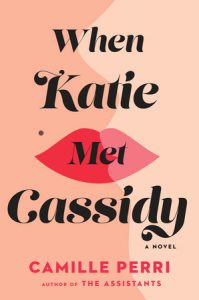 Camille Perri, author of the delightful new romantic comedy novel When Katie met Cassidy answered a few questions about New York, new love, and more.
So much loving detail is given to clothing in this novel – can you tell me a little about how you present your main characters?
I like clothes. I like fashion; particularly men’s fashion. Both my father and my grandmother on my mother’s side were tailors, so I think it’s in my blood. In terms of fiction writing, clothing serves as an efficient and fun method of characterization. You can not know a single thing about someone—a stranger who steps into a restaurant, let’s say—but their clothing tells you so much about them before they even open up their mouths to speak. Clothing reveals what a character is trying to project, as well as what they’re giving away about themselves without even realizing it: their socioeconomic class; their confidence level; their vulnerabilities.
For Cassidy, the clothing she chooses to wear is of utmost importance because it functions as a reflection of her gender identity. Everything she puts on has been curated. Her clothes are her armor. Katie, on the other hand, is always deliberating about what to wear. Depending on where she’s going and which version of herself she wants to accentuate, her clothing varies greatly. I think of Katie’s many costume changes as a reflection of the way she’s still trying on different versions of herself in this novel. She’s still searching for what feels right, which version of herself is the most authentic.
This book is such a joyful, fun depiction of two women falling in love – that’s still pretty rare. Are there any books or movies with romantic relationships that meant a lot to you?
My favorite lesbian romance of all time is the 1999 movie But I’m a Cheerleader, starring Natasha Lyonne and Clea DuVall. RuPaul is also in it, so is the brilliant Melanie Lynskey. It’s a satirical comedy about a cheerleader who is sent to conversion therapy camp to cure her lesbianism. It’s one of the smartest, funniest movies I’ve ever seen. The magic of this film is that it’s so much fun to watch as it tackles the complexity of hetero-normativity and the social construction of gender.
Do you have a favorite romantic comedy?
Everything Nora Ephron. My novel isn’t called When Katie Met Cassidy for nothing! But shh…my favorite Nora Ephron rom-com isn’t When Harry Met Sally—it’s You’ve Got Mail.
What I love about all of Ephron’s romantic comedies though is the way they’re more than just love stories. They also function as reflections of something specific going on in American culture at the time they were made. YGM, for example, is more than a simple feel-good story about two people in an online romance who are unaware that they’re business rivals. It’s also about how romance was changing with advances in technology, and how chains of mega bookstores were putting beloved independent shops out of business at alarming rates. I guess I like a little bit of social commentary with my romantic comedies. And nobody did that better than Nora Ephron.
Katie grew up pretty sheltered and has always thought of herself as straight. Why did you want someone new to dating women as one of your protagonists?
I liked the idea of someone who has never before been romantically attracted to a woman, and who’s never considered herself anything but straight and “normal,” to suddenly have to rethink her assumptions. Most of us who identify as LGBTQ at one time thought of ourselves as straight, too. That process of opening oneself up to a different path is very interesting to me and ripe for good storytelling.
Part of the issue for Katie, too, goes beyond her surprise at her attraction to Cassidy; it’s also that Katie is someone who very much needs to be liked. She yearns to be approved of. It’s difficult for her to risk upsetting her parents, or to accept that if she’s out with Cassidy, some people will look at her differently, in a way that may not be as approving as she’s accustomed to. That’s what I wanted to write about because part of coming to terms with being read as gay is adjusting to the fact that there will be some people out there who aren’t going to like you, no matter how hard you try, solely because of this one aspect of your personhood.
You previously worked as a books editor for Cosmopolitan and Esquire – what would surprise the average reader to know about that kind of job?
I think the average reader would be surprised by how many Readers with a capital “R” and book lovers work at those magazines. The people behind even the glossiest of magazines are, for the most part, smart and socially aware and many of them are doing their best to provide a service—a social good—even as they’re under a tremendous amount of pressure to put out a product that remains popular and profitable.
What novels have you especially loved lately?
I’ve enjoyed the recent hardcover releases The Wife by Alafair Burke; Sunburn by Laura Lippman; The Favorite Sister by Jessica Knoll, and in paperback, Julie Buntin’s Marlena.
You obviously have a lot of love for New York – are there any bars or restaurants that feel like home?
I’m big on coffee shops. Fortunately I live in Brooklyn where there are many to choose from. When I lived in Williamsburg, I basically lived in a coffee/pie shop called The Blue Stove. That’s were I wrote most of my first novel,
Camille Perri, author of the delightful new romantic comedy novel When Katie met Cassidy answered a few questions about New York, new love, and more.
So much loving detail is given to clothing in this novel – can you tell me a little about how you present your main characters?
I like clothes. I like fashion; particularly men’s fashion. Both my father and my grandmother on my mother’s side were tailors, so I think it’s in my blood. In terms of fiction writing, clothing serves as an efficient and fun method of characterization. You can not know a single thing about someone—a stranger who steps into a restaurant, let’s say—but their clothing tells you so much about them before they even open up their mouths to speak. Clothing reveals what a character is trying to project, as well as what they’re giving away about themselves without even realizing it: their socioeconomic class; their confidence level; their vulnerabilities.
For Cassidy, the clothing she chooses to wear is of utmost importance because it functions as a reflection of her gender identity. Everything she puts on has been curated. Her clothes are her armor. Katie, on the other hand, is always deliberating about what to wear. Depending on where she’s going and which version of herself she wants to accentuate, her clothing varies greatly. I think of Katie’s many costume changes as a reflection of the way she’s still trying on different versions of herself in this novel. She’s still searching for what feels right, which version of herself is the most authentic.
This book is such a joyful, fun depiction of two women falling in love – that’s still pretty rare. Are there any books or movies with romantic relationships that meant a lot to you?
My favorite lesbian romance of all time is the 1999 movie But I’m a Cheerleader, starring Natasha Lyonne and Clea DuVall. RuPaul is also in it, so is the brilliant Melanie Lynskey. It’s a satirical comedy about a cheerleader who is sent to conversion therapy camp to cure her lesbianism. It’s one of the smartest, funniest movies I’ve ever seen. The magic of this film is that it’s so much fun to watch as it tackles the complexity of hetero-normativity and the social construction of gender.
Do you have a favorite romantic comedy?
Everything Nora Ephron. My novel isn’t called When Katie Met Cassidy for nothing! But shh…my favorite Nora Ephron rom-com isn’t When Harry Met Sally—it’s You’ve Got Mail.
What I love about all of Ephron’s romantic comedies though is the way they’re more than just love stories. They also function as reflections of something specific going on in American culture at the time they were made. YGM, for example, is more than a simple feel-good story about two people in an online romance who are unaware that they’re business rivals. It’s also about how romance was changing with advances in technology, and how chains of mega bookstores were putting beloved independent shops out of business at alarming rates. I guess I like a little bit of social commentary with my romantic comedies. And nobody did that better than Nora Ephron.
Katie grew up pretty sheltered and has always thought of herself as straight. Why did you want someone new to dating women as one of your protagonists?
I liked the idea of someone who has never before been romantically attracted to a woman, and who’s never considered herself anything but straight and “normal,” to suddenly have to rethink her assumptions. Most of us who identify as LGBTQ at one time thought of ourselves as straight, too. That process of opening oneself up to a different path is very interesting to me and ripe for good storytelling.
Part of the issue for Katie, too, goes beyond her surprise at her attraction to Cassidy; it’s also that Katie is someone who very much needs to be liked. She yearns to be approved of. It’s difficult for her to risk upsetting her parents, or to accept that if she’s out with Cassidy, some people will look at her differently, in a way that may not be as approving as she’s accustomed to. That’s what I wanted to write about because part of coming to terms with being read as gay is adjusting to the fact that there will be some people out there who aren’t going to like you, no matter how hard you try, solely because of this one aspect of your personhood.
You previously worked as a books editor for Cosmopolitan and Esquire – what would surprise the average reader to know about that kind of job?
I think the average reader would be surprised by how many Readers with a capital “R” and book lovers work at those magazines. The people behind even the glossiest of magazines are, for the most part, smart and socially aware and many of them are doing their best to provide a service—a social good—even as they’re under a tremendous amount of pressure to put out a product that remains popular and profitable.
What novels have you especially loved lately?
I’ve enjoyed the recent hardcover releases The Wife by Alafair Burke; Sunburn by Laura Lippman; The Favorite Sister by Jessica Knoll, and in paperback, Julie Buntin’s Marlena.
You obviously have a lot of love for New York – are there any bars or restaurants that feel like home?
I’m big on coffee shops. Fortunately I live in Brooklyn where there are many to choose from. When I lived in Williamsburg, I basically lived in a coffee/pie shop called The Blue Stove. That’s were I wrote most of my first novel, 


