
Tag Archives: historical fiction

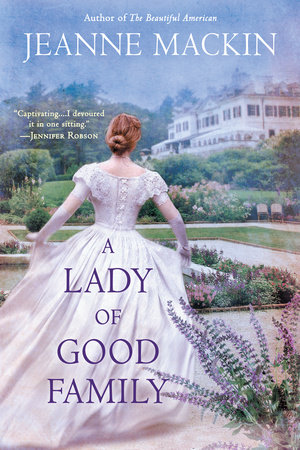
From the Editor’s Desk: Ellen Edwards, executive editor at NAL, on A Lady of Good Family by Jeanne Mackin

Editors get very passionate about books they work on – the Editor’s Desk series is his or her place to write in-depth about what makes a certain title special. Get the real inside-scoop on how books are shaped by the people who know them best. Two years ago, Jeanne Mackin had finished her first novel for NAL and was casting about for a new subject. In The Beautiful American, Jeanne had written about Vogue model/photographer Lee Miller, a lover of surreal artist Man Ray in 1930s Paris and the first woman to photograph the Nazi concentration camps after their liberation, and she was looking for another historical figure with artistic associations. One name came to my mind. I had recently visited the Bronx Botanical Gardens and spent time in the Peggy Rockefeller Rose Garden, designed by Beatrix Farrand. I’d learned that although the garden wasn’t created until the 1980s, Beatrix Farrand designed it in 1916. And somewhere I’d read that Beatrix was also a niece of Edith Wharton. Gardens and books—the combination certainly appealed to me, and I was delighted to learn that it appealed to Jeanne as well. “You know I wrote the Cornell book on herbs and flowers,” she told me. I hadn’t known, but we both felt she’d found her subject. Finding the story wasn’t nearly as easy. Jeanne called me, lamenting, “Beatrix led such a normal, responsible life. Where’s the conflict? How do I make her interesting?” I encouraged her as best I could, but Jeanne found a solution that went far beyond anything I could have imagined. Instead of writing a straightforward fictional biography, she borrowed a narrative style from Henry James, who was also a close friend of Beatrix, and created a narrator named Daisy (ring any bells?) who tells a small but crucial portion of Beatrix’s life story through the lens of her own experience. For good measure, Jeanne includes a ghost, inspired by James’s The Turn of the Screw. In fact, there is more than one ghost. And Jeanne writes a love story for the young Beatrix, despite Beatrix having been known in her early years for ignoring the strong expectation that she marry and instead pursuing a career—something that women, especially women of her class, never did. A Lady of Good Family is a beguiling narrative with echoes of novels by Wharton and James that explores relationships between mothers and daughters, husbands and wives, and art and artists during a time of great change for women. Like Willa Cather’s The Song of the Lark, it is also the story of a woman finding the courage to defy convention and follow her true passion; and of the forces that shape her as both a creative artist and as a woman. Set in Europe and New York during the Gilded Age and the early 20th century, A Lady of Good Family brings Beatrix Farrand to full and vibrant life, and proves that in the hands of a talented writer, even someone with a “normal, responsible life” can become utterly compelling. And now I have had the pleasure of visiting some of the gardens that Beatrix designed. I especially recommend Dumbarton Oaks, just outside Washington, DC. And, of course, the Peggy Rockefeller Rose Garden in our own backyard. Read more about A Lady of Good Family here.

A letter to the reader from Penguin Press President, Ann Godoff on The Last Bookaneer

Dear Reader, Here’s how Matthew Pearl describes his search for a good story that inhabits the environs he calls “gray-area history”: “A few years ago I stumbled on a stray detail indicating that century publishers would hire agents to obtain valuable manuscripts that were fair game under the laws. Because of their shadowy place in history, I could not find much else about this group, but I was intrigued. Building on this fragment of legal and publishing history, I tried imagining more fully these freelance bounty hunters – the history of their profession, what they might be called on to do, who they were, their backgrounds, how their lives would bring them to this unusual profession and how the profession would shape their personal lives. As far as historical fiction goes, it fit one of my ideals: a bit of gray-area history that cannot be explored very far without the help of fiction. In this case, it seemed to me to call for informed speculation – what I’d refer to as research-based fiction – plus plenty of imagination.” The result is […] The Last Bookaneer. Matthew has performed this kind of historical fiction sleight of hand successfully before with Dickens and Dante; now he turns to Robert Louis Stevenson living in Samoa in the midst of writing his last book. As always his history is dead-on, when Matthew writes about real characters, there are no gray areas. But in The Last Bookaneer, it’s his fictional characters- the literary pirate Pen Davenport and his assistant Edgar, that bring the chain-smoking, gone-native, near deified-by-the-locals-in-Samoa Stevenson to life. I feel sure you’ll get lost in the world Matthew Pearl conjures. What more can a reader ask? Sincerely, Ann Godoff Penguin Press President, Editor in Chief

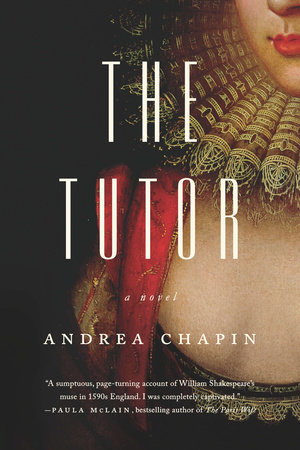
Writing Tips from Andrea Chapin, author of The Tutor

How would you recommend creating and getting to know your characters? I write historical fiction—some of my characters are based on real-life people, while others are invented. But the process of developing who they are is very similar for both the fact-based and the fictional characters. When I began The Tutor, I did a minimal amount of research because I didn’t want the history, the facts, to get in the way of the story. As the novel progressed I did a tremendous amount of research, but at the start I was interested in developing the dynamics between my main characters, how they reacted to each other—so I hurled them into situations where their dialogue and their actions began to convey their personalities, their likes and dislikes, their anxieties and obsessions. I wrote the first fifty pages this way, so that I got to know my characters before I started soaking them with the actual history of the times. For all my characters, I bring traits of people I know, including myself. But sometimes, and this is the alchemy of the art, I don’t even realize who I’ve brought in, what ghosts from my past I’ve conjured in creating these characters, until I’ve finished writing. Is there something you do to get into a writing mood? Somewhere you go or something you do to get thinking? Over the years I’ve learned that for me there are no special places I go and no special things I do to get into the mood to write: I just sit down and make myself do it. Sometimes it’s easy and sometimes it’s very hard. There is a wonderful magic that often comes with the process of writing—the sentences or moments that seem to come out of nowhere and light up the page—but I don’t think there’s any magic to the act of sitting down to do it. You have to stay at it and feel as though you are stuck to that chair with Velcro. I guess I’m afraid that if I have to go to a special place or do a special thing in order to write then the process will become precious, even fetishized, and that I will lose the natural, organic impulse. I can work with kids running around me, dogs barking, piles of laundry undone, dinner waiting to be made, bills waiting to be paid, or I can work while I’m alone and there is peace and quiet. Did you always want to write? How did you start your career as an author? My first “novel” was a mystery called, well, The Mystery of the Green Glass. I wrote it in third grade, longhand, on thick yellow paper with a thick pencil. I wish I had that copy now! My third-grade teacher launched a literary magazine for her students to publish poems, short stories, and art. This was way back before computers were ever used in schools or were ever used at all. We painstakingly wrote and drew everything on mimeograph paper and then printed out copies on the mimeograph machine in the school office. I started my mystery “novel” for that magazine, and then I just kept on going. I remember the satisfaction I felt as the stack of yellow paper grew on my desk. A few years later, my stories became more personal: I’d sit on the basement stairs of our house, in the dark, and in my head I’d write very autobiographical accounts of all the dysfunctional things that were going on with my family. Decades later, after I’d published journalism and a few short stories, it was returning to my autobiographical voice and then publishing memoir pieces and personal essays that truly enabled me to find my voice and to launch my career as a writer. What’s the best piece of advice you have received? Stop talking about how you’re going to write—sit down and do it! Because the real learning starts when you commit yourself to putting the words down on the page. What clichĂ©s or bad habits would you tell aspiring writers to avoid? Do you still experience them yourself? For writing novels: I think it’s very important to get through the first draft before you start extensive rewriting and revising. It’s hard to know what that first chapter or those first several chapters need to be until you’ve gotten to the end of your story. I remember I wrote a novel in graduate school, and years later I looked at all the drafts of the first chapter that I’d labored over–draft after draft after draft where I tried to incorporate all the comments from my workshops and all my neurotic insecurities about a word or a sentence or tense (past or past perfect, etc.). I think I wrote at least twenty drafts of that first chapter. When I looked at them again, years later, I realized they were all pretty much the same and that I’d been like a cat licking the same patch of fur over and over again. I could have written a draft of the whole book in the time that it took me to rewrite that first chapter so many times. Learn more about The Tutor here.

Writing Tips from Elizabeth Berg, author of The Dream Lover

We know readers tend to be writers too, so twice a month, we’ll feature writing tips from our authors. Who better to offer advice, insight, and inspiration than the authors you admire? They’ll answer several questions about their work, share their go-to techniques and more. Now, get writing! 

Do you ever base characters on people you know?

All the time! And I think you’d be hard-pressed to find a writer who wouldn’t say the same thing. But. Even if you do base a character on a person you know, that person becomes changed in small or large ways to accommodate the story you are trying to tell. So in the end, a real person becomes a made-up person. That’s the way it works for me in fiction, anyway.

How would you recommend creating and getting to know your characters?

For some writers, characters just come to them, though they are usually vague at first, ill formed.  As the writer keeps on with the story,  the characters reveal more and more about themselves.

There are times, though, when a character comes out of nowhere, fully formed; I love when that happens. HOW it happens, I have no idea. It’s like finding a four- leaf clover.

Some writers are very meticulous about keeping notebooks, compiling details that will go into making up a character, and so by the time they start writing, the character is pretty much determined: how he looks and acts and says is less of a surprise.

If you want to write, you need to find out what methods work best for you. It’s always best for me when it’s FUN writing a character, even the obnoxious ones–in fact, the obnoxious ones might be the most fun to write.

How is writing historical fiction different from other fiction?

I think what’s most important in historical fiction is that it feels like the story is actually taking place in whatever time you set it. People need to talk a certain way, have certain ways of doing things, have certain expectations of each other, certain moral codes. Clothes need to be right. Food. The political and social climate. You take on a lot of responsibility when you write historical fiction. You have a contract with a reader that you will take them somewhere else in time; you don’t want them feeling like they’re seeing behind the curtain. It’s much harder than contemporary fiction!

Is there something to do to get in the writing mood?

Yes. Write.

I don’t mean to sound flip with this answer. It seems to be true that if you just get that first sentence down, another will want to follow. That said, I’m almost always in the mood to write; it’s what I love doing most. I think if writing is an awful chore for you, if you have to trick yourself into sitting down and putting down lines, you might be better off in another line of work. Even if you’re a good writer, if you don’t like doing it, what’s the point?

What is your writing style, in five words or less?

Intimate.

Read more about The Dream Lover here.