
Tag Archives: nonfiction

Essential Reading: The New York Times Notable Books of 2015

It’s been a great year for books! In 2015 we’ve published some truly illuminating and perspective-shifting nonfiction. Take a look at the ones the New York Times Book Review deem among the best of the year. Between the World and Me by Ta-Nehisi Coates Forget, for a moment, the ubiquitous comparisons to James Baldwin: Though fitting in many ways, they can distract us from how original Coates’s book truly is. Structured as a letter to his teenage son, this slender, urgent volume — a searching exploration of what it is to grow up black in a country built on slave labor and “the destruction of black bodies” — rejects fanciful abstractions in favor of the irreducible and particular. Coates writes to his son with a clear-eyed realism about the beautiful and terrible struggle that inheres in flesh and bone. Empire of Cotton: A Global History, by Sven Beckert If sugar was the defining commodity of the 18th century and oil of the 20th, then surely cotton was king in the 19th century. In this sweeping, ambitious and disturbing survey, Beckert takes us through every phase of a global industry that has relied on millions of miserably treated slaves, sharecroppers and millworkers to turn out its product. The industrialization of cotton rested on violence, Beckert tells us, and its story is that of the development of the modern world itself. Even today, he reports, an industry that is always looking for cheaper labor is engaged in a “giant race to the bottom.” The Invention of Nature: Alexander von Humboldt’s New World by Andrea Wulf Alexander von Humboldt may have been the pre-eminent scientist of his era, second in fame only to Napoleon, but outside his native Germany his reputation has faded. Wulf does much to revive our appreciation of this ecological visionary through her lively, impressively researched account of his travels and exploits, reminding us of the lasting influence of his primary insight: that the Earth is a single, interconnected organism, one that can be catastrophically damaged by our own destructive actions. Once more, congratulations to all the Adult and Children’s authors and their publishers, who are recognized by the Book Review on their year-end lists. Click here for the complete list. If you’re looking for a gift for the holidays, check out our guide here.

Bookspotting: Sarah is reading We Should All be Feminists by Chimamanda Ngozi Adichie

Ever wonder what Penguin Random House employees are reading? We’re a bunch of professionally bookish people, so you can always count on us to have a book on hand… or thirty piled on our desks. Our Bookspotting feature shows off the range of readers behind the scenes at Penguin Random House.   sarahc copy Sarah, in web design, is reading We Should All be Feminists by Chimamanda Ngozi Adichie. Show us what you’re reading by using the #bookspotting hashtag!  
Congratulations to the National Book Award Winners and Finalists!

The 2015 National Book Award winners were announced last evening. Today we celebrate the winners and the finalists, all of whom wrote groundbreaking, touching, beautiful books. Adam Johnson, author of Fortune Smiles, a collection of stories, won the prize for Fiction. National Book Foundation: In the process of writing your book, what did you discover, what, if anything, surprised you? adam Johnson: Because I research a lot, the surprising joy of discovery is always central to my writing. I love to fashion entire worlds in my stories—these I try to adorn with details gleaned from the real world and the emotions of life lived. In researching the title story, for example, I was both troubled and inspired to hear North Korean defectors describe the regime-sponsored crimes they had to participate in. It wasn’t until I’d delivered hundreds of UPS packages in the Louisiana heat that I knew where my character in “Hurricanes Anonymous” would sleep that night. And it’s not until you descend to the lower levels of a Stasi prison that you begin to understand what must exist at the heart of a story like “George Orwell Was a Friend of Mine.” Start reading an excerpt here. Ta-Nehisi Coates, author of Between the World and Me, won the prize for Nonfiction. coates National Book Foundation: In the process of writing your book, what did you discover, what, if anything, surprised you? Coates: I discovered how hard it was to make the abstract into the something visceral. My goal was to take numbers and stats and make people feel them with actual stories. It was to take scholarship and make it literature. Start reading an excerpt of the book here. See Coates read in a video here. Robin Coste Lewis, author of Voyage of the Sable Venus, won the prize for Poetry.  robin “Robin Coste Lewis’s electrifying collection is a triptych that begins and ends with lyric poems considering the roles desire and race play in the construction of the self. The central panel is the title poem, “Voyage of the Sable Venus,” a riveting narrative made up entirely of titles of artworks from ancient times to the present—titles that feature or in some way comment on the black female figure in Western art. Bracketed by Lewis’s autobiographical poems, “Voyage” is a tender and shocking study of the fragmentary mysteries of stereotype, as it juxtaposes our names for things with what we actually see and know” – National Book Foundation  Be sure to check out the winning books below, and discover your next award-winning read!  
Bookspotting: Sarah is reading It Was Me All Along by Andie Mitchell

Ever wonder what Penguin Random House employees are reading? We’re a bunch of professionally bookish people, so you can always count on us to have a book on hand… or thirty piled on our desks. Our Bookspotting feature shows off the range of readers behind the scenes at Penguin Random House.   sarah Sarah, in web design, is reading It Was Me All Along by Andie Mitchell Show us what you’re reading by using the #bookspotting hashtag!  

Bookspotting: Shelby is reading The Orientalist

Ever wonder what Penguin Random House employees are reading? We’re a bunch of professionally bookish people, so you can always count on us to have a book on hand… or thirty piled on our desks. Our Bookspotting feature shows off the range of readers behind the scenes at Penguin Random House.   shelby Shelby, in the online marketing group, is reading The Orientalist by Tom Reiss. Show us what you’re reading by using the #bookspotting hashtag!    

Writing Tips from David Jaher, author of “The Witch of Lime Street”

We know readers tend to be writers too, so we feature writing tips from our authors. Who better to offer advice, insight, and inspiration than the authors you admire? They’ll answer several questions about their work, share their go-to techniques and more. Now, get writing!  After developing an idea, what is the first action you take when beginning to write? Research everything. I’m a nonfiction writer so after conceiving a chapter, I like to have every pertinent date and quote at hand so that there is no distraction—no source material to obtain— from staying in the flow. Is there something you do to get into a writing mood? Somewhere you go or something you do to get thinking? Many of my favorite authors were alcoholics, but I’ve always thrived on healthier forms of prewriting stimulation—bike riding, running, yoga. Having a clear head and listening to music puts me in the writing mood as does being just a little tired. Maybe it was because I was writing about ghosts and magic, but I always felt most imaginative at night. And I usually do my best work at home. Did you always want to write? How did you start your career as an author? I attended Graduate Film School at NYU and anticipated a career in film production. Later I did have a book idea and queried a literary agent, Tina Bennett, on a proposal related to astrology, which I was practicing professionally while trying to get my film projects off the ground. In the course of our communication, I also mentioned a screenplay I was developing about Houdini’s rivalry with a controversial Jazz age medium. She was thrilled with that story, which became the basis for The Witch of Lime Street, my first book. What’s the best piece of advice you have received? “Every word should mean something.” What clichĂ©s or bad habits would you tell aspiring writers to avoid? Do you still experience them yourself? Any serious writer should read everything, particularly by those authors with whom you identify, but William Faulkner once said of Shelby Foote that he only became a successful writer when he stopped trying to be Faulkner and started being Foote. Read more about The Witch of Lime Street here.

Q&A with Publisher Tim Duggan

Get to know the newest Penguin Random House imprint! Tim Duggan Books was founded in 2014 and is committed to the highest standard of storytelling across a range of genres. Our list of books is small, select, and curated from both well-established and brand new authors, including Eric Schlosser, Timothy Snyder, Emily Barton, Michael Kinsley, Yasmine El Rashidi, and Colin Jost. The imprint is dedicated to publishing books of quality, accuracy, elegance, and vision, and to authors who take risks and tell singular stories. Read on for an interview with Tim Duggan about this exciting new imprint.  What do you look for in the books and authors that you acquire? The first thing I usually look for in a book is the voice, which hopefully has energy and confidence and personality, and not a whiff of pretension. You can usually tell from the first page whether an author’s writing feels genuine and fresh and powerful, and whether there’s a real sense of urgency there, as if the author almost had no choice but to write this book. So in that sense I’m drawn toward books that somehow feel essential, by authors who are driven by a passion that probably borders on obsession, no matter what the genre is. For an author, that’s something you can’t manufacture, and for an editor, that’s the gold standard, and it’s a big part of what I’m looking for. In what way do you think Tim Duggan books aligns with the Crown publishing group? I’ve been incredibly impressed, long before I came here, with the way Crown has been publishing its books, from marketing, publicity, and sales to art, design, and production. There’s a wide variety of imprints, all of which struck me as very focused and backed by clever campaigns and extraordinary attention to detail. My imprint is small, selective, and idiosyncratic, so I feel I have plenty of room here to pursue what I want to pursue, while tapping into the deep pool of knowledge and resources that Crown is known for. It turned out to be a really easy and natural fit.
Tim Duggan
Tim Duggan
  What has been the hardest part of launching your own imprint? Ask me in a month! Truth be told, the first year has been totally exhilarating and fun, and part of that is probably a result of the fact that I’ve been doing more acquiring and editing at this point than anything else. That will change this fall when the first books hit the market, which I’m looking forward to. So I’m not even sure that starting an imprint is the hard part – but maintaining it and keeping up the momentum surely will be. Has it always been a goal of yours to launch your own imprint, or did it come about more organically? It came about pretty organically, in that I’ve always thought that having a little imprint within a much bigger organization would be the best of both worlds, which is definitely how this feels. I wanted to have a small list with a wide range, which comes out to about ten books a year, half fiction and half nonfiction, including memoir, humor, science, and poetry. My sense is that the whole publishing marketplace, from authors and agents to critics and booksellers, has been really supportive of small imprints like this one, which helped pave the way for me and made it a little less daunting – just knowing that even though I’m on my own, there are others out there who’ve done this and done it really well. Not to mention that once I got here and saw the level of support I had from my colleagues, it actually felt a lot less like I was on my own. Check out the new books from the Tim Duggan imprint:  Learn more about the imprint here.

4 National Book Award Fiction Semi-Finalists Join 9 Other Penguin Random House Longlisters

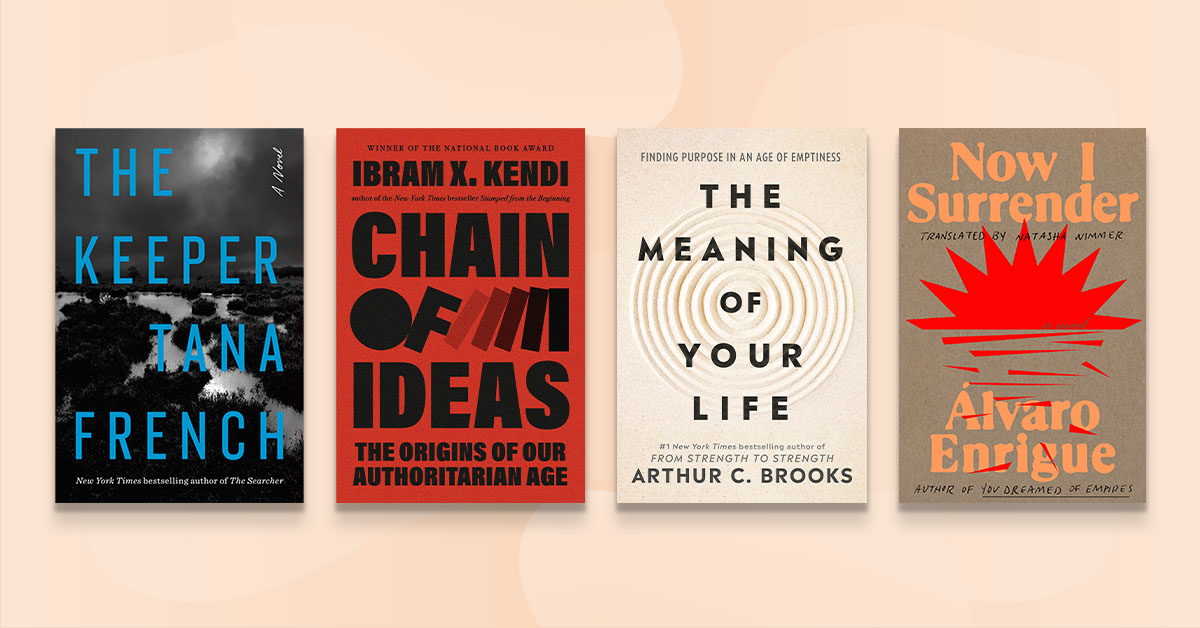
The 2015 National Book Award Fiction Longlist was unveiled this morning, with four Penguin Random House titles recognized as semi-finalists: Earlier this week, these Penguin Random House books were selected for their respective National Book Award Longlists. Nonfiction Poetry Head to nationalbook.org to browse all the finalists.

In Memoriam: Dr. Oliver Sacks

Dr. Oliver Sacks died early Sunday morning at his home in New York City.  He was 82.  Knopf Doubleday PG, his publisher, said:  “Oliver was a doctor, scientist, swimmer, teacher, and writer, and it was our joy and privilege to publish him. We all mourn his passing.” Oliver Sacks: ”I cannot pretend I am without fear. But my predominant feeling is one of gratitude. I have loved and been loved; I have been given much and I have given something in return; I have read and traveled and thought and written. I have had an intercourse with the world, the special intercourse of writers and readers.  Above all, I have been a sentient being, a thinking animal, on this beautiful planet, and that in itself has been an enormous privilege and adventure.” You can browse through Dr. Sacks’ books here.

What Should I Read on Vacation? Penguin Random House employees share their picks

Heading to the beach in the dog-days of summer? Taking some time off to unwind and catch up on your reading? Penguin Random House employees never go on vacation without a good book – see below to learn what professional book-people read on their off-time. Kristen Fritz, Senior Director, Content Marketing, Digital Marketplace Her vacation read: The Narrow Road to the Deep North by Richard Flanagan
Guatemala
The view from my reading spot in San Marcos La Laguna, Guatemala

“As I was situated along the shore of the soothing, somewhat eerie, very magical Lake Atitlan in Guatemala for a week last spring, Richard Flanagan’s 2014 Man Booker-winning novel, The Narrow Road to the Deep North, proved to be the kind of book in which I got deeply lost while silently willing the world to stay away and let me read.”

Lindsay Jacobsen, Senior Coordinator, Consumer Engagement  Her vacation read: Is Everyone Hanging Out Without Me? (And Other Concerns)

“Sometimes you begin a book on vacation and find that the story doesn’t match your destination. The book, Is Everyone Hanging Out Without Me? (And Other Concerns) by Mindy Kaling was the perfect companion on my trip to Ocho Rios, Jamaica. Her sparkly-eyed dreams of fame and materialism seamlessly complement a self-serving Caribbean beach getaway. While hanging out with Mindy, I laughed and I cried. I read out loud to no one. I used the book as protection from the sun. I was so enthralled, I even neglected my piña colada.”

Nancy Sheppard, Vice President, Director, Advertising and Promotions, Penguin Publishing Group Her vacation read: The Magicians, by Lev Grossman The Magicians

“Here I am with the great staff at City Lit Books while on vacation in my old neighborhood, Logan Square in Chicago. I was there handselling my favorite vacation read, The Magicians by Lev Grossman, in paperback!”

  Check out all our bestsellers to find more vacation-reading inspiration!