

Tag Archives: novel

From the Editor’s Desk: Kate Seaver, Executive Editor at Berkley, on Sunshine Beach by Wendy Wax

Editors get very passionate about books they work on – the Editor’s Desk series is his or her place to write in-depth about what makes a certain title special. Get the real inside-scoop on how books are shaped by the people who know them best. All year a stack of books sits on my bedside tale. Books I’m reading and ones I can’t wait to start. In the summer my weekend bag replaces my bedside table and the book choices shift to include more beach reads, fun, uplifting stories that often take place in locations I’d love to visit. Wendy Wax’s Sunshine Beach is such a book. Set in Florida, it’s part of a series of books that feature three women whose lives were upended when they lost their life savings in a Ponzi scheme. To make a living they banded together to renovate old houses. Wendy first introduced these characters in her novel Ten Beach Road. Avery, Maddie, and Nikki were strangers who took on the challenge of restoring a ramshackle, beachfront house to recoup the money they’d been cheated out of. Avery’s marriage had ended, Maddie was trying to keep her family together and Nikki was a business woman who’d lost everything—each story captivated me and it was fascinating to watch the women become best friends and renovate an older house. Without actually having to lift a hammer, I learned how to refinish floors and refurbish a chandelier. Wendy’s gutsy, funny, and very real characters resonated strongly with readers and encouraged Wendy to return to that beloved world for two more novels, Ocean Beach and The House on Mermaid Point. In each book we learn more about the three friends as their lives evolve and they fix up a new property. In Sunshine Beach, the three friends gather in the house they renovated in Ten Beach Road and embark on the challenge of restoring an old seaside hotel just down the beach from them. They also face major life changes. Maddie’s second-chance romance with her all-too-famous new boyfriend gets complicated, Avery struggles with grief over the loss of her mother, and Nikki’s reluctance to commit to the man who loves her could lead her to face the biggest challenge of her life. Even the hotel seems to be against them, when their renovation uncovers a decades-old unsolved murder which might bring their lives tumbling down again
 I love these women—their stories are compelling and their friendships inspiring. Each evening, no matter how hard the day has been, they gather on the beach with drinks and appetizers (including Avery’s beloved Cheez Doodles) to say the one good thing that happened that day. It’s an appealing ritual, and I invite you to add Sunshine Beach to your weekend bag and join Avery, Maddie and Nikki on the beach. It’ll prove to be the perfect summer escape. Learn more about Sunshine Beach below!
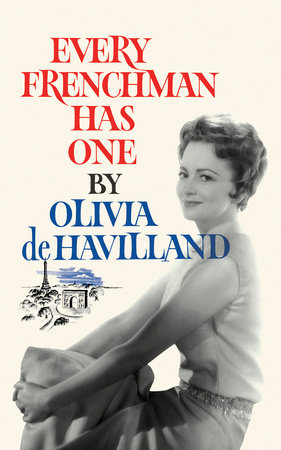
From the Editor’s Desk: Matt Inman, Senior Editor for Crown Trade on Every Frenchman Has One by Olivia de Havilland

Editors get very passionate about books they work on – the Editor’s Desk series is his or her place to write in-depth about what makes a certain title special. Get the real inside-scoop on how books are shaped by the people who know them best. On a recent Saturday morning, I glanced over at my iPhone and saw the words “O de Havilland” light up my screen. A new e-mail had arrived from Paris, where Olivia de Havilland was pondering a question I’d posed earlier that week (“In the past, you’ve referred to the guiding philosophy behind Parisian style as ‘the Paris principle;’ in your opinion, what are the key tenets of that principle?”) That I was discussing the timeless style of les parisiennes with the two-time Academy Award-winning actress who played Mellie Hamilton in Gone with the Wind (1939), while I, myself, was wearing sweaty tennis clothes and watching “Unbreakable Kimmy Schmidt,” now strikes me as a little, well, dĂ©classĂ©. But even if the details of this exchange are a little embarrassing, the story of how our paths crossed perfectly captures two aspects I love about my job: discovery and serendipity. About a year ago, I read a fascinating article about Olivia de Havilland’s groundbreaking 1944 lawsuit against Warner Bros. and found myself wanting to know more. I love reading about Hollywood’s Golden Age—and have always admired Miss de Havilland’s work—and I assumed that she’d already written about her extraordinary life and career. After a little searching, I was surprised to learn that while she had written a book, it was a 1962 memoir about falling in love with a Frenchman and moving to Paris. That book, Every Frenchman Has One, was long out of print and very expensive to buy online, so I went to the New York Public Library to check it out. As I read, I found myself laughing out loud at her witty, candid, and completely charming stories about her skirmishes with French customs, French maids, French salesladies, French holidays, French law, French doctors, and above all, the French language. A Francophile myself, I’d recently seen the Broadway staging of An American in Paris, and was surprised that such a wonderful book about Americans in Paris—and the lessons we can learn from the French—was so difficult to find. But as I read further, I realized that Every Frenchman Has One was about something much more profound. In her own way, Olivia de Havilland was quite brave, not only to drop everything; leave Hollywood behind; and take a chance on life, and love, in a new country, but to write so honestly about her bumpy ride as an expatriate. More than fifty years before Scarlett Johansson and Natalie Portman married Frenchmen and moved to Paris and long before celebrities revealed every detail of their lives to their followers via social media, de Havilland was sharing her gaffes and insecurities with her fans, saying, yes, even glamorous women can be embarrassed every once in a while; it’s the price one pays for trading comfort for change. More than anything, though, I was struck by Miss de Havilland’s wonderful writing. It exudes an effortless, timeless charm that makes it as appealing today as it was in 1962. Upon returning to the office, I learned Bennett Cerf himself had reverted the rights to Olivia in 1971, and so began my journey toward e-mailing with Olivia de Havilland about all things French on the eve of her 100th year. I’m thrilled that Crown Archetype will put Every Frenchman Has One back in print for the first time in decade—and publish it as an e-book for the first time—on June 28th. I’ve also had the great honor of corresponding with Olivia on a series of questions and answers that reflect on the book, and on her sixty-plus years as an American woman in Paris. They are delightful, and will appear as a postscript to this new edition. (Her answer to my original question about her philosophy of Parisian style, by the way: “1. Discretion, 2. Discretion, 3. Discretion.”). With this reissue, I’m excited to have even a small part in celebrating the centennial birthday of one of Hollywood’s greatest stars on July 1. I hope that anyone who loves Olivia de Havilland, Paris, or stories about Americans abroad will enjoy her book as much as I did. Learn more about Every Frenchman Has One below!

From the Editor’s Desk: Peter Gethers, President, Random House Studio and Senior Vice President, Editor at Large Penguin Random House on Sweetbitter by Stephanie Danler

Editors get very passionate about books they work on – the Editor’s Desk series is his or her place to write in-depth about what makes a certain title special. Get the real inside-scoop on how books are shaped by the people who know them best. There are several things that are most thrilling to a book editor. First and foremost is the discovery of true talent. Everything else extends from that. Next on the list is when other people throughout the company respond to that talent positively and excitedly. When strong enough, that response not only becomes electric, it becomes unstoppable. At its most exciting it becomes a tidal wave of appreciation for a book or a writer. Next, of course, is the validation that comes from a wider audience – The bookstore buyers, managers and sales people and then, finally, actual real people who make the final judgment on the book. Over the course of my lengthy career, I have brought in a lot of great talent and some major stars. That is satisfying in its own right. But it does not compare to the discovery of a writer who is fresh, unknown, who is to be revealed. I have never seen a response to an unknown talent like the one I have seen for Stephanie Danler’s Sweetbitter. It started with my read where, after only 20 pages, I realized I was not just reading a well-written novel, I was reading something special, spectacular. Claudia Herr, who became the line editor and helped shape and refine the novel with Stephanie, was the next reader and the first person to come into my office. She was, literally, trembling and said she had never been so excited after reading a submission. We went about trying to build a consensus but we did not have to try very hard. The manuscript swept through Knopf, through all the layers and every department. Never before had I gotten emails or phone calls saying things such as, “You must buy this book,” or “We have to publish this!” We met with the author and Ms. Danler was at least as impressive as her wonderful prose. Although there are obvious autobiographical elements in her first novel it was immediately clear that she had many more books in her ­ she was an author, not just someone who had written a terrific first novel. The thrill has continued every step of the way. The wild enthusiasm within the Knopf group turned into equally strong support from reviewers and bookstores and consumers. Right from the beginning, we thought that Stephanie Danler had written a novel that had a chance to become iconic, to really be that over-used clichĂ©: “the voice of a generation.” It is starting to look as if we all might be right. What did we see in this book from the moment the manuscript was submitted? We saw an elegant and eloquent use of language; the author’s descriptions of food made us hungry; her descriptions of sensual cravings stirred us; writing about the turmoil of being young brought us all back to our youth, or for those who were still young, it was like having their own lives being thrown back at them at the speed of light. The book made us all see ourselves in different ways, no matter our age or our sex. It also made us see outside of ourselves. It made us see the narrator’s very specific world as well as the world at large in new and startling ways. This is what talent does. This is what Sweetbitter is about to do to readers all over the world. Learn more about the book below!

Congratulations to Naomi Novik! Uprooted is a Nebula Award Winner

Congratulations to Naomi Novik on winning a 2015 Nebula Award for her novel, Uprooted. The Nebula Awards recognize outstanding novels, novellas and short stories in the science fiction and fantasy genres. Novik’s novel is an absorbing and moving introduction to a strange world, held in thrall by a cold wizard known as the Dragon. His protection of a peaceful village comes at a cost – a young woman who must serve him for ten years. Learn more about the book here:

Writing Tips from Karan Bajaj, author of The Yoga of Max’s Discontent

We know readers tend to be writers too, so we feature writing tips from our authors. Who better to offer advice, insight, and inspiration than the authors you admire? They’ll answer several questions about their work, share their go-to techniques and more. Now, get writing!  How would you recommend creating and getting to know your characters? I construct my writing on two pillars—ENTERTAINMENT and MEANING. The meaning comes from a deep, personal question I’m wrestling with and my novels help me articulate the answer to myself. That’s why I recommend creating characters that are asking your deepest questions. If you start from that foundation, you’ll know the back-story that led to the question and the journey the character has to embark on to answer the question in a very personal, visceral way. My best advice to get to know your characters is to push them from the ordinary world into the extraordinary world quickly! Their reactions to the extraordinary world will help you both unpeel the character and give the story the propulsive entertainment it needs to keep the reader glued. Did you always want to write? How did you start your career as an author? I’m an engineer-MBA and hadn’t written a single non-technical word until the age of 28! Yet my first novel was published in India at age 29. What happened in that year? I took a sabbatical from my job at Procter & Gamble and backpacked and lived in places I’d always fantasized about like Bhutan and Mongolia. Both the adventures that came from the journey and the sudden space and silence in my life compelled me to write. I wrote without a goal but ended up completing a novel that did quite well in India. Since then, I’ve constructed my life around what I call a 4/1/4 principle: -4 years of goal-directed working in a corporate environment while writing with discipline on the side. -1 year of complete slack where I travel, meditate, work in an orphanage, live in an ashram, write a little, basically do whatever I feel like without goals. -4 years of goal-directed living again. 
and so on. I think this tight-slack model is allowing enough adventures to inspire new ideas while ensuring the discipline to commit them to paper. What clichĂ©s or bad habits would you tell aspiring writers to avoid? Do you still experience them yourself? I tell aspiring writers to never have a single coincidence in their story. Nothing should happen by chance or destiny to your protagonist. The moment destiny plays a role in a story, the reader senses the presence of an author writing the story and the fictive dream breaks. Indeed, I still experience it myself because I like my novels to be fast-paced and often make things “happen” to my characters in the early drafts so that the story moves along quickly. I have to weed those incidents out in the subsequent drafts to make every incident organic to the story. Let me give you an example from my new novel, The Yoga of Max’s Discontent, which is about a Wall Street banker who becomes a yogi in the Himalayas. I wrote and re-wrote the beginning thirty or forty times to make his decision to leave his job and go to the top of the Himalayas extremely authentic to his past rather than a result of a chance encounter as I’d originally written it. Describe your writing style in 5 words or less. Pacy and unpretentious yet layered. What are three or four books that influenced your writing, or had a profound affect on you? This will probably be a surprising answer but the one book that had a profound impact on me was Forrest Gump (the book not the movie). I grew up in a small town in the Himalayas in India that people rarely left. My aunt who was visiting from the US left a copy of the book by accident in our house. I remember reading the book when I was fifteen and feeling deeply transformed by the idea of a life that has no limits and a world that knows no boundaries. Soon after, I left my town for New Delhi, then moved out of India and lived in Philippines, Singapore, then Europe and the US, and have been traveling since without any permanent notion of home or a fixed sense of my own abilities and limitations. I think Forrest Gump may have something to do with it! Other than that, the books I keep re-visiting again and again and shape my writing are perennial Eastern philosophical text like The Yoga Sutras of Patanjali, Dhammapada and the Upanishads, since they always deepen me as a person and a writer no matter how many times I read them. Learn more about the book below: