





Every writer is asked, “Where do you get your ideas?” Writers create people and worlds in a way that hints of magic, making things seemingly real that didn’t exist before. This mystery intrigues readers, who enjoy the final result but wonder how it came about.
I suspect every writer has his or her own pathway to creation. One of the best explanations I ever read, and the one that comes closest to what happens to me, was described by C.S. Forster (author of the Horatio Hornblower novels) in his autobiography Long Before Forty. He said various random ideas would come to him, some stronger than others. He would let them rest — he compared it to sinking a log into water and then pulling it up later to see if moss was growing on it. If there was, it was a viable idea. A writer has many ideas but only a few take root and grow. For every one of my eight novels, I must have had ten other tentative novels that didn’t ‘grow.’ Readers, editors, and friends often make suggestions; those are treated to the ‘log submersion’ test; sometimes these bear fruit and sometimes not. My Nero novel came about from a casual question at dinner: “Have you ever thought about the emperor Nero?” My Henry VIII novel came from a trip I made to Hampton Court, where I was struck with the realization that everyone knew about Anne Boleyn but few knew about his fifth wife, Catherine Howard. My Helen of Troy novel came about because I wanted to see what it would be like to be the most beautiful woman in the world. Ideas and inspirations can come from all quarters; they come best when I am not actively searching for them. Ray Bradbury said all writers should write a thousand words a day. That seems a little extreme to me — that’s about five pages. But I do think the better advice is ‘keep the pilot light lit.’ You should write something on your project every day just to sustain it in your mind, to keep it alive. Email and Facebook don’t count. If you really want to be superstitious about it, make sure to write at least a paragraph on your work on New Year’s Day because the folklore is that whatever you do on New Year’s Day you will continue to do all year long. Conversely, whatever you don’t do, you won’t do all year long. It helps to keep a log of when you wrote and how much you wrote; otherwise you forget and in planning a new project, you tend to overestimate the amount you actually can do at a reasonable pace. I can normally do about twenty-five pages a week. That’s one hundred pages a month. Others, of course, can write more or less. Drafts — ah, drafts! That’s such an individual choice. Some people write best what they write first, and subsequent drafts get paler and paler and dwindle away in power. Other people write sprawling first drafts that have to be corralled and pounded into shape. The only rule is, please know which category you are in! Ideally some time should elapse before you start editing your work. Let it sit — this is sometimes called ‘the icebox method.’ Then you can read it in a more detached manner. Some people — like me — have a hard time editing their own work. I see it from the beginning as if it is a fixed thing rather than still in progress. (Along the same line, I have trouble visualizing the furniture in a room in any other arrangement.) If you have this problem, enlist the help of a friend whose reading tastes are like yours. The first feedback I get tends to make me nervous, but apparently even Stephen King suffers from this, as he awaits his wife’s first read-through. It is the first time anyone has seen our ‘darling’ besides us, and of course to us she is beautiful, but what if she isn’t to anyone else? This is as good a time as any for me to say I have heard the advice ‘read through your manuscript and every time you see a phrase that is fine and lovely, strike it through.’ That seems silly to me — why shouldn’t it be fine and lovely? You are not writing a newspaper, but a work of art. Would you follow the advice to open your closet and take your most flattering clothes out, leaving only the dull ones? Finally, the most useful advice I can give is to develop the ability to sit still and see a project through, and to ruthlessly avoid the distractions that can derail the project. It is hard — it feels like entering a monastery sometimes, but in the end you will thank yourself. Check out Margaret’s books here:Tag Archives: writing tips
How to Deal with Plotter’s Block (Which Is Worse Than Writer’s Block)
 This article was written by Francesca Hornak and originally appeared on Signature Reads.
This year, with the deadline for my second novel in sight, plotter’s block descended. Plotter’s block is different from writer’s block. Writer’s block, as I see it, is when you have a story but the words aren’t flowing or behaving. Plotter’s block is when you’re itching to write, perhaps you’re already writing — except you have no story. Nothing to reel your readers in. All you have is a jumble of settings, characters, conflicts, scenes. Nothing, in short, that is actually going to hold that blurb. The tricky thing is that actively searching for ideas can feel contrived, and paralyzing. So there’s definitely a case for putting everything on hold, while your subconscious chews things over. But if you’re as impatient as I am, you’ll want to help your subconscious out in the meantime. These, then, are the three places I look for stories (without telling myself I’m looking).
Read the local news Unlike the global or national news, local papers are mines of small-scale human-interest stories. And these stories, the family feuds, the individual tragedies, the community uprisings and the everyday heroes, are exactly the material a novelist needs. It worked for me, anyway. The plot I’ve ended up with for my second novel is based on a story in my local rag about ‘Patient X’ — a mysterious man who had been lying unconscious and unidentified in hospital, for thirty days. The paper’s focus was on the man: Who was he, and how could someone go un-missed ‘in one of the most connected cities in the world’? My focus is going to be on the patient’s neighbors, who find him, call him an ambulance, and are then brought together by the puzzle he presents. Conversations with strangers Everyone has something for your novel, if you let them talk. Case in point: after I’d found Patient X, I met someone at a wedding who told me about a strange man in her very bourgeois street in West London. His house, which he has apparently lived in since birth, looks derelict with boarded up windows. He barely speaks to anyone (although you can faintly hear him playing the violin through those window boards). But every morning he goes to the local tube station, collects a load of free papers, and delivers one to every house on the street. Immediately I thought of Patient X, and what great details these would be for the local ‘loner’ — possibly even details the plot could twist or hinge on. Then there was the man I sat beside on a plane who told me how his mother, sick of making packed lunches every morning, hit on batch-freezing industrial quantities of sandwiches every few months instead. He and his siblings would then get these frozen sandwiches — usually only half defrosted — in their lunchboxes. Admittedly it didn’t spark a whole novel, but something in its muted, suburban madness really appealed to me. And unlike a friend or relative, a stranger is unlikely to find out you plundered their life. If they do, you’ve obviously written a bestseller. Existing stories If you’re really stuck, it’s worth considering any myths, parables, or fairy tales that caught your imagination as a child. I’ve always loved the story of The Prodigal Son — I like the way its themes of sibling rivalry and unconditional parental love are so enduring, and the fact that everyone behaves badly or rashly at some point. I used it to structure my first novel Seven Days of Us, because I knew I wanted to write a family story about one rebellious sister and one who was very attached to her parents. The key to making this method feel fresh and inspiring, I think, is to reverse one aspect of the existing story. In my case, the ‘errant’ sibling was off doing good deeds, rather than squandering her inheritance, while the stay-at-home sibling was very frivolous. I don’t see any shame in this tactic — apparently there are only about seven stories in the world anyway, so it’s no wonder we all get plotter’s block from time to time. Good luck. Plotter’s Block / Photo by Kelly Sikkema on UnsplashWriting is Work, and You Need to Make Time for It
 This article was written by Karen White and originally appeared on Signature Reads.
I always get a little squirmy when I’m asked to give advice on writing. I mean, what makes me an authority on the subject? Sure, I’ve written a bunch of books, but the only “training” I’ve had in my chosen vocation is the thousands of books I’ve read in my lifetime so far.
I’d like to think that despite not having a lot of experience or knowledge about the whole writing thing when I started, surely I’ve learned something along the way. And I have. In that vein, here are a few nuggets of wisdom I’ve gleaned in my nearly twenty years of being a published author. No, I haven’t figured out the magic formula that will grant a writer instant success. But I have accumulated a nice list of what not to do if you’re planning on having a career as a writer. Do not spend all your writing time making excuses as to why you can’t write instead of actually writing. Excuses will not write a book. Finding the perfect time to finally start a book is like choosing the right time to move to another country and start a new life. There will never be a perfect time, as there will always be reasons why the timing isn’t optimal. If you have a burning desire to write a book (or move to another country), make it a priority. The rest will fall into place, and you’ll be a lot happier with yourself. Do not take to heart everyone else’s writing style/advice/methods before you’ve given yourself a chance to figure out your own. Writing is incredibly personal. There are as many writing techniques and styles as there are writers. It’s what gives us our individual writer’s voice. It’s precious and unique and you need to own it and not dilute it with external influences before you’ve given it a chance to sprout. If I’d listened to all the well-meaning advice when I started (don’t write in first person, never start a sentence with “and,” outline everything before you write the first sentence), I would never have written my first book. Do not surround yourself with naysayers. For whatever reason, there will always be people in our lives who will attempt to discourage us from our pursuits. Either family members, friends, or other writers will have negative things to say about our talent (or lack thereof). Don’t listen to them. It’s always easier to be a critic than the warrior fighting the battle. Just remember that it’s not about them. Your writing is between you and the words on the page. And nobody else. Do not wait until the muse strikes before you sit down to write.This one always makes me laugh. I would have written exactly three pages in my entire career if this were true. In my previous life in the business world, I don’t imagine I would have lasted in any job very long if my attitude had been that I’d only show up for work when I felt like it. There are usually about a million other things I’d rather be doing than gluing myself to my chair and getting to work. Since I consider writing my career and not just a hobby, I treat it with respect. Do not say my family/job/life isn’t conducive to writing a book.News flash: unless you’re independently wealthy and your family is entirely self-sufficient, this will never change. I wrote my first books in my SUV at the football field and horse barn while my children practiced. My husband traveled about ninety percent of the time for his job so I was basically a single mom for most of the week. Instead of chatting with the other mothers, or reading a magazine, or napping, I used that time to write. There are pockets of time in each of our lives that we can prioritize as writing time. Expect to let go of a few things (binge watching on Netflix, hanging out on Facebook, sleeping in on weekends) to find the time. But the time is there if you’re willing to make your writing happen. Do not expect that the hard work is over after you sell your first book. It’s only just beginning. To prepare yourself for your writing career, start thinking about your next book as soon as you send your first book proposal to prospective agents and editors. You’ve got momentum so make the most of it. Writers write. It’s what we do. We turn off the negative voices, we create the time and the place, and we write. To borrow words from Nike, Just Do It. Writing/Photo by Lubomyr Myronyuk on UnsplashIf You Want to be a Writer, You Need to be Fearless: Here’s Why
 This article was written by Christina Dalcher and originally appeared on Signature Reads.
A quick Google search for ‘writing advice’ tells me there can’t be much left that hasn’t already been said. Nobel Prize winners offer tips. Forty experts tell beginners what to do. Bestselling authors give us insight into their creative processes. And so on, ad infinitum. Then there’s that perfect book, half craft, half writer’s memoir: Stephen King’s On Writing. If I could only have one how-to manual on my shelf, it would be that one.
Where does this leave us, then? What guidance can I, a debut novelist and writer of flash fiction, possibly offer the world, or the emerging writer? I’ve thought about it over and over, and finally came up with two words: Be fearless. We know writing takes work, and skill, and talent, and perseverance. There’s the old ‘Butt-in-the-chair, honey!’ mandate (with its cute acronym) — a writer’s corollary to the athlete’s ‘Just Do It’ mantra. You want to run? Run. You want to write? Write. There’s something so plainly tautological about it all. And there can be beauty in tautologies.But I think fearlessness is the single quality we as writers need to cultivate, and I mean this in multiple ways.We need the bravery to pour our emotions out, spilling ink onto paper with a little of our own blood mixed in. That’s no small trick. We need the courage to send our words into the world, knowing that once we do, a part of us is gone, floating in the public sphere, no longer under our control. If one accepts Roland Barthes’ notion that the author is dead, we authors must embrace the concept that we’re killing some portion of ourselves the minute our work leaves us. And, of course, we need the self-esteem and thick, carapace-like skin to hang on and persist when the inevitable rejections hit our inboxes. Believe me, they will hit — hard. A bland form rejection from an agent or editor can carry all the pain of bludgeon to the face, a direct smack to our very soul. Everyone who writes, or who wants to write, requires a ring fighter’s determination, a Rocky-esque willingness to go the distance, and to keep going. Being fearless also takes us in new directions, allowing us to experiment with previously unknown forms, new characters, and diverse points of view. One of my favorite things about writing flash fiction — tightly condensed stories often under 500 words — is exactly this: Within the space of a day, I can be a cranky old man on a front porch in Mississippi, a young housewife, or a sneaky feline. Fearlessness is a gift, a license to try something different and liberate ourselves from any habitual ruts. And it need not be limited to our writing lives. We can extend it to our whole lives: to our relationships with ourselves and others, to our careers (and the changing thereof), and to how we interact with the world. Finally, we need to forge some armor of another sort — the kind that protects us from dissatisfied readers. It’s useful to remember that old John Lydgate saying about not being able to please everyone all of the time. Every once in a while, our words may not even reach the point of unpleasing, instead inspiring far less positive reactions. Still, they’re our words and our thoughts, and we have to steel ourselves against ugly feedback. (Hint: read your reviews, or not. Then go back to doing what you do.) When I teach writing classes, the very first thing I tell my students is to prepare for rejection and failure. Both are going to happen, sometimes much more frequently than we’d wish. The rejection and failure aren’t the focus, though; it’s what we do afterwards that counts. And what we, as creators, should do afterwards is simple: get up and do it all over again. Would I call myself fearless? Would I use that label? I don’t know; I haven’t walked through the world with a superhero cape on my back. I do know that others have said this about me, starting with my first professor in graduate school twenty years ago. That man is gone now, and I can’t pick up the phone and say, “Hey, guess what? I believe you.” So instead, I write, a little or a lot every day, and try to live up to the descriptor. I try to fear nothing, even when that seems impossible. Maybe you were expecting a writer’s user manual. A list of do’s and don’ts full of perennial tips like ‘show, don’t tell’ and ‘avoid adverbs.’ Something along those lines. But the best advice I can give, and — in my mind — the only advice worth its salt, is encapsulated in two words. Be fearless. Then sit back and watch what happens. I have a feeling what happens will be good. Be Fearless/Photo by Evan Kirby on Unsplash
There’s a Limit to Writing What You Know, and Here’s Why
 This article was written by Elyssa Friedland and originally appeared on Signature Reads.
Lately I’ve been thinking about the difficult balance an author needs to strike between writing what we are familiar with, and therefore helping to unsure an authentic voice, and creating characters totally apart from ourselves in settings we may never have visited.
The former might seem easier and the safer route to go. “Write what you know;” it’s a familiar refrain and popular advice given to aspiring writers. But even that can be fraught with difficulty. In writing characters, places, and events from our own lives, we can all too easily fall into the trap of sharing too much detail. When setting a novel in New York City, where I live, it’s critical that I don’t mention every restaurant and boutique name that I frequent. When I find myself writing more of a guidebook to New York City than a novel, I ask myself: Is that extra detail propelling the story forward? If not, it should be cut. I certainly don’t want to limit the audience for my books to readers who live within a ten-mile radius of me looking for a great hat store. On the other hand, there is value in sharing the nooks and crannies of a setting we know intimately well. It is the ultimate way to invite the reader to join us in the pages. Reading fiction is nothing if not an escape, and the more specificity provided, the more easily a reader can Photoshop themselves into the novel and feel the humid air, taste the freshly picked tomato, and smell the lavender — whatever atmosphere the writer is trying to suck the reader into comes alive the more detail we give. A quick anecdote. In my latest novel, The Intermission, a critical scene takes place at a Chinese restaurant on First Avenue called Wa Jeal. This would be a case of providing too much in the minutia department. It didn’t matter that it was on First Avenue and it certainly didn’t matter what the restaurant was called. The only upshot of providing that detail were the numerous texts I got from local friends: Is Wa Jeal really good? What do you order there? Do they deliver? Yeah… you get the idea. Setting is not the only trap where writing what you know can lead to extraneous detail. Too often we as writers like to share experiences from our former professions — probably because we are scarred by them. There are a lot of lawyers-turned-writers and much as we may want to tell our readers about the gloom and doom of law firm life, from the tedious document review at three A.M. to the hours spent waiting in the printing office for four-hundred page contracts to be bound, we need to remember: there’s a reason we switched gears. Being a lawyer was boring! And so is writing about it. In The Intermission, I attempted to strike a nice balance between writing what I knew and writing what I wanted to know about. I refused to make either of my husband and wife pair attorneys. Instead, I made Jonathan a hedge funder — a world that is somewhat elusive to me but is prevalent in my hometown of New York City. For Cass, I decided to put her in the world of Broadway marketing. I love theater but knew very little about the behind-the-scenes making of a show. So I was able to bring my passion for the stage to the novel but also explain the mechanics of marketing a show in outsider-not-insider terms. Likewise with the plot. Half the novel is set in New York, but half the story is in Los Angeles. I’ve visited LA many times but don’t know it nearly as well as my hometown. Having a split-setting kept my overflow details in check. I needed to make sure LA came alive just as much as New York did in the book. Not overwriting what I know continues to be a struggle I face as a writer, but I’m certainly aware of the pitfalls. And I welcome reader feedback on the subject, as that is truly the test of whether I’m striking the proper balance. Photo by Kelly Sikkema on UnsplashThe 9 Best Books on Writing Memoir
 This article was written by Meghan McCullough and originally appeared on Signature Reads.
The idea of writing your own story is a daunting one. At first, it may seem easy; after all, you know your own life better than anyone else, and who could be better equipped to tell the story of your life? But the act of putting pen to paper and actually beginning your own memoir is much harder than that. Where to begin? How to sift out the important things from the mundane? What if your writing upsets your loved ones? Or worse, what if no one cares enough to read it?
The books listed below tackle all of those questions and more. From inspiration that’ll get you started to practical tips as you make your way through your first draft, these books will get you remembering and writing your memoir in no time.
This article was written by Meghan McCullough and originally appeared on Signature Reads.
The idea of writing your own story is a daunting one. At first, it may seem easy; after all, you know your own life better than anyone else, and who could be better equipped to tell the story of your life? But the act of putting pen to paper and actually beginning your own memoir is much harder than that. Where to begin? How to sift out the important things from the mundane? What if your writing upsets your loved ones? Or worse, what if no one cares enough to read it?
The books listed below tackle all of those questions and more. From inspiration that’ll get you started to practical tips as you make your way through your first draft, these books will get you remembering and writing your memoir in no time.
9 Writing Techniques to Keep Suspense Alive Until the Last Page
 This article was written by Carolyn Hart and originally appeared on Signature Reads.
In Ghost on the Case, Bailey Ruth Raeburn, an emissary from Heaven’s Department of Good Intentions, returns to earth to help a young woman who receives a terrifying phone call demanding ransom for her sister. What can Susan Gilbert do? What will she do? What is going to happen to her sister?
My hope is the action scene lures readers to follow Bailey Ruth. I won’t reveal the peaks and valleys in Ghost on the Case to avoid spoiling readers’ enjoyment. Instead, I will illustrate suspense by using the framework of Spooked, a short story that introduces 12-year-old Gretchen Gilman, the protagonist of Letter from Home, my WWII novel from Berkley.
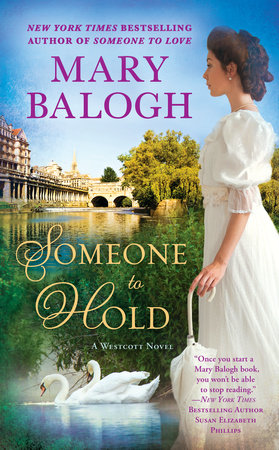
Writing Tips from Mary Balogh, author of Someone to Hold
We know readers tend to be writers too, so we feature writing tips from our authors. Who better to offer advice, insight, and inspiration than the authors you admire? They’ll answer several questions about their work, share their go-to techniques and more. Now, get writing!
Did you always want to write? How did you start your career as an author?
Yes. As a child, when people used to ask me what I wanted to be when I grew up, I would say I wanted to be an authoress (that word certainly dates me, doesn’t it?). I used to fill notebooks with stories. When I grew up, of course, I discovered that I needed to eat so became a high school English teacher. Then I got married and had children. There was no time to write. I took a year’s leave of absence following the birth of my third child and worked my way through a suggested Grade XI reading list. It included Georgette Heyer’s Frederica. I was enchanted, perhaps more than I have been with any book before or since. I read everything she had written and then went into mourning because there was nothing else. I decided that I must write books of my own set in the same historical period. I wrote my first Regency (A Masked Deception) longhand at the kitchen table during the evenings and then typed it out and sent it off to a Canadian address I found inside the cover of a Signet Regency romance. It was a distribution centre! However, someone there read it, liked it, and sent in on to New York. Two weeks later I was offered a two-book contract.
What’s the best piece of advice you have received?
Someone (I can’t even remember who) at a convention I attended once advised writers who sometimes sat down to work with a blank mind and no idea how or where to start to write anyway. It sounded absurd, but I have tried it. Nonsense may spill out, but somehow the thought processes get into gear and soon enough I know if what I have written really is nonsense. Sometimes it isn’t. But even if it is, by then I know exactly how I ought to have started, and I delete the nonsense and get going. I have never suffered from writers’ block, but almost every day I sit down with my laptop and a blank mind.
What clichés or bad habits would you tell aspiring writers to avoid? Do you still experience them yourself?
You don’t have to know everything before you start. You don’t have to know the whole plot or every nuance of your characters in great depth. You don’t have to have done exhaustive research. All three things are necessary, but if you wait until you know everything there is to know, you will probably never get started. Get going and the knowledge will come—or at least the knowledge of what exact research you need to do.
Do you ever base characters off people you know? Why or why not?
Never consciously. I wouldn’t want anyone to recognize himself or herself in my books. However, I have spent a longish lifetime living with people and interacting with them and observing them. I like my characters to be authentic, so I suppose I must take all sorts of character traits from people around me. And sometime yes, I suddenly think “Oh, this is so-and-so.”
What are three or four books that influenced your writing, or had a profound affect on you?
All the books of Georgette Heyer would fit here. She was thorough in her research and was awesomely accurate in her portrayal of Georgian and Regency England. At the same time she made those periods her own. She had her own very distinctive voice and vision. When I began to write books set in the same period, I had to learn to do the same thing—to find my own voice and vision so that I was not merely trying to imitate her (something that never works anyway).
Learn more about the book below:
Writing Tips from Nick Petrie, author of Burning Bright
We know readers tend to be writers too, so we feature writing tips from our authors. Who better to offer advice, insight, and inspiration than the authors you admire? They’ll answer several questions about their work, share their go-to techniques and more. Now, get writing!
Is there something you do to get into a writing mood? Somewhere you go or something you do to get thinking?
I find that I do my best work at the beginning of the day, but I’m rarely in a writing mood when I sit down. I’m usually somewhat sleep-deprived, and I always have a long list of other responsibilities calling my name.
But if I can get myself into my chair with a cup of coffee, and start reading the last few days’ work, I find myself making a few changes here and there. Then I’m adding a few new sentences at the end, and before I know it, several hours have passed, I’ve written a few new pages, and I’m in a pretty good mood.
When I fall out of that flow, I get up and go for a walk, make another cup of coffee, and sit back down in my chair, just for another minute or two, and that’s another few hours gone, and some more sentences stacked up to reread tomorrow.
Which is a long way of saying that the best way for me to get into a writing mood is to sit down and start writing. And if I do it every day, it all gets easier.
What’s the best piece of advice you have received?
The painter Chuck Close said, “Amateurs sit and wait for inspiration, the rest of us just get up and go to work.”
He didn’t say it to me, but I consider this good advice for anyone doing creative work. Don’t wait for inspiration. Learn to cultivate it. Write your own writer’s manual. Find the tools and mindset that help you move forward when things get difficult. Because things almost always get difficult. That’s not necessarily a sign that the work is bad, it’s just a part of the process. Learning to understand and manage your own process is, for me, the secret to creative life.
I’m still working on it, by the way. But I’ve found that when I show up and do the work on a daily basis, inspiration will eventually perch on my shoulder and begin to whisper in my ear.
What clichés or bad habits would you tell aspiring writers to avoid? Do you still experience them yourself?
I love the beautiful distractions of the world – television and movies, video games, the internet in general. But I try really hard to avoid them, because they don’t help me become a better writer. They subtract hours from my day. And a writer’s main currency is time. Time to daydream, time to walk and think, time to sit and do the work.
Reading good books is one distraction that will help you become a better writer. And writing – that’s the thing – writing is what will really make you a better writer. Write bad stories until you begin to write so-so stories, which might, if you keep at it, turn to writing good stories. So put down your phone and keep at it.
This is not a new idea, nor one exclusive to writing fiction. The way to get good at playing the piano is to play the piano. And play, play, play.
I tell myself this every day.
What are three or four books that influenced your writing, or had a profound effect on you?
Cormac McCarthy’ Border Trilogy (All the Pretty Horses, The Crossing, and Cities of the Plain) had an enormous influence on me. I love his prose, his use of place as character, and his vivid descriptions of character in action, but the most powerful effect of reading those books was that they freed me up to write about what really interested me. At the most fundamental level, these are cowboy novels. The fact that they also rank among the best of American literature somehow made genre distinctions irrelevant.
Elmore Leonard had a profound influence on me as well. There are a few of his books I really love – Freaky Deaky, Stick, Glitz, Bandits. But I love his dialogue, his humor, his small-time hustlers, and the economy of his prose. He does a lot with a little, over and over.
The Writer’s Chapbook is a collection of bits and pieces of writers’ interviews culled from The Paris Review – a long list of great writers. The book is organized by topic, so no matter what problem I’m having, I can find far better writers who’ve had the same problem. It makes me feel better. In addition to dipping in and out, I’ve also read it cover to cover about ten times in the last ten years. I found it used in a clunky old cloth-covered hardback that makes me smile just to hold it in my hand.
Ask me this question next week and I’d probably give you a different list.
Learn more about the book below:
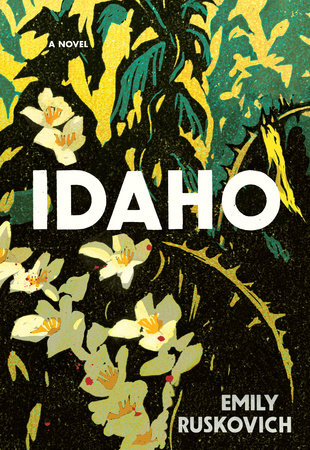
Writing Tips from Emily Ruskovich, author of Idaho
We know readers tend to be writers too, so we feature writing tips from our authors. Who better to offer advice, insight, and inspiration than the authors you admire? They’ll answer several questions about their work, share their go-to techniques and more. Now, get writing!
How would you recommend creating and getting to know your characters?
Marilynne Robinson once told a class that I was in that “all character is just a sense of character.” This feels very true to my experience writing fiction. I don’t actively create my characters; instead, I get a feeling about them, and so I try to chase down this feeling and trap it in a scene in order to spend time with it, and hope that the feeling metamorphosizes into something I can see and understand. I don’t build a character by thinking deliberately about the facts of that person, like what they want, what they look like, what they’re interested in. Those details come later. I know that creating a character profile is a method that works very well for a lot of authors, but when I try to get to know a character, it’s like I’m trying to get to know a shadow cast by someone I can’t see, and maybe never will see, even when the story is finished. And the only way it works for me—the only way—is by building a scene around that shadow, that mere “sense.” But even when a story or novel is finished, I don’t actually ever see my character’s faces. When I think of them, the feeling I get from them is distinct and very, very real, but I don’t picture their facial structures, their hands, their clothes. Though those things are important, they are somewhat meaningless to me as I write; they feel like the only things that I straight-out “create.” In fact, sometimes I forget basic facts and have to go back and check eye color to make sure it’s consistent, or even check the age of my character. Those kinds of facts feel very separate of who the character actually is. There are certain aspects of them I can see. Their stances are often very distinct to me. So are the way their shoes look. The way their voices sound, and the way they speak. And sometimes hair color is clear to me, too, but not always. It’s like when I try to visualize them, they are turning their faces away. They are always in motion. I realized recently that this is how I read, too. When I am invested in a novel, I don’t actually “picture” the people in my head, even if their faces are intricately described. I just feel them. There isn’t really something I can compare this experience to, because there is no experience to me that is anything like reading except for writing. And maybe having a dream, when you have such a strong sense in the morning of what occurred, and it really affects you, but you can’t remember details. The faces are blurred. I don’t know if this is useful or not. I guess what this boils down to is: When you are trying to get to know a character, maybe try not to see them so exactly. Trust your instincts, however fleeting and confusing they may be, and just try to build a scene around a feeling, or rather, let that feeling build the scene for you. It’s the only way my characters ever feel real and honest. I hope this isn’t too ethereal to be useful advice. Of course, there are many ways to get to know your characters, and I think other writers have a much more straightforward time getting to know them. I find it very difficult transcribing feelings into people. I think it’s really hard.
Is there something you do to get into a writing mood? Somewhere you go or something you do to get thinking?
I like to write with animals around. My rabbit has an enormous pen which we built right in front of my window, so I am always looking inside of his pen, watching him and his squirrel visitors. In the morning, before I start writing, I go down to the river and call to my pet ducks. Usually, they fly right to me and have a treat from my hand. I hatched them in an incubator, so they are very tame, even though they have chosen to live in the wild now. When they were little, they would sleep on my lap, or else on my feet, as I worked on my computer. When they decided to fly to the river, I adopted kittens, in part so that I have something to summon onto my lap while I write. Even just having a bird-feeder out my window is very helpful to me. Often, I start by reading beautiful passages by authors I admire. My husband’s office is just on the other side of mine, and often we start out our day by reading to each other what we’d written the day before, to get us going, to get our confidence up. It really helps to have someone pursuing the same things that I am. We help each other a great deal. He always has a cat on his lap, too.
Did you always want to write? How did you start your career as an author?
Yes, I have wanted to write since I was very young. Before I could write, I would often dictate stories or poems to my mom and dad, and they would write them down for me. I remember it seemed like the most magical thing to me, that the things I said could be saved forever simply by my parents making marks on a piece of paper. I was very lucky that I grew up in a house where writing was a natural part of life. My dad is a very prolific writer. Even with all he had to do when I was growing up—teaching, farming, gardening, taking care of children, chopping wood, building barns, managing money trouble—he still found time almost every single day to write, even if he was exhausted. And so it was a very natural part of my existence. I understood writing as a thing that people simply did, a crucial part of daily life. A few years ago, my dad gave me suitcase full of poems. Fifty pounds of poems! I know it’s exactly fifty pounds, because we didn’t want to pay an extra fee at the airport when I was flying these poems from Idaho to Colorado, so we weighed it very carefully and had to remove quite a few to get the weight down. Hauling the suitcase from state to state, whenever I move, makes me feel very sentimental, like I have been given the gift of actually holding the weight of his imagination. Most of the poems are handwritten. Many of them are sonnets. Many of them are very beautiful. Those fifty pounds of poems are my favorite possession. I always wanted to follow in his footsteps, and so I wrote all the time, too. He taught me from a very early age. So I feel like my career never had a starting point. It was always what I was going to do, because it was always what he did.
What clichés or bad habits would you tell aspiring writers to avoid?
I do have a list of cliche’s that I give to my intro-level creative writing students. It’s called “The List.” As a class, we build on it throughout the semester. It’s very long, and I hope students find it funny as well as useful. It was made in good humor. It contains all the themes or situations that I have encountered many times in student writing. Some of the items on the list include: “No coffee shops; no waking up to begin a day; no college or high school parties; no awkward Thanksgivings; no storms that knock out electricity; no hospital beds; no hitmen; no kids kicking cans; no amnesia; no FBI agents; no CEO executives who suddenly quit their jobs and become free-spirits living on the streets playing music; no serial killers; no unwanted pregnancies if the central conflict is whether or not to keep the baby; no camping or hiking stories if the central conflict is getting lost or attacked by a wild animal; no stories whose energy comes entirely from a bitter or sarcastic voice; no grinning. A grin is so much less complicated than a smile.” The list goes on and on. None of these things are absolute, of course. All of them have been written about very, very well. But it is a challenge I like to pose in my writing classes. I think students enjoy it. I hope so. Of course, I break these rules myself sometimes. One of the rules is, “No stories from an animal’s perspective.” And I definitely broke that rule in my novel. Also, my novel has storms knocking out electricity all over the place. And it also contains a hospital bed.
Do you ever base characters off people you know? Why or why not?
Yes and no. My characters are all their own selves, distinct from anyone I’ve met. But I do find that I give my characters many qualities of the people that I love. In my novel, the main characters resemble my family members. Not in their actions, or in their stories, just the sense I get of them. The best parts of my character Wade remind me of my dad. There is a moment in the first chapter when Wade knocks his knuckle on the piano as if to test the quality of its wood, and that moment is my dad exactly. Of course, they are very, very different, too. Similarly, I see my mom in both of my central female characters, Jenny and Ann. This may be a strange thing to say, considering I see my mom as the gentlest person on Earth, and yet I have given some of her kindest qualities to Jenny, who has committed an act of horrifying violence. But lending Jenny some aspects of my mom was a way of empathizing with Jenny, a way of complicating her, a way of loving her in spite of what she’d done, which I felt was very important. And I do love Jenny. I needed to, in order to continue this quite painful story. May, too, was inspired by my sister Mary. This is the closest that I came to writing about someone so directly, though it wasn’t at all my intention. Mary came alive in May so quickly. I have hardly changed a word of the May chapters since their very first draft, because those chapters were almost written for me, by Mary’s childhood voice. I have a photograph of my sister when she is young taking a “swim” in a garbage can filled with water that has been warming in the sun. When I look at that picture, I see both Mary and May, equally. It made writing May’s perspectives both very natural and very painful. I feel May’s loss even more deeply because of her resemblance to my sister. Some parts of the novel, in fact, are painful for me to return to because of that. June, also, reminds me a lot of what I was like when I was young.
What are three or four books that influenced your writing, or had a profound affect on you?
The Progress of Love by Alice Munro, and all of her other books, too. Beloved by Toni Morrison. Never Let Me Go by Kazuo Ishiguro. Lila by Marilynne Robinson. And Watership Down by Richard Adams.
Learn more about the book below:


