



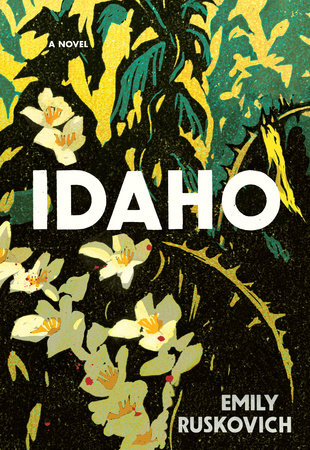
Writing Tips from Emily Ruskovich, author of Idaho
We know readers tend to be writers too, so we feature writing tips from our authors. Who better to offer advice, insight, and inspiration than the authors you admire? They’ll answer several questions about their work, share their go-to techniques and more. Now, get writing!
How would you recommend creating and getting to know your characters?
Marilynne Robinson once told a class that I was in that “all character is just a sense of character.” This feels very true to my experience writing fiction. I don’t actively create my characters; instead, I get a feeling about them, and so I try to chase down this feeling and trap it in a scene in order to spend time with it, and hope that the feeling metamorphosizes into something I can see and understand. I don’t build a character by thinking deliberately about the facts of that person, like what they want, what they look like, what they’re interested in. Those details come later. I know that creating a character profile is a method that works very well for a lot of authors, but when I try to get to know a character, it’s like I’m trying to get to know a shadow cast by someone I can’t see, and maybe never will see, even when the story is finished. And the only way it works for me—the only way—is by building a scene around that shadow, that mere “sense.” But even when a story or novel is finished, I don’t actually ever see my character’s faces. When I think of them, the feeling I get from them is distinct and very, very real, but I don’t picture their facial structures, their hands, their clothes. Though those things are important, they are somewhat meaningless to me as I write; they feel like the only things that I straight-out “create.” In fact, sometimes I forget basic facts and have to go back and check eye color to make sure it’s consistent, or even check the age of my character. Those kinds of facts feel very separate of who the character actually is. There are certain aspects of them I can see. Their stances are often very distinct to me. So are the way their shoes look. The way their voices sound, and the way they speak. And sometimes hair color is clear to me, too, but not always. It’s like when I try to visualize them, they are turning their faces away. They are always in motion. I realized recently that this is how I read, too. When I am invested in a novel, I don’t actually “picture” the people in my head, even if their faces are intricately described. I just feel them. There isn’t really something I can compare this experience to, because there is no experience to me that is anything like reading except for writing. And maybe having a dream, when you have such a strong sense in the morning of what occurred, and it really affects you, but you can’t remember details. The faces are blurred. I don’t know if this is useful or not. I guess what this boils down to is: When you are trying to get to know a character, maybe try not to see them so exactly. Trust your instincts, however fleeting and confusing they may be, and just try to build a scene around a feeling, or rather, let that feeling build the scene for you. It’s the only way my characters ever feel real and honest. I hope this isn’t too ethereal to be useful advice. Of course, there are many ways to get to know your characters, and I think other writers have a much more straightforward time getting to know them. I find it very difficult transcribing feelings into people. I think it’s really hard.
Is there something you do to get into a writing mood? Somewhere you go or something you do to get thinking?
I like to write with animals around. My rabbit has an enormous pen which we built right in front of my window, so I am always looking inside of his pen, watching him and his squirrel visitors. In the morning, before I start writing, I go down to the river and call to my pet ducks. Usually, they fly right to me and have a treat from my hand. I hatched them in an incubator, so they are very tame, even though they have chosen to live in the wild now. When they were little, they would sleep on my lap, or else on my feet, as I worked on my computer. When they decided to fly to the river, I adopted kittens, in part so that I have something to summon onto my lap while I write. Even just having a bird-feeder out my window is very helpful to me. Often, I start by reading beautiful passages by authors I admire. My husband’s office is just on the other side of mine, and often we start out our day by reading to each other what we’d written the day before, to get us going, to get our confidence up. It really helps to have someone pursuing the same things that I am. We help each other a great deal. He always has a cat on his lap, too.
Did you always want to write? How did you start your career as an author?
Yes, I have wanted to write since I was very young. Before I could write, I would often dictate stories or poems to my mom and dad, and they would write them down for me. I remember it seemed like the most magical thing to me, that the things I said could be saved forever simply by my parents making marks on a piece of paper. I was very lucky that I grew up in a house where writing was a natural part of life. My dad is a very prolific writer. Even with all he had to do when I was growing up—teaching, farming, gardening, taking care of children, chopping wood, building barns, managing money trouble—he still found time almost every single day to write, even if he was exhausted. And so it was a very natural part of my existence. I understood writing as a thing that people simply did, a crucial part of daily life. A few years ago, my dad gave me suitcase full of poems. Fifty pounds of poems! I know it’s exactly fifty pounds, because we didn’t want to pay an extra fee at the airport when I was flying these poems from Idaho to Colorado, so we weighed it very carefully and had to remove quite a few to get the weight down. Hauling the suitcase from state to state, whenever I move, makes me feel very sentimental, like I have been given the gift of actually holding the weight of his imagination. Most of the poems are handwritten. Many of them are sonnets. Many of them are very beautiful. Those fifty pounds of poems are my favorite possession. I always wanted to follow in his footsteps, and so I wrote all the time, too. He taught me from a very early age. So I feel like my career never had a starting point. It was always what I was going to do, because it was always what he did.
What clichés or bad habits would you tell aspiring writers to avoid?
I do have a list of cliche’s that I give to my intro-level creative writing students. It’s called “The List.” As a class, we build on it throughout the semester. It’s very long, and I hope students find it funny as well as useful. It was made in good humor. It contains all the themes or situations that I have encountered many times in student writing. Some of the items on the list include: “No coffee shops; no waking up to begin a day; no college or high school parties; no awkward Thanksgivings; no storms that knock out electricity; no hospital beds; no hitmen; no kids kicking cans; no amnesia; no FBI agents; no CEO executives who suddenly quit their jobs and become free-spirits living on the streets playing music; no serial killers; no unwanted pregnancies if the central conflict is whether or not to keep the baby; no camping or hiking stories if the central conflict is getting lost or attacked by a wild animal; no stories whose energy comes entirely from a bitter or sarcastic voice; no grinning. A grin is so much less complicated than a smile.” The list goes on and on. None of these things are absolute, of course. All of them have been written about very, very well. But it is a challenge I like to pose in my writing classes. I think students enjoy it. I hope so. Of course, I break these rules myself sometimes. One of the rules is, “No stories from an animal’s perspective.” And I definitely broke that rule in my novel. Also, my novel has storms knocking out electricity all over the place. And it also contains a hospital bed.
Do you ever base characters off people you know? Why or why not?
Yes and no. My characters are all their own selves, distinct from anyone I’ve met. But I do find that I give my characters many qualities of the people that I love. In my novel, the main characters resemble my family members. Not in their actions, or in their stories, just the sense I get of them. The best parts of my character Wade remind me of my dad. There is a moment in the first chapter when Wade knocks his knuckle on the piano as if to test the quality of its wood, and that moment is my dad exactly. Of course, they are very, very different, too. Similarly, I see my mom in both of my central female characters, Jenny and Ann. This may be a strange thing to say, considering I see my mom as the gentlest person on Earth, and yet I have given some of her kindest qualities to Jenny, who has committed an act of horrifying violence. But lending Jenny some aspects of my mom was a way of empathizing with Jenny, a way of complicating her, a way of loving her in spite of what she’d done, which I felt was very important. And I do love Jenny. I needed to, in order to continue this quite painful story. May, too, was inspired by my sister Mary. This is the closest that I came to writing about someone so directly, though it wasn’t at all my intention. Mary came alive in May so quickly. I have hardly changed a word of the May chapters since their very first draft, because those chapters were almost written for me, by Mary’s childhood voice. I have a photograph of my sister when she is young taking a “swim” in a garbage can filled with water that has been warming in the sun. When I look at that picture, I see both Mary and May, equally. It made writing May’s perspectives both very natural and very painful. I feel May’s loss even more deeply because of her resemblance to my sister. Some parts of the novel, in fact, are painful for me to return to because of that. June, also, reminds me a lot of what I was like when I was young.
What are three or four books that influenced your writing, or had a profound affect on you?
The Progress of Love by Alice Munro, and all of her other books, too. Beloved by Toni Morrison. Never Let Me Go by Kazuo Ishiguro. Lila by Marilynne Robinson. And Watership Down by Richard Adams.
Learn more about the book below:

 First, I knew him to be fun. Within the first six years of my life, if asked what Dad was to me I would have emphatically responded: “Dad is fun!” This was my simple foundation for my enduring relationship with my father.
This is the man he was. He never lost this.
To those who knew him well—family, friends, coworkers alike—the one essential thing that was blazingly evident was the light and laughter within my father’s heart. Typically, though his common image may be otherwise, he was not heavy and dark, but loving and full of color.
Yet there was so much more . . .
For one thing—he was brilliant. He was a scholar, learned in ancient texts, including those of Flavius Josephus and unquestionably of the Bible. He was an ordained minister and could easily hold his own with any theologian or historian. His books on ancient history, such as Gibbon’s The History of the Decline and Fall of the Roman Empire, were annotated, read, reread and worn, his very soul deeply ingrained into their threadbare pages. I still have some of these books. When I hold them, when I touch the pages, I can sense my father in some ways even more profoundly than in his music.
First, I knew him to be fun. Within the first six years of my life, if asked what Dad was to me I would have emphatically responded: “Dad is fun!” This was my simple foundation for my enduring relationship with my father.
This is the man he was. He never lost this.
To those who knew him well—family, friends, coworkers alike—the one essential thing that was blazingly evident was the light and laughter within my father’s heart. Typically, though his common image may be otherwise, he was not heavy and dark, but loving and full of color.
Yet there was so much more . . .
For one thing—he was brilliant. He was a scholar, learned in ancient texts, including those of Flavius Josephus and unquestionably of the Bible. He was an ordained minister and could easily hold his own with any theologian or historian. His books on ancient history, such as Gibbon’s The History of the Decline and Fall of the Roman Empire, were annotated, read, reread and worn, his very soul deeply ingrained into their threadbare pages. I still have some of these books. When I hold them, when I touch the pages, I can sense my father in some ways even more profoundly than in his music.
 My father was an entertainer. This is, of course, one of the most marked and enduring manifestations. There are thousands upon thousands of new Johnny Cash fans every year, inspired by the music, talent, and—I believe hugely—by the mystery of the man.
My dad was a poet. He saw the world through unique glasses, with simplicity, spirituality, and humor. He loved a good story and was quick to find comedy, even in bleak circumstances. This is evident in one of the last songs he wrote within his lifetime, “Like the 309”:
My father was an entertainer. This is, of course, one of the most marked and enduring manifestations. There are thousands upon thousands of new Johnny Cash fans every year, inspired by the music, talent, and—I believe hugely—by the mystery of the man.
My dad was a poet. He saw the world through unique glasses, with simplicity, spirituality, and humor. He loved a good story and was quick to find comedy, even in bleak circumstances. This is evident in one of the last songs he wrote within his lifetime, “Like the 309”:
 Dad was many things, yes. He was tortured throughout his life by sadness and addiction. His tragic youth was marked by the loss of his best friend and brother Jack, who died as the result of a horrible accident when John R was only twelve. Jack was a deeply spiritual young man, kind and protective of his two-year-younger brother. Perhaps it was this sadness and mourning that partly defined my father’s poetry and songs throughout his life. He was likewise defined at the end of his life by the loss of my mother, June Carter. When she passed, their love was more beautiful than ever before: unconditional and kind.
Still, it could not be said that any of this—darkness, love, sadness, music, joy, addiction—wholly defined the man. He was all of these things and none of them. Complicated, but what could be said that speaks the essential truth? What prevails? The music, of course . . . but likewise . . . the words.
All that made up my father is to be found in this book, within these “forever words.”
When my parents died, they left behind a monstrous amassment of “stuff.” They just didn’t throw anything away. Each and every thing was a treasure, but none more than my father’s handwritten letters, poems, and documents, ranging through the entirety of his life. There was a huge amount of paper—his studies of the book of Job, his handwritten autobiography Man in Black, his letters to my mother, and likewise to his first wife, Vivian, from the 1950s. Dad was a writer, and he never ceased. His writings ranged through every stage of his life: from the poems of a naive yet undeniably brilliant sixteen-year-old to later comprehensive studies on the life of the Apostle Paul. The more I have looked, the more I have understood of the man.
Dad was many things, yes. He was tortured throughout his life by sadness and addiction. His tragic youth was marked by the loss of his best friend and brother Jack, who died as the result of a horrible accident when John R was only twelve. Jack was a deeply spiritual young man, kind and protective of his two-year-younger brother. Perhaps it was this sadness and mourning that partly defined my father’s poetry and songs throughout his life. He was likewise defined at the end of his life by the loss of my mother, June Carter. When she passed, their love was more beautiful than ever before: unconditional and kind.
Still, it could not be said that any of this—darkness, love, sadness, music, joy, addiction—wholly defined the man. He was all of these things and none of them. Complicated, but what could be said that speaks the essential truth? What prevails? The music, of course . . . but likewise . . . the words.
All that made up my father is to be found in this book, within these “forever words.”
When my parents died, they left behind a monstrous amassment of “stuff.” They just didn’t throw anything away. Each and every thing was a treasure, but none more than my father’s handwritten letters, poems, and documents, ranging through the entirety of his life. There was a huge amount of paper—his studies of the book of Job, his handwritten autobiography Man in Black, his letters to my mother, and likewise to his first wife, Vivian, from the 1950s. Dad was a writer, and he never ceased. His writings ranged through every stage of his life: from the poems of a naive yet undeniably brilliant sixteen-year-old to later comprehensive studies on the life of the Apostle Paul. The more I have looked, the more I have understood of the man.
 When I hold these papers, I feel his presence within the handwriting; it brings him back to me. I remember how he held his pen, how his hand shook a bit, but how careful and proud he was of his penmanship—and how determined and courageous he was. Some of these pages are stained with coffee, perhaps the ink smudged. When I read these pages, I feel the love he carried in those hands. I once again feel the closeness of my father, how he cared so deeply for the creative endeavor; how he cared for his loved ones.
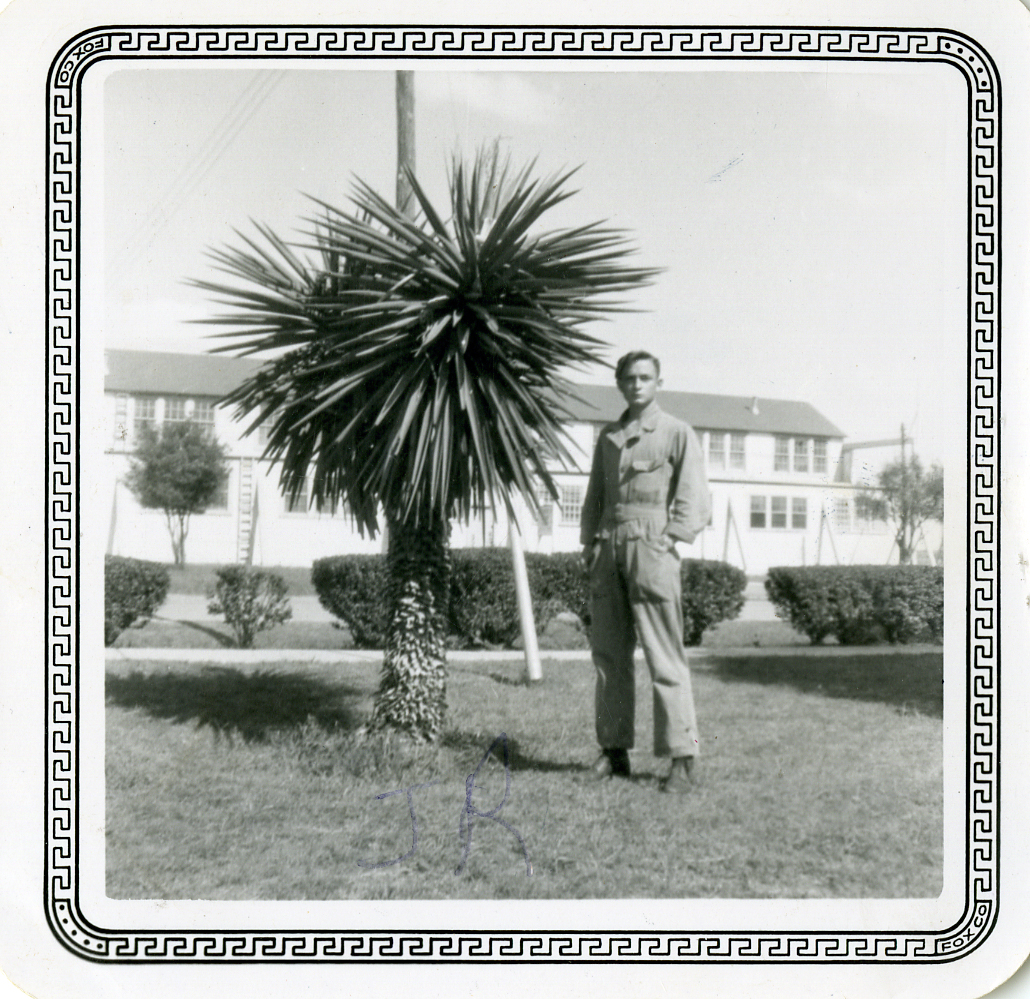 There are some of these I feel he would have wanted to be shared, some whose genius and brilliance simply demanded to be heard. I hope and believe the ones chosen within these pages are those he would want read by the world.
Finally, it is not only the strength of his poetic voice that speaks to me, it is his very life enduring and coming anew with these writings. It is in these words my father sings a new song, in ways he has never done before. Now, all these years past, the words tell a full tale; with their release, he is with us again, speaking to our hearts, making us laugh, and making us cry.
There are some of these I feel he would have wanted to be shared, some whose genius and brilliance simply demanded to be heard. I hope and believe the ones chosen within these pages are those he would want read by the world.
Finally, it is not only the strength of his poetic voice that speaks to me, it is his very life enduring and coming anew with these writings. It is in these words my father sings a new song, in ways he has never done before. Now, all these years past, the words tell a full tale; with their release, he is with us again, speaking to our hearts, making us laugh, and making us cry.
 The music will endure, this is true. The music will endure, this is true. But also, the words. It is ultimately evident within these words that the sins and sadnesses have failed, that goodness commands and triumphs. To me, this book is a redemption, a cherished healing. Forever.
John Carter Cash
35,000 feet above western Arkansas, flying east . . .
The music will endure, this is true. The music will endure, this is true. But also, the words. It is ultimately evident within these words that the sins and sadnesses have failed, that goodness commands and triumphs. To me, this book is a redemption, a cherished healing. Forever.
John Carter Cash
35,000 feet above western Arkansas, flying east . . .


 But while those things are often in a good story, they are not what make a good story. In fact, they don’t make a story at all. Instead, at best, they simply convey – albeit in luscious language — a bunch of surface things that happen. Such well-written, story-less prose is known in the trade as a beautifully written “who cares?”


