

Andrea Walker, Executive Editor at Random House, on The Longest Night by Andria Williams

Editors get very passionate about books they work on – the Editor’s Desk series is his or her place to write in-depth about what makes a certain title special. Get the real inside-scoop on how books are shaped by the people who know them best.

Andria Williams’ debut novel The Longest Night is a book about many things—the Cold War, the American West, gender roles in the 1960s, the birth of nuclear power—but above all it is a portrait of a marriage and the forces that challenge it.  I was immediately drawn into the story by the opening scene of the novel—a man named Paul, racing through the night on a rural road, passing an ambulance and fire trucks that are rushing away from an accident that he is driving towards.  What is taking him there, compelling him to put himself in terrible danger?  Who is he trying to save?

Before we can get answers to this question the novel flashes back to a blindingly hot summer day, three years earlier.  A young family are driving cross-country from Virginia to Idaho Falls, where the husband, Paul, has been stationed for his next army tour.  They stop at a lake in northern Utah where local teenagers are diving from the rocks.  The wife, Nat, is desperate to cool off, and leaves her one and three year old daughters while she climbs to the top of the cliff and dives in, fully clothed.  When she emerges from the lake Paul is furious—embarrassed, ashamed, scared she could have hurt herself.  But as a reader, I was fascinated.  I wanted to know what Nat was looking for in that moment of freedom.  Did she just want to escape the demands of being a wife and mother for those brief seconds?  Did she want to show her husband that she was her own person, still?   Did she want to set an example of fearlessness for her daughters, or was she not thinking of them at all?

longest

When I describe Andria’s novel I often say that it reminds me of Revolutionary Road, if such a book were set in the American West.  That is to say—it is a story about frustrated ambition; domesticity; the stifling social norms of a small town, ruled by a cabal of wives who never fail to match the color of their centerpieces to the tablecloths.  Yet it is also a story about how love changes in a marriage—how it is shaped by distance and separation; the birth of children; by our challenges in reconciling our adult selves with our adolescent ones.  It is a story rooted in a uniquely specific time and place, that is utterly universal in its implications.  I hope you will enjoy reading it.

Read more about the book here.

Bookspotting: John is reading The Hanging Girl by Jussi Adler-Olsen

Ever wonder what Penguin Random House employees are reading? We’re a bunch of professionally bookish people, so you can always count on us to have a book on hand… or thirty piled on our desks. Our Bookspotting feature shows off the range of readers behind the scenes at Penguin Random House. john John, in online marketing, is reading The Hanging Girl by Jussi Adler Olsen. Find out more about the book here:

Golden Globes 2016: A Look at the Books Adapted to Television and Film

With the Golden Globes coming up, it’s time to check out all the books that have been adapted to nominated television shows and films. Keith Rice for Word and Film, dives in: The best drama category highlights a wide swath of films covering a wider array of topics. “Spotlight,” which is based on a series of Pulitzer Prize-winning articles from the Boston Globe that uncovered a pattern of sexual abuse and cover-ups by the Boston Archdioceses, is possibly the early favorite. However, there is strong competition on the adaptation front with “Carol,” “The Revenant,” and “Room” as contenders for the prize. “Carol” is based on the novelThe Price of Salt by Patricia Highsmith. “The Revenant” is inspired by true events and adapted from the novel of the same name by Michael Punke – although despite its quality, the film may prove too brutal for anything other than a nod. “Room” is based on the novel of the same name by Emma Donoghue. The nominees this year have really upped the game – and it could be anyone’s win at this point. Read the rest of the article on Word and Film here.

Celebrating the 40th Anniversary of Roll of Thunder, Hear My Cry

We’re celebrating the 40th anniversary of Roll of Thunder, Hear My Cry with a beautiful new edition of the book, out now. Regina Hayes, Editor at Large of Viking Young Readers, wrote this letter to commemorate the day.

It is hard to believe that forty years have passed since the publication of Roll of Thunder, Hear My Cry.  It seems like only yesterday that I met Mildred Taylor, when the manuscript that became her first book about the Logan family, Song of the Trees, won a contest sponsored by the Council on Interracial Books.  Mildred was interviewing the editors who had expressed interest in her manuscript, and she came to our offices at Dial, a beautiful, shy, but very composed young African-American woman. Much to my delight, she chose Dial as her publisher, and I became her editor.

After working with her on the first book, I knew Ms. Taylor had enormous talent, but I was still stunned when the manuscript for Roll of Thunder, Hear My Cry arrived: a hugely accomplished, compelling, full-fledged novel with an unforgettable cast of characters. Reading it, I had shivers up my spine.  Could it really be as good as I thought it was? But subsequent readers confirmed my judgment.  There was such excitement in the office around publication. We firmly believed that this was an important book, and our faith was justified when the Newbery committee chose Roll of Thunder, Hear My Cry as the most distinguished contribution to literature for children that year. Today. generations of readers have agreed as they embraced the Logan family saga.

To celebrate the occasion, the wonderfully talented and award-winning Kadir Nelson has agreed to create new covers, not only for Roll of Thunder, Hear My Cry, but for all nine of Mildred Taylor’s books about the Logan family, which will be reissued throughout the year. Mr. Nelson’s work has been featured in numerous different outlets, including The New Yorker, a United States postage stamp, a Michael Jackson album cover, and numerous award-winning children’s books, and his rich, inviting paintings are the perfect complement to Mildred Taylor’s heartfelt stories.

roll

And something more to look forward to:  2017 will see publication of the final book in the saga of the Logans, which follows Cassie Logan through the years after World War II,  as she attends law school and becomes involved in the momentous years of the early civil rights movement.

I hope you will join all of us at Penguin Young Readers in the year-long celebration of a ground-breaking writer, her memorable, moving books, and forty years of courage, love, and pride.

With best wishes,

image003.jpg

Bookspotting: Alissa is reading My Brilliant Friend by Elena Ferrante

Ever wonder what Penguin Random House employees are reading? We’re a bunch of professionally bookish people, so you can always count on us to have a book on hand… or thirty piled on our desks. Our Bookspotting feature shows off the range of readers behind the scenes at Penguin Random House.   Alissa Alissa, in Crown production, is reading My Brilliant Friend, by Elena Ferrante.

VP and Editor in Chief, Andy Ward, on Shame and Wonder by David Searcy

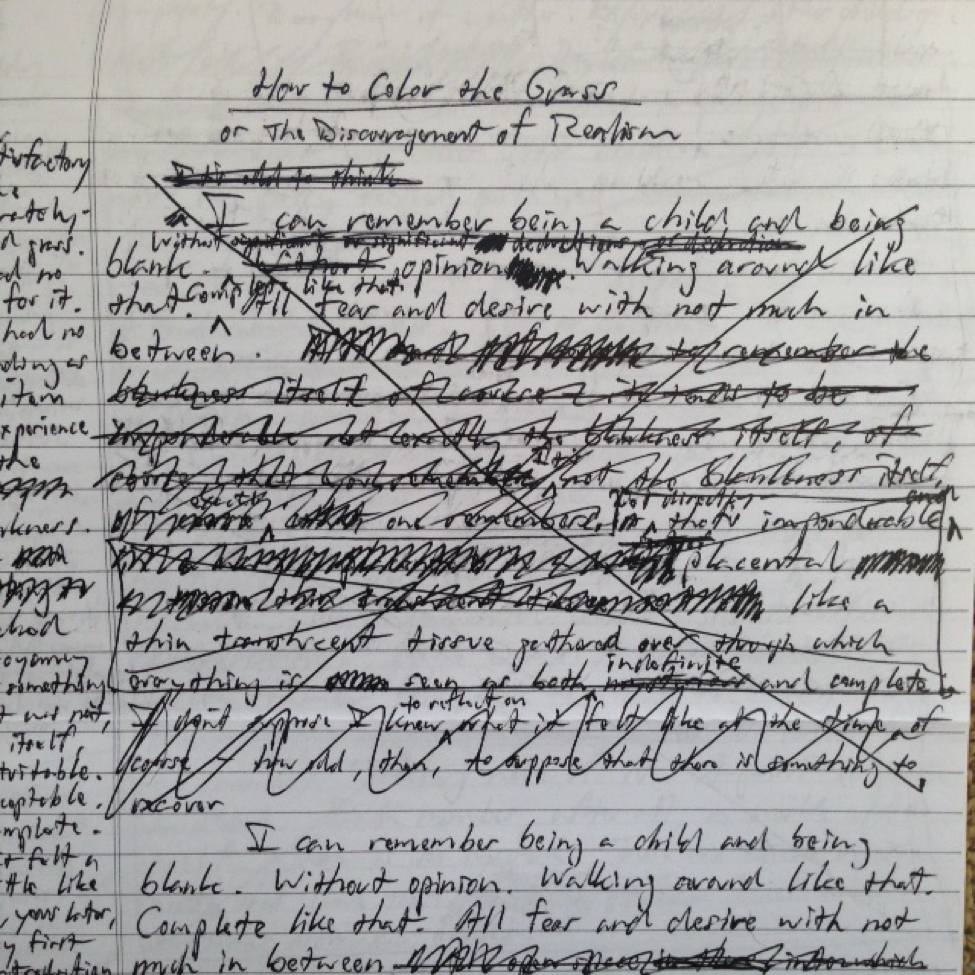
The origin story of Shame and Wonder, as brief as I can make it: I was sitting at my desk, four years ago, when my phone rang. It was the writer John Jeremiah Sullivan calling. “This is going to sound weird,” he said, “but I did a reading in Texas last night, and I met a guy there. He handed me a copy of an essay he’d written. I think it might be good. Can I send it to you?” This happens a lot, when you’re an editor, people sending you “good” things to read, and the track record isn’t great. But the essay John sent me that day – five typewritten, hand-corrected pages from a guy in Dallas named David Searcy, who’d only started writing nonfiction in his late sixties – was unlike anything I’d read before. An hour later, I was on the phone with David Searcy. A month later, we had a book deal. Four years later, we have Shame and Wonder. But my love for this book goes beyond its unusual beginnings. I love it for the beauty and strangeness of David’s sentences: “I can remember being a child and being blank. Without opinion. Walking around like that. Complete like that. All fear and desire with not much in between. I think of it now as an experimental setup. Like a cloud chamber – where you’ve got this otherwise empty vessel filled with a sort of mist through which events, the passage of subatomic particles, leave evanescent trails.” I love it because of the feelings of deep longing he is able to conjure in, say, a pair of initials (“little heart-shaped memories of love”) carved into the trunk of an old tree or, even, the prizes at the bottom of cereal boxes. I love it, too, because it is funny. But maybe most special of all, in the end, was being a witness to David’s process, which is not exactly typical, and to be honest, probably not advisable. Below, how a David Searcy essay – this one, titled “How to Color the Grass” — comes to be: David writes on yellow legal pads, in long hand, with a ball point pen. Here’s what his first draft looks like. (Two ways to look at this, as an editor: Fascinating or stressful.) Untitled Here’s what his second or third draft looks like, i.e. when clarity begins to assert itself: Untitled2 And here’s what happens when he puts his pen down and commits to a final draft, which he commemorates via a Swiss-made Hermes 3000 typewriter, circa l959, with standard serif pica font. As David says, “It’s like typing on a Steinway – just the right mechanical resistance to make you mean what you say.” Untitled3.   Finally, David also takes photos of the things he writes about, and several of these photos appear in the book. Think W.G. Sebald… if W.G. Sebald lived in Dallas… and drove a truck… and said things like “holy crap”… and spent a lot of time thinking about the venality of Scrooge McDuck. Though I love the title, the overall effect is: no shame, all wonder. Untitled4 Find out more about Shame and Wonder here:

Bookspotting: Alex is reading The Scarlatti Inheritance by Robert Ludlum

Ever wonder what Penguin Random House employees are reading? We’re a bunch of professionally bookish people, so you can always count on us to have a book on hand… or thirty piled on our desks. Our Bookspotting feature shows off the range of readers behind the scenes at Penguin Random House.   alex Alex, in Crown production, is reading The Scarlatti Inheritance by Robert Ludlum. Show us what you’re reading by using the #bookspotting hashtag!  

Bookspotting: Jalinya is reading The Girl on the Train by Paula Hawkins

Ever wonder what Penguin Random House employees are reading? We’re a bunch of professionally bookish people, so you can always count on us to have a book on hand… or thirty piled on our desks. Our Bookspotting feature shows off the range of readers behind the scenes at Penguin Random House.   jalinya Jalinya, Email Marketing, is reading The Girl on the Train by Paula Hawkins. Show us what you’re reading by using the #bookspotting hashtag!  

Creative Writing for NYC High Schoolers and Their Teachers

At the annual Inspiring Young Writers’ Luncheon hosted by the Penguin Random House Foundation, NYC English teachers came to our Penguin Random House offices this week for their own day of writing and inspiration.  During a morning writing workshop they were able to explore their own creative writing. English Teacher Elissa Goldstein said: “In the space of two hours, teaching artist Richard Hoehler took a group of stressed out English teachers and put them through a series of fun and eye-opening exercises.  There were cheers, gasps, cries and creative juices flowing all around the room.  All of us recognized that these exercises, when brought back to the classroom, could only help our students find their voices and help them to develop their love of words and creativity.” In the afternoon, Penguin Random House Creative Writing Award alumni from Amherst College, Stonybrook and City College, among others, met up with some of their former teachers to  hear more about the creative writing process from Knopf Doubleday Author Susan Minot.  Barbara Rothenberg, President of the New York City Association of Assistant Principals Supervision, English, said, “I thought she was great and spoke so well about her writing voice and how she went about discovering it. Her ideas could definitely be used in any high school classroom and/or by anyone who aspires to be a writer.  Her points were clear, coherent, and inspiring.” If you are a high schooler in New York City, check out our Creative Writing Competition!