Backlist Bracket: The Scary Sixteen!

What’s the best creepy read to curl up with on a chilly fall evening?  The Penguin Random House team has come up with sixteen spine-tingling, spook-tastic contenders in four classic book categories that’ll make you sleep with the light on. Vote every week in a new round to determine the ultimate terrifying read!

Each week, there will be a drawing to see who wins a set of the Penguin Horror Classics set, edited by lifelong horror literature lover, Guillermo Del Toro.

Penguin Horror Let’s get started! Meet this week’s kickoff contenders: vote for one of each of these match-ups, and enter HERE for a chance to win the prize. Follow on social media and share your thoughts with the hashtag #scarysixteen. WEEK 1:  The Road vs. World War Z The apocalypse in World War Z is a busy and bloody chaos — the terrifying spread of two hundred million zombies devoted to consuming all life on earth is realistically recounted for us in every gory detail. The apocalypse in The Road is barren and cold – the Pulitzer Prize winning book follows father and son as they travel through the abyss, dodging unknown perils at every turn en route to their only hope: the coast. Which post-apocalyptic tale has you running for your panic room? The Stand vs. The Handmaid’s Tale The forces of Good and Evil clash in a world ravaged by disease in Stephen King’s massive, magnificent The Stand. In her masterpiece, The Handmaiden’s Tale, Margaret Atwood exposes a woman’s terrifying existence under a brutal totalitarian regime. Which book best imagines a horrifying future of humanity on the brink? Frankenstein vs. Infected What’s scarier? Victor Frankenstein’s terrible creation of an anguished monster or an alien disease that turns ordinary Americans into raving, paranoid murderers who inflict brutal horrors on strangers, their own families, and even themselves? Dracula vs. Salem’s Lot The King of Horror takes on the king of all vampire novels – which is scarier? Vampires in small-town Maine or THE vampire in 19th Century London?   Click the image below to see the fullsize bracket, and check back next week to find out who survived the first round! Scary Sixteen - All Titles If you haven’t read the books mentioned above, check them out here!    

Dust & Grooves playlist: music to accompany the book

We’re celebrating the release of Dust & Grooves with a playlist of songs mentioned in the book. An exploration of records and the people who collect them, Dust & Grooves includes beautiful photos and insightful interviews.
  1. High Plains Drifter by Beastie Boys, Paul’s Boutique: The special double vinyl version of this album featured a 360-degree photo of a street corner in NYC by photographer Adam Yauch, half displayed on the inside and half displayed on the outside. It requires two copies to put the photo together. (Page in Dust & Grooves: 257)
  2. Bad Bold Beautiful Girl by The Persuaders, The Persuaders:  The Persuaders’ self-titled album came out in 1973, and the song Bad Bold and Beautiful Girl topped the R&B charts at #24 (Page in Dust & Grooves: 182)
  3. Free to Be…You and Me, by The New Seekers, Free to Be…You and Me: Free to Be…You and Me was an album that was originally released in 1972 and the result of a project by the Ms. Foundation for Women. The album promoted gender neutrality, and promoted individuality and being comfortable with self-identity. (Page in Dust & Grooves: 176)
  4. Little Green by Joni Mitchell, Blue: Little Green, a beautifully melodic song, explore’s Joni Mitchell’s experience with giving up a baby girl for adoption. The Album, Blue, is a favorite song of London-based record-collector Colleen Murphy. (Page in Dust & Grooves: 144)
  5. The Man Who Sold the World by David Bowie, The Man Who Sold the World: The Man Who Sold the World is Bowie’s third album, and the title track was released in the US in November of 1970. Jeff Gold, of Venice California, notes that “The original cover, featuring Bowie in a dress, was evidently too much for his US and German record companies, to take. Both released the album with their own unique covers.” (Page in Dust & Grooves: 242)
  6. Time Dom Dom by Jorge Ben Jor, Samba Esquema Novo: Originating from Rio de Janeiro, Brazil, Jorge Ben Jor fuses samba, funk, rock, and bossa nova. (Page in Dust & Grooves: 142)
  7. Trick of the Light by The Raah Project, Gilles Peterson Presents Brownswood Bubblers Five: Dust ad Grooves features an interview with Gilles Peterson, a DJ, record collector, and record label owner based in the UK. Gilles’ Brownswood Recordings was designed to give unknown artists a platform to help them have their music heard. (Page in Dust & Grooves: 295)
  8. Amazing Grace by Aretha Franklin, Amazing Grace: Dust and Grooves’ author, Eilon Paz, interviews DJ Rich Medina, based out of the City of Brotherly Love: Philadelphia. Rich says of Aretha’s rendition of Amazing Grace in Dust and Grooves, “The honesty in young Aretha’s voice on this LP showed us what it meant to truly sing from your heart at all times.” (Page in Dust & Grooves: 314)
  9. Be My Baby by The Ronettes, Presenting the Fabulous Ronettes: Be My Baby peaked on the Billboard Top 100 at number 2. The Ronettes were one of the most popular groups of the 1960s, and hail from Spanish Harlem. (Page in Dust & Grooves: 342)
  10. Gat Kirwani by Ravi Shankar, The Best of Ravi Shankar: William Bensussen, also known as the Gaslamp Killer, says that Indian music is “what gets [him] in a really good mood,” during his discussion with Josiah Titus in Dust and Grooves. (Page in Dust & Grooves: 407)
Read about Dust & Grooves here.

4 National Book Award Fiction Semi-Finalists Join 9 Other Penguin Random House Longlisters

The 2015 National Book Award Fiction Longlist was unveiled this morning, with four Penguin Random House titles recognized as semi-finalists: Earlier this week, these Penguin Random House books were selected for their respective National Book Award Longlists. Nonfiction Poetry Head to nationalbook.org to browse all the finalists.

Author Sarah Robinson dishes about her new book, Breaking a Legend

Fighter romance books are very popular in the book world today, however, I’d never even read one before writing Breaking a Legend. I don’t know why, maybe I just never came across one that grabbed my attention. When I finished writing this book, I decided to start reading some to see what else was out there. I absolutely fell in love with works by JB Salsbury and Katy Evans. There are some amazing fighter books out there and I’m honored to join them with Rory and Clare’s story. Since I didn’t really start reading that type of romance until I was finished with Breaking a Legend, most of the research that went into writing it in the first place was just plain old studying. I read every article on mixed martial arts that I could find on Google, I read manuals and guides, and I read all kinds of terminology lists on what to say/not say. There’s a lot to know, but there’s also a lot of personal preference. Most of my research centered around different types of techniques, holds, grabs, takedowns, etc, as well as terminology and history. While they might not be an integral part of Rory’s story, they do serve as a backdrop for the entire series. It was important for me to describe how the family gym, Legends, is set up and make everything accurate. Mixed Martial Arts itself is a full-contact sport that combines martial arts, wrestling, and other combat sports into one epic battle. It’s called mixed for a reason, it’s just everything combined. There’s boxing, wresting, karate, taekwondo, kickboxing, jiu-jitsu, judo, and more all in one sport. It’s fairly new, despite it’s rich and long reaching origins, as the term mixed martial arts only dates back to the 1990’s. The sport itself is now regulated and has spread internationally. While there are many organizations that support and sanction the sport, there is none bigger than the Ultimate Fighting Championship (UFC) which features the world’s top-ranked fighters and is a billion dollar organization. The whole intoxication of mixed martial arts, and why it’s such a perfect fit in the romance genre, is because of the taboo passion one must have to compete in that sport. Despite the fact that a lot of MMA has gone main stream, it’s still deeply rooted in it’s past of underground battles with illegal betting. The sport itself is passion, strength, and pain- and really, isn’t that what love is? To be honest, however, this book isn’t one heavy fight scene after another. It really is all about the relationship between Rory and Clare, which is something universal. You don’t need to Google what love is, you just need to feel it. I hope everyone who reads Breaking a Legend feels that, and has it in their own lives as well. Learn more about the book here.

Writing Tips from Miranda Beverly-Whittemore, author of Bittersweet

We know readers tend to be writers too, in this feature, we’ll share writing tips from our authors. Who better to offer advice, insight, and inspiration than the authors you admire? They’ll answer several questions about their work, share their go-to techniques and more. Now, get writing! How would you recommend creating and getting to know your characters? I believe that story comes from character; I have to know my characters inside and out in order to write a novel that’s halfway worth reading. That said, I’m also a big fan of trusting my gut. When I was starting my novel Bittersweet, Mabel Dagmar began speaking to me very early in the game, long before I knew how untrustworthy she is or exactly what had happened over the course of the summer in which the book takes place. I took dictation for about fifty pages, until I knew she had a hold on me; then I went back to the drawing board and really got to know her by thinking about her all the time, filling out a character sheet on her, and imagining who and what she would come in contact with that would challenge her. Once I know a character well, I’m able to ask what she wants, deep down, in her core. Everyone wants something. A novelist’s trick is to write a story that aligns many wants to support a thematic idea, without it looking like that’s what I’m doing. As plot grows, it’s valuable to understand whether a character’s desires align with that central idea; if they don’t, out she goes. Bittersweet is the story of Mabel getting what she wants, plain and simple, but it took me a long time to understand what that was and how the book would tell that story. I’m also a big believer in casting (in my mind) a real actor (preferably someone I’ve seen on screen in a number of different roles) to play each of my main characters. That way, when I’m stumped about how a character would drink a cup of coffee or walk down the street, it’s easy to see her with my own eyes (plus, then I get to call watching a movie “research,” which is just one of the thousand reasons I love my job). And revision is my best friend, because I can stretch the limits of my characters and then pull back in the next draft after I’ve learned how they would or wouldn’t react. After developing an idea, what is the first action you take when beginning to write? I need to write about fifty pages in order to understand whether the story I’ve imagined actually has legs; if I can’t make fifty pages work, then there’s no way I’ll be able to compose four hundred. In these first fifty I’m looking for moments that crack me up, that make me afraid, that feel risky, that open my up to questions about the book I didn’t know I had when I first started it. If I don’t discover something new in those early weeks of work, then I know I haven’t found my next book. Is there something you do to get into a writing mood? Somewhere you go or something you do to get thinking? I used to be much more precious about my writing rituals; becoming a mother definitely cured me of that! But strangely (or maybe not so strangely) my most productive two years of creative work to date came right after giving birth: I wrote a novel and two screenplays, and produced a short film. I think the secret lies in the preciousness of childcare; if I only have two hours to work in a day, I’m not going to squander it, whereas in the unscheduled days before my son was born, it was easy to while away the hours. I’m lucky to have both a home office and a great local cafĂ© (where I wrote most of Bittersweet). But if I’m alone at home, I’m just as likely to spread out on the dining room table as I am on my son’s bottom bunk. I’m currently in the final push on a novel called June. I’m writing from a pretty strict chapter outline that I’ve developed over the course of the past year. When I sit down to write on a given day, I use this outline as a roadmap. Its signposts and landmarks are the actions and beats I know need to be accomplished in the scene at hand, even if I don’t know exactly how I’ll get from A to B. The fun lies in discovering. Did you always want to write? How did you start your career as an author? As a kid I loved theater. In my childhood out in Oregon, I went to this amazing camp where we did Shakespeare every summer. As a result, without trying to ingrain the five-act structure inside myself, it is. Also, I grew up advocating for the characters I was inhabiting, as actors are wont to do. Both traits have served me well as a writer. Of course, I thought I wanted to be an actor, but in college I realized I’d have a lot more power (and probably be just as poor) in the writing life. I wrote a creative thesis in college. It was the first time I’d written anything longer than twenty pages, and I just fell in love. I realized I had it in me to create whole worlds. But I didn’t know if this could actually be my job until I was working at the Unterberg Poetry Center at the 92nd Street Y and met people like Joyce Carol Oates and Philip Roth and JosĂ© Saramago and Saul Bellow, and saw a more direct connection between the books I loved and the people who made them. While I was at the Y, I wrote The Effects of Light, which was to become my first published novel; got an agent; and then revised it for her for a year before we sold it. What’s the best piece of advice you have received? My parents were great believers in my sister and me pursuing creative fields. What they gave us wasn’t advice as much as it was philosophy. In my sister’s forthcoming documentary, my mom says “You know who you are by what you make,” and this idea still very much drives who I am. I’ve learned that I’m a lot happier when I’m working on a novel than when I’m not, mainly because when I’m writing a novel, I’m my most “me”—I recognize myself. I see this in my six-year-old too; he’s a lot happier when he’s engaged in a big, sweeping art project. Maybe that’s just him/us? Maybe that’s a trait many of us have as children, and we’re taught not to value it (because it’s not quantifiable or easily applied to a business model), so when we grow up, we leave it behind? A few months ago I was with my family up in the cabin in Vermont that inspired Bittersweet, and I looked around the main room: my father was transcribing his field notes from West Africa for use in the book he’s writing; my mother was working on her book series; my sister was working on her screenplay; my son was meticulously decorating a tall stack of valentines; and I was writing June. I often meet fellow parents who tell me they’re concerned because their child wants to become a writer or an artist. Yes, it can be a bumpy path, but it’s incredibly rewarding in some pretty fundamental ways that we don’t always honor culturally. I wish for the children of those parents to get to be given the gift I was, of belief and support. For all its hardship, I wouldn’t give up my career for anything! Read more about Miranda Beverly-Whittemore’s book, Bittersweet.

Three Questions for VP and Publisher Marian Wood on Editing Sue Grafton

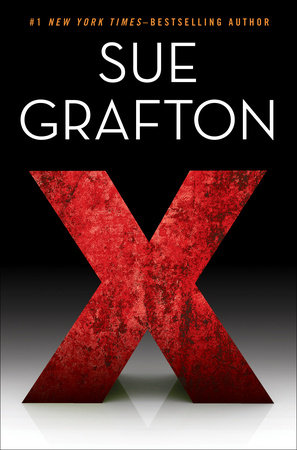
On the occasion of Marian Wood Books’ publication of X, Sue Grafton’s 24th Kinsey Millhone Mystery, we are pleased to present Vice President and Publisher Marian Wood. As Grafton’s longtime editor, she agreed to answer three questions involving her work with Grafton. Marian admits, “These questions brought sort of a walk down memory lane: 34 years of memories, to be exact. Foolishly, I went to my bookshelves and picked up A is for Alibi and began reading, and couldn’t stop.” What initially attracted you to Sue Grafton’s writing style and her approach to the mystery novel form? Well, although Sue never writes the same novel twice and her books consistently surprise me, rereading “A” brought back that incredible rush I had on my first reading. Here was an original voice: tough, funny, smart, without an ounce of self-pity but also without any superhero ego. From the first I knew she was a serious stylist, that her characters were fully formed and she was using genre the way earlier mystery writers (the men who gave us noir) had: to make telling points about the (largely corrupt) world their characters moved in. Be it Raymond Chandler or Ross Macdonald, their protagonists were loners, honest but flawed (and usually, unlike Kinsey, very heavy drinkers), who took on cases the way a knight errant might take on causes. The world Kinsey navigates is not as corrupt as theirs, but it is often just as twisted and dangerous. SueGraftonABCtnail In “A,” Kinsey tells us she is 32, twice divorced, no kids, no pets, no houseplants. In short, she is independent and alone. What we learn as the series progresses is that she is also nobody’s sidekick. Unlike so many female characters in the mysteries that preceded her appearance, she is not a loyal helpmate or willing employee or second banana. Now, how refreshing is that? And when she finds herself in serious danger, she is tough enough to fight her way out—even when it means killing or maiming her attacker. But it bothers her that she has to. So in addition to being tough and honest, she has a conscience. Mayhem for mayhem’s sake is not on her resume. Her novels also do not depend on technology or gadgets for their denouements. Brains and determination are what matter. There are no James Bond gimmicks, and no saviors in white hats to come to Kinsey’s rescue. Through Kinsey, Sue is able to wrestle with some very current social ills. She doesn’t preach, but she does observe. And her intelligence in these matters raises the books to another level. You won’t find her giving facile answers to homelessness, but you will find her pointing out all sides of the problem. How you take this is your call as a reader. Sue is not here to convert you—but she wants readers to understand the human toll such problems take. And she is not here to solve our social problems. She can’t tell us how to stop the abuse of elders, for example. But she can, in horrible detail, show you how it happens. SueGraftonENDtnaail Perhaps this makes the books sound “heavy.” They are hardly that. One of the very great attractions of Sue Grafton’s writing is just how clever (both witty and funny) Kinsey is and how tellingly Sue leads her characters into crazy (but all too real) human interactions. And a large part of her success in doing this is that she has such a terrific grasp of the human condition, which is another reason her characters resonate long after you’ve finished the book. How would you describe the nature of your editor/author process when working with Sue Grafton and how has it evolved over the years? Our relationship is based on trust and mutual respect. Sounds corny, but it’s true. There may have been a few bumps early on because Sue bore some real scars from her years of working with Hollywood know-it-alls (“They all seemed to be barely out of high school,” she has said). Books, however, are not movies, and editing is a matter of supporting the writer not taking over her book. (Some of you may know of instances of editors taking credit for the quality of their writer’s book. Personally, if the writing was that bad to begin with, I’d want no part of it.) With Sue, as the years and books progressed, our working relationship, never problematic to begin with, became a sheer delight. Sue is a professional and a dedicated craftswoman. I like to think the same applies to her editor. There have been a few occasions during the writing when the plot line seems temporarily to stall out. Sue says dreaming often resolves a knotty plot line, and I say that what cannot be resolved in dreams is usually a relatively easy fix that a trusted reader can suggest. Mostly that first reader is her husband, Steve Humphrey. As someone who was long-married to a writer, I know the pitfalls that can happen when a spouse is called upon to read, but in the 34 years I’ve known them, their working relationship has been nothing short of miraculous. What has contributed to the popularity of the Kinsey Millhone character and the series, and what elements in the new novel, X, do you feel will resonate most strongly with readers? Sue never runs in place. I have read many writers who begin a series wonderfully and then, at about book 4 or 5, stall out. The books become padded, the plots are listless, the characters repeat themselves. Not so Sue. In fact, Sue brings a freshness and originality to each new book. Even those instances in which she needs to reintroduce a character from an earlier book or reprise some earlier plot line–so that a reader coming new to the series need not begin with “A”—are deftly handled and, for the veteran reader, often contain welcome new information. I think the reason the series continues to appeal so strongly is that Sue takes her writing very seriously. To turn in a listless effort would be to cheat her readers—and herself. SueGraftonSUVtnail The second part of your question is harder to answer because it would give away much of the plot of X. Let me just say this: There are three extraordinary plot lines in X. The reader will initially be hard pressed to know which is the prime plot, which secondary. But all are supremely interesting. One is outrageous—but many of us will be familiar with the neighbors from hell and, in its own way, it is very comic. Another is a complex scam that has grown out of the broken marriage of two hot-tempered people who should have taken the time to cool down. And the third? It is the harrowing story of a vicious sociopathic serial killer who has left a trail of dead women going back nearly thirty years. The victims have either been declared suicides or they have simply vanished. The killer is at large, and Kinsey is in his sight lines. Dark, chilling, and clever, X is also infinitely wise in the matter of human misbehavior—or why we are often our own worst enemy. Read more about X here.

Writing Tips from Jules Moulin, author of Ally Hughes Has Sex Sometimes

We know readers tend to be writers too, so we feature writing tips from our authors. Who better to offer advice, insight, and inspiration than the authors you admire? They’ll answer several questions about their work, share their go-to techniques and more. Now, get writing!  What writing techniques have you found most important or memorable? For me, learning different ways to structure a story was crucial, and still is! I’m always on the lookout for great structuring tips. While outlining, in order to ensure causal plotting, I use the phrase “WHICH CAUSED” between scenes. For example: “The queen caught a cold. The queen died. The king died.” This isn’t causal plotting. But “The queen caught a cold.” WHICH CAUSED “The queen to die of that cold.” WHICH CAUSED “The king to die of heartbreak.” This helps me to make sure that one moment causes the next moment. How would you recommend creating and getting to know your characters? I have a background in journalism, so I recommend reporting — even for fiction. For Ally Hughes Has Sex Sometimes, I called a slew of Sex and Gender professors (not unlike my main character Ally) and interviewed them, asking questions about anything and everything including their jobs, daily schedules, likes and dislikes, opinions on current events, etc. After developing an idea, what is the first action you take when beginning to write? I actually do everything at once: I start writing scenes that I’m 90 percent sure will end up in the story, I start researching, and I start outlining. And most importantly, I start imagining the ending so that I can start planning the beginning. My outline is fluid and evolving — I go back and make changes to my outline throughout the writing process so that I complete the outline only a short while before I finish the book. Is there something you do to get into a writing mood? Somewhere you go or something you do to get thinking? Yes! I work in cafes mostly, where I have endless access to coffee and WiFi, and if I have serious, important writing to do, I plug into my earphones and listen to the Dave Matthews Band! Did you always want to write? How did you start your career as an author? No. I wanted to be an actress. I actually still do, but I’m too chicken. But everything I know about writing came from years and years of studying acting. I studied everywhere, with everyone; learned how to break down a scene, how to create and motivate character, how to write dialogue, etc. What’s the best piece of advice you have received? That you should try to write every day, even if it’s just for ten or twenty minutes. I don’t do this — but every writer I admire gives this advice and says they heed it! What clichĂ©s or bad habits would you tell aspiring writers to avoid? Do you still experience them yourself? My worst habit is not writing daily, for sure. I’m pretty good about not using adverbs. Adverbs are deadly, unless you’re J.K. Rowling, who uses them all the time, so go figure… Read more about Ally Hughes Has Sex Sometimes here.

In Memoriam: Dr. Oliver Sacks

Dr. Oliver Sacks died early Sunday morning at his home in New York City.  He was 82.  Knopf Doubleday PG, his publisher, said:  “Oliver was a doctor, scientist, swimmer, teacher, and writer, and it was our joy and privilege to publish him. We all mourn his passing.” Oliver Sacks: ”I cannot pretend I am without fear. But my predominant feeling is one of gratitude. I have loved and been loved; I have been given much and I have given something in return; I have read and traveled and thought and written. I have had an intercourse with the world, the special intercourse of writers and readers.  Above all, I have been a sentient being, a thinking animal, on this beautiful planet, and that in itself has been an enormous privilege and adventure.” You can browse through Dr. Sacks’ books here.

Penguin Random House Internships – The Inside Scoop, Part 2

For book lovers, snagging a summer internship in publishing is a very big deal. Now that it’s almost time to head back to school, we asked our interns about their experiences at Penguin Random House. 

Speakers Bureau Intern: Sara Chuirazzi 

To be completely honest, when I found out that I would be interning with the Penguin Random House Speakers Bureau this summer, I had no idea what that entailed. Even so, I packed my life into two suitcases and flew from my small Ohio town to New York City. It’s only been a month or so, but I’ve already learned so much about the business of publishing, and the speakers bureau, in particular (in addition to everything I’ve learned about city living!). Essentially, the speakers bureau represents authors in the world of paid speaking engagements–which I’ve found out is a vibrant, fast-paced industry. I’ve had the opportunity to work with a varied clientele base (libraries, corporations, schools, etc.) and large group of talented authors. Because the bureau represents the entire company, I am lucky enough to work with multiple imprints and types of literature. Not only does working in this capacity keep me up-to-date on new book releases, but I also feel well informed about current events and topics in which there is a demand for conversations, such as LGBT rights, leadership skills, and other social issues. It feels good to know that I am playing a small role in facilitating these important conversations by helping to send qualified, enthusiastic speakers into the world! This week, one of the agent directors from the speakers bureau presented at our intern lunch meeting and I was overwhelmed by how proud I felt to be part a of this close-knit, hardworking group. Beyond that, I was filled with gratitude for having the opportunity to work at a place that has such a healthy corporate culture and that places such a high value on mentoring. One of the most important things that I’ve learned in my time here is how special it is to connect with people who share your passions. How awesome is it to discuss books and writing with people all day?! What a great foundation to build a career on! I’ve also learned how important it is to get to know the people around you. It’s more than just “networking,” which young people are encouraged to do as frequently as possible. If you’re not actually interested in something, networking doesn’t work. You need to be genuinely interested in how people ended up where they are today, what they love about their jobs, and how you can create a career for yourself that is equally fulfilling. Here’s to an equally wonderful second half of my internship with Penguin Random House! Random House Publishing Group Art Intern: Arielle Pearl Arielle Pearl These past five weeks at Random House have been really educational and productive. I am interning in the Advertising/Promotions department, as well as the Art/Design department for the Random House Publishing Group imprint. Even on my first day I could tell that this was going to be a valuable experience that I would enjoy. Being an intern can be intimidating, but this is not the case at Random House. Everyone who works here is extremely humble, and friendly, and is eager to teach beginners the works of the business. It is an environment where teamwork is fostered, and the success of books is priority. In the Art department I am being supervised by Paolo Pepe, the SVP & Creative Director. I have been reading manuscripts and learning how to design book covers using Adobe Creative Suite and hand illustration. This process has been really challenging because everyone involved in the process has a very specific image of how they think the cover should look. One book that I am working on has been in the cover development process for almost a year. It has been really interesting learning about the process from such talented designers, as well seeing the selection process from the publisher’s point of view. For the art department, I’ve also been creating mechanicals using Adobe Creative Suite, and creating templates for e-books. In the Advertising and Promotions Department, I am being supervised by the Sr Director of Creative Services, Annette Melvin. For the department I have been using Adobe Creative Suite to create advertising materials for upcoming books, such as social media banners, and print ads. I’ve also been writing copy for upcoming book’s advertising campaigns.
Interns at a Networking Event

Digital Video Intern: Katie Susko 

Before I started interning at Penguin Random House, three things came to mind when I thought of book publishers: books, books, and more books. I never would have guessed that the things that I would be handling when working at a book publisher would be mobile apps and YouTube videos; and yet, here I am. And coincidentally, these two things are exactly what I want to be dealing with. An outsider may be confused as to why Penguin Random House hired an intern to report sales in the App Store, or analyze the audience retention of a video of Aziz Ansari at Book Con. But from the inside, this makes perfect sense. I am an intern for the app development and video production departments. My daily activities are centered on apps that we have created to accompany our books and brands, such as Fodor’s, Game of Thrones, and Cat in the Hat. My activities also involve our YouTube videos that promote our books, but also get people excited about reading in general. My day-to-day tasks are challenging because they are completely new to me (I’ve only had experience in editorial), but that makes my internship exciting. I never know what I’m going to do next. Aside from learning the ins and outs of a book publisher (from both my supervisors and from the amazing brown bag lunches), I now have knowledge in video production, marketing, sales, audience involvement, app design, and so much more. But in book publishing, there is always more to learn. Luckily, my supervisors and co-workers have encouraged me to get involved in as many aspects of publishing as I can while I’m in New York (we just don’t have the same opportunities back in Michigan). With this overwhelming encouragement, and inspiration from brown bag lunches, I hope to look more in depth at the art and editorial departments. I have studied these two subjects in school and would love to see how they are executed at an actual business (and then I can go back and brag to my professors). But you may be wondering: if I’ve been studying art and editorial, why are the app and video departments “exactly what I want to be dealing with”? I have always been fascinated with the way that others are able to take traditional ideas and transform and innovate as our world evolves. And that is exactly what my department is doing. Videos and mobile apps are not what you’d expect from a book publisher: and that’s why I want to be here. I am so blessed to be working with some of the most innovative and creative people I have had the pleasure to meet, and it has only added to my desire to be in the book publishing industry. For the rest of this internship, I hope to learn as much as I can about apps and videos; from the design and editing to, ultimately, the users’ interaction. I am so lucky to have this internship this summer (and the free books aren’t so bad either). Thanks to all our interns for all your hard work! You’ll be missed! 

Senior Editor at The Penguin Press, Virginia Smith Younce, on The Star Side of Bird Hill, by Naomi Jackson

Editors get very passionate about books they work on – the Editor’s Desk series is his or her place to write in-depth about what makes a certain title special. Get the real inside-scoop on how books are shaped by the people who know them best. I fell in love with Naomi Jackson’s debut novel about a matriarchal family in Barbados, The Star Side of Bird Hill, from the opening page. In short order, Jackson indelibly captures Barbados’ Bird Hill neighborhood and the two young Braithwaite sisters who have left Brooklyn to come and live there with their grandmother. From its very first line, Star Side plunges us in this very specific, very beautiful community: The people on the hill liked to say that God’s smile was the sun shining down on them. Jackson’s first descriptions of the girls at the heart of this novel are also stunning. Dionne, the elder sister, is “sixteen going on a bitter, if beautiful, forty-five.” Phaedra, age ten, saw “her skin had darkened to a deep cacao from running in the sun all day in spite of her grandmother’s protests… Glimpses of Phaedra’s future beauty peeked out from behind her pink heart-shaped glasses, which were held together with scotch tape.” Before I turned to the second page, I was fully immersed in this place, and I felt I had known these girls for years. Author Naomi Jackson grew up in a predominantly West Indian neighborhood in Brooklyn and spent summers in Barbados with her family. There is a strong autobiographical element to Star Side, which explores themes of immigration and identity, motherhood and family, sexual awakening and coming of age, and mental illness and belonging. After their mother’s breakdown in New York forces them into exile in Barbados, Dionne spends the summer in search of love, while Phaedra explores Bird Hill, where her family has lived for generations. The girls’ grandmother, Hyacinth, is a midwife and practitioner of the local spiritual practice of obeah. Hyacinth is a magical character, and the novel beautifully explores parenthood through her loves and losses. Her daughter Avril left Barbados for good when she fell for the girls’ father Errol. When Errol arrives to reclaim the sisters, the girls must choose between two worlds, as their mother once did. It has been so gratifying to see in-house readers, booksellers, and reviewers connect with this lyrical narrative. Jackson’s Barbados captured our imagination, and her characters are unforgettable, especially the heartbreaking young Phaedra.The Star Side of Bird Hill is an Indies Introduce selection, and many of our independent bookselling partners told me at BEA how excited they were to get this novel into the hands of their more advanced YA readers, as well as their adult readers who love transporting, literary fiction. I look forward to seeing many more readers fall for Star Side and the very talented Naomi Jackson. Read more about The Star Side of Bird Hill here.