

Listen: C.A. Higgins on morality, mythology, and black holes
C. A. Higgins joins guest host Haley to talk about the last book in the Lightless Trilogy, RADIATE. They talk morality, welsh mythology, and how people are like particles.




 The Return: Fathers, Sons and the Land in Between by Hisham Matar.
Edited by Noah Eaker.
Pulitzer citation: “For a first-person elegy for home and father that examines with controlled emotion the past and present of an embattled region.”
Susan Kamil, Hisham Matar’s publisher at Random House, said, “It’s thrilling to see Hisham’s work so recognized by the Pulitzer jury. The Return is about Hisham’s personal search for his father, but his art elevates it into a universal quest for justice.”
The Return previously won the inaugural PEN/Jean Stein Book Award.
Fiction
The Return: Fathers, Sons and the Land in Between by Hisham Matar.
Edited by Noah Eaker.
Pulitzer citation: “For a first-person elegy for home and father that examines with controlled emotion the past and present of an embattled region.”
Susan Kamil, Hisham Matar’s publisher at Random House, said, “It’s thrilling to see Hisham’s work so recognized by the Pulitzer jury. The Return is about Hisham’s personal search for his father, but his art elevates it into a universal quest for justice.”
The Return previously won the inaugural PEN/Jean Stein Book Award.
Fiction
 The Underground Railroad by Colson Whitehead.
Edited by Bill Thomas.
Pulitzer citation: “For a smart melding of realism and allegory that combines the violence of slavery and the drama of escape in a myth that speaks to contemporary America.”
Colson Whitehead commented, “I don’t even know what to say — this has been a crazy ride ever since I handed the book in to my editor. I’m incredibly grateful to everyone who picked up a copy and dug it, and to all the kind folks who championed it along the way — the booksellers, the reviewers, the awesome Oprah Winfrey, and the judges. It’s a nice day to put ‘New York, New York’ on the headphones and walk around city making crazy gestures at strangers.”
The Underground Railroad has sold over 825,000 copies in the United States across all formats. An Oprah’s Book Club 2016 selection, #1 New York Times bestseller, a New York Times Book Review Ten Best Books of 2016 selection and the winner of the 2016 National Book Award for Fiction, the book chronicles young Cora’s journey as she makes a desperate bid for freedom in the antebellum South. After escaping her Georgia plantation for the rumored Underground Railroad, Cora discovers no mere metaphor, but an actual railroad full of engineers and conductors, and a secret network of tracks and tunnels beneath the Southern soil.
General Nonfiction
The Underground Railroad by Colson Whitehead.
Edited by Bill Thomas.
Pulitzer citation: “For a smart melding of realism and allegory that combines the violence of slavery and the drama of escape in a myth that speaks to contemporary America.”
Colson Whitehead commented, “I don’t even know what to say — this has been a crazy ride ever since I handed the book in to my editor. I’m incredibly grateful to everyone who picked up a copy and dug it, and to all the kind folks who championed it along the way — the booksellers, the reviewers, the awesome Oprah Winfrey, and the judges. It’s a nice day to put ‘New York, New York’ on the headphones and walk around city making crazy gestures at strangers.”
The Underground Railroad has sold over 825,000 copies in the United States across all formats. An Oprah’s Book Club 2016 selection, #1 New York Times bestseller, a New York Times Book Review Ten Best Books of 2016 selection and the winner of the 2016 National Book Award for Fiction, the book chronicles young Cora’s journey as she makes a desperate bid for freedom in the antebellum South. After escaping her Georgia plantation for the rumored Underground Railroad, Cora discovers no mere metaphor, but an actual railroad full of engineers and conductors, and a secret network of tracks and tunnels beneath the Southern soil.
General Nonfiction
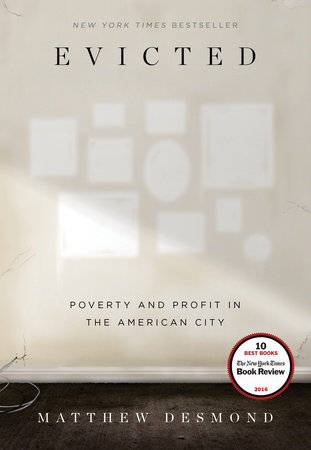 Evicted: Poverty and Profit in the American City by Matthew Desmond.
Edited by Amanda Cook.
Pulitzer citation: “For a deeply researched exposé that showed how mass evictions after the 2008 economic crash were less a consequence than a cause of poverty.”
Ms. Cook commented, “It’s been an honor for all of us at Crown to help bring Evicted into the world. Matt Desmond writes with great heart and intellectual rigor about America’s housing crisis. He follows eight families in Milwaukee as they struggle to keep a roof over their heads, showing us how a lack of stable shelter traps families in poverty and destroys lives meant for better things. Matt often says, ‘We don’t need to outsmart poverty; we need to hate it more.’ With Evicted, he has helped us do exactly that.”
Evicted previously won the 2016 National Book Critics Circle Award for Nonficiton, the 2017 Andrew Carnegie Medal for Excellence in Nonfiction, the 2017 PEN/John Kenneth Galbraith Award for Nonfiction, and the 2016 Discover Great New Writers Award in Nonfiction, among other honors.
History
Evicted: Poverty and Profit in the American City by Matthew Desmond.
Edited by Amanda Cook.
Pulitzer citation: “For a deeply researched exposé that showed how mass evictions after the 2008 economic crash were less a consequence than a cause of poverty.”
Ms. Cook commented, “It’s been an honor for all of us at Crown to help bring Evicted into the world. Matt Desmond writes with great heart and intellectual rigor about America’s housing crisis. He follows eight families in Milwaukee as they struggle to keep a roof over their heads, showing us how a lack of stable shelter traps families in poverty and destroys lives meant for better things. Matt often says, ‘We don’t need to outsmart poverty; we need to hate it more.’ With Evicted, he has helped us do exactly that.”
Evicted previously won the 2016 National Book Critics Circle Award for Nonficiton, the 2017 Andrew Carnegie Medal for Excellence in Nonfiction, the 2017 PEN/John Kenneth Galbraith Award for Nonfiction, and the 2016 Discover Great New Writers Award in Nonfiction, among other honors.
History
 Blood in the Water: The Attica Prison Uprising of 1971 and Its Legacy by Heather Ann Thompson.
Edited by Edward Kastenmeier.
Pulitzer citation: “For a narrative history that sets high standards for scholarly judgment and tenacity of inquiry in seeking the truth about the 1971 Attica prison riots.”
Mr. Kastenmeier commented, “Heather is a remarkable historian who has spent the last ten years of her life working diligently to make sure she could do justice to this story before it is too late. She has shown remarkable courage and fortitude in researching a story the authorities didn’t want told. We need that now more than ever. In the years she’s been working on this book the issues it raises have become more urgent than ever. For all these reasons I could not be happier for her upon this news.”
We thank and congratulate Hisham Matar, Colson Whitehead, Matthew Desmond, and Heather Ann Thompson, their respective editors Noah Eaker, Bill Thomas, Amanda Cook, and Edward Kastenmeier, and our colleagues at Random House, Doubleday, Crown Publishers, and Pantheon for continuing and building upon one of our proudest literary traditions.
To view the complete 2017 Pulitzer winners list, click here.
Learn more about the winners here:
Blood in the Water: The Attica Prison Uprising of 1971 and Its Legacy by Heather Ann Thompson.
Edited by Edward Kastenmeier.
Pulitzer citation: “For a narrative history that sets high standards for scholarly judgment and tenacity of inquiry in seeking the truth about the 1971 Attica prison riots.”
Mr. Kastenmeier commented, “Heather is a remarkable historian who has spent the last ten years of her life working diligently to make sure she could do justice to this story before it is too late. She has shown remarkable courage and fortitude in researching a story the authorities didn’t want told. We need that now more than ever. In the years she’s been working on this book the issues it raises have become more urgent than ever. For all these reasons I could not be happier for her upon this news.”
We thank and congratulate Hisham Matar, Colson Whitehead, Matthew Desmond, and Heather Ann Thompson, their respective editors Noah Eaker, Bill Thomas, Amanda Cook, and Edward Kastenmeier, and our colleagues at Random House, Doubleday, Crown Publishers, and Pantheon for continuing and building upon one of our proudest literary traditions.
To view the complete 2017 Pulitzer winners list, click here.
Learn more about the winners here:
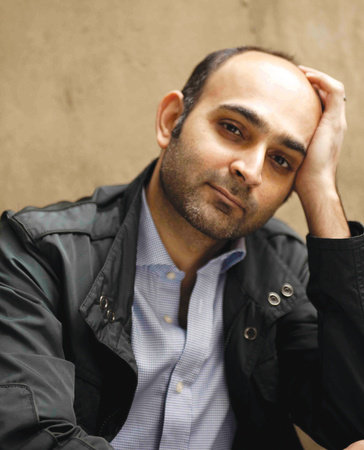
Mohsin Hamid. Photo by Jillian Edelstein
Did you always want to write? How did you start your career as an author?
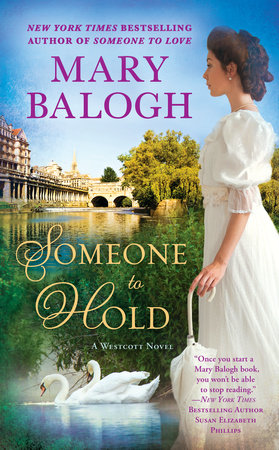
Yes. As a child, when people used to ask me what I wanted to be when I grew up, I would say I wanted to be an authoress (that word certainly dates me, doesn’t it?). I used to fill notebooks with stories. When I grew up, of course, I discovered that I needed to eat so became a high school English teacher. Then I got married and had children. There was no time to write. I took a year’s leave of absence following the birth of my third child and worked my way through a suggested Grade XI reading list. It included Georgette Heyer’s Frederica. I was enchanted, perhaps more than I have been with any book before or since. I read everything she had written and then went into mourning because there was nothing else. I decided that I must write books of my own set in the same historical period. I wrote my first Regency (A Masked Deception) longhand at the kitchen table during the evenings and then typed it out and sent it off to a Canadian address I found inside the cover of a Signet Regency romance. It was a distribution centre! However, someone there read it, liked it, and sent in on to New York. Two weeks later I was offered a two-book contract.
What’s the best piece of advice you have received?
Someone (I can’t even remember who) at a convention I attended once advised writers who sometimes sat down to work with a blank mind and no idea how or where to start to write anyway. It sounded absurd, but I have tried it. Nonsense may spill out, but somehow the thought processes get into gear and soon enough I know if what I have written really is nonsense. Sometimes it isn’t. But even if it is, by then I know exactly how I ought to have started, and I delete the nonsense and get going. I have never suffered from writers’ block, but almost every day I sit down with my laptop and a blank mind.
What clichés or bad habits would you tell aspiring writers to avoid? Do you still experience them yourself?
You don’t have to know everything before you start. You don’t have to know the whole plot or every nuance of your characters in great depth. You don’t have to have done exhaustive research. All three things are necessary, but if you wait until you know everything there is to know, you will probably never get started. Get going and the knowledge will come—or at least the knowledge of what exact research you need to do.
Do you ever base characters off people you know? Why or why not?
Never consciously. I wouldn’t want anyone to recognize himself or herself in my books. However, I have spent a longish lifetime living with people and interacting with them and observing them. I like my characters to be authentic, so I suppose I must take all sorts of character traits from people around me. And sometime yes, I suddenly think “Oh, this is so-and-so.”
What are three or four books that influenced your writing, or had a profound affect on you?
All the books of Georgette Heyer would fit here. She was thorough in her research and was awesomely accurate in her portrayal of Georgian and Regency England. At the same time she made those periods her own. She had her own very distinctive voice and vision. When I began to write books set in the same period, I had to learn to do the same thing—to find my own voice and vision so that I was not merely trying to imitate her (something that never works anyway).
Learn more about the book below:
Ottessa Moshfegh’s debut novel Eileen, published by Penguin Press, was one of the literary events of 2015. Garlanded with critical acclaim, it won the PEN/Hemingway Award for Debut Fiction, was nominated for a National Book Critics Circle Award, was shortlisted for the Man Booker Prize, and was named a book of the year by The Washington Post and San Francisco Chronicle. But as many critics noted, Ottessa Moshfegh is particularly held in awe for her short stories.
 Homesick for Another World, on sale now from Penguin Press, is the rare case where an author’s short story collection is, if anything, more anticipated than her novel. And for good reason. There’s something eerily unsettling about Ottessa’s stories, something almost dangerous, while also being delightful, and even laugh-out-loud funny. Her characters are all unsteady on their feet in one way or another; they all yearn for connection and betterment, though each in very different ways, but they are often
 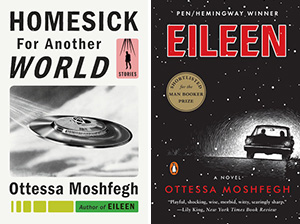 tripped up by their own baser impulses and existential insecurities. Homesick for Another World is a master class in the varieties of self-deception across the gamut of individuals representing the human condition.
In this interview, Ottessa takes us inside her world:
How would you describe your writing regimen and routines?
Obsessive and neurotic and captivating. I wake up, I work, I dilly dally, work, take out the trash, work, pace around, eat, work, shower, work, read, work, go for a walk, call people, work, eat, work, sleep. Toward the end of writing a book, I often sleep with my computer under my pillow…
What differentiates your approach to conceiving a novel as compared with your short stories?
The motivation to write a short story often comes from an abstract, mysterious noise in my head, and I can take my time concentrating on that sound and experimenting with what words, voice, characters, and narrative movements are being described by the music in my mind. Writing a novel is that, plus a million pounds of pressure at my back, loaded with questions about how my life is being reflected in this writing process, and what I want to learn and say to the world. So, novels are more prolonged and intense journeys, although they can start out as playfully as a story.
tripped up by their own baser impulses and existential insecurities. Homesick for Another World is a master class in the varieties of self-deception across the gamut of individuals representing the human condition.
In this interview, Ottessa takes us inside her world:
How would you describe your writing regimen and routines?
Obsessive and neurotic and captivating. I wake up, I work, I dilly dally, work, take out the trash, work, pace around, eat, work, shower, work, read, work, go for a walk, call people, work, eat, work, sleep. Toward the end of writing a book, I often sleep with my computer under my pillow…
What differentiates your approach to conceiving a novel as compared with your short stories?
The motivation to write a short story often comes from an abstract, mysterious noise in my head, and I can take my time concentrating on that sound and experimenting with what words, voice, characters, and narrative movements are being described by the music in my mind. Writing a novel is that, plus a million pounds of pressure at my back, loaded with questions about how my life is being reflected in this writing process, and what I want to learn and say to the world. So, novels are more prolonged and intense journeys, although they can start out as playfully as a story.
 Where do inspirations for your characters and storylines come from?
They come from my life experiences, overheard conversations, dreams, the imagination, the ether…
It what ways has Penguin Press impacted your writing career?
Penguin Press has been a miracle in my life – this team has been so incredibly supportive, positive, and – I think – gutsy. I tell everyone how blessed I feel to have a publisher that understands my work and sees its value today and the potential for the future.
Explore Moshfegh’s books below:
Where do inspirations for your characters and storylines come from?
They come from my life experiences, overheard conversations, dreams, the imagination, the ether…
It what ways has Penguin Press impacted your writing career?
Penguin Press has been a miracle in my life – this team has been so incredibly supportive, positive, and – I think – gutsy. I tell everyone how blessed I feel to have a publisher that understands my work and sees its value today and the potential for the future.
Explore Moshfegh’s books below:


