Congratulations to Zayn on his AMA Win!

At Sunday’s American Music Awards, Zayn Malik won the New Artist of the Year award! Learn more about this beloved up-and-comer through his new book:
“This book is my diary of a period that I would like to share with you all. I hope that there are things in the book that contextualise some of the moments and memories we have all shared together. There are things I address in the book that are very personal to me, things that I have never told anyone, things I still find hard to talk about. It’s a part of a journey I’m still on.”—ZAYN

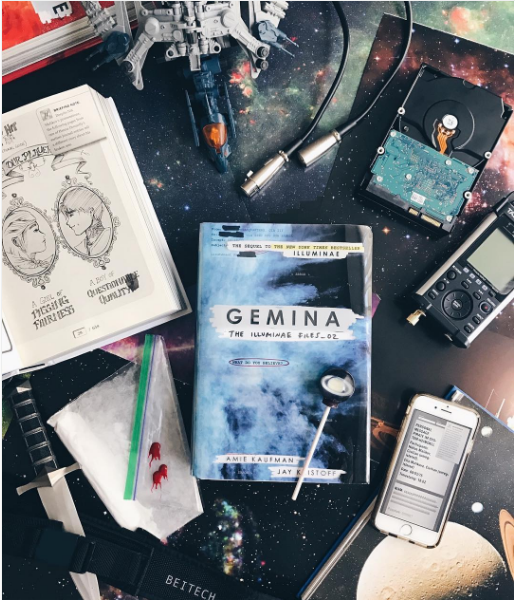
The Life of a Book: An interview with Gemina authors and praise from talented book instagrammers!

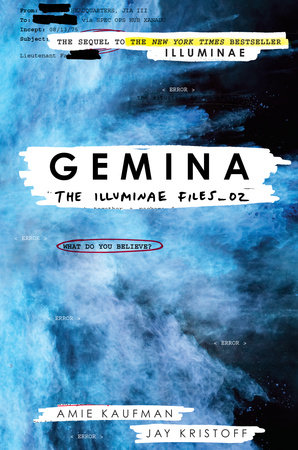
We’re going deep inside the making of a book, with interviews from Penguin Random House employees in editorial, marketing, sales, and more.  If you’ve ever wondered about all the behind-the-scenes work that goes into making your favorite books, this is the series for you.  Take a look at the first post in this series here.  Gemina is now on shelves! We’re wrapping up this series with an interview with the authors! Amie Kaufman and Jay Kristoff stopped by the studio to talk about their book tour and much more. Listen here: 
“Getting out and meeting readers is honestly the best part of the job” – Jay Kristoff
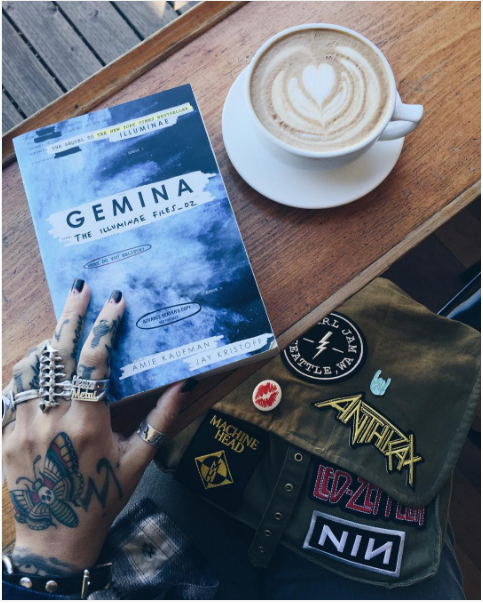
Fans have been raving about Gemina, and book instagrammers have a lot to say! From Hikari of Folded Pages Distillery:
Gemina: 10/5 Stars. Explosive, Brutal, Hilarious, Unforgiving, Fist Pumping, Jaw Dropping. These are the words I’m using for Gemina. I started Gemina on Thursday and stayed up last night until 3 a.m. finishing it because I COULD NOT STOP.”
From Vilma of Vilma’s Book Blog:
“I think the whole world knows how much I loved #Illuminae and so far I’m loving Hanna and Nik’s story too! Anddddd the book features illustrations by @marieluthewriter! How awesome is that?!!!”
From Ursula of ursula_uriarte: “I present you guys my favorite book of the year!!! If you haven’t read this series please do yourself a favor and get on it! If you do it simultaneously on audio is even better!” Thanks for following along with Gemina’s Life of a Book series! Follow the authors on Twitter (@AmieKaufman, @misterkristoff) and Instagram (@amiekaufmanauthor, @misterkristoff) Visit the website here: illuminaefiles.com Check out more Young Adult books here.  Get the book here: 

Assistant Editor Victoria Savanh on A Voice in the Night and the Montalbano series

Editors get very passionate about books they work on – the Editor’s Desk series is his or her place to write in-depth about what makes a certain title special. Get the real inside-scoop on how books are shaped by the people who know them best. Last fall, we celebrated New York Times and internationally bestselling author of the Inspector Montalbano mystery series Andrea Camilleri’s 90th birthday with the publication of A Beam of Light. This year we’ve hit another incredible milestone—A Voice in the Night is the twentieth novel in his Montalbano series. Having the opportunity to work on a beloved cult classic like the Montalbano series is truly a privilege. The novels sensuously capture the sense of Sicily, from the sun-soaked buildings and seaside views, the simmering food on Montalbano’s plate, to the do-as-you-please attitudes of its inhabitants. The books are translated from Italian, and Stephen Sartarelli’s skill as a translator is on ample display in the ease and rhythm of the quick-witted and wryly humorous dialogue. In reading the first draft, I found it fascinating to consider the nuances of translating from the Italian, as Camilleri often employs several Sicilian dialects within a single novel. I do wonder what cultural idiosyncrasies are lost in translation, but am always pleased that the humor and warmth translate fully. A Voice in the Night brings us back to the Sicilian town VigĂ ta, where Montalbano’s moody demeanor has taken a dive as another birthday rolls around. To cheer himself up, he deals with a young driver’s road rage in his own way, and surprisingly, finds himself confronting the young man once again, this time as the suspect of a gruesome murder. Many of the series’ trademarks make a welcome appearance in A Voice in the Night—lighthearted spats and make-ups with Livia, Catarella’s mispronunciations as unintentional linguistic jokes, the seemingly omnipresent influence of the mob in both the streets and halls of government. And of course, there is the food. (A particularly memorable scene casts a two-foot octopus as murderous foe before vengeful food dish.) Camilleri’s charming creation, Inspector Montalbano, continues to delight and surprise me. Flawed but lovable, the Sicilian Inspector is great company, and it’s with a lot of enthusiasm that we get to share this series with English speaking readers. A Voice in the Night won’t disappoint longtime fans of the books, but it’s also a good jumping-off point for new readers to acquaint themselves with Montalbano’s Sicily. Luckily for me, and for you, dear reader, this isn’t Montalbano’s last case.

Quiz: Which Thanksgiving Dish Are You?

Read John Carter Cash’s foreword to his father’s Forever Words

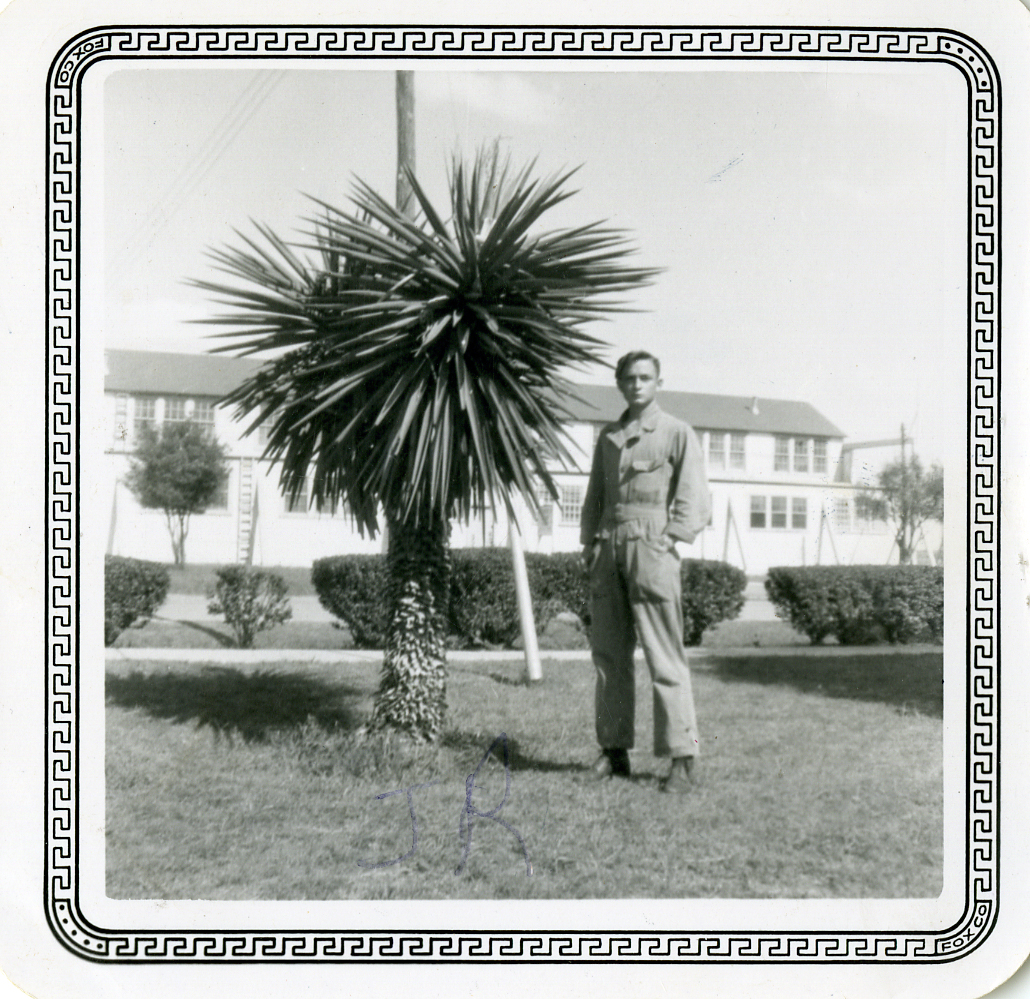
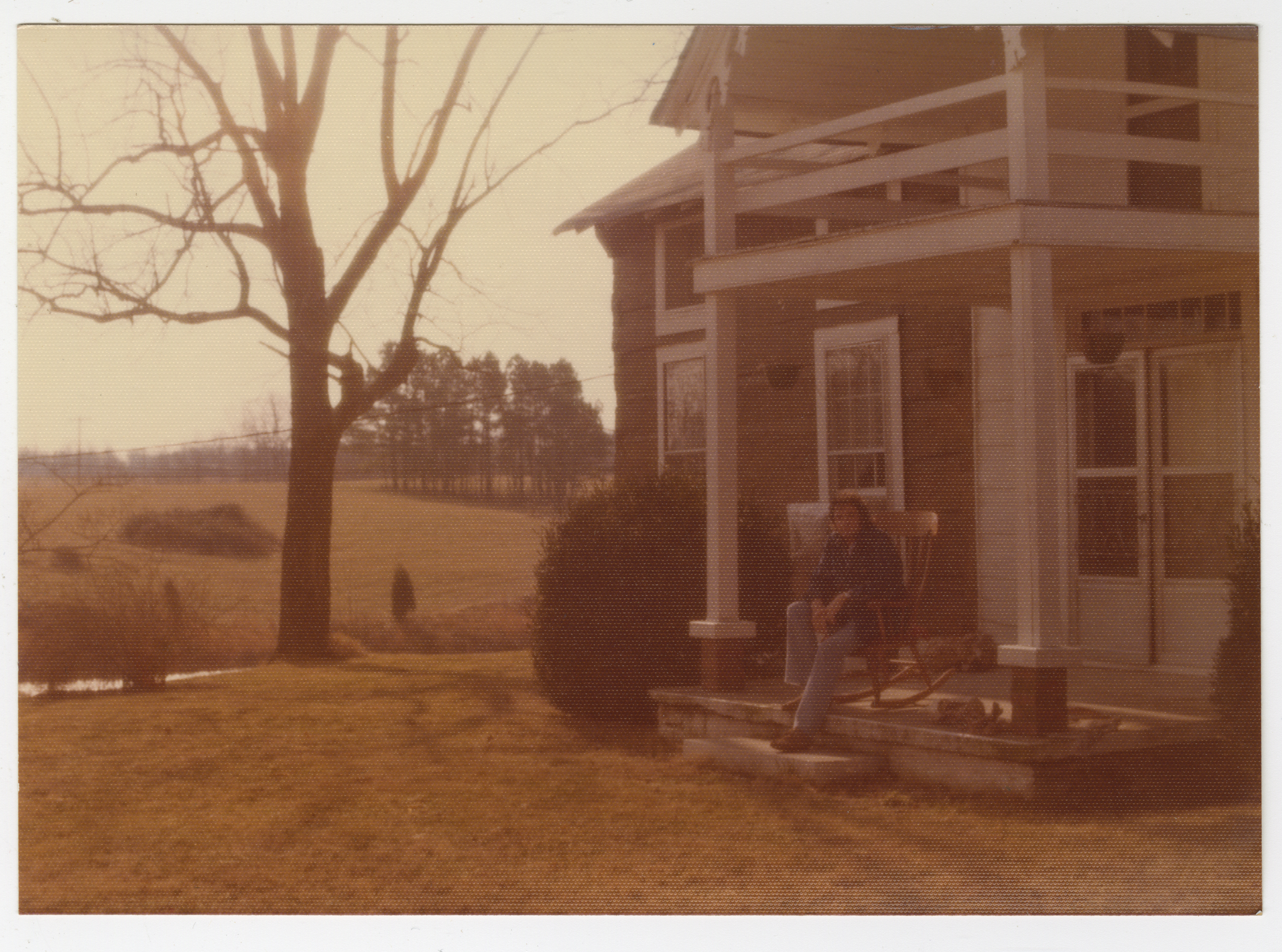
Johnny Cash’s son reflects on his father, his legacy, and his poetry.  FOREWORD: REDEMPTIONS My father had many faces. There was much that made up the man. If you think you “know” John R Cash, think again. There are many layers, so much beneath the surface. First, I knew him to be fun. Within the first six years of my life, if asked what Dad was to me I would have emphatically responded: “Dad is fun!” This was my simple foundation for my enduring relationship with my father. This is the man he was. He never lost this. To those who knew him well—family, friends, coworkers alike—the one essential thing that was blazingly evident was the light and laughter within my father’s heart. Typically, though his common image may be otherwise, he was not heavy and dark, but loving and full of color. Yet there was so much more . . . For one thing—he was brilliant. He was a scholar, learned in ancient texts, including those of Flavius Josephus and unquestionably of the Bible. He was an ordained minister and could easily hold his own with any theologian or historian. His books on ancient history, such as Gibbon’s The History of the Decline and Fall of the Roman Empire, were annotated, read, reread and worn, his very soul deeply ingrained into their threadbare pages. I still have some of these books. When I hold them, when I touch the pages, I can sense my father in some ways even more profoundly than in his music. My father was an entertainer. This is, of course, one of the most marked and enduring manifestations. There are thousands upon thousands of new Johnny Cash fans every year, inspired by the music, talent, and—I believe hugely—by the mystery of the man. My dad was a poet. He saw the world through unique glasses, with simplicity, spirituality, and humor. He loved a good story and was quick to find comedy, even in bleak circumstances. This is evident in one of the last songs he wrote within his lifetime, “Like the 309”:

It should be a while before I see Dr. Death So it would sure be nice if I could get my breath Well, I’m not the crying nor the whining kind Till I hear the whistle of the 309 Of the 309, of the 309 Put me in my box on the 309. Take me to the depot, put me to bed Blow an electric fan on my gnarly old head Everybody take a look, see I’m doing fine Then load my box on the 309 On the 309, on the 309 Put me in my box on the 309.

Dad was asthmatic and had great difficulty breathing during the last months of his life. On top of all this, he suffered with recurring bouts of pneumonia. Still, through the gift of laughter, he found the strength to face these infirmities. This recording is steeped in irony, although made mere days before his passing. His voice is weak, yet the mirth in his soul rings true. Dad was many things, yes. He was tortured throughout his life by sadness and addiction. His tragic youth was marked by the loss of his best friend and brother Jack, who died as the result of a horrible accident when John R was only twelve. Jack was a deeply spiritual young man, kind and protective of his two-year-younger brother. Perhaps it was this sadness and mourning that partly defined my father’s poetry and songs throughout his life. He was likewise defined at the end of his life by the loss of my mother, June Carter. When she passed, their love was more beautiful than ever before: unconditional and kind. Still, it could not be said that any of this—darkness, love, sadness, music, joy, addiction—wholly defined the man. He was all of these things and none of them. Complicated, but what could be said that speaks the essential truth? What prevails? The music, of course . . . but likewise . . . the words. All that made up my father is to be found in this book, within these “forever words.” When my parents died, they left behind a monstrous amassment of “stuff.” They just didn’t throw anything away. Each and every thing was a treasure, but none more than my father’s handwritten letters, poems, and documents, ranging through the entirety of his life. There was a huge amount of paper—his studies of the book of Job, his handwritten autobiography Man in Black, his letters to my mother, and likewise to his first wife, Vivian, from the 1950s. Dad was a writer, and he never ceased. His writings ranged through every stage of his life: from the poems of a naive yet undeniably brilliant sixteen-year-old to later comprehensive studies on the life of the Apostle Paul. The more I have looked, the more I have understood of the man. When I hold these papers, I feel his presence within the handwriting; it brings him back to me. I remember how he held his pen, how his hand shook a bit, but how careful and proud he was of his penmanship—and how determined and courageous he was. Some of these pages are stained with coffee, perhaps the ink smudged. When I read these pages, I feel the love he carried in those hands. I once again feel the closeness of my father, how he cared so deeply for the creative endeavor; how he cared for his loved ones. There are some of these I feel he would have wanted to be shared, some whose genius and brilliance simply demanded to be heard. I hope and believe the ones chosen within these pages are those he would want read by the world. Finally, it is not only the strength of his poetic voice that speaks to me, it is his very life enduring and coming anew with these writings. It is in these words my father sings a new song, in ways he has never done before. Now, all these years past, the words tell a full tale; with their release, he is with us again, speaking to our hearts, making us laugh, and making us cry. The music will endure, this is true. The music will endure, this is true. But also, the words. It is ultimately evident within these words that the sins and sadnesses have failed, that goodness commands and triumphs. To me, this book is a redemption, a cherished healing. Forever. John Carter Cash 35,000 feet above western Arkansas, flying east . . .
Quiz: Which Book Cover Are You?


Author Laura Bradford on why she bakes: “Because He Smiled”

Laura Bradford, author of several cozy mysteries, writes about how she came to be a baker:  When creating a main character in what an author hopes will be a long-running series that character’s motivations have to make sense. So when it came to uncovering the reason behind Winnie’s (the main character in my new Emergency Dessert Squad Mysteries) passion for baking, I really only had to look to myself for the perfect answer
 I think I was only three or four when my big sister let me help make a “cake” in her EZ Bake Oven. I remember peeking in at the little pan as it baked, so excited that I’d helped. When it was done, we topped it with frosting and sprinkles and presented it to our grandfather with much pomp and circumstance. He, in turn, tossed it into his mouth and ate that entire “cake” in one bite. If I try really hard, I can remember a pang of disappointment that he’d eaten it so fast. But what I remember most is the face-splitting smile he wore when he was done. I’d made him smile. With something I’d baked.
A Sunday trip through some of my favorite cookbooks led me to the recipe for Double Chocolate Brownies with Salted Butterscotch and Cherries in WHAT KATIE ATE ON THE WEEKEND
 by Katie Quinn Davies.
Needless to say, I was hooked on baking from that moment forward. I didn’t care if it was cupcakes, brownies, cakes, pies, or cookies, I just wanted to relive that moment of utter satisfaction again and again. And I have. Many times over. Baking has become a part of who I am in much the same way it is a part of Winnie. The only real difference is that she’s made a career out of baking, and I’ve made a career out of writing. But because I write her, I get to be there with her as she dreams up the perfect recipe (and emergency-themed name) for a new customer. Because I write her, I get to be there as she measures and mixes. Because I write her, I’m there, right beside her, as she pulls her baked creation out of the oven. Because I write her, I get to experience the smiles her desserts bring to the faces of her customers. And best of all, because I write her, I have yet another excuse to sit at my kitchen table, scouring cookbook after cookbook for new recipes to try. Sometimes, the picture and the list of ingredients looks and sounds perfect just the way it is. Sometimes, I imagine how it might be if I added a pinch of cinnamon or a bit of caramel, or tried it without a certain taste entirely. But generally speaking, if a recipe has all the things I like, I’ll give it a whirl.
Preparing the salted butterscotch (which, by the way, was awesome!!!)
Funny thing now, though? No matter what I bake these days, I find myself trying to think what Winnie would call it if it had a spot on her Emergency Dessert Squad’s menu. For instance, my kids’ favorite s’more bar has become Winnie’s Worry No s’More Bar (for her most stressed customers), my favorite Black & White cookies have become Winnie’s Black & Blue cookies (for injured customers), my dad’s favorite peach pie is now Winnie’s You’re A Peach pie (for someone who needs to know they’re treasured). The more books I write in the series, the more desserts Winnie needs on her menu. And the more desserts Winnie needs on her menu, the more excuses I have to bake. And just think
 It all started with a smile. So tell us, why do you bake?
Ta-Da—the finished product (sans cherries)!!!
Bio: As a child, Laura Bradford fell in love with writing over a stack of blank paper, a box of crayons, and a freshly sharpened number two pencil. From that moment forward, she never wanted to do or be anything else. Today, Laura is the national bestselling author of several mystery series, including the Emergency Dessert Squad Mysteries, the Amish Mysteries, the Jenkins & Burns Mysteries, the Southern Sewing Circle Mysteries written as Elizabeth Lynn Casey, and the upcoming Tobi Tobias Mystery Series. She is a former Agatha Award nominee, and the recipient of an RT Reviewer’s Choice Award in romance. A graduate of Xavier University in Cincinnati, Ohio, Laura enjoys making memories with her family, baking, and being an advocate for those living with Multiple Sclerosis. For more information, visit: www.laurabradford.com or, for day to day stuff, you can find Laura on Facebook: https://www.facebook.com/laurabradfordauthor/  and occasionally on Twitter @bradfordauthor Browse her books here:

Associate Editor William Heyward on Antoine Leiris’ deeply moving, personal response to last year’s Paris attacks

Editors get very passionate about books they work on – the Editor’s Desk series is his or her place to write in-depth about what makes a certain title special. Get the real inside-scoop on how books are shaped by the people who know them best. Among the victims of the terrorist attacks in Paris last November 13 was a young mother named HĂ©lĂšne Muyal-Leiris. That night, she went to the Bataclan concert hall, while her husband, Antoine Leiris, stayed at home, looking after their 17-month old son, Melvil. Three days after the attacks, Antoine wrote an open letter addressed directly to the terrorists who had murdered his wife, which he published on Facebook. You may have read it at the time. It was titled “You Will Not Have My Hate” and within days had been shared millions of times and reported on across the world. “Victim’s Husband Tells Terrorists, ‘I Will Not Give You the Gift of Hate’,” read the headline in the New York Times. Afterwards, Antoine continued to write about caring for his son alone and burying HĂ©lĂšne. His account of the days and weeks following the attack was soon published in France as book with the same title, You Will Not Have My Hate. When I was sent the manuscript by the French publisher, I read it with tears in my eyes, and more than once, as I worked with the translator, Sam Taylor, I felt overcome by Antoine’s bravery and kindness. His words of grief are startlingly simple and direct, which made the translation process quite straightforward. There were only a handful of instances where Sam and I had some uncertainties about the best phrasing in English (and every time Sam found the ideal solution). Like his letter, Antoine’s book has received passionate gratitude the world over. It will be published in 24 languages and is already a bestseller in multiple countries. This success is because the book is extraordinary, full of heartbreak and sorrow, but also love and hope. It is inspiring. Antoine describes one of the letters he received after he published his open letter, in which a stranger wrote to him, “You are the one who was hurt, and yet it is you who give us courage.” I think there’s a tendency to consider something that has been published as a book as completed, as the past. But it has been less than a year since the attacks in Paris. For those of us who weren’t directly affected, the events have perhaps already been displaced in our memories, pushed to one side as horror has struck again and again. In Orlando, San Bernardino, Nice, Baghdad, and elsewhere. It can seem like we barely have time to mourn one attack before another happens. But You Will Not Have My Hate reminds us sharply of the inconceivable pain of such tragedies. It is both a private story and a universal one. Both a love letter and farewell. To read it is to grieve for a stranger with all one’s heart.

The Life of a Book: Cover and Interior Design

We’re going deep inside the making of a book, with interviews from Penguin Random House employees. Take a look at the first post in this series here.  You can preorder the book here. For a Q&A with the authors, click here… and for you superfans, join First In Line here to see the full uncensored version. Follow along: #Gemina, #Illuminae, #IluminaeFiles Gemina is a beautifully and complicatedly designed book. We spoke to Ray Shappell, Senior Designer at Random House Books for Young Readers and Stephanie Moss, Art Director at Penguin Random House, to find out more.  Did you interact with the authors when planning your design?

Stephanie Moss: The interior design process is very collaborative and we work closely with the authors. When the manuscript is submitted to editorial, the authors also share art, design notes and reference material for the different types of pages throughout the book. Our first task is to then flesh out those ideas into the designs for the pages that appear most frequently. Afterward, we’ll focus on the more unique pages throughout the book. These pages often involve partnering with talented illustrators, like Marie Lu, Meinart and Stuart Wade, to create Hanna’s diary pages and the ship schematics and logos. Each set of designs is then shared with the editor and authors where we’ll discuss possible changes and finesse each idea until it best captures the vision for the book. After the main pages are approved, we’ll begin bringing all the different components together and lay out the entire book. This is also the time when we fine tune some of the one-off page designs.

Ray’s Gemina supplies

Ray Shappell: Yes, indeed. The Illuminae Files are ultimately their brainchild, so our goal in designing the series was to enhance their unique storytelling with a one-of-a-kind package. This series is more technically complicated than any other, and requires a huge collaboration with everyone involved. Once editorial and design approve a cover, we share it with the authors and value their opinions through each step of the process. 

Creating the cover for Gemina was actually a breeze, compared to the process for Illuminae, because I already had an established series design. When I start a new series, I always think about how the current design would work for a second and third book. (Or more if we’re lucky.) So when we finally nailed down the concept for book 1 in The Illuminae Files—a brightly colored explosion interacting with the redacted documents from the story through acetate and a printed case—I also had a rough proposal for Gemina and the third book in the series. When Jay and Amie were in the offices celebrating Illuminae’s launch last November, I shared the proposed visuals for Gemina and they loved it!!! Coincidentally, the color of the blue explosion fits perfectly with the description of a black hole in Gemina. And the proposed image for book three is
XXXXXXXXX (redacted).

The Illuminae FilesWhat is your favorite part of your job?

Ray Shappell: My favorite part of the job is creative problem solving. After reading the manuscript, I have so many concepts and design ideas. I love sketching them all out—picking out typefaces, colors, textures, illustrations, hand lettering, or hiring an illustrator, photographer, or CG artists—all to match the tone of the story. But since I’m not the only one involved, there will be multiple moments throughout the cover design process that require finding a new solution that addresses the needs and concerns of everyone involved, while maintaining creative integrity of the original concept and design. This is extremely fun and rewarding when you are able to make a final piece of artwork that becomes the book jacket. The Illuminae Files is a great example of this working at it’s best – the end product is a much better version of the original concept. 

Ray Shappell lettering

Stephanie Moss: The best part of my job is collaborating with a lot of talented people. Particularly with Gemina, it was exciting to pull together everyone’s ideas then work with artists and a wonderful designer, Heather Kelly, and see those ideas get interpreted in really neat ways.

What would surprise a layman to know about your work?

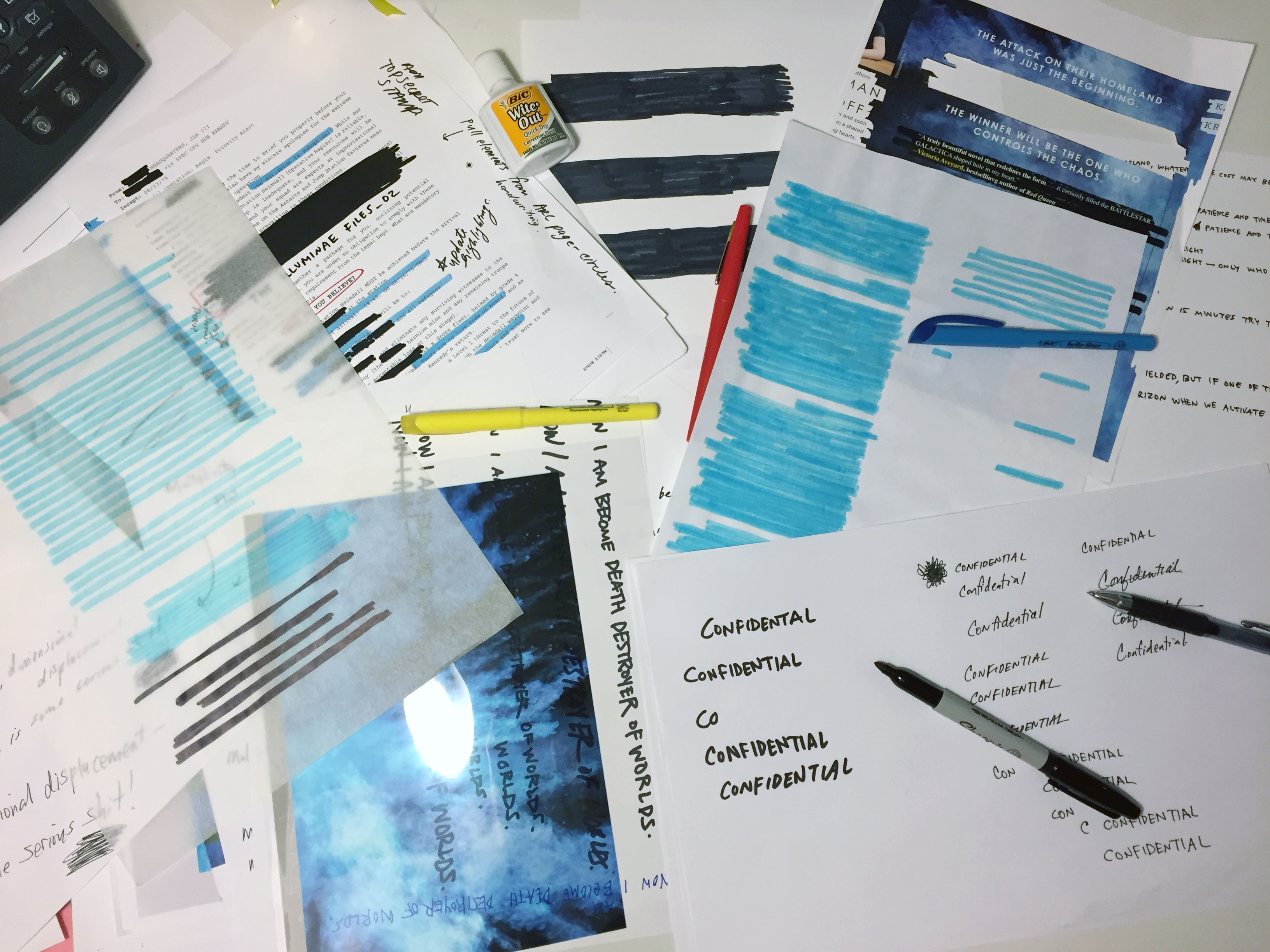
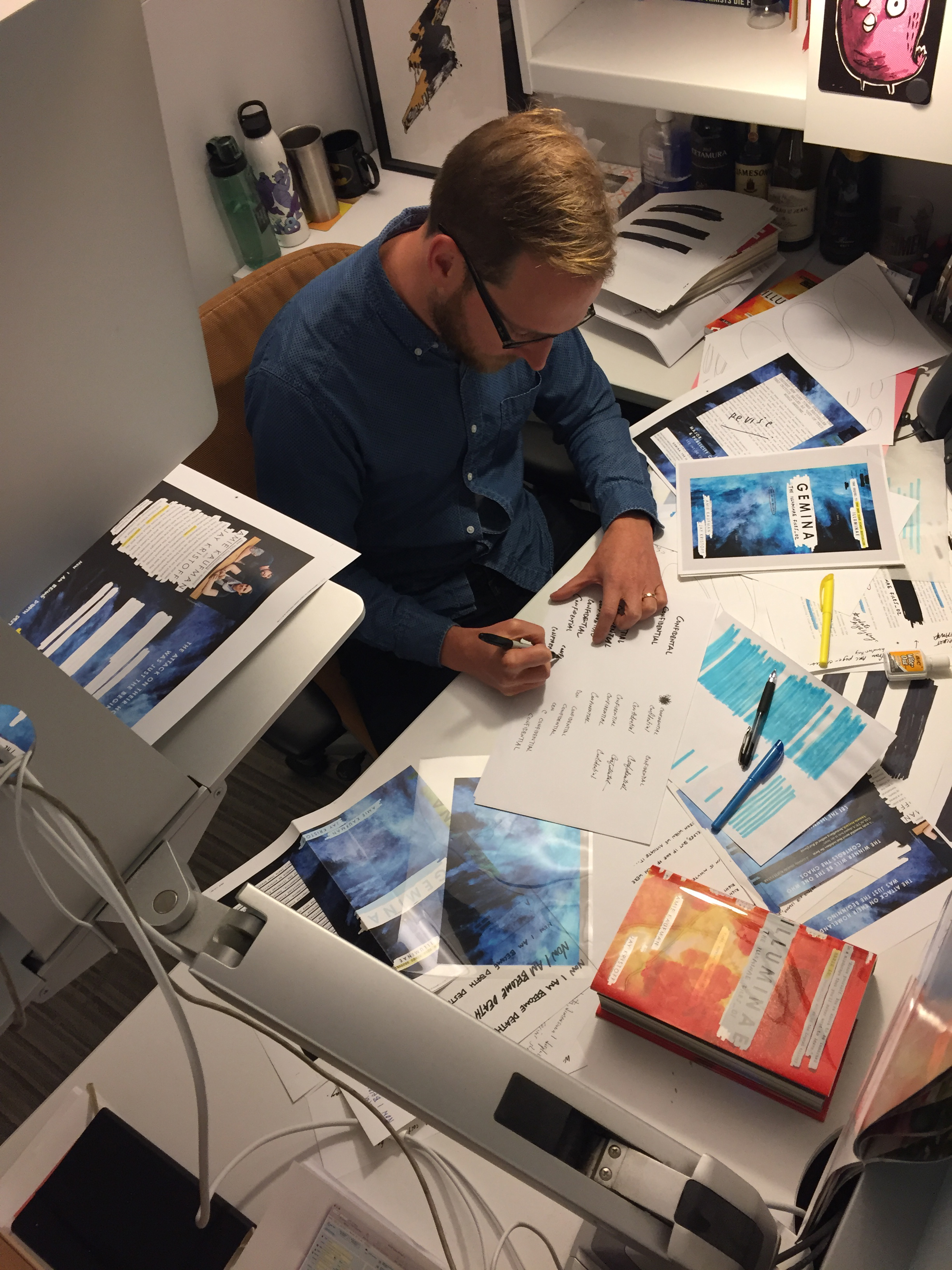
Ray Shappell: I love keeping physical authenticity of design over digital effects when possible. So in the case of Gemina, I actually set the files up clean on the computer first. However, once copy is approved, I then print out the covers and take a bunch of Sharpie markers, highlighters and tracing paper over to a light box. I cross out everything, scribble over the redacted areas, and make it messy. Then I scan it back into the computer and continue to line up all if the sharpie marks over the type on a different layer. I think it looks more realistic than if I used a digital marker. 

Ray Shappell at work

What did you most want this one to convey?

Ray Shappell: I think that a successful jacket does a few things: 

  1. It intrigues you and draws you in, making you pick it up and want to learn more about the story. 
  2. It has great design (visual balance of graphic elements, typography, artwork, color, etc.) 
  3. It stands out from the competition in a new and fresh way 
  4. It informs you about the content from a very quick glance.  

For The Illuminae series, our goal was to portray as much of the interior as we could on the cover, since it’s such a creative and unique story telling experience. Using the acetate to reveal and redact text from the case underneath was our solution for showing pieces of the story—with layers of actual text and phrases—in a new and exciting manner. I hope you enjoy the secret messages that are printed in the negative of the opaque white ink! 

How has your approach to designing covers changed over time?

Ray Shappell: I’m hoping to push what’s possible in our YA market. I know how to make covers that will be liked and approved easily. But I prefer the challenge to create covers that push the limits of what we have seen before. Yes, they may require extra convincing and more energy, but the end result is a cover that really stands out from the rest.

I also have been incorporating more technology into my designs. I’ve created animated gif covers for Illuminae and Gemina, but I just finished working with a CG studio to create a fully animated cover for an upcoming series. Along with an augmented reality app, it brings the print book to life! It’s AMAZING and should be out shortly!!  

Ray Shappell

Follow the authors on Twitter (@AmieKaufman, @misterkristoff) and Instagram (@amiekaufmanauthor, @misterkristoff)

Visit the website here: illuminaefiles.com  

NaNoWriMo 2016: Writing Tips and Techniques from our authors

Ready to tackle your novel? We’ve got your back – browse through all the practical, encouraging, and personal advice from Penguin Random House authors here. For a concrete guide featuring tried and true methods, Signature has compiled a truly wonderful Writing Guide. Check out these excellent books to inspire and instruct. National Novel Writing Month is almost here! Happy writing!