We know readers tend to be writers too, so twice a month, we’ll feature writing tips from our authors. Who better to offer advice, insight, and inspiration than the authors you admire? They’ll answer several questions about their work, share their go-to techniques and more. Now, get writing! What writing techniques have you found most important or memorable?
I don’t have any specific techniques I employ on a daily basis. But there are some tips I’ve found useful over the years. In particular, an article that Zadie Smith wrote back in 2010 is one I think every writer should emblazon on the inside of his/her brain. The entire list is here.
My two favorite rules from it, No. 7 and No. 8, are:
“Work on a computer that is disconnected from the internet.”
“Protect the time and space in which you write. Keep everybody away from it, even the people who are most important to you.”
How would you recommend creating and getting to know your characters?
I find character summaries useful—a few pages where I write out character history, likes, dislikes and personality quirks. But I learned the most about my characters when I “interviewed” them. I got a friend to ask me questions, and took on the personalities of my characters as I attempted to answer those questions. The interviews made me really consider who these characters were and what they wanted. It was weird, but it was also a revelation. After developing an idea, what is the first action you take when beginning to write?
I stare at a blank laptop screen thinking, “Oh no, what now?”
Kidding! It depends on what I’m writing, but when working with a book idea, I try to sketch out a few paragraphs worth of action—just to see if the idea has legs or if it falls apart. Once all my thoughts are down—and if I feel like the idea is still solid—I try to organize what I’ve got into a few coherent chapters
Sabaa TahirIs there something you do to get into a writing mood? Somewhere you go or something you do to get thinking?
Music and coffee. Without either of those, I’m no good. The coffee wakes me up, and the music gets my brain moving—it’s basically the fastest way into whatever scene I’m working on that day.
Did you always want to write? How did you start your career as an author?
I always wanted to write, but never admitted it to myself. I’ve told stories since I was a little girl, and began writing them down as soon as I figured out how. But for my parents, who are South Asian and were quite traditional, writing wasn’t a legitimate career because it offered no security. I spent years assuming I’d become a doctor. Eventually, I went into journalism and used that as a springboard into fiction.
What’s the best piece of advice you have heard?
“If you’re going through hell, keep going.” —Winston Churchill.
What clichés or bad habits would you tell aspiring writers to avoid? Do you still experience them yourself?
Off the top of my head, I can think of three.
Don’t waste inordinate amounts of time polishing small sections of your writing. Figure out your story first. Polish later.
Show your work to people. Recently, I fell into an old (bad) pattern. I’d written 50 pages of something and was certain it was horrible, but hadn’t actually shown pages to anyone. Don’t do that! Find trusted readers amongst writer friends, and get feedback.
Don’t make excuses for yourself. You can waste years that way. If you find yourself repeatedly saying you haven’t written because you’re too tired/busy/blocked etc., then rethink how badly you want to be a writer.
Describe your writing style in 5 words or less.
Tell it like it is.
Do you ever base characters off people you know? Why or why not?
I sometimes borrow certain quirks or characteristics from people I know, but no, I never wholly base characters off of people I know. It’s way more fun to make them up.
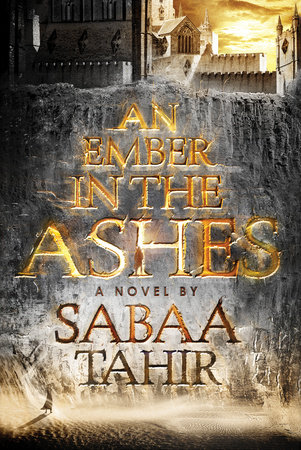
Read more about An Ember in the Asheshere.
Unlucky in love? Aziz Ansari goes deep into the contemporary dating world in his new book,Modern Romance. With his coauthor, noted sociologist, Eric Klienenberg, Ansari looks at the social science of dating with his signature sense of humor.
Read more about Modern Romancehere.
Today, June 10th 2015, would have been Saul Bellow’s 100th birthday. In celebration of his of his life, we reached out to Beena Kamlani, Bellow’s editor, to reflect on the writer’s life and influence.
Bellow @ 100: Some Reminiscences and Thoughts
To read Bellow is to be struck. As by a meteor, a thunderbolt, or something from some indefinable source. You are suddenly in possession of knowledge that comes from elsewhere—as if gifted. Stunned and blessed—how often does this happen to us in our lives? I speak from experience. I read him when I was eight. The book was Herzog. We preferred to read because TV in Bombay, India, was grainy and unpredictable. From the Hardy Boys to Enid Blyton, from Jane Austen to H. Rider Haggard—there was nothing that was considered unacceptable, and nothing that turned us off. But the world opened up for me when I came to Herzog. For it spoke about things no one had ever spoken about before. Its openness bowled me over.
Saul Bellow’s editor, Beena Kamlani
I was eight. It was a hard book to read as a child. The intellectual discourses in the letters Moses Herzog wrote were confusing and frustrating, for one didn’t know any of the references. But its truth was unassailable. Perhaps a child can grasp such things more easily than an adult for here was Moses remembering his childhood, the youngest in a family of four children, an immigrant family struggling to make it in immigrant Chicago, describing the helplessness of a child who sat in full knowledge of the struggles and challenges that faced them. These challenges colored his experience of childhood. Persistent failure rubbed shoulders with success; dashed dreams and thwarted ambitions made near impossible lives already brought low by sickness, the deaths of close family members, and sheer survival. Simple existence had to be constantly redefined, rearticulated, reimagined.
In our family, too, there were deaths, divorces, and the effects of failure. Illness and sudden loss were common. Mourning bore witness but the questions multiplied. No one said a word in the mistaken belief that children ought to be protected from the truth. But there, in the kitchen of Moses Herzog’s home on Napoleon Street, in immigrant closeness and proximity, there are no secrets and the children come to know everything because it’s happening in front of them. It is the source of his intimate knowledge about a child’s world, filled with uncertainty, frustration, knowledge that is useless in the present but becomes part of our psychic calibration later, and the constant threat of abandonment. “We were like cave dwellers,” Moses says. We, too, become cave dwellers with him as we hear his pain about losing a beloved wife to a best friend, about the terrible longing for his daughter, and listen to him rage in loneliness against the world. There is the unforgettable scene in that kitchen when Father Herzog comes home robbed and beaten after a bootlegging expedition. “’Sarah!’ he said. ‘Children!’ He showed his cut face. He spread his arms so we could see his tatters, and the white of his body under them. Then he turned his pockets inside out—empty. As he did this, he began to cry, and the children standing about him all cried. It was more than I could bear that anyone should lay violent hands on him—a father, a sacred being, a king. Yes, he was a king to us. My heart was suffocated by this horror. I thought I would die of it. Whom did I ever love as I loved them?” Beckett, writing about Proust, said, “Yesterday is not a milestone that has been passed, but a daystone on the beaten track of the years, and irremediably part of us, within us, heavy and dangerous.” In Herzog, Bellow shows us how to record our pasts, how to transcribe them, how to live with them, even when they threaten to wreck us.
Photo credit: Beena Kamlani
Bellow concerned himself with what affected people, in the way they lived their lives, and in the way they dealt with the struggles of the heart. He had a real feeling for it, which is why his work leaves such a mark. He taps corresponding notes in another’s life. He is able to articulate what we know but cannot decipher for ourselves. “Every writer’s assumption is that he is as other human beings are, and they are more or less as he is. There’s a principle of psychic unity. [Writing] was not meant to be an occult operation; it was not meant to be an esoteric secret.”
Memory becomes the key to unlocking those crossover truths from writer to reader. You not only become a cave dweller in that kitchen but you also recognize the truth of what’s happening when the older Moses takes you into the kitchen of his home where these struggles took place. You trust the sensibility and the mind of the older Moses, remembering, seeing his family again, and as a reader you find equivalent emotional hotspots in your own life, hotspots that take you right into the heart of Saul’s work.
In the world I grew up in, girls are handed knowledge in breadcrumbs. It is a privilege, a gift. Boys can expect it by the sackful, for it is necessary to live life, to bring forth families and to support them. What Bellow does is to hand us all this gift.
When I was working with him, every night, weary with the challenges and exhilarations of the work, we would wind down for the day and hand the manuscript to his wife, Janis, for safekeeping. He had gone, as usual, close to the fire, and it had taken a lot out of him. We worked on hard copy, and it was the only extant copy of the manuscript. The vault she placed it in was none other than the freezer, for this is the last place to be attacked by fire. That act of reverence and preservation was necessary—for the present, yes, but also for posterity. For those words, cooling in their frozen vault, would become jewels for readers in the future, illuminating and warming them as we ourselves had been.
Years later, I told him I’d read him when I was eight. “It was Herzog,” I said. He looked at me incredulously. “You don’t say!” he said. Then he put his fingers on the table where we were working and playfully drummed them against the wooden surface. “And here we are!” he said.
-Beena Kamlani
Browse through all of Bellow’s work here.
Editors get very passionate about books they work on – the Editor’s Desk series is his or her place to write in-depth about what makes a certain title special. Get the real inside-scoop on how books are shaped by the people who know them best.
Two years ago, Jeanne Mackin had finished her first novel for NAL and was casting about for a new subject. In The Beautiful American, Jeanne had written about Vogue model/photographer Lee Miller, a lover of surreal artist Man Ray in 1930s Paris and the first woman to photograph the Nazi concentration camps after their liberation, and she was looking for another historical figure with artistic associations.
One name came to my mind. I had recently visited the Bronx Botanical Gardens and spent time in the Peggy Rockefeller Rose Garden, designed by Beatrix Farrand. I’d learned that although the garden wasn’t created until the 1980s, Beatrix Farrand designed it in 1916. And somewhere I’d read that Beatrix was also a niece of Edith Wharton. Gardens and books—the combination certainly appealed to me, and I was delighted to learn that it appealed to Jeanne as well. “You know I wrote the Cornell book on herbs and flowers,” she told me. I hadn’t known, but we both felt she’d found her subject.
Finding the story wasn’t nearly as easy. Jeanne called me, lamenting, “Beatrix led such a normal, responsible life. Where’s the conflict? How do I make her interesting?” I encouraged her as best I could, but Jeanne found a solution that went far beyond anything I could have imagined. Instead of writing a straightforward fictional biography, she borrowed a narrative style from Henry James, who was also a close friend of Beatrix, and created a narrator named Daisy (ring any bells?) who tells a small but crucial portion of Beatrix’s life story through the lens of her own experience. For good measure, Jeanne includes a ghost, inspired by James’s The Turn of the Screw. In fact, there is more than one ghost. And Jeanne writes a love story for the young Beatrix, despite Beatrix having been known in her early years for ignoring the strong expectation that she marry and instead pursuing a career—something that women, especially women of her class, never did.
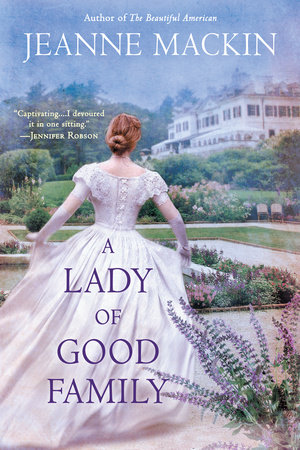
A Lady of Good Family is a beguiling narrative with echoes of novels by Wharton and James that explores relationships between mothers and daughters, husbands and wives, and art and artists during a time of great change for women. Like Willa Cather’s The Song of the Lark, it is also the story of a woman finding the courage to defy convention and follow her true passion; and of the forces that shape her as both a creative artist and as a woman. Set in Europe and New York during the Gilded Age and the early 20th century, A Lady of Good Family brings Beatrix Farrand to full and vibrant life, and proves that in the hands of a talented writer, even someone with a “normal, responsible life” can become utterly compelling.
And now I have had the pleasure of visiting some of the gardens that Beatrix designed. I especially recommend Dumbarton Oaks, just outside Washington, DC. And, of course, the Peggy Rockefeller Rose Garden in our own backyard.
Read more about A Lady of Good Family here.
Judy Blume’s first book for adults in seventeen years has just come out, and we couldn’t be more excited!
In The Unlikely Eventis a multi-generational novel that explores war, love, family and a changing America. The story traces an air-travel tragedy from the 1950’s and follows Miri Ammerman as she reflects back on that time, thirty-five years later.
Since Blume has shaped so many lives over the years, we turned to our employees to reminisce about the Blume books they loved growing up.
I have two daughters now in their twenties. When the younger one was almost eight, she particularly loved Otherwise Known as Sheila the Great. When the older one was ten, she loved Starring Sally J. Freedman as Herself. Judy Blume was empowering girls before the word empowering was ever used in the current context!”
-Beverly Horowitz, VP Publisher, Delacorte Press
“I used to imagine myself in the NY city apartment building where Peter, Fudge, and their pet Turtle lived. I read Tales of a Fourth Grade Nothing during “silent” reading time in 3rd grade and giggled in the corner the whole time.”
-Melissa Major, Digital Marketing Coordinator, Random House Children’s Books
“Starring Sally J. Freedman as Herself was the first Judy Blume book I ever read and my best loved. Even though our circumstances were entirely different, I saw so much of Sally in myself: she was inquisitive, opinionated, and had the most intensely weird imagination of any character I’d ever read. I’m still all of those things and I like to think that Sally is too!”
-Emma Shafer, Community Manager, Blogging for Books
“Coming from a family of three siblings, Superfudge both defined and helped navigate my sibling relationships. As a middle child myself, I completely relate to Fudge.”
-Sonia Nash Gupta, Associate Director of Marketing Random House Children’s Books
Browse through all of Judy Blume’s books here!
For some, baking and cooking is a comforting and calming way to work through issues. Judith Fertig has taken this one step further with her new book, The Cake Therapist.
What can a little cake therapy do for you? When I was writing my debut novel The Cake Therapist (at the same time as my new cookbook Bake Happy), I had an “aha” moment. What if my heroine could help people solve their thorny life issues—with cake?
Cake that comforts, cajoles, gives us cajones. Cake takes us back to a sunny summer day and unlocks the door to the past. That cake.
For some more cake Therapy, and for the recipe for the beautiful Rainbow Cake, check out Judith’s blog.
Another dessert expert, Linda Lomelino, has a beautiful book of cakes: Lomelino’s Cakes. All the cakes within are stunning, impressive, visually beautiful and amazingly delicious desserts. See below for the full recipe for this gorgeous Pavlova.
Happy baking!
Lomelino’s Cakes, p. 37 From Lomelino’s Cakes
PAVLOVA
This meringue cake with chocolate, cream, raspberries, and pistachios is magnificently sticky and crispy. When the cake is finished, refrigerate it for a few minutes to make it easier to cut the layers. This cake should be made the same day it will be served.
8–10 slices
CHOCOLATE MERINGUE LAYERS
1 ¾ ounces dark chocolate (70% cocoa)
Whites from 6 large eggs
1 ¼ cups granulated sugar
3 tablespoons cocoa powder
1 tablespoon cornstarch
1 teaspoon white wine vinegar
WHIPPED CREAM FROSTING AND DECORATIONS
1 ¾ cups whipping cream
1 ¾ ounces shelled pistachio nuts (about 1/2 cup)
8 ¾ ounces raspberries
MAKING THE CHOCOLATE MERINGUE LAYERS
1. Break the chocolate into small pieces, and melt them slowly over a double boiler (see page 10) or in the microwave. Let cool.
2. Preheat the oven to 350°F.
3. Cut a piece of parchment paper the size of your baking sheet. Then, cut out or find a circle template about 6 inches in diameter. Place the circles as far apart as possible on the parchment paper without touching the edges; trace. Turn the parchment paper over, and lay it on the baking sheet. These circles will indicate the placement of your meringue.
4. In a clean, dry bowl, beat the egg whites until soft peaks form. Add the sugar gradually, and continue beating to a thick meringue. You should be able to tip the bowl without the meringue sliding out.
5. Sift the cocoa powder and cornstarch into the meringue. Add the vinegar, and blend until the batter is smooth. Add the melted chocolate, and stir gently.
6. Divide the meringue among the paper circles. The meringues might shift during baking. Put the baking sheet into the oven, and lower the heat to 250°F.
7. Bake the meringue for 60–75 minutes. The baked layers should be hard and crisp around the edges but still sticky in the center. Turn off the oven, leaving the layers in the oven with the door propped open until the oven has cooled.
MAKING THE FROSTING AND DECORATIONS
1. In a dry, clean bowl, whip the cream until it thickens.
2. Chop the pistachios. Rinse and dry the raspberries.
ASSEMBLING THE CAKE
1. Place the first cake layer on a cake plate. Spread one- third of the Whipped Cream Frosting on the top, and sprinkle on a few raspberries. Repeat with the next layer. Place the third layer on top.
2. Top the cake with the remaining Whipped Cream Frosting, and then add the remaining raspberries and all the chopped pistachios.
In The Knockoff, by Lucy Sykes and Jo Piazza, Imogen Tate is a highly accomplished fashion editor at the top of her game, in spite of the fact that she is a bit tech-challenged (she’s barely mastered e-mail). Eve Morton is her ambitious assistant at Glossy magazine. When Imogen returns from a leave of absence, Eve has taken over and is determined to turn the beautiful pages of Glossy into an app.
Imogen has to reinvent herself in ways she never imagined as she struggles to re-gain control of the magazine. Office politics have never been quite so stylish.
Lucy Sykes is the former fashion director of Marie Claire and Rent the Runway. Jo Piazza is the Managing Editor of Yahoo Travel. It’s a co-author match made in heaven: The Knockoff is filled with insider dish on the worlds of fashion and tech.
Here are a few of their favorite things to do, see, and read–offline as well as online.
LUCY AND JO’S FAVORITE THINGS
Jo’s Favorites
1. Favorite sites and apps
I travel so much that most of my favorite sites and apps are things I can use on the go. I use Buddhify to meditate on the road.
I am an NPR addict so I have the WNYC app, but then I individually have the This American Life and The Moth apps, which I listen to constantly while I travel.
My favorite hotel booking app is Hotel Tonight for last minute booking (and I am almost always last minute). I use City Maps to get around in a new place and I am obsessed with the Go Pro app.
2. Favorite offline things to do with friends
Yoga, cooking dinner, skiing.
Also…seeing how long we can go without looking at our phones.
3. Favorite books about women in the workplace
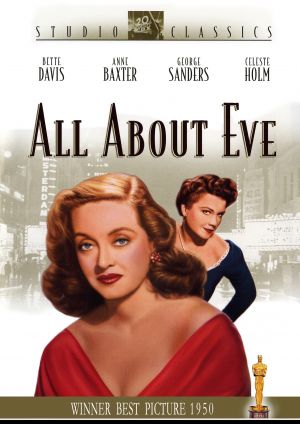
The play All About Eve inspired so much of The Knockoff that we have to mention it here (in addition to the movie).
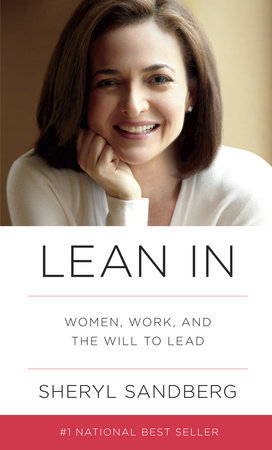
I am obsessed with Girl Boss right now. I think Sophia Amoruso is my spirit animal.
I also love Kelly Cutrone’s If You Have to Cry Go Outside
4. Favorite movies about women in the workplace
I remain obsessed with the movie Working Girl (Oh the shoulder pads!)
9 to 5 (obviously)
Baby Boom (First time I girl-crushed on Diane Keaton!)
Legally Blonde
The Devil Wears Prada
Lucy’s Favorites
1. Favorite sites and apps
My Flybarre App is friendly, quick, and simple. It makes working out seem easy!
My Instagram is right up there–being a visual person and having the attention span of a gnat, it gives me a jolt of excitement 4 or 5 times a day. Does that sound naughty?
Netflix is so amazing. I get into bed and put my headphones on and I am off on a fascinating bizarre creepy story while my boys watch boring football–perfect!
2. Favorite offline things to do with friends
I adore Flybarre an amazing super hectic sexy boot camp/ballet class–all the rage in NYC. I have taken all my friends and my husband!
I adore cooking for a dinner party, totally from scratch, once a week. I call it farm stand to table, as I buy everything from Farmer Harry down the road. I also love to buy vintage cocktail glasses and old silver. Lots of white flowers and candles are my tricks to making a pretty table.
Hanging with my family–all the cousins, aunties and uncles and grandparents. Watching my elder son become a passionate sportsman and a good guy. Seeing my young son playing the part of Lysander was a first, and making fairy cakes with him –and eating all the mixture first.
3. Favorite books about women in the workplace
All About Eve (Well, the play is as good as a book–it’s so sharp, timeless and true!
Is there something you do to get into a writing mood? Somewhere you go or something you do to get thinking?
I am one of those people who just loves working in my own quiet little apartment, with all my stuff around me. (I live alone, so things are calm enough to do this!) I don’t like writing in coffeeshops or public places generally because I get distracted and want to watch everyone. On the best mornings, I get up, I make coffee, maybe I poke around a little online, and then, still wearing pj’s, I start writing. But I also balance book writing with freelance writing work for websites and magazines and editorial work, so deadlines can pop up that I need to deal with first. My goal is to write something creative daily, to fit it in when I can, even if it’s just ten minutes (which usually turns into something longer). There are days that doesn’t happen, though. I try not to be too guilty about it, and to consider not-writing-but-thinking time an important part of the process, too.
Did you always want to write? How did you start your career as an author?
I always wanted to write. I told my dad I wanted to be a writer when I was little and he said something along the lines of “Well, it might be hard to make money doing that,” and so I said, “OK, I’ll be a librarian then.” Clearly, I loved (and love) books. My path to writing a book was a little bit circuitous, but after a few jobs that didn’t take—in advertising, for example—I started working in magazine publishing, and later I became a writer for the Village Voice and The Atlantic, which led to me getting my agent’s attention and ultimately selling my first book.
What’s the best piece of advice you have received?
A friend told me once, “Just open the Word document.” You can’t write until you do! And even though I can procrastinate and psych myself out of writing for hours—because the longer you go without writing, the more the mind spirals into thinking whatever you’ve accomplished up to this point is just terrible—once you’re staring at an open document, you start to reread what you’ve written, and you start to edit, and soon enough, you’re writing again. And that’s the part that’s really fun, even though when the document is closed it can feel impossibly scary.
What clichés or bad habits would you tell aspiring writers to avoid? Do you still experience them yourself?Don’t spend more time asking people for advice about writing than you actually spend time writing. The only way to ever write a book is to actually just write it. And it’s a slow process, but you chip away at it and eventually, it happens. I have many bad habits, and finding ways not to write—tweeting and Instagramming and reading random websites and cleaning my apartment—is definitely one of them. (Speaking of which, I should probably clean my apartment now.)
Do you ever base characters off people you know? Why or why not? Save the Date is a memoir, so yes—the “characters” are actually people I know, though most names are changed to protect the innocent and even the less innocent. There is definitely some existential angst involved in writing about real people. It’s nerve-wracking to think someone won’t like the portrayal; after all, I’m talking about humans who actually exist and have feelings and have the right to their own feelings about being in a book! (Just as I have the right to write it, and to feel my own feelings about it.) I’m working on fiction now, though, and it’s really fun to create characters out of thinish air. Of course, I can’t help but bring my own experiences and perspectives to them, and there are probably elements of people I know in all of them. But no one will know if I do it right.
Read more about Save the Datehere.
This feature will highlight books and authors on certain significant dates in history.
Today, May 25th, is Ralph Waldo Emerson‘s birthday. Born in 1803, Emerson is known best for his essays and for spearheading Transcendentalist thought in the United States.Read more.
Emerson’s writings influenced thinkers such as Walt Whitman, and Henry David Thoreau. He is perhaps best known for “Self-Reliance” and “Nature”.
After attending the Harvard School of Divinity and acting as a minister in the 1820s, Emerson went abroad to Europe and on his return began giving talks about spirituality and ethics. Read more.
Did you know?
[Emerson’s] “concept of the Over-Soul—a Supreme Mind that every man and woman share—allowed Transcendentalists to disregard external authority and to rely instead on direct experience.” Read more.
This focus on individuality goes hand-in-hand with Emerson’s urges to American writers to find literary independence and a writing style of their own. Read more.
“The glory of friendship is not the outstretched hand, not the kindly smile, nor the joy of companionship; it is the spiritual inspiration that comes to one when you discover that someone else believes in you and is willing to trust you with a friendship.”
― Ralph Waldo Emerson
Browse through Emerson’s works here.
David Ebershoff, Vice President & Executive Editor, Random House, offers insights into his work with author Jill Alexander Essbaum on her debut novel, Hausfrau.Hausfrau is an unforgettable story of marriage, fidelity, sex, morality, and most especially self. Navigating the lines between lust and love, guilt and shame, excuses and reasons, Anna Benz is an electrifying heroine whose passions and choices readers will debate with recognition and fury. Her story reveals, with honesty and great beauty, how we create ourselves and how we lose ourselves and the sometimes disastrous choices we make to find ourselves.
How did the fact that Jill Alexander Essbaum had primarily written poetry before beginning Hausfrau influence her approach to the novel form and the development of her narrative prose voice?
Jill’s poetic sensibility is everywhere in Hausfrau. When we say a novel is poetic, we often mean lyrical or even pretty. But that’s not how Jill is using poetry here. For example she uses iambic meter in several sections to create a steady drum-beat of dread and inevitability. She uses space breaks the way a poet uses them between stanzas to both pause the story and quicken the read. While writing, she read the novel aloud to hear the sounds of the words (in fact, she has memorized much of it). Whenever she was stuck and didn’t know what to write next, she started choosing her words the way a poet would — relying on sound, beat, image, and even how it looks on the page. Yet what’s so remarkable about this, to me at least, is Jill has written a very plot-y novel and paced it like a thriller.
What was involved in the scope of the editor/author process of working with Jill from initial manuscript to finished book?
The manuscript I read on submission was strong and self-assured. This made my job delicate — I didn’t want to mess up something that was mostly working. Jill and I went over the novel line by line, making sure every word was in place and there was nothing extraneous or overwrought. I paid particular attention to the passages concerning love and sex because I knew a certain kind of reviewer would pounce on any purple or overheated language. I also asked Jill a number of questions about her protagonist, Anna. We discussed how and why readers might interpret her, giving Jill a chance to respond (or not) in the text itself.
Having already received much praise, drawing comparisons to such classics as Madame Bovary and Anna Karenina as well as mega-bestsellers such as Gone Girl and Fifty Shades of Grey, Hausfrau is well positioned as it enters the market. What, in your view, sets Jill’s novel apart and what aspects do you think will most engage readers?
I acquired world rights to Hausfrau at a fairly modest level because I wasn’t sure how readers would respond to such a controversial heroine. I closed the deal the same morning I left for last year’s London Book Fair. By the time the fair’s doors opened, foreign publishers were offering on the book. I met with several of them, and so I had a chance to hear directly from readers around the world who were – I’m not exaggerating – obsessed with the book (one editor was in tears). What I learned then, and continue to see today, is that people read the book differently — some see it as literary fiction, some see it as a psychological thriller, some emphasize the sex and love. Jill’s UK publisher is calling it domestic noir (if that isn’t a category, it should be). The novel is almost a Rorschach test. The same is true with the protagonist, Anna. Some people empathize with her. Others love to hate her. Some understand her. Others find her a mystery. The novel opens with this memorable line: “Anna was a good wife, mostly.” That seems to capture why people are engaging with the book. Readers are debating with passion and fury just how good a wife Anna was — or wasn’t.
Read more about Hausfrau here.








 Lomelino’s Cakes, p. 37 From Lomelino’s Cakes
PAVLOVA
This meringue cake with chocolate, cream, raspberries, and pistachios is magnificently sticky and crispy. When the cake is finished, refrigerate it for a few minutes to make it easier to cut the layers. This cake should be made the same day it will be served.
8–10 slices
CHOCOLATE MERINGUE LAYERS
1 ¾ ounces dark chocolate (70% cocoa)
Whites from 6 large eggs
1 ¼ cups granulated sugar
3 tablespoons cocoa powder
1 tablespoon cornstarch
1 teaspoon white wine vinegar
WHIPPED CREAM FROSTING AND DECORATIONS
1 ¾ cups whipping cream
1 ¾ ounces shelled pistachio nuts (about 1/2 cup)
8 ¾ ounces raspberries
MAKING THE CHOCOLATE MERINGUE LAYERS
1. Break the chocolate into small pieces, and melt them slowly over a double boiler (see page 10) or in the microwave. Let cool.
2. Preheat the oven to 350°F.
3. Cut a piece of parchment paper the size of your baking sheet. Then, cut out or find a circle template about 6 inches in diameter. Place the circles as far apart as possible on the parchment paper without touching the edges; trace. Turn the parchment paper over, and lay it on the baking sheet. These circles will indicate the placement of your meringue.
4. In a clean, dry bowl, beat the egg whites until soft peaks form. Add the sugar gradually, and continue beating to a thick meringue. You should be able to tip the bowl without the meringue sliding out.
5. Sift the cocoa powder and cornstarch into the meringue. Add the vinegar, and blend until the batter is smooth. Add the melted chocolate, and stir gently.
6. Divide the meringue among the paper circles. The meringues might shift during baking. Put the baking sheet into the oven, and lower the heat to 250°F.
7. Bake the meringue for 60–75 minutes. The baked layers should be hard and crisp around the edges but still sticky in the center. Turn off the oven, leaving the layers in the oven with the door propped open until the oven has cooled.
MAKING THE FROSTING AND DECORATIONS
1. In a dry, clean bowl, whip the cream until it thickens.
2. Chop the pistachios. Rinse and dry the raspberries.
ASSEMBLING THE CAKE
1. Place the first cake layer on a cake plate. Spread one- third of the Whipped Cream Frosting on the top, and sprinkle on a few raspberries. Repeat with the next layer. Place the third layer on top.
2. Top the cake with the remaining Whipped Cream Frosting, and then add the remaining raspberries and all the chopped pistachios.
Lomelino’s Cakes, p. 37 From Lomelino’s Cakes
PAVLOVA
This meringue cake with chocolate, cream, raspberries, and pistachios is magnificently sticky and crispy. When the cake is finished, refrigerate it for a few minutes to make it easier to cut the layers. This cake should be made the same day it will be served.
8–10 slices
CHOCOLATE MERINGUE LAYERS
1 ¾ ounces dark chocolate (70% cocoa)
Whites from 6 large eggs
1 ¼ cups granulated sugar
3 tablespoons cocoa powder
1 tablespoon cornstarch
1 teaspoon white wine vinegar
WHIPPED CREAM FROSTING AND DECORATIONS
1 ¾ cups whipping cream
1 ¾ ounces shelled pistachio nuts (about 1/2 cup)
8 ¾ ounces raspberries
MAKING THE CHOCOLATE MERINGUE LAYERS
1. Break the chocolate into small pieces, and melt them slowly over a double boiler (see page 10) or in the microwave. Let cool.
2. Preheat the oven to 350°F.
3. Cut a piece of parchment paper the size of your baking sheet. Then, cut out or find a circle template about 6 inches in diameter. Place the circles as far apart as possible on the parchment paper without touching the edges; trace. Turn the parchment paper over, and lay it on the baking sheet. These circles will indicate the placement of your meringue.
4. In a clean, dry bowl, beat the egg whites until soft peaks form. Add the sugar gradually, and continue beating to a thick meringue. You should be able to tip the bowl without the meringue sliding out.
5. Sift the cocoa powder and cornstarch into the meringue. Add the vinegar, and blend until the batter is smooth. Add the melted chocolate, and stir gently.
6. Divide the meringue among the paper circles. The meringues might shift during baking. Put the baking sheet into the oven, and lower the heat to 250°F.
7. Bake the meringue for 60–75 minutes. The baked layers should be hard and crisp around the edges but still sticky in the center. Turn off the oven, leaving the layers in the oven with the door propped open until the oven has cooled.
MAKING THE FROSTING AND DECORATIONS
1. In a dry, clean bowl, whip the cream until it thickens.
2. Chop the pistachios. Rinse and dry the raspberries.
ASSEMBLING THE CAKE
1. Place the first cake layer on a cake plate. Spread one- third of the Whipped Cream Frosting on the top, and sprinkle on a few raspberries. Repeat with the next layer. Place the third layer on top.
2. Top the cake with the remaining Whipped Cream Frosting, and then add the remaining raspberries and all the chopped pistachios.