
Writing Tips from Lily Brooks-Dalton, author of Motorcycles I’ve Loved

What writing techniques have you found most important or memorable? When it comes to revising something, I’ve gotten into the habit of retyping my pages. It sounds pretty time-consuming—and it is—but it’s so worth it. I don’t know how else to get that kind of fresh perspective on a sentence-by-sentence level unless you force yourself to literally rewrite every single line. After developing an idea, what is the first action you take when beginning to write? I’ll probably do an outline. Sometimes I just dive straight into the prose, but at a certain point I need to step back and organize my thoughts. Particularly if it’s going to be a book, I’ll end up laying it out chapter by chapter pretty early on. That outline will change radically as I get further in, but it’s good to have a road map. I’m a big fan of lists—I might make a list of all the scenes I already have in mind, or elements that I want to include, just to get it down on paper. If I’m stuck, a list like that is a great resource to look back at. Is there something you do to get into a writing mood? Somewhere you go or something you do to get thinking? I need a quiet room and a big, uninterrupted chunk of time. I’m at my most productive when I know that I can devote an entire day to a project—wake up with it and go to sleep with it. But if all else fails… candy. Did you always want to write? How did you start your career as an author? I’ve always written, but it wasn’t always clear to me that I could be a writer (whatever that means). When I was a kid, I really believed that I could do anything, but as I got older, it seemed impossible, like I was being foolish if I didn’t have a plan B lined up. I think the first time I really gave myself permission to at least try to be a writer was when I was an undergrad, working on the opening chapters of Motorcycles I’ve Loved, and my writing professor told me it could be a book. I’m not sure I would have allowed myself to entertain that fantasy if someone hadn’t given me the go-ahead. It’s an amazing gift to give someone—to give them permission to go for it. I wish it was easier to give it to ourselves! What clichés or bad habits would you tell aspiring writers to avoid? Do you still experience them yourself? Don’t use three words when one will do. I am totally guilty of that, I always have a whole list of adjectives that I cannot part with. What’s the best piece of advice you have received? Finish things. I forget where I first heard that, but it’s the most important thing I know about writing. It doesn’t matter how good your ideas or your opening pages are if you don’t finish your project. Read more about Motorcycles I’ve Loved here. 

A letter to the reader from Penguin Press President, Ann Godoff on The Last Bookaneer

Dear Reader, Here’s how Matthew Pearl describes his search for a good story that inhabits the environs he calls “gray-area history”: “A few years ago I stumbled on a stray detail indicating that century publishers would hire agents to obtain valuable manuscripts that were fair game under the laws. Because of their shadowy place in history, I could not find much else about this group, but I was intrigued. Building on this fragment of legal and publishing history, I tried imagining more fully these freelance bounty hunters – the history of their profession, what they might be called on to do, who they were, their backgrounds, how their lives would bring them to this unusual profession and how the profession would shape their personal lives. As far as historical fiction goes, it fit one of my ideals: a bit of gray-area history that cannot be explored very far without the help of fiction. In this case, it seemed to me to call for informed speculation – what I’d refer to as research-based fiction – plus plenty of imagination.” The result is […] The Last Bookaneer. Matthew has performed this kind of historical fiction sleight of hand successfully before with Dickens and Dante; now he turns to Robert Louis Stevenson living in Samoa in the midst of writing his last book. As always his history is dead-on, when Matthew writes about real characters, there are no gray areas. But in The Last Bookaneer, it’s his fictional characters- the literary pirate Pen Davenport and his assistant Edgar, that bring the chain-smoking, gone-native, near deified-by-the-locals-in-Samoa Stevenson to life. I feel sure you’ll get lost in the world Matthew Pearl conjures. What more can a reader ask? Sincerely, Ann Godoff Penguin Press President, Editor in Chief

Backlist Time Machine: Mom’s Favorite Book

For many of us, a love of reading starts at home. For Mother’s Day, let’s celebrate our inspiring moms by sharing a few of their favorite books. Four Penguin Random House employees explain which titles are especially meaningful to them and to their mothers.

“My mother and I have both read Pride and Prejudice by Jane Austen many, many, many times. I remember discussing the book with my mom when I couldn’t have been more than twelve and again more recently when I read this classic as a woman in my 40s. In our most recent discussion, my mom and I marveled at the subtleties that stand out the more one has lived, details such as how very quickly Elizabeth Bennet’s feelings for Mr. Darcy turn from distain to admiration once she has witnessed the grounds of Pemberley (seriously, no sooner has her carriage pulled up to the front door than she is swooning for the guy!). Also the bigger picture. As a girl I was furious with Mr. Darcy for his treatment of Elizabeth Bennett but, in the final analysis, Elizabeth’s pride was just as vicious as Mr. Darcy’s prejudice. Pride and Prejudice, two big vices to watch out for! I will always treasure the conversations I’ve had with my mom about this favorite book.”

-Sara Carder, Editorial Director of Penguin Publishing Group 

Turns out Pride & Prejudice is a popular favorite…

Mom and I at Central Park

“Every time I read the book or watch the movie it’s something I get to share with my youngest daughter.  We both love it so much, we’re always quoting it to each other!”

-Mother of Katherine Stewart, Marketing Coordinator, Penguin Press 

McNeill JPG

“My mum was a teacher and her favorite author was Roald Dahl, which she often read to us as kids. The BFG was my favorite because the main character is Sophie, like me. My mum sadly passed away 6 years ago so she didn’t get to meet two of her granddaughters. But I’m lucky enough to have several of her Roald Dahl books (with her name written inside so they didn’t get lost at school), which I read to my children. It’s a lovely reminder of her.”

 -Sophie McNeill, Director, Partnerships and Audience Development for Brightly

unbroken

“One of my mom’s favorite books is Unbroken by Laura Hillenbrand. My mom is inspired by this true(!) story of Louis Zamperini’s endurance and courage. It’s a miracle that Zamperini survived a plane crash, starvation, and torture—not to mention post-traumatic stress disorder. Just when you think that things couldn’t get any worse for him, they do. But he doesn’t just survive all the terrible things that happen to him, he learns to forgive and live a full and happy life. Zamperini’s story is a testament to the power of grace and forgiveness.”

-Joanna Ng, Assistant Editor, Penguin Publishing Group

Grab a new book to share with the mother in your life!

Three Questions for Ballantine Books Executive Editor Pamela Cannon on Three Many Cooks

Our “Three Questions for an Editor” feature presents Pamela Cannon, Executive Editor, Ballantine Books, on Three Many Cooks by acclaimed cookbook author Pam Anderson and her daughters, Maggy Keet and Sharon Damelio. Together, Pam, Maggy, and Sharon reveal the challenging give-and-take between mothers and daughters, the passionate belief that food nourishes both body and soul, and the simple wonder that arises from good meals shared. Three Many Cooks ladles out the highs and lows, the kitchen disasters and culinary triumphs, the bitter fights and lasting love. What was the genesis of Three Many Cooks, with cookbook author Pam Anderson and her two daughters openly sharing not only their culinary adventures and recipes, but insights into their personal relationships? Three Many Cooks was submitted to me by an agent as a traditional cookbook based on the blog of the same name. After reading the proposal in its entirety, I kept coming back to the parcels of narrative in the headnotes. I sensed that there was a very specific dynamic going on between this mother and her adult daughters, and wondered if there was more there to mine. Also impressed with their ability to handle prose, I decided to take a shot and see if they would be comfortable recasting the book as an autobiographical collection of essays told from their three distinctive perspectives. Knowing that Pam had a lot of culinary fans from her previous bestselling cookbooks, I thought it might be nice to include a corresponding recipe at the end of each essay as a bonus of sorts. The result succeeded beyond anything I’d hoped for. How would you describe the editor/author process over the course of the creation and evolution ofThree Many Cooks, from initial concept to finished book? While they were a bit daunted by the idea of becoming full-fledged prose writers, the trio was excited at the prospect and up for the challenge. After a few initial meetings about what type of subjects to include and how wide to cast the net, they soon found a rhythm in which to work. While I’ve edited books with dual authors, it was the first time editing three people collectively, which can get tricky, but everyone remained respectful of the editing process. Pam, Maggy, and Sharon were fully cognizant that the goal was to make the book stronger as a whole cohesive work, uniting their various points of view within its narrative arc. They had an easy going relationship and a built-in shorthand not just from being in the same family, but from being in the same kitchen as well. It was a privilege to get to know these women and be part of the creation of their story. While this book is clearly an ideal Mother’s Day gift, what elements do you think will connect with the widest array of readers and draw them in? The main elements of the book are family, food, and a sprinkling of faith. The audience for these themes is quite broad. Food, whether it be at stove or at table, is the vehicle that Pam and her daughters use to communicate, as do many of us. A thoughtfully planned meal is the very definition of caring and love. It can evoke a range of memories and emotions, much like reading a good book. And like a good meal,Three Many Cooks is a powerful celebration and tribute to be shared with those you love. Read more about the book here.

A Round-Table discussion with Jon Krakauer on Medium.com

Jon Krakauer joined a group of feminist bloggers to discuss his newest piece of nonfiction, Missoula. The book centers around a series of sexual assaults at the University of Montana and the mishandling of rape cases in the United States.  Missoula investigates  unreported assaults, the improper investigation of crimes, and a culture that condemns victims. Below, Krakauer explains the the problematic systems that don’t protect the women who are assaulted.

“You can’t blow off cases and say he’s just a frat boy or it was just, you know, a bad hookup. Each of these serial rapists on average sexually assault six people, women generally, but each one is responsible for 14 crimes of violence of other kinds — domestic abuse, child abuse. You need to go after [each case], because they’re probably a serial predator. And you need to educate your cops and prosecutors the way trauma effects testimony, so they can educate the jury.

So yeah, I think it’s systemic as hell. You know, Missoula really is typical unfortunately. There’s a lot of good cops and good prosecutors, but even female detectives, having listened to their audio recordings, it’s just this feeling of resignation, like…you know that the prosecutors are never going to prosecute this guy, what are we wasting our time for…literally if they didn’t have a confession, pretty much, they weren’t going to refer it for prosecution. So there’s a long, long way to go.”

Read the entire discussion here.

Revisiting Seabiscuit for the Kentucky Derby

Today, as the Kentucky Derby begins, we’re celebrating a wonderful backlist title: Seabiscuit by Laura Hillenbrand. Before the wildly successful Unbroken hit the shelves, Hillenbrand was best known for her fascinating book on the racehorse, Seabiscuit, and his place in history. Despite his impressive racing pedigree, Seabiscuit was an unlikely champion – he was small for a racehorse, had crooked legs, and didn’t run particularly well as a young horse.  Under the gentle hands of his owner, Charles Howard and his trainer, Tom Smith, he slowly grew into his potential. Read more. When Seabiscuit started to win races, he seized the American imagination and became an underdog hero. Even when an injury seemed to ruin the horse’s career, Seabiscuit came back to the track, won a legendary race and cemented his hero status. Read more. seabiscuit
“It’s easy to talk to a horse if you understand his language. Horses stay the same from the day they are born until the day they die. They are only changed by the way people treat them.”
― Laura Hillenbrand, Seabiscuit: An American Legend Enjoy the Derby!

Celebrate Independent Bookstore Day!

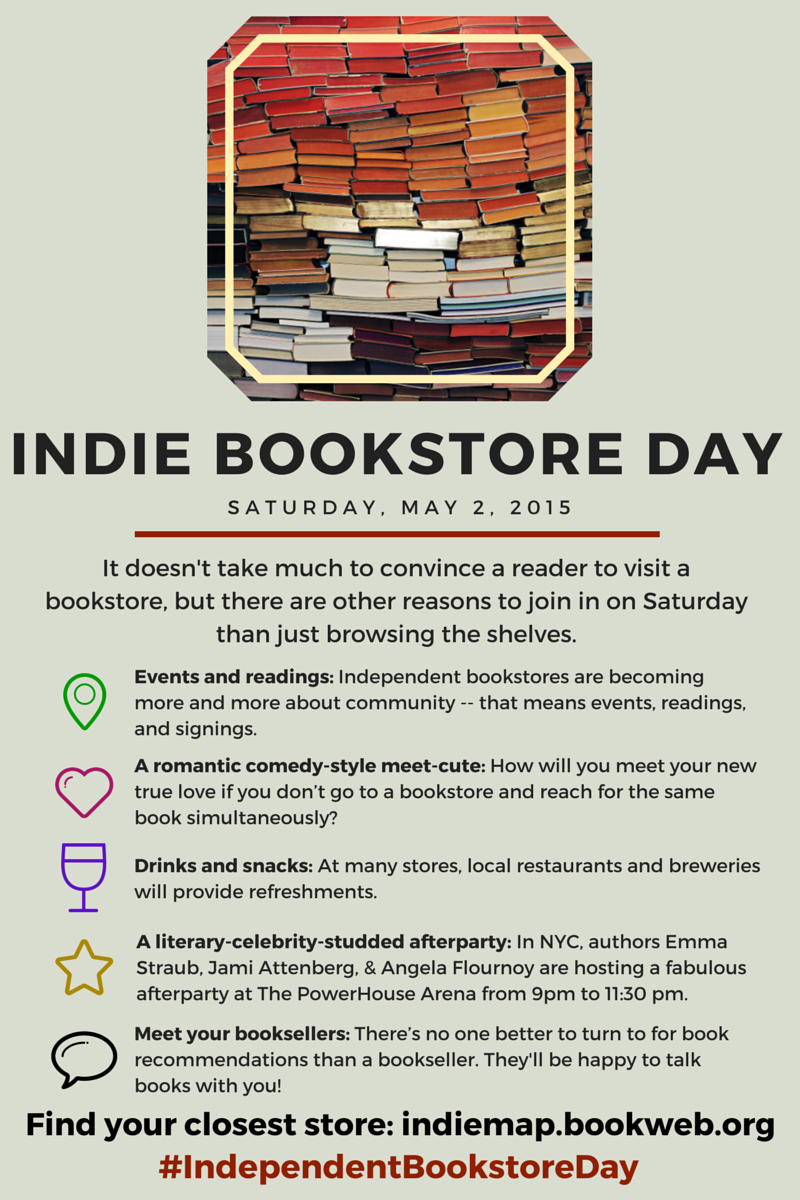
This Saturday (May 2, 2015) is the first ever Independent Bookstore Day! It doesn’t take much to convince a reader to visit a bookstore, but there are other reasons to join in on Saturday than just browsing the shelves. Find your closest store here. For some inspiration and store recommendations, check out Fodor’s 16 Indie Bookstores We Love. Indie Bookstore Day social If you’re based in New York City, you can see all the goings on, store by store, here.

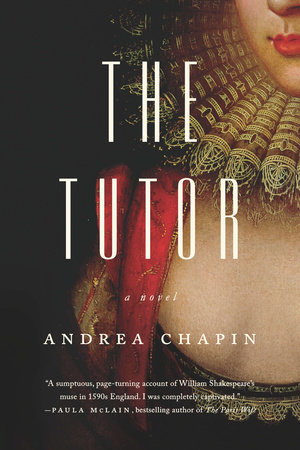
Writing Tips from Andrea Chapin, author of The Tutor

How would you recommend creating and getting to know your characters? I write historical fiction—some of my characters are based on real-life people, while others are invented. But the process of developing who they are is very similar for both the fact-based and the fictional characters. When I began The Tutor, I did a minimal amount of research because I didn’t want the history, the facts, to get in the way of the story. As the novel progressed I did a tremendous amount of research, but at the start I was interested in developing the dynamics between my main characters, how they reacted to each other—so I hurled them into situations where their dialogue and their actions began to convey their personalities, their likes and dislikes, their anxieties and obsessions. I wrote the first fifty pages this way, so that I got to know my characters before I started soaking them with the actual history of the times. For all my characters, I bring traits of people I know, including myself. But sometimes, and this is the alchemy of the art, I don’t even realize who I’ve brought in, what ghosts from my past I’ve conjured in creating these characters, until I’ve finished writing. Is there something you do to get into a writing mood? Somewhere you go or something you do to get thinking? Over the years I’ve learned that for me there are no special places I go and no special things I do to get into the mood to write: I just sit down and make myself do it. Sometimes it’s easy and sometimes it’s very hard. There is a wonderful magic that often comes with the process of writing—the sentences or moments that seem to come out of nowhere and light up the page—but I don’t think there’s any magic to the act of sitting down to do it. You have to stay at it and feel as though you are stuck to that chair with Velcro. I guess I’m afraid that if I have to go to a special place or do a special thing in order to write then the process will become precious, even fetishized, and that I will lose the natural, organic impulse. I can work with kids running around me, dogs barking, piles of laundry undone, dinner waiting to be made, bills waiting to be paid, or I can work while I’m alone and there is peace and quiet. Did you always want to write? How did you start your career as an author? My first “novel” was a mystery called, well, The Mystery of the Green Glass. I wrote it in third grade, longhand, on thick yellow paper with a thick pencil. I wish I had that copy now! My third-grade teacher launched a literary magazine for her students to publish poems, short stories, and art. This was way back before computers were ever used in schools or were ever used at all. We painstakingly wrote and drew everything on mimeograph paper and then printed out copies on the mimeograph machine in the school office. I started my mystery “novel” for that magazine, and then I just kept on going. I remember the satisfaction I felt as the stack of yellow paper grew on my desk. A few years later, my stories became more personal: I’d sit on the basement stairs of our house, in the dark, and in my head I’d write very autobiographical accounts of all the dysfunctional things that were going on with my family. Decades later, after I’d published journalism and a few short stories, it was returning to my autobiographical voice and then publishing memoir pieces and personal essays that truly enabled me to find my voice and to launch my career as a writer. What’s the best piece of advice you have received? Stop talking about how you’re going to write—sit down and do it! Because the real learning starts when you commit yourself to putting the words down on the page. What clichĂ©s or bad habits would you tell aspiring writers to avoid? Do you still experience them yourself? For writing novels: I think it’s very important to get through the first draft before you start extensive rewriting and revising. It’s hard to know what that first chapter or those first several chapters need to be until you’ve gotten to the end of your story. I remember I wrote a novel in graduate school, and years later I looked at all the drafts of the first chapter that I’d labored over–draft after draft after draft where I tried to incorporate all the comments from my workshops and all my neurotic insecurities about a word or a sentence or tense (past or past perfect, etc.). I think I wrote at least twenty drafts of that first chapter. When I looked at them again, years later, I realized they were all pretty much the same and that I’d been like a cat licking the same patch of fur over and over again. I could have written a draft of the whole book in the time that it took me to rewrite that first chapter so many times. Learn more about The Tutor here.

Challenge Your Shelf: Young Adult Reading Challenge

Who said reading can’t be competitive? Every few months, we’ll be challenging you to read a list of selected books. Print out the challenge and cross the titles off as you go. Show off how much you’ve read by taking a picture and tweeting @penguinrandom or Instagramming (@penguinrandomhouse) with the hashtag #challengeyourshelf. There are always books on your to-be-read shelf, so why not challenge yourself? We picked 24 beloved Young Adult books everyone should read. Show us how many you finish! (click image to see full size and print out)readingchallenge-must-read-ya-best-sellers

Welcome to the new Penguin Random House website

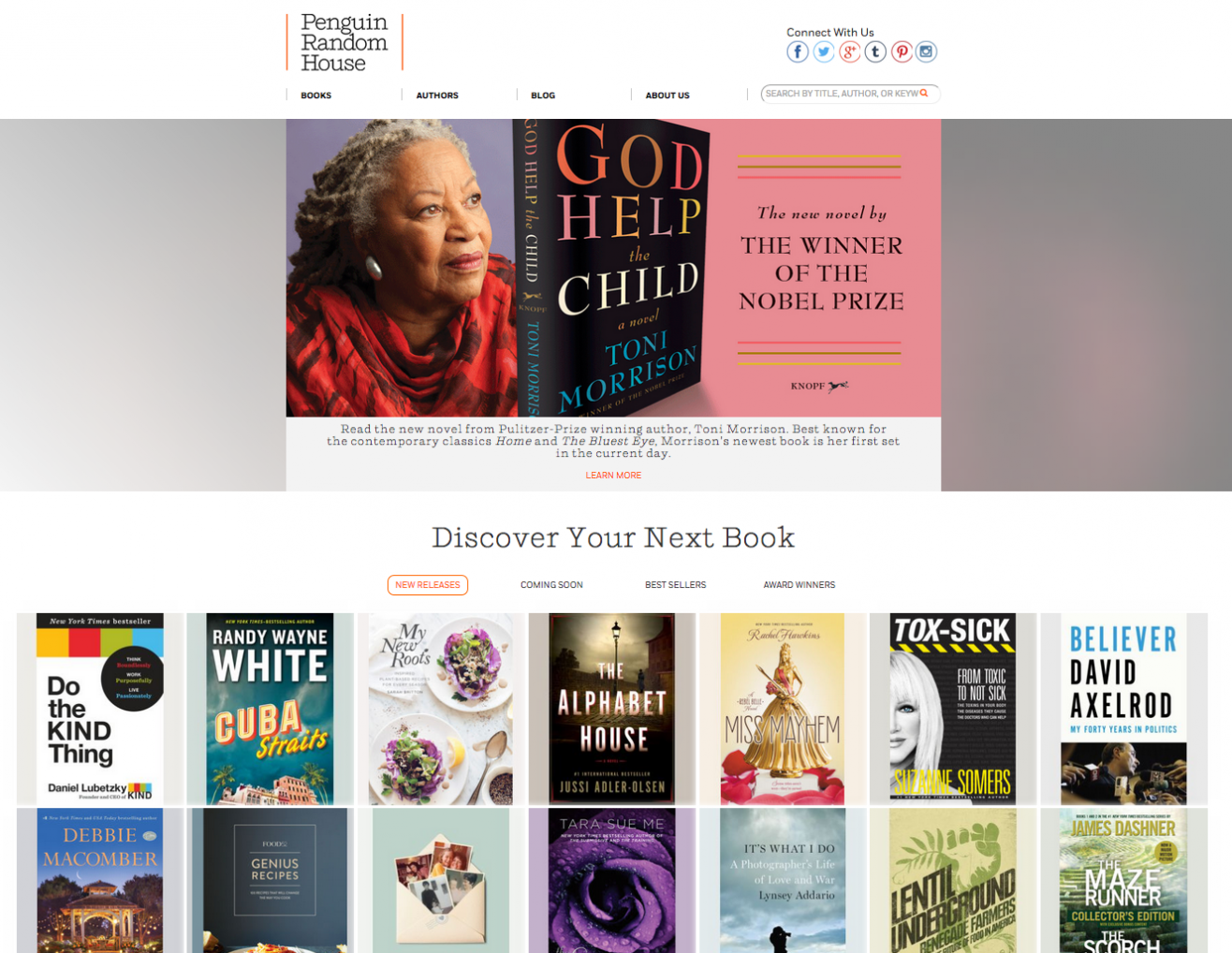
Welcome to PenguinRandomHouse.com. where you’ll find countless books, author pages, genre-specific recommendations, and more. We’re happy to welcome you to our beautiful new home and can’t wait to find you your new favorite book.

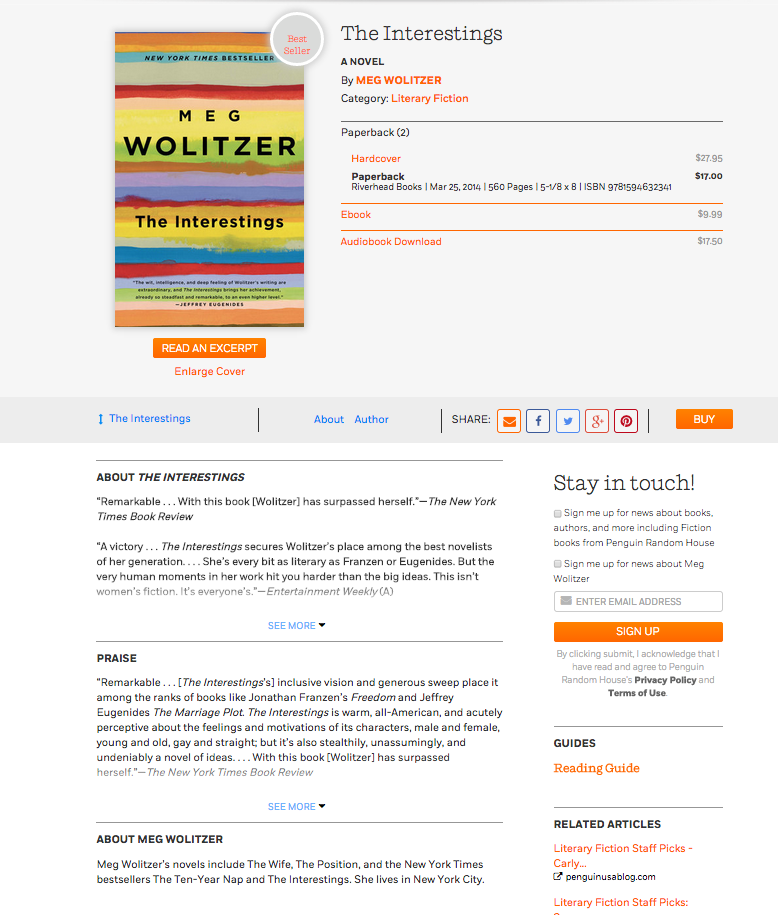
Clear, beautiful, fun, specific       With thousands of new books to choose from every year, it can be overwhelming trying to find a new read. We’ve made it easier than ever to surface books you’ll love through clean design, sophisticated genre pages, and suggestions based on bestsellers, your category preferences and more. home Organized, Detailed, Simple Book detail pages are chock-full of information: plot summaries, excerpts, praise, reading guides, author Q&As, podcasts, videos, and so much more. With our expansive content network, you’ll find everything you need quickly and easily. book detail Know exactly what you’re looking for? For the reader who knows just the sort of book they prefer, we have pages for each genre, sub-genre and sub-sub-genre! Whether you like hard or soft Science Fiction, Paranormal Romance, or Space Opera novels, PenguinRandomHouse.com has you covered. nonfictionnonfiction3 Get the latest news and announcements   Want more from your favorite author or category? It’s easy to sign up for specific news about bestsellers, your favorite book genre or a particular author. Get the scoop on big blog posts, interviews, author event dates, and book announcements.        stay in touch Share with friends Social media just got more bookish! It’s easy to share a book with a friend, alert your followers to a great author signing in your area, or pin a beautiful piece of cover art.book detail (social)  Never miss an author event again We know how important writers are to you. Keep tabs on your favorites – we’ve made it easy to get information about author events, signings and readings, so you’ll never miss a tour date in your town.meet our authors Insider Access Get in the know with the Penguin Random House blog, The Perch. There are always behind-the-scenes posts, from editors writing about a new favorite book, to an author doling out writing tips.the perch Show off your reading chops by playing Book Bingo or participating in a challenge. Keep tabs on other competitors on social media and start exploring titles you might not have picked up otherwise.book bingo Head to the PenguinRandomHouse.com homepage to find your next read!discover your next book