
Tag Archives: editing

From the Editor’s Desk: Kate Seaver, Executive Editor at Berkley, on Sunshine Beach by Wendy Wax

Editors get very passionate about books they work on – the Editor’s Desk series is his or her place to write in-depth about what makes a certain title special. Get the real inside-scoop on how books are shaped by the people who know them best. All year a stack of books sits on my bedside tale. Books I’m reading and ones I can’t wait to start. In the summer my weekend bag replaces my bedside table and the book choices shift to include more beach reads, fun, uplifting stories that often take place in locations I’d love to visit. Wendy Wax’s Sunshine Beach is such a book. Set in Florida, it’s part of a series of books that feature three women whose lives were upended when they lost their life savings in a Ponzi scheme. To make a living they banded together to renovate old houses. Wendy first introduced these characters in her novel Ten Beach Road. Avery, Maddie, and Nikki were strangers who took on the challenge of restoring a ramshackle, beachfront house to recoup the money they’d been cheated out of. Avery’s marriage had ended, Maddie was trying to keep her family together and Nikki was a business woman who’d lost everything—each story captivated me and it was fascinating to watch the women become best friends and renovate an older house. Without actually having to lift a hammer, I learned how to refinish floors and refurbish a chandelier. Wendy’s gutsy, funny, and very real characters resonated strongly with readers and encouraged Wendy to return to that beloved world for two more novels, Ocean Beach and The House on Mermaid Point. In each book we learn more about the three friends as their lives evolve and they fix up a new property. In Sunshine Beach, the three friends gather in the house they renovated in Ten Beach Road and embark on the challenge of restoring an old seaside hotel just down the beach from them. They also face major life changes. Maddie’s second-chance romance with her all-too-famous new boyfriend gets complicated, Avery struggles with grief over the loss of her mother, and Nikki’s reluctance to commit to the man who loves her could lead her to face the biggest challenge of her life. Even the hotel seems to be against them, when their renovation uncovers a decades-old unsolved murder which might bring their lives tumbling down again… I love these women—their stories are compelling and their friendships inspiring. Each evening, no matter how hard the day has been, they gather on the beach with drinks and appetizers (including Avery’s beloved Cheez Doodles) to say the one good thing that happened that day. It’s an appealing ritual, and I invite you to add Sunshine Beach to your weekend bag and join Avery, Maddie and Nikki on the beach. It’ll prove to be the perfect summer escape. Learn more about Sunshine Beach below!
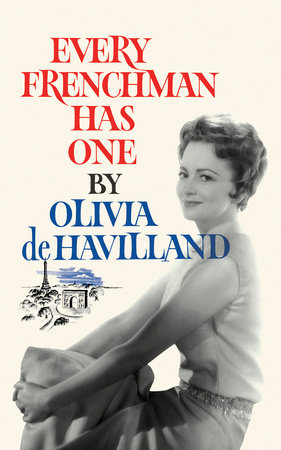
From the Editor’s Desk: Matt Inman, Senior Editor for Crown Trade on Every Frenchman Has One by Olivia de Havilland

Editors get very passionate about books they work on – the Editor’s Desk series is his or her place to write in-depth about what makes a certain title special. Get the real inside-scoop on how books are shaped by the people who know them best. On a recent Saturday morning, I glanced over at my iPhone and saw the words “O de Havilland” light up my screen. A new e-mail had arrived from Paris, where Olivia de Havilland was pondering a question I’d posed earlier that week (“In the past, you’ve referred to the guiding philosophy behind Parisian style as ‘the Paris principle;’ in your opinion, what are the key tenets of that principle?”) That I was discussing the timeless style of les parisiennes with the two-time Academy Award-winning actress who played Mellie Hamilton in Gone with the Wind (1939), while I, myself, was wearing sweaty tennis clothes and watching “Unbreakable Kimmy Schmidt,” now strikes me as a little, well, déclassé. But even if the details of this exchange are a little embarrassing, the story of how our paths crossed perfectly captures two aspects I love about my job: discovery and serendipity. About a year ago, I read a fascinating article about Olivia de Havilland’s groundbreaking 1944 lawsuit against Warner Bros. and found myself wanting to know more. I love reading about Hollywood’s Golden Age—and have always admired Miss de Havilland’s work—and I assumed that she’d already written about her extraordinary life and career. After a little searching, I was surprised to learn that while she had written a book, it was a 1962 memoir about falling in love with a Frenchman and moving to Paris. That book, Every Frenchman Has One, was long out of print and very expensive to buy online, so I went to the New York Public Library to check it out. As I read, I found myself laughing out loud at her witty, candid, and completely charming stories about her skirmishes with French customs, French maids, French salesladies, French holidays, French law, French doctors, and above all, the French language. A Francophile myself, I’d recently seen the Broadway staging of An American in Paris, and was surprised that such a wonderful book about Americans in Paris—and the lessons we can learn from the French—was so difficult to find. But as I read further, I realized that Every Frenchman Has One was about something much more profound. In her own way, Olivia de Havilland was quite brave, not only to drop everything; leave Hollywood behind; and take a chance on life, and love, in a new country, but to write so honestly about her bumpy ride as an expatriate. More than fifty years before Scarlett Johansson and Natalie Portman married Frenchmen and moved to Paris and long before celebrities revealed every detail of their lives to their followers via social media, de Havilland was sharing her gaffes and insecurities with her fans, saying, yes, even glamorous women can be embarrassed every once in a while; it’s the price one pays for trading comfort for change. More than anything, though, I was struck by Miss de Havilland’s wonderful writing. It exudes an effortless, timeless charm that makes it as appealing today as it was in 1962. Upon returning to the office, I learned Bennett Cerf himself had reverted the rights to Olivia in 1971, and so began my journey toward e-mailing with Olivia de Havilland about all things French on the eve of her 100th year. I’m thrilled that Crown Archetype will put Every Frenchman Has One back in print for the first time in decade—and publish it as an e-book for the first time—on June 28th. I’ve also had the great honor of corresponding with Olivia on a series of questions and answers that reflect on the book, and on her sixty-plus years as an American woman in Paris. They are delightful, and will appear as a postscript to this new edition. (Her answer to my original question about her philosophy of Parisian style, by the way: “1. Discretion, 2. Discretion, 3. Discretion.”). With this reissue, I’m excited to have even a small part in celebrating the centennial birthday of one of Hollywood’s greatest stars on July 1. I hope that anyone who loves Olivia de Havilland, Paris, or stories about Americans abroad will enjoy her book as much as I did. Learn more about Every Frenchman Has One below!

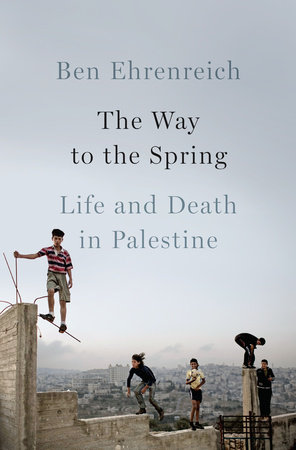
From the Editor’s Desk: Scott Moyer, VP & Publisher of the Penguin Press on The Way to the Spring by Ben Ehrenreich

Editors get very passionate about books they work on – the Editor’s Desk series is his or her place to write in-depth about what makes a certain title special. Get the real inside-scoop on how books are shaped by the people who know them best.

To publish a book about Palestinian lives in the West Bank is to take part in a fiercely contested debate, whether you like it or not.  It’s a debate that’s become a dialogue of the deaf, and it can seem too complicated and unpleasant to pay too much attention to.  I didn’t come to this book out of some sense of advocacy, in particular, nor frankly would I have wanted to: there are enough shrilly partisan books out there, for the most part preaching to the choir.  But what I did and do feel, stubbornly, is that nothing human should be alien to us, and that if a great journalist, which is to say a great observer and listener, someone with a great head and heart, really goes there and stays there, then we ought to pay attention.  And Ben Ehrenreich is a great journalist.  The contact high from his talent is exhilarating. 

He’s also very brave. Show us the extreme challenges of life in a public housing project in the South Bronx, or in a Mumbai slum, and it’s all good; you get roses thrown at your feet.  But the West Bank is under Israeli military occupation, of course, and has been for a very long time, and so if you write a clear and honest human account of life for ordinary Palestinians, then you can be accused of being “anti-Israel” , or worse, and you find yourself under assault, or at least greeted with uncomfortable silence.  In fact, Ben Ehrenreich is no more anti-Israel than someone writing about life in Northern Ireland under British occupation was by definition anti-English.  If you bring to light stories that depict inhumane situations, and thereby create pressure to improve them, are you “anti” the country in which the inhumane situations exist or “pro” that country? 

Anyway, I am making this book sound shrill itself, which is precisely what it is not.  Under the spell of the storytelling, we find ourselves in the shoes of a group of wonderfully vivid and disparate characters, united by the struggle to live decent lives.  What I think was most shocking to me was how openly the enemies of the Palestinian presence in the West Bank – the far right-wing Israeli settlers – admit to having an eliminationism agenda: their stated goal is to drive all Palestinians out of the West Bank and take it over completely – ethnic cleansing on the installment plan. And their means of achieving that is to make life unbearable for the Palestinians. 

Ben Ehrenreich is a powerful witness to all this; he spent several years in the West Bank, all told, and came to know these communities intimately.  There’s sadness and heartbreak in this book, but there’s also laughter and affirmation.  But there’s no escaping the fact that this shows us a situation that has become very extreme, even almost unimaginable, and so I think however uncomfortable it makes us, it’s worth our whole-hearted support.  This isn’t a dogged or prescriptive polemic, it is a work of art; by immersing us in these lives, these stories, it places us as readers right on the horns of the dilemma.  There’s no easy way out, for anyone, but the more we bring this world into our consciousness, the more human we will be – and the more honest we will be with each other about the consequences of our own inaction.

Learn more about The Way to the Spring below:

From the Editor’s Desk: Peter Gethers, President, Random House Studio and Senior Vice President, Editor at Large Penguin Random House on Sweetbitter by Stephanie Danler

Editors get very passionate about books they work on – the Editor’s Desk series is his or her place to write in-depth about what makes a certain title special. Get the real inside-scoop on how books are shaped by the people who know them best. There are several things that are most thrilling to a book editor. First and foremost is the discovery of true talent. Everything else extends from that. Next on the list is when other people throughout the company respond to that talent positively and excitedly. When strong enough, that response not only becomes electric, it becomes unstoppable. At its most exciting it becomes a tidal wave of appreciation for a book or a writer. Next, of course, is the validation that comes from a wider audience – The bookstore buyers, managers and sales people and then, finally, actual real people who make the final judgment on the book. Over the course of my lengthy career, I have brought in a lot of great talent and some major stars. That is satisfying in its own right. But it does not compare to the discovery of a writer who is fresh, unknown, who is to be revealed. I have never seen a response to an unknown talent like the one I have seen for Stephanie Danler’s Sweetbitter. It started with my read where, after only 20 pages, I realized I was not just reading a well-written novel, I was reading something special, spectacular. Claudia Herr, who became the line editor and helped shape and refine the novel with Stephanie, was the next reader and the first person to come into my office. She was, literally, trembling and said she had never been so excited after reading a submission. We went about trying to build a consensus but we did not have to try very hard. The manuscript swept through Knopf, through all the layers and every department. Never before had I gotten emails or phone calls saying things such as, “You must buy this book,” or “We have to publish this!” We met with the author and Ms. Danler was at least as impressive as her wonderful prose. Although there are obvious autobiographical elements in her first novel it was immediately clear that she had many more books in her ­ she was an author, not just someone who had written a terrific first novel. The thrill has continued every step of the way. The wild enthusiasm within the Knopf group turned into equally strong support from reviewers and bookstores and consumers. Right from the beginning, we thought that Stephanie Danler had written a novel that had a chance to become iconic, to really be that over-used cliché: “the voice of a generation.” It is starting to look as if we all might be right. What did we see in this book from the moment the manuscript was submitted? We saw an elegant and eloquent use of language; the author’s descriptions of food made us hungry; her descriptions of sensual cravings stirred us; writing about the turmoil of being young brought us all back to our youth, or for those who were still young, it was like having their own lives being thrown back at them at the speed of light. The book made us all see ourselves in different ways, no matter our age or our sex. It also made us see outside of ourselves. It made us see the narrator’s very specific world as well as the world at large in new and startling ways. This is what talent does. This is what Sweetbitter is about to do to readers all over the world. Learn more about the book below!

From the Editor’s Desk: Jake Morrissey, Executive Editor, on Three-Martini Lunch by Suzanne Rindell

Editors get very passionate about books they work on – the Editor’s Desk series is his or her place to write in-depth about what makes a certain title special. Get the real inside-scoop on how books are shaped by the people who know them best. The best present an author can give an editor is the gift of surprise. Editors spend their days reading a lot of manuscripts that don’t tell them anything new. So reading a story about a world you thought you understood framed in an unexpected way that prompts you to think differently about it, that’s hitting the publishing jackpot. Which is what I did when Three-Martini Lunch came across my desk. In this terrific novel, Suzanne Rindell delves into a world I knew something about – book publishing – but sets her story in the late 1950s, which was when big changes were about to take place. I thought I had a decent grasp of the era. I’m familiar with two other iconic New York stories from around that time: Rona Jaffe’s classic novel (and eventual movie) The Best of Everything and the television show Mad Men. In both of those, New York City is portrayed as one of the places to be in the mid-20th century. If you know anything about either The Best of Everything or Mad Men – or even Alfred Hitchcock’s 1959 movie North by Northwest – you see a New York that’s sleeker, cleaner, less crowded than it is today. And the roles of men and women were as clearly defined then as their ambitions: Success for men meant career and advancement; success for women marriage and family. In Three-Martini Lunch, Suzanne Rindell peers beyond that mid-century mindset and explores the lives and worlds of Miles, Cliff and Eden, three young people struggling to gain a toehold in New York and hoping that publishing is the way to do that. The lives they lead are a far cry from the expense-account lunches and pristine suburban enclaves of the publishing elite. These young people are drawn to Greenwich Village and its emerging beatnik culture, with its dark and smoke-filled bars, jazz clubs, and poetry readings. And they struggle to stretch their meager bank balances by living in cramped, ramshackle apartments and having just enough money for food and beer but not always both. Suzanne gives her characters fascinating opportunities to pursue their individual ambitions and indulge their temptations. Even more compelling, she shows readers how the choices they make to achieve their goals changes them. I’m not giving anything away when I say that what you think of Miles, Cliff, and Eden at the beginning of Three-Martini Lunch will not be what you think of them at the end. As I followed the characters’ journeys through successive drafts of the novel, I found myself reassessing my own ideas about what was possible in publishing, in New York, and in America during that time. It was an era on the cusp of upheaval and turmoil, and it’s that change that Suzanne Rindell explores so effectively – and so surprisingly – in Three-Martini Lunch. Which is one of the highest compliments I can pay. Learn more about Three-Martini Lunch below!

The Life of a Book: An interview with editor Brant Rumble, Part 2

We’re going deep inside the making of a book, with interviews from Penguin Random House employees in editorial, marketing, sales, and more.  If you’ve ever wondered about all the behind-the-scenes work that goes into making your favorite books, this is the series for you.   Today we’re featuring part two of our interview with the editor of But What if We’re Wrong?, Brant Rumble. Rumble has worked with Chuck Klosterman for years, and has agreed to give us the inside scoop on editing a book.  Q: Do you have a favorite part of the editorial and publishing process? A: I have a few. First, there’s the moment when you realize that you want to work on a book. It’s not unlike the beginning of a romance, minus all of the untoward activities, of course. Then there’s the editing. It’s definitely work, and sometimes it’s more work than anticipated, but, when you can shut out the world and really interact with what someone has written—ask them more questions, challenge them a bit, and just enjoy it like any reader would—that’s entertaining. It’s a heightened form of reading. And, last but not least, there are moments when you can tell that a reader (other than yourself) has genuinely loved a book. Whether it’s a rave review or a crowd of people at an author’s event who are obviously enjoying themselves, or someone on the subway reading one of your books with an intent (but not displeased) look on his or her face. I have a cynical side, like anyone else, but those are the things that have a way of eroding it, at least until the next moment of pain and disappointment comes along. Q: Do you have a favorite section or quote from But What if We’re Wrong?

A: More than any of the other nonfiction books that Chuck has written, this one is all of a piece. I think Chuck’s reader have gotten used to reading his books like collections, reading some essays, but not others, and sometimes not in sequential order. Which is fine. But not for this book. It builds. The chapter on music is the first chapter I read because it was the first chapter draft Chuck shared with me. I enjoyed it, but I know now that I didn’t fully get it, and that’s because I wasn’t reading it in the context of the book. (The chapter begins on page 59.) My early impression became problematic when I expressed some vague concerns about the piece, which I think alarmed Chuck, because—for anyone who knows me—music is my primary preoccupation, and, if I don’t love reading something that a writer I enjoy reading has written about music, then there might actually be something amiss. But the only issue was that I wasn’t reading the material within the flow of the book. Now the music chapter is definitely among my favorites, and, having said all of this, I’m sure the chapter will be excerpted somewhere, and therefore read in isolation. I’m not too worried. I look forward to seeing how readers react to it. The chapter about TV is a challenging one. Chuck makes an argument that I have a hard time understanding, or “buying” as some people like to put it. But that’s why I like it. I don’t just read books to agree with them. Towards the end of the book, there’s a significant riff on the phrase “you’re doing it wrong” that sums up quite a lot about the problem of our collective experience at this point in human history. 

Q: What do you want readers to take away from this book? A: Humility and flexibility. There is not nearly enough of those two things in the world today, unless I’m wrong about that. Read Part 1 of this Q&A here and the first post in this series here.

The Life of a Book: An interview with editor Brant Rumble, Part 1

We’re going deep inside the making of a book, with interviews from Penguin Random House employees in editorial, marketing, sales, and more.  If you’ve ever wondered about all the behind-the-scenes work that goes into making your favorite books, this is the series for you.   Today we’re featuring the editor of But What if We’re Wrong?, Brant Rumble. Rumble has worked with Chuck Klosterman for years, and has agreed to give us the inside scoop on editing a book.  Rumble Q: How would you describe this book to someone who’s never read Chuck? A: Imagine you’re about to meet up at a bar (or any other kind of location where you can relax and enjoy yourself) with several of your best friends. You’re going to discuss both important and completely unimportant subjects. You’re going to play some songs on the jukebox, which might lead you to ponder the career of Gerry Rafferty. You’re going to casually watch whatever games are on. You’ll argue, you’ll laugh—both with and at each other—and you might be surprised by a good friend’s revelation or news. And, unless someone loses a tooth or a credit card, you’ll have a good time, living in a world where not all times are good. Reading Chuck is the literary equivalent of that night out. There’s part of me that hesitates to characterize his work in that way because I fear it implies, to some people, a lack of quality, which is not what I’m trying to convey at all. In fact, if that’s what you think it implies, then maybe you need some new best friends. This book, specifically, asks—in every which way—what we, as individuals and as a society, might be wrong about. We look back in history and it’s obvious to us that people have always been wrong about major facts or issues at any given time, yet it’s difficult to apply that same scrutiny to the present. Chuck tries. He looks at art, science, politics, sports, dreaming, the fabric of reality, and just about everything else. He consults experts in each field, and he draws some fascinating conclusions about how we think about what we know, or don’t know. Q: What would surprise a layman about the editing and publishing process? A: People who are unfamiliar with the publishing industry probably don’t realize the extent to which editors are involved in a book at every step from signing it up to editing it (they probably can guess about that part) to publishing it to finding ways to promote it years later. Editors depend on countless colleagues in production, design, sales, publicity, marketing, rights, and legal—not to mention booksellers and media and partners outside of the publishing house—but an editor is generally involved throughout the entire process. An editor is the author’s primary connection to the publishing house. Maybe a layman knows all of this. Sometimes that guy is smarter than we think. Q: What do you look for when you acquire a book? How does that apply to But What if We’re Wrong? A: It’s relatively simple: I look for books I love to read. Of course, I have particular interests in music, pop culture, sports, counterculture, and quirky/weird/wild subjects, so most of the books I look for relate to one or more of those realms, but I also love a writer who can pull me into a subject I was never expecting to want to read about. That takes a distinct voice and command of language, and usually some sense of levity, which can range from subtle to outlandish. As for Chuck, I’ve been working with him since the beginning of his literary career, which was essentially the beginning of my career as an editor. In 1999, I was a novice editor, but I’d been trained to look for writers and books, applying the aforementioned principles, and I’m extremely fortunate to have been in the right place at the right time to start working with Chuck. The way in which he typifies the kind of writer I enjoy reading cannot be overstated. Q: What’s the first thing you do after acquiring a book? How do you start the editing process? How do you collaborate with Chuck? How has it changed since his first book? A: Usually, in the process of acquiring a book, an editor has had some kind of conversation with the author. So, the first step is usually an extension of that conversation, and just getting to know each other a little bit. If the writer is in New York, I take him or her to lunch. We talk about logistics of the project and the general approach the writer is going to take with the book. With Chuck, this is the eighth book we’ve worked on together, and we know each other well. We’re pals who’ve watched approximately fifty college football games while sitting in the same room. But I still take him to lunch sometimes. We usually have three big conversations about a given book—one before he starts writing, one after he’s been writing for a while, and one before he delivers the first complete draft. Then we have lots of little conversations and email exchanges until the book is ready to go to the printer. That hasn’t changed a lot over the years. Check back soon for Part 2., in which Rumble describes his favorite parts of the editorial process and the most striking chapters of But What If We’re Wrong? Read the first post in this series here.

From the Editor’s Desk: Carole Baron, editor of Maeve Binchy’s A Few of the Girls

Editors get very passionate about books they work on – the Editor’s Desk series is his or her place to write in-depth about what makes a certain title special. Get the real inside-scoop on how books are shaped by the people who know them best. As Maeve Binchy’s publisher and editor, we worked on every one of books together. She was a natural born storyteller whether she was writing a full length novel such as her first, Light a Penny Candle or her last, A Week in Winter. But Maeve was also a short story writer. Working as a columnist at the Irish Times honed her talents in setting up a story with a beginning, middle and end. But in her way, she could pack a whole novel in a 3,500 word short story. She was once asked “how long is a short story?” and her answer was: “It’s a bit like asking how long is a piece of string.” In other words, tell the story. And check out The Maeve Binchy Writer’s Club where she details how she asked herself nine questions before she set out to write any short story. Maeve wrote a lot of them, and now seemed like the time to share these with the world. What a treat it would be for all of Maeve’s considerable and loyal fans. Gordon Snell, Maeve’s husband, was on board. The first task was pulling altogether the short stories with the help of her UK publisher, her agent and her husband. We read every short story she ever wrote… maybe 100, maybe more. Some of her short stories have already been collected into books (I am thinking of “The Lilac Bus,” for example). Others were published in magazines or newspapers, mostly in the UK. Some were written for charity auctions and even as gifts for friends. Which stories should we include? How would they be organized? I was hoping that the organization of the stories could drive a narrative of life because after all, that’s what Maeve wrote about. Once the stories made the final cut, there was only one way I could go about it: I printed them all out—yes, on paper, this was not a job for the computer. I read and reread them, made a few notes, and then put them on my dining room table, trailed some onto the floor, and covered the couch with stories. I would move stories from place to place physically. I added colored paper to help sort out themes as they emerged. Maeve always wrote about relationships and love, about lousy friends, about family, and jobs, and holidays that changed people’s lives. After reading and sorting and crying and laughing, it was clear that the stories fell into natural categories: “Friends and Enemies,” “Love and Marriage,” “Your Cheating Heart,” “Relatives and Other Strangers,” “Work and No Play,” and “Holidays”… And a book was created: A Few of the Girls. So grab a copy and spend some time with Maeve … I think I’ll join you. I can never get enough of Maeve’s humor and wisdom. And if you want a taste of one of her perfect short stories, there is Vintage’s e-short “Dusty’s Winter” that won’t disappoint. Listen to an excerpt of A Few of the Girls from Penguin Random House Audio here!  Read more about Maeve Binchy’s book below.

The Life of a Book: From Manuscript to Bookstore

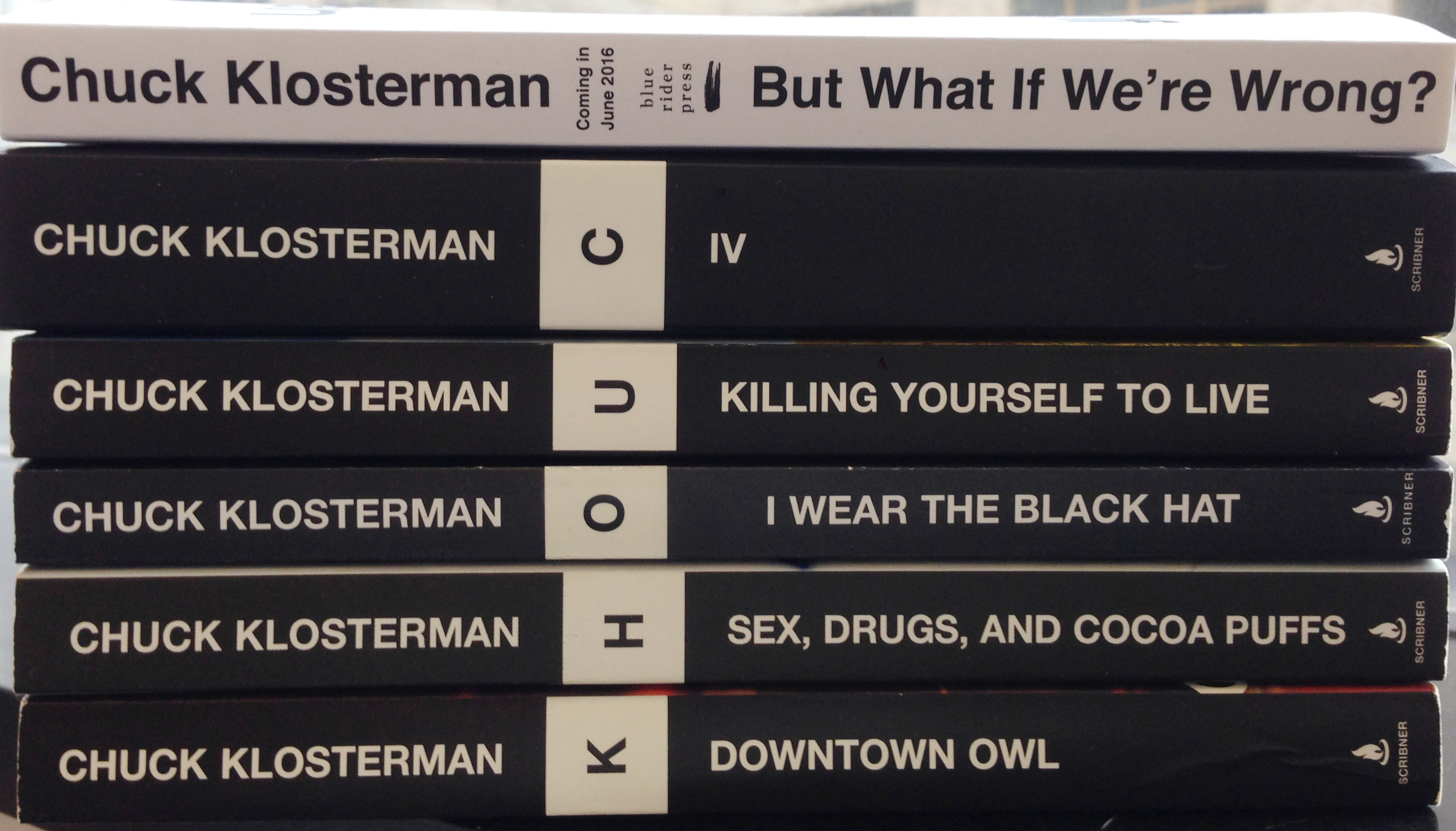
Ever wonder how a book makes it from the author’s mind to a reader’s shelf? We’re going deep inside one book in particular, But What If We’re Wrong?  by Chuck Klosterman to show readers the changes, collaborations, hard work, and inspiration that goes into the development of a book. In the coming months, we’ll talk to the editor, marketing team, cover art designers, and other people who help make a book… a book! Chuck Klosterman is an author and essayist known for his books (Sex, Drugs, and Cocoa Puffs, Eating the Dinosaur, and Fargo Rock City, among others), and his columns and articles for GQ, Esquire, Grantland, Spin, and The New York Times Magazine. His newest book, But What If We’re Wrong?, coming out this June, is all about the supposed facts and knowledge we take for granted. Check back in the coming weeks for the inside scoop from Chuck’s editor, Brant Rumble. IMG_4161 copy   Read more about But What If We’re Wrong? below

An Essay from Carole Baron, editor of Green Island by Shawna Yang Ryan

Editors get very passionate about books they work on – the Editor’s Desk series is his or her place to write in-depth about what makes a certain title special. Get the real inside-scoop on how books are shaped by the people who know them best. Green Island arrived in an email on January 29th 2014—just over two years ago—along with the usual enthusiasm of an agent doing his job. It was one of six manuscripts waiting for me to read. It turned out to be the best birthday present ever. It was the end of January, and out of the blue I received a note from the agent extolling Green Island’s virtues. “Put in on the pile,” I said to myself. But something in the letter piqued my interest. Maybe the subject: Taiwan, otherwise known as “Formosa.” A place that I vaguely remembered from my history classes and from current events. Chiang Kai-shek, the ruler in exile from mainland China, run off by communists. Or maybe the fact that the author had published a book called Water Ghosts that came with exquisite reviews… But those two things that intrigued me could also be negatives: Would American readers care about Taiwan? It was also the author’s second novel, often a difficult sell to the booksellers. It would all depend on the writing, the story, the book. I printed it out and promised to read it within a week or two, but I couldn’t help taking a peek. I read a few of the opening pages and immediately put aside all my other work. I had to find out about the unnamed narrator, whose birth coincides with history being made with that famous day: February 28, 1947. I wanted to know more about her baba, who was one of many thousands who were disappeared by the KMT, and who eventually returns to his wife and children but discovers that survival comes at a cost. And I especially wanted to see how these issues followed the narrator as she journeys to America as a married woman. E.L. Doctorow once said that there is no difference between fiction and non-fiction, there’s only narrative. And Green Island is a perfect example of an excellent narrative that combines history that foreshadows current events with a family that you really care about, whose lives are entwined with the fate of their country. The writing took me into a world that I had no idea existed. It brought me into a period that I had only learned about in high school history and geography classes. Not since reading about the disappeared of Argentina have I been so drawn to the horrors of living in a place and time where one word spoken to the wrong person could result in death. Shawna received a Fulbright and used it to travel to Taiwan, where her mother had grown up, and became fluent in Mandarin to conduct research for this book. She uncovered the naked truth of how people had to live there for all those years under martial law, mostly unreported by the western press. But most importantly, she wrote a story of family, of love, of hard decisions, and of loyalty that simply tears your heart out. So I learned, I wept, and I couldn’t wait to speak to Shawna and find out more about her. I couldn’t wait to share this extraordinary book with others. Of course, as an editor, I had some comments: “Transitions need tweaking, some of the history could be clearer” But the emotional core the book was there, and Shawna was thoughtful, careful, and in command of her work. My assistant, Ruthie Reisner, and I worked with Shawna by email and dealt with complicated time difference between New York and Hawaii. Finally, there was a manuscript that we could share with the publishing world. The response has been extraordinary. From a rave blurb from Viet Thanh Nguyen, author of The Sympathizer (“a tough, unsentimental and moving novel that is a memorial not only to the heroes, but also to the survivors”), to excellent pre-reviews (“epic” —Kirkus, “engrossing… absorbing and affecting” —Booklist) to bookseller support that resulted in an Indie Next Pick to an Amazon Top 10 Book of the Month pick for February. In addition, our international sales team selected the novel for their first ever “global title wave” campaign. It is a stealth publication where the book itself is driving the enthusiasm and on February 23rd, it will be available for the world to read. I can’t wait. P.S. The finished copies just arrived at my desk. This is one of the best moments in an editor’s life, to see those manuscript pages in my inbox turn into a “real book.” Even more thrilling is to get this picture from a happy author. Learn more about Green Island here.