




Writing Tips from Nick Petrie, author of Burning Bright
We know readers tend to be writers too, so we feature writing tips from our authors. Who better to offer advice, insight, and inspiration than the authors you admire? They’ll answer several questions about their work, share their go-to techniques and more. Now, get writing!
Is there something you do to get into a writing mood? Somewhere you go or something you do to get thinking?
I find that I do my best work at the beginning of the day, but I’m rarely in a writing mood when I sit down. I’m usually somewhat sleep-deprived, and I always have a long list of other responsibilities calling my name.
But if I can get myself into my chair with a cup of coffee, and start reading the last few days’ work, I find myself making a few changes here and there. Then I’m adding a few new sentences at the end, and before I know it, several hours have passed, I’ve written a few new pages, and I’m in a pretty good mood.
When I fall out of that flow, I get up and go for a walk, make another cup of coffee, and sit back down in my chair, just for another minute or two, and that’s another few hours gone, and some more sentences stacked up to reread tomorrow.
Which is a long way of saying that the best way for me to get into a writing mood is to sit down and start writing. And if I do it every day, it all gets easier.
What’s the best piece of advice you have received?
The painter Chuck Close said, “Amateurs sit and wait for inspiration, the rest of us just get up and go to work.”
He didn’t say it to me, but I consider this good advice for anyone doing creative work. Don’t wait for inspiration. Learn to cultivate it. Write your own writer’s manual. Find the tools and mindset that help you move forward when things get difficult. Because things almost always get difficult. That’s not necessarily a sign that the work is bad, it’s just a part of the process. Learning to understand and manage your own process is, for me, the secret to creative life.
I’m still working on it, by the way. But I’ve found that when I show up and do the work on a daily basis, inspiration will eventually perch on my shoulder and begin to whisper in my ear.
What clichés or bad habits would you tell aspiring writers to avoid? Do you still experience them yourself?
I love the beautiful distractions of the world – television and movies, video games, the internet in general. But I try really hard to avoid them, because they don’t help me become a better writer. They subtract hours from my day. And a writer’s main currency is time. Time to daydream, time to walk and think, time to sit and do the work.
Reading good books is one distraction that will help you become a better writer. And writing – that’s the thing – writing is what will really make you a better writer. Write bad stories until you begin to write so-so stories, which might, if you keep at it, turn to writing good stories. So put down your phone and keep at it.
This is not a new idea, nor one exclusive to writing fiction. The way to get good at playing the piano is to play the piano. And play, play, play.
I tell myself this every day.
What are three or four books that influenced your writing, or had a profound effect on you?
Cormac McCarthy’ Border Trilogy (All the Pretty Horses, The Crossing, and Cities of the Plain) had an enormous influence on me. I love his prose, his use of place as character, and his vivid descriptions of character in action, but the most powerful effect of reading those books was that they freed me up to write about what really interested me. At the most fundamental level, these are cowboy novels. The fact that they also rank among the best of American literature somehow made genre distinctions irrelevant.
Elmore Leonard had a profound influence on me as well. There are a few of his books I really love – Freaky Deaky, Stick, Glitz, Bandits. But I love his dialogue, his humor, his small-time hustlers, and the economy of his prose. He does a lot with a little, over and over.
The Writer’s Chapbook is a collection of bits and pieces of writers’ interviews culled from The Paris Review – a long list of great writers. The book is organized by topic, so no matter what problem I’m having, I can find far better writers who’ve had the same problem. It makes me feel better. In addition to dipping in and out, I’ve also read it cover to cover about ten times in the last ten years. I found it used in a clunky old cloth-covered hardback that makes me smile just to hold it in my hand.
Ask me this question next week and I’d probably give you a different list.
Learn more about the book below:

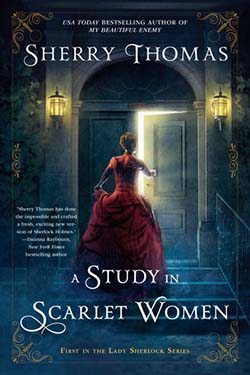
 Which makes it all the more interesting that historical mysteries set during the Victorian and Edwardian era, especially those featuring female protagonists, are determined not to be bound by those constraints.
 Robert Johnson (1911 – 1938)
The undisputed master of the Delta Blues is rumored to have met the devil at the crossroads to bargain for his soul. Johnson got his wish and became a famous bluesman, but died at only 27 years of age. The exact location of Johnson’s crossroads is unknown, although some people suggest the intersection of US 61 and US 49 in Clarksdale, MS. That’s as good a place to begin your search as any. If you don’t find the devil, there’s still a good chance you’ll find God: Morgan Freeman is a Clarksdale native, and is not infrequently spotted hanging out at his Ground Zero Blues Club.
Expert Advice: Take a trip to the Delta and look for the devil at the crossroads. At worst you’ll have some incredible food and enjoy some great music.
Robert Johnson (1911 – 1938)
The undisputed master of the Delta Blues is rumored to have met the devil at the crossroads to bargain for his soul. Johnson got his wish and became a famous bluesman, but died at only 27 years of age. The exact location of Johnson’s crossroads is unknown, although some people suggest the intersection of US 61 and US 49 in Clarksdale, MS. That’s as good a place to begin your search as any. If you don’t find the devil, there’s still a good chance you’ll find God: Morgan Freeman is a Clarksdale native, and is not infrequently spotted hanging out at his Ground Zero Blues Club.
Expert Advice: Take a trip to the Delta and look for the devil at the crossroads. At worst you’ll have some incredible food and enjoy some great music.
 Jonathan Moulton (1726 – 1787)
Revolutionary War hero Brigadier General Jonathan Moulton took trolling to an epic level when he sold his soul for an agreement that the devil would fill his boots with gold every day. Unafraid to try the father of lies at his own game, Moulton cut the soles out of his boots and placed them on the top of his chimney. After Old Scratch came along to fill up Moulton’s boots and found that he couldn’t, he burned Moulton’s house down.
Expert Advice: There’s no way you’re getting a square deal out of the devil, and you’re going to Hell anyway. You might as well try to pull one over on him.
Jonathan Moulton (1726 – 1787)
Revolutionary War hero Brigadier General Jonathan Moulton took trolling to an epic level when he sold his soul for an agreement that the devil would fill his boots with gold every day. Unafraid to try the father of lies at his own game, Moulton cut the soles out of his boots and placed them on the top of his chimney. After Old Scratch came along to fill up Moulton’s boots and found that he couldn’t, he burned Moulton’s house down.
Expert Advice: There’s no way you’re getting a square deal out of the devil, and you’re going to Hell anyway. You might as well try to pull one over on him.
 Nicolò Paganini (1782-1840)
This Italian violin virtuoso was gifted enough that people just assumed that he had made a deal with the devil. The rumors dogged him until the day he died — and after. Following his death in 1840, the Catholic church in Genoa refused to give him a Christian burial. Is there any truth to his association with Satan? Maybe, maybe not, and It’s unlikely the devil will give you a straight answer.
Expert Advice: Even if you don’t make a deal with the devil, you might as well let people think you did. It’s obviously good publicity if we’re still talking about it nearly 2 centuries later. Just clear everything up with your priest, first.
Nicolò Paganini (1782-1840)
This Italian violin virtuoso was gifted enough that people just assumed that he had made a deal with the devil. The rumors dogged him until the day he died — and after. Following his death in 1840, the Catholic church in Genoa refused to give him a Christian burial. Is there any truth to his association with Satan? Maybe, maybe not, and It’s unlikely the devil will give you a straight answer.
Expert Advice: Even if you don’t make a deal with the devil, you might as well let people think you did. It’s obviously good publicity if we’re still talking about it nearly 2 centuries later. Just clear everything up with your priest, first.
 Theophilus of Adana (? – 535 AD)
Unhappy with his lot in life as an archdeacon in the church, Theophilus decided to explore his options as a free agent. He hired a necromancer to summon the devil, who offered Theophilus a position as a bishop in the church in exchange for his soul. Theophilus signed a contract in blood and was promoted shortly thereafter. Apparently Theophilus looked at his chances as a mole in God’s operation and decided they weren’t so good. He took the contract to another bishop and asked for his help. The bishop ripped up the contract and Theophilus died on the spot … supposedly out of joy to have gotten out of the deal, but it’s not like he’s around to ask.
Expert Advice: Whether you’re getting in or getting out of a deal with the devil, it’s good to have a professional at your side. You might have a hard time finding a necromancer these days, but there’s always Craigslist.
NEXT STEPS:
Grab your guitar or violin, hang a pair of boots over your chimney, put your bishop’s phone number on speed dial, and grab the next flight out to Clarksdale. Chances are this won’t end the way you want it to, but you can’t say I didn’t warn you. Presuming you do make contact with the devil, then you’re probably going to want to start thinking of ways to get out of your contract. Here are a couple of maybe-tried and not-so-true methods.
Fiddle Contest:
Apparently, Satan can’t resist a good old fashioned fiddlin’.
Theophilus of Adana (? – 535 AD)
Unhappy with his lot in life as an archdeacon in the church, Theophilus decided to explore his options as a free agent. He hired a necromancer to summon the devil, who offered Theophilus a position as a bishop in the church in exchange for his soul. Theophilus signed a contract in blood and was promoted shortly thereafter. Apparently Theophilus looked at his chances as a mole in God’s operation and decided they weren’t so good. He took the contract to another bishop and asked for his help. The bishop ripped up the contract and Theophilus died on the spot … supposedly out of joy to have gotten out of the deal, but it’s not like he’s around to ask.
Expert Advice: Whether you’re getting in or getting out of a deal with the devil, it’s good to have a professional at your side. You might have a hard time finding a necromancer these days, but there’s always Craigslist.
NEXT STEPS:
Grab your guitar or violin, hang a pair of boots over your chimney, put your bishop’s phone number on speed dial, and grab the next flight out to Clarksdale. Chances are this won’t end the way you want it to, but you can’t say I didn’t warn you. Presuming you do make contact with the devil, then you’re probably going to want to start thinking of ways to get out of your contract. Here are a couple of maybe-tried and not-so-true methods.
Fiddle Contest:
Apparently, Satan can’t resist a good old fashioned fiddlin’.