Tag Archives: fiction

Challenge Your Shelf: Women’s History Reading Challenge

Who said reading can’t be competitive? Every few months, we’ll be challenging you to read a list of selected books. Print out the challenge and cross the titles off as you go. Show off how much you’ve read by taking a picture and tweeting @penguinrandom or Instagramming (@penguinrandomhouse) with the hashtag #challengeyourshelf.

Remembering Pat Conroy’s life and work

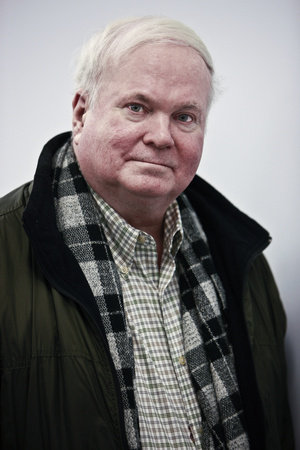
New York Times bestselling author Pat Conroy died Friday, March 4, at the age of 70.  Conroy passed away at his home in Beaufort, SC, surrounded by family and loved ones.  “The water is wide and he has now passed over,” said his wife, novelist Cassandra Conroy.  Funeral arrangements are currently being made at this time.

Read the New York Times obituary here.

“Pat has been my beloved friend and author for 35 years, spanning his career from The Prince of Tides to today,” said his longtime editor and publisher, Nan A. Talese of Doubleday.  “He will be cherished as one of America’s favorite and bestselling writers, and I will miss him terribly,” Talese said.

Listen to an interview with Nan about Pat Conroy’s life here.

Conroy is the author of eleven previous books, including The Boo, The Water is Wide, The Great Santini, The Lords of Discipline, The Prince of Tides, Beach Music, My Losing Season, The Pat Conroy Cookbook: Recipes of My Life, South of Broad, My Reading Life and The Death of Santini.   His novels have sold over 20 million copies worldwide.

Interview with C.J. Box, author of the Joe Pickett novels

Off the Grid, the sixteenth Joe Pickett novel by New York Times bestselling author C.J. Box, is being published by G.P. Putnam’s Sons on March 8.  Strong advance buzz has been building for this book, which revolves around how terror is found – and fought – in the wild expanses of Wyoming.  Game warden Joe Pickett, his best friend Nate Romanowksi, and Joe’s daughter Sheridan are embroiled in multiple plot lines that unfurl with urgency, harrowing suspense and surprising twists.  The Joe Pickett character entered the literary world in 2001 and a reviewer for The New York Times once wrote, “ 
 Box introduced us to his unlikely hero 
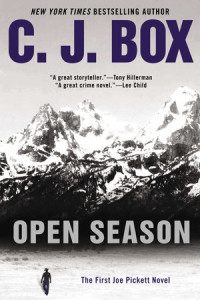
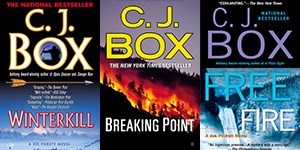
 a decent man who lives paycheck to paycheck and who is deeply fond of his wife and his three daughters. Pickett isn’t especially remarkable except for his honesty and for a quality that Howard Bloom attributes to Shakespeare – the ability to think everything through for himself.”  Fellow Penguin Random House author Lee Child has called Box “one of today’s solid-gold, A-list, must-read writers.” Read on for a Q&A with C.J. Box.  C.J.  Box agreed to respond to the following questions for Igloo:  Sixteen novels in, what do you think accounts for the wealth of themes, storylines and characters that have kept your Joe Pickett series fresh and filled with surprises? OpenSeasonAlthough the first Joe Pickett novel (Open Season) was written as a one-off at the time, the characters, themes, location, and style introduced in that book provided a great framework for the series to grow.  I’ve never had to regret the foundation laid in that book.  Also, because the books take place in real time the characters mature and change from book to book.  For example, Joe Pickett’s daughter Sheridan is seven years old in Open Season and now 22 in Off the Grid.  Because the characters get older and benefit (or not) from previous situations in the books I think that helps keep the series fresh.  Plus, since each book includes a theme or controversy unique to the story (endangered species, alternative energy, the ethics of hunting, or in the case of Off the Grid — domestic terrorism) they are all stand-alones in their own way. A lot of your longtime fans will be happy that your character Nate Romanowski features prominently in Off the Grid.  From a writer’s standpoint, what is involved in making Nate so interesting and unpredictable?  Unlike just about every other character in the series, Nate Romanowski is based on a friend of mine although I’ve exaggerated (Thank God) his personality. The buddy I grew up with was a big blonde middle linebacker who later went on to join the military and special forces.  He took me falconry hunting and through him I was introduced to the very strange and fascinating world of falconers and the mindset that goes with it.  And, of course, Nate carries one of the largest handguns in the world and he’s good with it. For a reader coming to your Joe Pickett novels for the first time, which  of your backlist titles, from Open Season onward, would you recommend they check out first and why? CJBox3booksTnailTough question, since in their way each book stands alone.  No reader would be hopelessly lost starting with any book in the series.  Of course, those who’ve read them all say it’s important to start with OPEN SEASON so the reader can experience Joe’s family growing and changing, and I probably lean that direction.  But there are certain books —Winterkill,  Free Fire,  Breaking Point, andOff the Grid   – that I think could be good entry points into the series. Find out more about C.J. Box’s books below.  

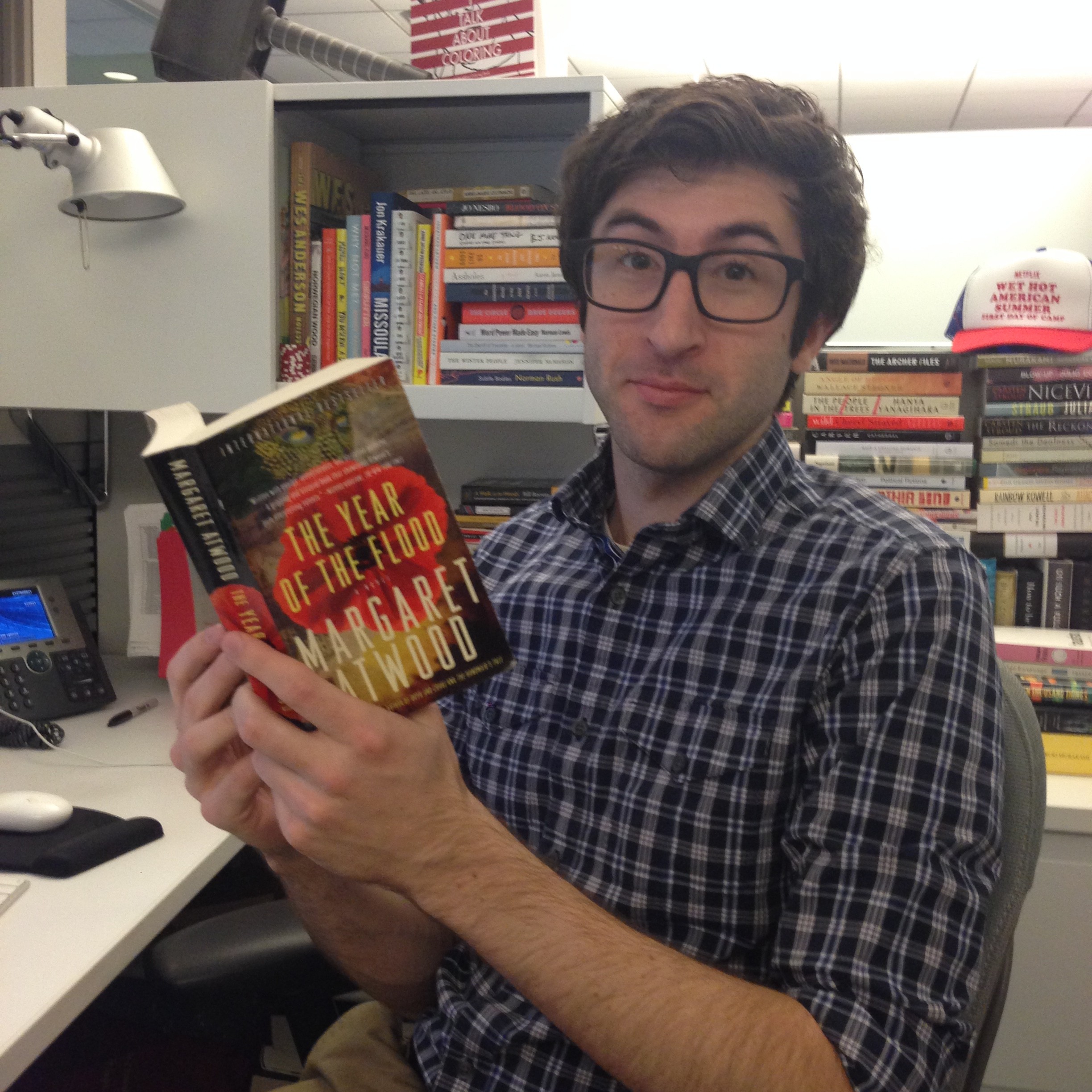
Bookspotting: Adam is reading The Year of the Flood by Margaret Atwood

Ever wonder what Penguin Random House employees are reading? We’re a bunch of professionally bookish people, so you can always count on us to have a book on hand
 or thirty piled on our desks. Our Bookspotting feature shows off the range of readers behind the scenes at Penguin Random House. adam maid Adam, Social Media and Digital Publishing for Vintage and Anchor books, is reading The Year of the Flood by Margaret Atwood. Find out more about the book here:  

Deb Garrison, Senior Editor at Pantheon, on The Stargazer’s Sister by Carrie Brown

The Stargazer’s Sister, Carrie Brown’s novel based on the life of Caroline (Lina) Herschel, the sister of the great 19th century astronomer William Herschel, and a noted astronomer herself, is my third project with Carrie and the first time we’ve worked on a historical novel together. In many respects this felt different, because of Carrie’s desire to be loyal to a life about which there is much on record—Lina Herschel has been the subject of biographies, alongside her brother—and to the actual stargazing they conducted. Carrie’s acknowledgments include a professor of physics and graduate students in the field, who helped her understand the mathematics of the brother-sister duo and the skies they observed with revolutionary results. Their success was due to, among other factors, William’s single-minded passion to build a telescope bigger than seemed possible—a wonderful episode in the novel where we see how truly remarkable it is when science is in the making: there are people who think of things that no one has thought of before and find ways to carry out their vision, despite the skepticism that surrounds them. I was awed by the world Carrie made vivid to me and at the same time, a good litmus test for the casual reader who may not have any particular interest in chasing comets but who cares deeply about women’s lives. Carrie’s job was to be historically accurate but to also help us understand the wonder of who Lina was—to invent a voice for her, and to create living episodes for this budding feminist. Lina was a career woman so much before her time that it seems ludicrous to use the term; she had a vocation, and made major sacrifices for it. She also sacrificed much to be by her brother’s side, to run his household in Bath, cooking and cleaning and keeping accounts for a thriving scientific enterprise that took place quite literally in the siblings’ backyard. As Carrie shows us, Lina had an unwavering if complex loyalty to William, who saved her from a life of misery at the hands of her aging and unhappy mother in Hanover, Germany. Because Lina was scarred and her growth stunted by typhus in her youth, she was not suitable to be married off; William recognized Lina’s superior intellectual gifts, paying for the ongoing care of his mother in order to free Lina from imprisonment as her caretaker and drudge-mate forever. What ensues is that she became his own caretaker and drudge-mate, yet also the necessary enabler of his genius—one mathematically gifted enough to work out the calculations needed to record what he sees in the skies during their obsessive and sometimes bone-chilling nightly observations. In The Stargazer’s Sister, Carrie moves the reader with a grace and insight similar to that of her previous Pantheon titles, The Rope Walk, about a ten-year-old girl losing innocence and discovering adult fallibility, and The Last First Day, about the wife of a beloved prep school headmaster. Whether historical or not, her novels expose the tenderness and uncertainty of female strength as it comes into being. Her interest in the female psyche and how it develops, is revealed to its bearer, and is bodied forth in true acts in the world, hovers between the lines throughout her work. Without caring especially for what shines in the sky (though Carrie does beautifully with the vastness of heaven, its treasures suddenly near to the eye for the first time in history), a reader can be fully riveted by Lina’s story – that of a girl with a curious and potent brain becoming a woman by following her entirely unique path. I am delighted to read the excellent reviews so far for this winning novel! Learn more about the book below!

Writing Tips from Kristopher Jansma, author of Why We Came to the City

We know readers tend to be writers too, so we feature writing tips from our authors. Who better to offer advice, insight, and inspiration than the authors you admire? They’ll answer several questions about their work, share their go-to techniques and more. Now, get writing!   How would you recommend creating and getting to know your characters? More often than not I start by trying to capture an inner voice or set of actions. As an exercise, I picture characters either sitting down or standing up, and spend a full page describing them. It gives me a chance to zoom in on small but significant details of their bodies and movements; before long I’m peering into their thoughts and feelings and imagining them moving around. You don’t want to introduce a character in a static way, like a model posed for a photograph. You want a reader to meet characters who appear busy going about their lives, which have gone on long before the story began and he or she arrived to observe them. Did you always want to write? How did you start your career as an author? I wrote even before I wanted to be a writer. In early grade school my class had to write in one of those black-and-white-marbled journals every day after recess, and I would often write down things about the make-believe games that my friends and I had played outside—time spent becoming superheroes, slaying dragons, that sort of thing. One day in the fourth grade we were assigned a long-term substitute teacher because our first one had gotten sick, and this new teacher didn’t like that we were using journal time to write about “made-up stuff.” I didn’t even know what she meant by that. It was all perfectly real to me. Somehow I got nominated to take our side of the fight to the principal, and she completely surprised me by agreeing that it was important to write down the kinds of stories I loved. She compromised, giving us new journals with red covers and allowing us to write in them after we had written in the marble notebooks for five minutes. So that was that. My first schism between nonfiction and fiction, and my first moment of fighting for my art. Even then it wasn’t until I think the seventh grade that it really dawned on me that writing could be a job, that all these books I loved to read had been written by real people—and that I could someday write my own. What’s the best piece of advice you have received?  About writing? A few years ago I went to Princeton for the afternoon to read through some old unpublished stories and letters belonging to J. D. Salinger, the famous recluse. One of the letters, to his editor, was sent from either basic Army training or the Western Front. And Salinger said, of his own early stories, “I’m beginning to feel that no writer has the right to tear his characters apart if he doesn’t know how, or feel that he knows how (poor sucker) to put them together again. I’m tired . . . my God, so tired . . . of leaving them all broken on the page with just ‘The End’ written underneath.” And reading that just set something off in me. I realized that was all I knew how to do with fiction, and I immediately resolved to learn how to put them back together again. It changed everything for me. Do you ever base characters off people you know? Why or why not? I think we all do that, whether consciously or unconsciously. Often a character may emerge as a thinly veiled version of someone I know, and then through the writing process that veil grows more and more substantial until the original person is nowhere to be found anymore. The funny thing about it is that I might borrow a few details about a character from the life of a friend, and often that friend is fine—and sometimes even flattered—if he or she ever notices. But I’ll also face situations when friends come up to me and say, “Oh, this character here is totally based on X, right?” and X will be a completely different friend, someone I had never thought about consciously. And yet I can see what they mean. . . . Learn more about Why We Came to the City below.

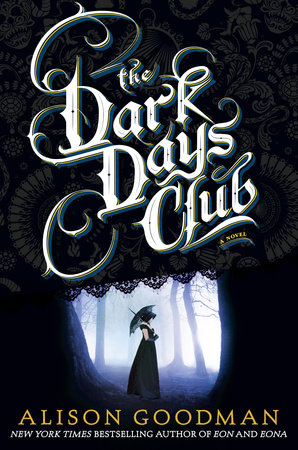
Writing Tips from Alison Goodman, author of The Dark Days Club

We know readers tend to be writers too, so we feature writing tips from our authors. Who better to offer advice, insight, and inspiration than the authors you admire? They’ll answer several questions about their work, share their go-to techniques and more. Now, get writing!   How would you recommend creating and getting to know your characters? I have a particular method that I have used for a very long time now. I call it the portal method. The first step is to think of at least three important events that have happened in your character’s past. They can be good or bad, but they have to be significant. These are the portals through which you look when you are planning a particular scene. For instance, in The Dark Days Club, my main character, Lady Helen, lost both her parents when she was ten. They drowned on a yachting trip and their bodies were never found. So out of that comes a whole slew of character traits and information, all based on what I imagine would be the psychological consequences of that event. For example, the loss makes Helen feel a sense of abandonment, it has made the idea of family very important to her, she does not like doubt, and she has grown up to be quite cautious. When it comes time to writing a scene that has a link to family – perhaps between Helen and her brother – then some of those traits would come into play. I focus the scene through that “Family/Loss” portal. It provides a base line from which to build the character’s responses, and because these are fixed events in the character’s life they provide cohesiveness to the overall characterization. After developing an idea, what is the first action you take when beginning to write? I always start by researching – many, many months of reading books about my era and searching out primary resources. As I’m doing that, I’m also creating a storyboard and scene breakdown of the plot. Then, when I get to a certain stage in that process, I start writing the first chapter to test out the voice and tone. I keep rewriting that first chapter until I have the voice and tone in place, and I have worked out most of the main plot points on the storyboard. Then off I go, writing the novel. However, that does not mean the research or the storyboarding stops; they continue throughout the whole writing process. There are always delicious new facts to discover and blend into the narrative, and, as I move forward through the manuscript, the interaction between character and plot can sometimes create shifts in the storyline that require a rethink of action sequences or scene placement. What’s the best piece of advice you have received? Every writer rewrites. The first thing that comes out of your mind may be good, but it is not finished. One of my bugbears is the notion that if something is going to be good, then it should arrive perfectly formed. That is absolute 19th century Romantic nonsense. That initial, wonderful rush of ideas is a great start, but the real work is in crafting all that excitement and energy into a meaningful emotional journey for the reader. Describe your writing style in 5 words or less. Fluid, suspenseful and slyly humorous. What are three or four books that influenced your writing, or had a profound affect on you?
  1. The Outsiders by S.E. Hinton. I was about thirteen and had been dragged along to a dinner party by my parents. While the adults ate prawn cocktails, beef stroganoff and talked politics, I took refuge in the living room to finish The Outsiders. I ended up sobbing my eyes out in my borrowed bean-bag, partly because of the sad ending but mainly due to the realization that a good deal of my devastation had been created by the terrible beauty of the book’s circular structure. That’s when I truly wanted to become a writer.
  2. These Old Shades by Georgette Heyer. Again, I was twelve or thirteen years old. My mother always gave me a book for Christmas and this one came at exactly the right moment—I was ready for well-researched history and dashing romance. I was besotted by the exciting blend of adventure, humor, and buttoned-up characters coming undone by love.       This was the beginning of my love affair with the 18th and 19th centuries, which has now come into full bloom with The Dark Days Club!
  3. If On A Winters Night A Traveller by Italo Calvino. This was one of the texts I read in college. It is a postmodern masterpiece, and has everything you’d ever want to know about creating poignant relationship triangles in fiction, all explored in beautiful prose.
Learn more about The Dark Days Club below.

Bookspotting: Kelli is reading The Girl in the Spider’s Web by David Lagercrantz

Ever wonder what Penguin Random House employees are reading? We’re a bunch of professionally bookish people, so you can always count on us to have a book on hand
 or thirty piled on our desks. Our Bookspotting feature shows off the range of readers behind the scenes at Penguin Random House. Kelli Kelli, in Crown production, is reading The Girl in the Spider’s Web by David Lagercrantz. Find out more about the book here: