Tag Archives: history
Congratulations to the 2017 Pulitzer Prize Winners!
The Return: Fathers, Sons and the Land in Between by Hisham Matar.
Edited by Noah Eaker.
Pulitzer citation: âFor a first-person elegy for home and father that examines with controlled emotion the past and present of an embattled region.â
Susan Kamil, Hisham Matarâs publisher at Random House, said, âItâs thrilling to see Hishamâs work so recognized by the Pulitzer jury. The Return is about Hishamâs personal search for his father, but his art elevates it into a universal quest for justice.â
The Return previously won the inaugural PEN/Jean Stein Book Award.
Fiction
The Underground Railroad by Colson Whitehead.
Edited by Bill Thomas.
Pulitzer citation: âFor a smart melding of realism and allegory that combines the violence of slavery and the drama of escape in a myth that speaks to contemporary America.â
Colson Whitehead commented, âI donât even know what to say â this has been a crazy ride ever since I handed the book in to my editor. Iâm incredibly grateful to everyone who picked up a copy and dug it, and to all the kind folks who championed it along the way â the booksellers, the reviewers, the awesome Oprah Winfrey, and the judges. Itâs a nice day to put âNew York, New Yorkâ on the headphones and walk around city making crazy gestures at strangers.â
The Underground Railroad has sold over 825,000 copies in the United States across all formats. An Oprahâs Book Club 2016 selection, #1 New York Times bestseller, a New York Times Book Review Ten Best Books of 2016 selection and the winner of the 2016 National Book Award for Fiction, the book chronicles young Coraâs journey as she makes a desperate bid for freedom in the antebellum South. After escaping her Georgia plantation for the rumored Underground Railroad, Cora discovers no mere metaphor, but an actual railroad full of engineers and conductors, and a secret network of tracks and tunnels beneath the Southern soil.
General Nonfiction
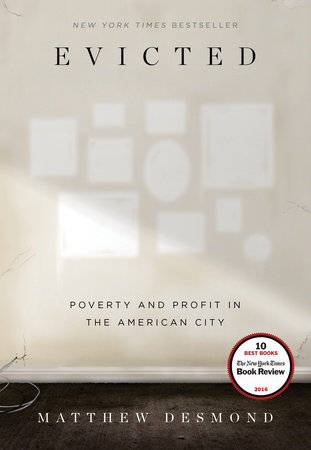
Evicted: Poverty and Profit in the American City by Matthew Desmond.
Edited by Amanda Cook.
Pulitzer citation: âFor a deeply researched exposĂ© that showed how mass evictions after the 2008 economic crash were less a consequence than a cause of poverty.â
Ms. Cook commented, âItâs been an honor for all of us at Crown to help bring Evicted into the world. Matt Desmond writes with great heart and intellectual rigor about Americaâs housing crisis. He follows eight families in Milwaukee as they struggle to keep a roof over their heads, showing us how a lack of stable shelter traps families in poverty and destroys lives meant for better things. Matt often says, âWe donât need to outsmart poverty; we need to hate it more.â With Evicted, he has helped us do exactly that.â
Evicted previously won the 2016 National Book Critics Circle Award for Nonficiton, the 2017 Andrew Carnegie Medal for Excellence in Nonfiction, the 2017 PEN/John Kenneth Galbraith Award for Nonfiction, and the 2016 Discover Great New Writers Award in Nonfiction, among other honors.
History
Blood in the Water:Â The Attica Prison Uprising of 1971 and Its Legacy by Heather Ann Thompson.
Edited by Edward Kastenmeier.
Pulitzer citation: âFor a narrative history that sets high standards for scholarly judgment and tenacity of inquiry in seeking the truth about the 1971 Attica prison riots.â
Mr. Kastenmeier commented, âHeather is a remarkable historian who has spent the last ten years of her life working diligently to make sure she could do justice to this story before it is too late. Â She has shown remarkable courage and fortitude in researching a story the authorities didnât want told. Â We need that now more than ever. In the years sheâs been working on this book the issues it raises have become more urgent than ever. For all these reasons I could not be happier for her upon this news.â
We thank and congratulate Hisham Matar, Colson Whitehead, Matthew Desmond, and Heather Ann Thompson, their respective editors Noah Eaker, Bill Thomas, Amanda Cook, and Edward Kastenmeier, and our colleagues at Random House, Doubleday, Crown Publishers, and Pantheon for continuing and building upon one of our proudest literary traditions.
To view the complete 2017 Pulitzer winners list, click here.
Learn more about the winners here:
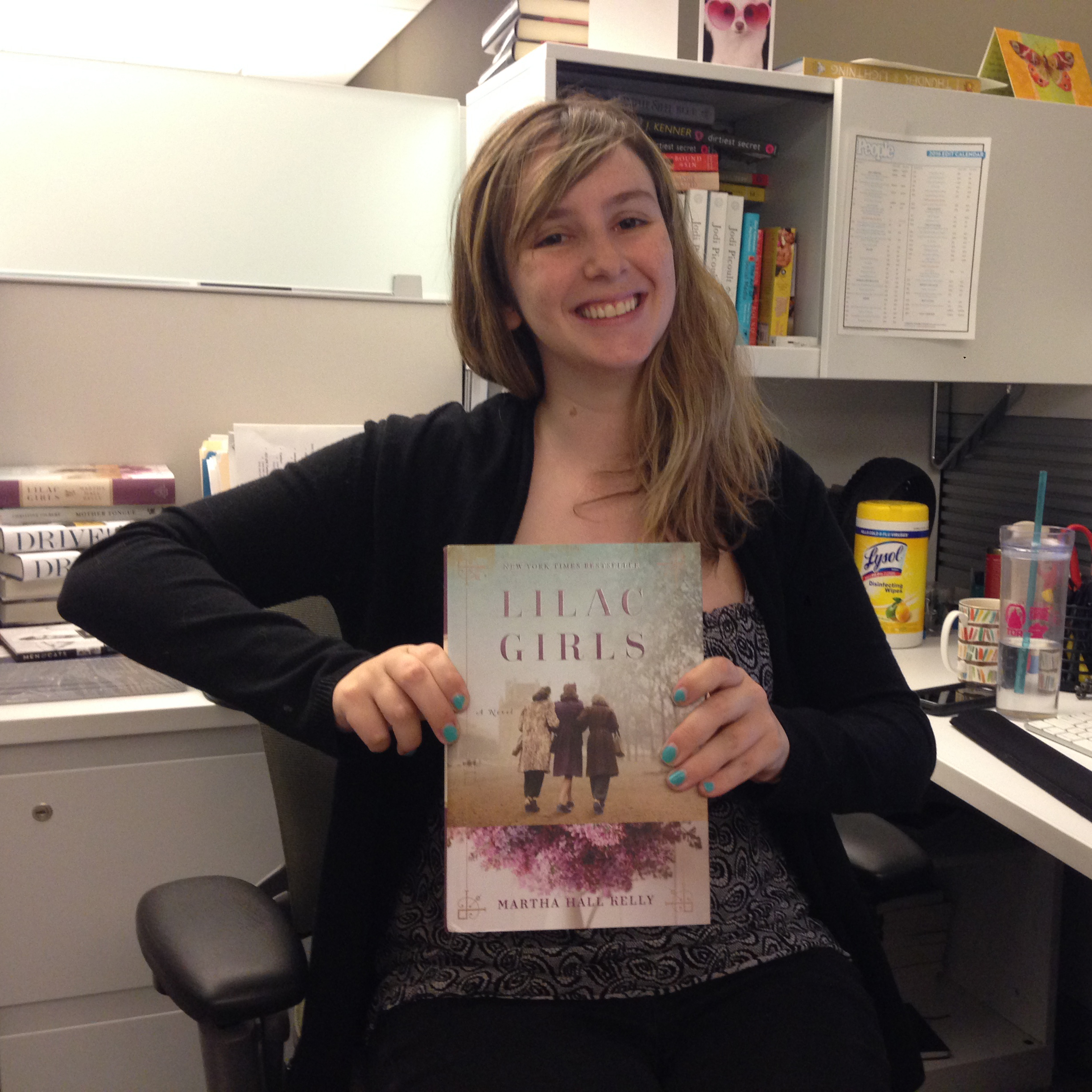
Bookspotting: Jess is reading Lilac Girls by Martha Hall Kelly
Jess in Random House Ad/Promo is reading Lilac Girls by Martha Hall Kelly
Find out more about the book here:
Bookspotting: Andrea is reading The Last Days of Night by Graham Moore
Andrea in Random House marketing is reading The Last Days of Night by Graham Moore.
Find out more about the book here:
Listen: Karen White talks family, history, beekeeping, and much more
2016 Pulitzer Prize Winners from Penguin Random House
- General Non-Fiction: Joby Warrick for Black Flags: The Rise of ISIS
- History: T.J. Stiles for Custerâs Trials: A Life on the Frontier of a New America
- Biography or Autobiography: William Finnegan for Barbarian Days: A Surfing Life
Writing Tips from Thomas Mallon, author of Finale
Writing Tips from David Jaher, author of “The Witch of Lime Street”
Attention, New Yorkers: Pick up Widow Basquiat before you see the Basquiat exhibit at the Brooklyn Museum
Brooklyn-born artist Jean-Michel Basquiat filled numerous notebooks with poetry fragments, wordplay, sketches, and personal observations ranging from street life and popular culture to themes of race, class, and world history. The first major exhibition of the artistâs notebooks, Basquiat: The Unknown Notebooks features 160 pages of these rarely seen documents, along with related works on paper and large-scale paintings.To dive a little deeper, learn the story of Jean-Michel Basquiat’s partner, Suzanne Mallouk. In Widow Basquiat by Jennifer Clement, the reader is plunged into 1980’s New York City where the lovers meet for the first time. All about art, underground culture, passion and creative energy, this biography is gripping and transportive.  See below for an excerpt from the book.
This excerpt is from Jennifer Clement‘s  Widow Basquiat, the story of the short-lived, obsessive love affair between Suzanne Mallouk and Jean-Michel Basquiat. Clement is former president of PEN Mexico and is the author of three novels and several books of poetry. THE CROSBY STREET LOFT MADNESS She irons the clothes, folds his clothes, places them in the same order on the shelfâthe red sweater is folded this way and placed above the red shirt. She places the soap at an angle on the sink and always places the towels in the same order 1-2-3. She irons one shirt five times. She makes the bed three times and irons the sheets. If a sweater fades in the wash she cries. She never speaks and only answers questions or speaks in a panicky monologue: âMy mother was a spy in the war. They took her to see a woman with transparent skin. They could see her heart beating in there and her lungs and blood. They could see her eyeballs turning. This was a military secret. Nobody knows about this. And they would give the woman foodâ turnips, oranges, breadâand watch it all go down into her. This was a military secret. I heard about her when I was five and I thought she must have been very beautiful like a larva, but very scared. I kept looking at my own stomach and wondering what was in there. I chewed care- fully. My mother said she was a kind of Venus or virgin.â At first Jean-Michel thinks this is funny and puts some of her words in his paintings. Then he tells her to shut up. He paints Self-portrait with Suzanne. He paints her speaking her chicken-chatter, âPTFME E a a a R M R M O AAAAAAAA.â They do coke six or seven times a day. He tells Suzanne she can only wear one dress. It is a gray shift with white checks. He tells her she can only wear one pair of very large menâs shoes. He does another line of coke. Suzanne walks clunk- clunk-clunk, her feet wading in the shoes, around the loft. He tells her she canât wear lipstick anymore. He says she can only buy groceries and detergents. Then he says no, he will buy them. He does another line of coke and paints Big Shoes, a portrait of Suzanne in big shoes. He calls her Venus. He says, âHey, Venus, come and kiss me.â He says, âVenus, go get us some coke.â He writes âVenusâ into his paintings and says Suzanne is only with him for his money. Jean-Michel sticks black paper over all the windows so that they wonât know if it is day or night. âThe day is too light,â he says. Soon Suzanne stops cleaning and Jean-Michel stays at home all day. Suzanne finds a place to live under a small table, like a small cat that finds a hiding place. From here she watches Jean- Michel paint, sleep and do drugs. He picks up books, cereal boxes, the newspaper or whatever is around. He finds a word or phrase and paints it on his board or canvas. A few times a day he crawls under the table with Suzanne and gives her a kiss on the forehead. Sometimes he pulls her out, has sex with her, and then puts her back under the table and continues to paint. Sometimes Suzanne weeps a little and Jean-Michel says, âShut up, Venus. I know what it is like to be tied up and fed, with a bowl of rice on the floor, like an animal. I once counted my bruises and I had thirty-two.â Suzanne moves from under the table into a closet in the bedroom. In here there is a green trench coat, a pair of moccasins, black and pink pumps, a tin frying pan, a superÂmarket plastic bag full of bills, two large boxes of chalk. Under one moccasin Suzanne finds a small box of birthday candles. THEY DO NOT KNOW HOW TO DRIVE A CAR Shortly after Suzanne moves into the Crosby Street loft Jean-Michel takes her to Italy. He is having a show at the Emilio Mazzoli Gallery in Modena. Neither Jean-Michel nor Suzanne knows how to drive a car so Jean-Michel pays to bring Kai Eric along to drive them around. In the airplane Jean-Michel continuously gets up to do some coke in the bathroom. He says he has to finish it up before he goes through customs in Europe. He says he wants to open up the emergency door exit and jump on the clouds. Suzanne has hepatitis. She cannot lift up her arms. Jean-Michel sits beside her; he kisses and licks one of her arms. âBeautiful arms,â he says. âVenus, I have to paint your arms.â He takes a blue marker out of his pocket and paints on Suzanneâs arm. He paints her humerus, ulna, radius and carpus. He writes âanimal cellâ on the inside of her wrist. He draws a ring around her finger. âNow you are my wife,â he says. Read more about Widow Basquiat here. Learn about the Basquiat exhibit at the Brooklyn Museum here.ÂâSublime, poeticâŠA harrowing, beautifully told love story about two seekers colliding in a pivotal moment in history, and setting everything, including themselves, on fire.ââRebecca Walker for NPR
âStunningly lyrical . . . Original, insightful, and engrossing. . . . While filled with pop culture anecdotes art fans might seekâAndy Warhol and Rene Ricard both make appearances, for instanceâClementâs account is an honest love story above all else.ââPublishers Weekly
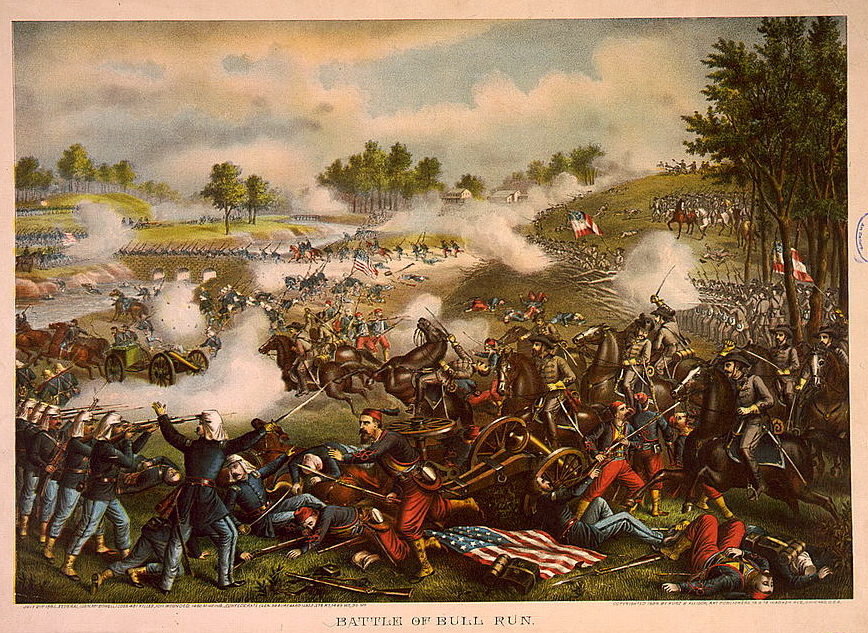
This Day In History: The Battle of Bull Run
Not until midday did Russell finally get close enough to the fighting to hear âthe thudding noise, like taps with a gentle hand upon a muffled drumâ of artillery in action. Among congressmen and other dignitaries, many of them accompanied by their wives, he watched from atop a hill above Centreville as distant wisps of smoke marked the opposing lines. He ate a sandwich. He drank some Bordeaux heâd packed in his case. By the time he drew closer to the fighting, the Union forces were pulling back; then, suddenly, they were fleeing in a rout so complete that he could hardly believe his eyes.
Russell was on a borrowed nag threading his way toward the action when he heard loud shouts ahead of him and saw several wagons coming from the direction of the battlefield. The drivers were trying to force their way past the ammunition carts coming up the narrow road. A thick cloud of dust rose behind them. Men were running beside the carts, between them. âEvery moment the crowd increased, drivers and men cried out with the most vehement gestures, âTurn back! Turn back! We are whipped.â They seized the heads of the horses and swore at the opposing drivers.â A breathless officer with an empty scabbard dangling by his side got wedged for a second between a wagon and Russellâs horse.
âWhat is the matter, sir?â Russell asked. âWhat is all this about?
âWhy, it means we are pretty badly whipped,â said the officer, âand thatâs the truth.â Then he scrambled away.
The heat, the uproar, and the dust were âbeyond description,â Russell wrote afterward. And it all got worse when some cavalry soldiers, flourishing their sabers, tried to force their way through the mob, shouting, âMake way for the general!â
Russell had made it to a white house where two field guns were positioned, when suddenly troops came pouring out of the nearby forest. The gunners were about to blast away when an officer or a sergeant shouted, âStop! Stop! They are our own men.â In a few minutes a whole battalion had run past in utter disorder. âWe are pursued by their cavalry,â one told Russell. âThey have cut us all to pieces.â
After a while there was nothing the worldâs greatest war correÂspondent could do but fall in with the tide of men fleeing the fightÂing. In all his battles, he had never seen anything like this: âInfantry soldiers on mules and draught horses, with the harness clinging to their heels, as much frightened as their riders; Negro servants on their mastersâ chargers; ambulances crowded with unwounded soldiers; wagons swarming with men who threw out the contents in the road to make room; grinding through a shouting, screamÂing mass of men on foot, who were literally yelling with rage at every halt and shrieking out, âHere are the cavalry! Will you get on?ââ They talked âprodigious nonsense,â Russell said, âdescribing batteries tier over tier, and ambuscades, and blood running knee-deep.â As he rode through the crowd, men grabbed at Russellâs stirÂrups and saddle. He kept telling them over and over again not to be in such a hurry. âThereâs no enemy to pursue you. All the cavalry in the world could not get at you.â But, as he soon realized, he âmight as well have talked to the stones.â
It was a long way back to Washington that day. But after sevÂeral brushes with violent deserters, drunken soldiers, and more panic-stricken officers, Russell made his way in the moonlight to the Long Bridge across the Potomac and into the capital. He told anyone who asked him that the Union commander would regroup and resume the battle the next morning. But when he awoke in his boardinghouse on Pennsylvania Avenue, he found the city full of uniformed rabble. âThe great Army of the Potomac,â he wrote, âis in the streets of Washington instead of on its way to Richmond.â
The Federal capital was essentially defenseless. âThe inmates of the White House are in a state of the utmost trepidation,â Russell wrote, âand Mr. Lincoln, who sat in the telegraph operatorâs room with General Scott and Mr. Seward, listening to the dispatches as they arrived from the scene of the action, left in despair when the fatal words tripped from the needle and the defeat was already reÂvealed to him.â
For the South, âhere is a golden opportunity,â said Russell. âIf the Confederates do not grasp that which will never come again on such terms, it stamps them with mediocrity.â But the rebels stayed where they were, and the fact that they did not march on WashingÂton suggested this would be a long war.
As Russell studied the city, its politicians, and its dispositions in the aftermath of the battle, he did not agree with âmany who think the contest is now over.â He figured the Northerners had learned a lesson about âthe nature of the conflict on which they have enÂteredâ and would be roused to action. But when the Times ran RusÂsellâs article on the battle, his balanced judgment about the lessons learned got no play. The whole effect of his account of the rout was to reinforce the editorsâ image of a South that not only would fight, but that could fight better than the North and, therefore, should soon be free of it.
Read more about the American Civil War and the untold story of the Robert Bunch: an unlikely Englishman who hated the slave trade and whose actions helped determine the fate of our nation in Our Man in Charleston.
âA perfect book about an imperfect spy.” âJoan Didion