





Anna North, author of The Life And Death Of Sophie Stark, chats with us after Twitter Fiction Festival to discuss her highly praised novel and the inspiration behind it.
Tag Archives: literary fiction
Let the Book Apothecary pick out your next read!
Further Afield features are from our greater Penguin Random House family. We pick interesting articles to keep you updated on genre-specific news, interviews, and more.
Feeling anxious? Discouraged? Lovesick? Let The Book Apothecary prescribe the perfect book for you. Inspired by Monsieur Perdu in the best selling The Little Paris Bookshop, the apothecary will recommend books good for what ails you.

 “The Little Paris Bookshop is an enchantment. Set in a floating barge along the Seine, this love letter to books – and to the complicated, sometimes broken people who are healed by them – is the next best thing to booking a trip to France.”—Sarah Pekkanen, author of Catching Air
Get your recommendations here!
“The Little Paris Bookshop is an enchantment. Set in a floating barge along the Seine, this love letter to books – and to the complicated, sometimes broken people who are healed by them – is the next best thing to booking a trip to France.”—Sarah Pekkanen, author of Catching Air
Get your recommendations here!
“With all due respect, what you read is more important in the long term than the man you marry, ma chère Madame.” – Monsieur Perdu, The Little Paris Bookshop
“The Little Paris Bookshop is an enchantment. Set in a floating barge along the Seine, this love letter to books – and to the complicated, sometimes broken people who are healed by them – is the next best thing to booking a trip to France.”—Sarah Pekkanen, author of Catching Air
Get your recommendations here! 
From the Editor’s Desk: Marian Wood, VP and Editor of Marian Wood Books on Black Glass by Karen Joy Fowler
Editors get very passionate about books they work on – the Editor’s Desk series is his or her place to write in-depth about what makes a certain title special. Get the real inside-scoop on how books are shaped by the people who know them best.
Karen Joy Fowler and I have been together since 1990, when her agent sent me the manuscript of what was to become KJ’s first novel. That agent had discriminating taste and kept a small list. She also very quietly took the measure of the editors she met. I had known her for years and saw very little in the way of submissions. She placed her clients well and the marriages tended to last. So when the manuscript arrived, I was both curious and interested.
Nabokov is famously on record as saying “you will know great fiction when the hairs on the back of your neck stand on end as you read.” It’s been my good fortune to have that happen many times though not having it happen is more the norm. With Karen Fowler’s Sarah Canary, it happened immediately and continued to the last page. Her agent had taken my measure over the years and now she hit a home run. That novel—quirky, subversive, funny and, yes, sad, was a literary success. Of the many glowing reviews, the one I still treasure came in as a prepublication comment. I should preface this by saying that in my wayward youth, I had gone to graduate school, reading politics and philosophy and, as a teaching assistant, handling the introductory comparative politics course. I loved the teaching and hated the grad school but I soldiered on until the day came when I realized I would never fit into the white, male- dominated world of academia. And I also realized that poetry and fiction mattered more to me than statistical analyses and grantsmanship. The revelation—not quite as dramatic as Paul on the road to Damascus but still undeniable—was made real when I found myself immersed in the poetry, memoirs, and short fictions of W. S. Merwin. I did not personally know Merwin, but from his work I sensed KJ’s novel would strike a chord and I sent him a bound galley. The result was all an editor could hope for. This U.S. Poet Lauriat and winner of just about every major literary prize had this to say: “An enchanted and enchanting narrative . . . a work with the suggestive authority and the evanescent power of myth. Her storytelling gifts are exhilarating.”
KJ now has six novels to her credit, the most recent—We Are All Completely Beside Ourselves—a best seller on both sides of the Atlantic, earned her the PEN/Faulkner Award and made her a finalist for the Man Booker in the first year that prize was opened to Americans. Just this past week the Knopf publicist for Judy Blume’s new adult novel told us that as her tour began, all she wanted to talk about was WAACBO and she urged her audiences to read it. But then, from the beginning it was clear to me that KJ was a writer’s writer and her fans are legion—from Michael Chabon to Ann Packer, from Kaled Hosseini to Ursula Le Guin.
If you have yet to read KJ, a good place to begin would be Black Glass: fifteen gemlike tales that showcase the extraordinary talents of this prizewinning writer. I published it in 1998 and its reception far outpaced what publishers expect from short story collections. Nationally (and very favorably) reviewed, it went on become a Ballantine Reader’s Circle paperback, with Ballantine simultaneously promoting all of her backlist. But that was seventeen years ago. The stories have worn well, and Putnam believed, following on the success of WAACBO, there was a new audience, a new generation to reach out to with this collection. But publishing short stories is still hard, and publishing a collection that has already had one incarnation can be a publicist’s nightmare. I’m happy to report that KJ’s terrific publicist (Katie Grinch) came through. At the end of May, Esquire magazine presented its summer reading list and Black Glass was one of their ten fiction selections. Not bad for a republished story collection! And KJ is set to revisit the Diane Rehm show this summer. She is also still touring, largely now to college campuses—several having made WAACBO the freshman read for the incoming class.
In Black Glass, KJ lets her wit and vision roam freely, turning accepted norms inside out and fairy tales upside down—forcing us to reconsider our unquestioned verities and proving yet again that she is among our most subversive writers. By turns tender and funny, these stories are also dark and acerbic—the unexpected sting that jolts us out of our comfort zone. A master of the sly feint and cunning conceit, Fowler toys with figures from myth, history, and pop culture, upsetting all our expectations. So here is Carrie Nation loose again in the land, breaking up topless bars and radicalizing women as she preaches clean living to men more intent on babes and booze. And here is Mrs. Gulliver, her patience with her long-voyaging Lemuel worn thin: money is short and the kids can’t even remember what their dad looks like. And what of Tonto, the ever faithful companion, now turning forty without so much as a birthday phone call from that masked man? Playing with time, chance, and reality, Black Glass is, as Kirkus said, filled with “ferociously imaginative stories in an accomplished and risk-taking work from one of our most interesting writers.”
The New York Times Book Review: “There is much that is fantastical about Black Glass, but also much that is rooted in a solid emotional reality; in fine-edged and discerning prose, Fowler manages to re-create both life’s extraordinary and its ordinary magic.”
San Francisco Chronicle: “[An] astonishing voice . . . at once lyric and ironic, satiric and nostalgic. Fowler can tell tales that engage and enchant.”
The Washington Post: “’Black Glass,’ Fowler’s longest story, is one of those marvels that defeat criticism. It’s a piece of bravura virtuosity, which Fowler also manages to make extremely funny. You reread the story, intent on discovering how she did it, and end up losing yourself again to wonder and enjoyment.”
The Boston Globe: “Arresting . . . each piece puts us on notice in its own way that an intriguing intelligence is at work.”
So, is this multitalented woman a monster? Well, no. No, no, and no again. KJ emerged from the politics that was Berkley in the sixties and she never lost her commitment to fair play and justice. She is a warm and generous woman with a brilliant mind. If you want to know more about her, read her prefatory essay in this new edition of Black Glass. Oh, and one more thing: She wasn’t an English major and did an MA in southeast Asian history. Plus she does not have an MFA in writing. Thank heaven there are still writers who do not follow that cookie cutter path.
Read more about Black Glass here.
Listen: Brendan Duffy on Cocktails, Changing Tires, and Upstate New York
Brendan Duffy, a former editor here at Putnam, and author of the thrilling new novel, House Of Echoes, sits down with Lindsay to discuss his editorial career and becoming an author.

Three Questions for Random House VP & Executive Editor David Ebershoff on Hausfrau
David Ebershoff, Vice President & Executive Editor, Random House, offers insights into his work with author Jill Alexander Essbaum on her debut novel, Hausfrau. Hausfrau is an unforgettable story of marriage, fidelity, sex, morality, and most especially self. Navigating the lines between lust and love, guilt and shame, excuses and reasons, Anna Benz is an electrifying heroine whose passions and choices readers will debate with recognition and fury. Her story reveals, with honesty and great beauty, how we create ourselves and how we lose ourselves and the sometimes disastrous choices we make to find ourselves.
How did the fact that Jill Alexander Essbaum had primarily written poetry before beginning Hausfrau influence her approach to the novel form and the development of her narrative prose voice?
Jill’s poetic sensibility is everywhere in Hausfrau. When we say a novel is poetic, we often mean lyrical or even pretty. But that’s not how Jill is using poetry here. For example she uses iambic meter in several sections to create a steady drum-beat of dread and inevitability. She uses space breaks the way a poet uses them between stanzas to both pause the story and quicken the read. While writing, she read the novel aloud to hear the sounds of the words (in fact, she has memorized much of it). Whenever she was stuck and didn’t know what to write next, she started choosing her words the way a poet would — relying on sound, beat, image, and even how it looks on the page. Yet what’s so remarkable about this, to me at least, is Jill has written a very plot-y novel and paced it like a thriller.
What was involved in the scope of the editor/author process of working with Jill from initial manuscript to finished book?
The manuscript I read on submission was strong and self-assured. This made my job delicate — I didn’t want to mess up something that was mostly working. Jill and I went over the novel line by line, making sure every word was in place and there was nothing extraneous or overwrought. I paid particular attention to the passages concerning love and sex because I knew a certain kind of reviewer would pounce on any purple or overheated language. I also asked Jill a number of questions about her protagonist, Anna. We discussed how and why readers might interpret her, giving Jill a chance to respond (or not) in the text itself.
Having already received much praise, drawing comparisons to such classics as Madame Bovary and Anna Karenina as well as mega-bestsellers such as Gone Girl and Fifty Shades of Grey, Hausfrau is well positioned as it enters the market. What, in your view, sets Jill’s novel apart and what aspects do you think will most engage readers?
I acquired world rights to Hausfrau at a fairly modest level because I wasn’t sure how readers would respond to such a controversial heroine. I closed the deal the same morning I left for last year’s London Book Fair. By the time the fair’s doors opened, foreign publishers were offering on the book. I met with several of them, and so I had a chance to hear directly from readers around the world who were – I’m not exaggerating – obsessed with the book (one editor was in tears). What I learned then, and continue to see today, is that people read the book differently — some see it as literary fiction, some see it as a psychological thriller, some emphasize the sex and love. Jill’s UK publisher is calling it domestic noir (if that isn’t a category, it should be). The novel is almost a Rorschach test. The same is true with the protagonist, Anna. Some people empathize with her. Others love to hate her. Some understand her. Others find her a mystery. The novel opens with this memorable line: “Anna was a good wife, mostly.” That seems to capture why people are engaging with the book. Readers are debating with passion and fury just how good a wife Anna was — or wasn’t.
Read more about Hausfrau here.

Writing Tips from Elizabeth Berg, author of The Dream Lover
We know readers tend to be writers too, so twice a month, we’ll feature writing tips from our authors. Who better to offer advice, insight, and inspiration than the authors you admire? They’ll answer several questions about their work, share their go-to techniques and more. Now, get writing!
Do you ever base characters on people you know?
All the time! And I think you’d be hard-pressed to find a writer who wouldn’t say the same thing. But. Even if you do base a character on a person you know, that person becomes changed in small or large ways to accommodate the story you are trying to tell. So in the end, a real person becomes a made-up person. That’s the way it works for me in fiction, anyway.
How would you recommend creating and getting to know your characters?
For some writers, characters just come to them, though they are usually vague at first, ill formed. As the writer keeps on with the story, the characters reveal more and more about themselves.
There are times, though, when a character comes out of nowhere, fully formed; I love when that happens. HOW it happens, I have no idea. It’s like finding a four- leaf clover.
Some writers are very meticulous about keeping notebooks, compiling details that will go into making up a character, and so by the time they start writing, the character is pretty much determined: how he looks and acts and says is less of a surprise.
If you want to write, you need to find out what methods work best for you. It’s always best for me when it’s FUN writing a character, even the obnoxious ones–in fact, the obnoxious ones might be the most fun to write.
How is writing historical fiction different from other fiction?
I think what’s most important in historical fiction is that it feels like the story is actually taking place in whatever time you set it. People need to talk a certain way, have certain ways of doing things, have certain expectations of each other, certain moral codes. Clothes need to be right. Food. The political and social climate. You take on a lot of responsibility when you write historical fiction. You have a contract with a reader that you will take them somewhere else in time; you don’t want them feeling like they’re seeing behind the curtain. It’s much harder than contemporary fiction!
Is there something to do to get in the writing mood?
Yes. Write.
I don’t mean to sound flip with this answer. It seems to be true that if you just get that first sentence down, another will want to follow. That said, I’m almost always in the mood to write; it’s what I love doing most. I think if writing is an awful chore for you, if you have to trick yourself into sitting down and putting down lines, you might be better off in another line of work. Even if you’re a good writer, if you don’t like doing it, what’s the point?
What is your writing style, in five words or less?
Intimate.
Read more about The Dream Lover here.

Writing Tips from Anna North, author of The Life and Death of Sophie Stark
We know readers tend to be writers too, so twice a month, we’ll feature writing tips from our authors. Who better to offer advice, insight, and inspiration than the authors you admire? They’ll answer several questions about their work, share their go-to techniques and more. Now, get writing!
After developing an idea, what is the first action you take when beginning to write?
I try to get started pretty much right away — for some reason I can never make myself outline anything, or even do all that much thinking or research before I start writing. I think I just need to see the story on the page before I know what to do with it or whether it’s working. So as soon as I have the very beginning of an idea, I usually try to start writing the story or novel as I think it might go, starting from the beginning. I don’t know if this is actually a good system — I almost always end up rewriting much of the beginning, and for a novel I typically spend about a year writing and rewriting before I get to a story that actually works. But so far it’s the only system I’ve been able to follow.
Is there something you do to get into a writing mood? Somewhere you go or something you do to get thinking?
These are pretty clichéd, but I like to make tea and sit in a chair by the window. Sometimes I even light a scented candle. If it’s a first draft, I usually write long-hand in a journal. I find the computer pretty distracting, and I can’t seem to get in a groove if I’m looking at the screen. The journal allows me to sort of slip into an alternate mental space where I can think about the story I’m trying to tell.
Did you always want to write? How did you start your career as an author?
I always wanted to write. Before I actually knew how to write I’d make my mom or my aunt take dictation. I produced several “books” this way. You could say I started my career as an author when I published my first short story in The Atlantic in 2005. But I didn’t necessarily feel like I’d started a career then. I wasn’t sure I could ever publish anything else, and for a long time I didn’t. When my first novel came out in 2011 I felt a little more like I had a career, but I still wasn’t sure if I’d ever be able to publish anything again. I guess I’m not sure I’ll ever fully feel like I have a career as an author — I might always feel uncertain about the next step, the next thing. I do feel like a writer most of the time now, which is different from having a career, but which still feels good.
Do you ever base characters off people you know? Why or why not?
Sometimes when I’m thinking about what a character looks like, I’ll imagine people I know, but usually not people I know well. I don’t usually base characters’ personalities on people I know — my writing isn’t usually very autobiographical, so the stories I’m writing often call for people with particular characteristics that wouldn’t necessarily match those of people I know. If anything I tend to base characters on aspects of myself. If I’m trying to think about how someone might behave in a situation, I might think about how I might act if I were a little stronger, or weaker, or meaner. And so sometimes my characters end up being an expression of a particular side of me, sometimes intentionally and sometimes not.
How is writing a novel different from the kind of writing you normally do?
I’m also a journalist, and writing a novel feels very different from that kind of writing in that it’s more inward. When I write a news story I’m talking to people and reading things and stitching it all together into a piece that says something about the outside world. When I write a novel I’m sort of going deep inside my own brain and building a new world in there, and then trying to communicate some of it on the page. Someday I’d love to have my brain scanned while I’m writing fiction and then while I’m writing non-fiction — I wonder if the activity would look really different.
Read more about Anna North’s book, The Life and Death of Sophie Stark here.
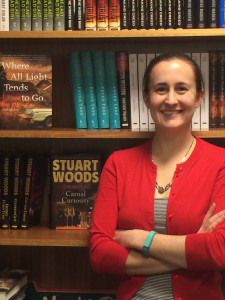
Three Questions for Putnam Editor Sara Minnich on David Joy’s debut novel Where All Light Tends to Go
Editors get very passionate about books they work on – the Editor’s Desk series is his or her place to write in-depth about what makes a certain title special. Get the real inside-scoop on how books are shaped by the people who know them best.
Putnam Editor Sara Minnich answers “Three Questions for an Editor” about her work on David Joy’s Where All Light Tends to Go. This highly praised debut novel is a savage and beautiful story of a young man seeking redemption.
In the meth-dealing family at the center of the book, killing a man is considered a rite of passage, but when eighteen-year-old Jacob McNeely botches a murder, he is torn between appeasing his kingpin father and leaving the mountains with the girl he loves. The world that Jacob inhabits is bleak and unrelenting in its violence and disregard for human life, and having known nothing more, he wonders if he can muster the strength to rise above it.
For a debut novelist, David Joy has a writing style that feels so natural and remarkably assured as he creates an off-the-grid world populated by authentic characters that are bound to cause readers to feel a wide range of emotions. What were your thoughts and impressions as you read the initial manuscript for the first time?
I was hooked within the first few pages of Where All Light Tends to Go. Both the writing style and the voice of the young protagonist were raw and gritty, utterly real. After promising opening pages, I was crossing my fingers in hope that the rest of the book would hold up – and it absolutely did. Shortly into the story things take a shocking and violent turn, and the pace only escalates from there. Mostly I remember being unable to put it down. The manuscript needed some work, but I knew from the first read that I loved it and that David was the real deal.
How would you describe the scope of the editor/author process as Where All Light Tends to Go evolved into a finished book?
The first draft that I read was in fairly solid shape in terms of the plot, pacing, and writing. The element David and I spent the most time revising over the course of three drafts was the relationship between the hero, Jacob McNeely, and his love interest Maggie. Maggie’s character needed to be fleshed out, and David did a lot of work to find her voice and to help the reader understand the magnetism between her and Jacob. Their relationship was fundamentally transformed from the first draft to the final book, in a way that brought a lot of heart and hope to a story that is ultimately quite dark.
This novel is not your traditional “book club” book, given the gritty nature of a lot of the stories that unfold in its pages, but it feels like a book that will spark a lot of discussions. What kinds of readers do you think will be most attracted to Where All Light Tends to Go and why?
The novel falls firmly in the category of country noir, so would be perfect for readers of Daniel Woodrell and Larry Brown. Fans of shows like “Breaking Bad” or “Justified” would also find much to enjoy – a strong sense of place, characters that leap off the page, a grim and intense story, and a relentless pace.
 Read more about Where All Light Tends to Go by David Joy here.
Read more about Where All Light Tends to Go by David Joy here. Listen: Thomas Pierce Talks Absurdity, Changing Perspectives, and More
Hall Of Small Mammals author, Thomas Pierce talks to Amy about his new collection.
Listen: Marlon James on Bob Marley and Writing Advice
Lindsay sits down with Marlon James, author of A brief History Of Seven Killings.


