
Tag Archives: writing

Writing Tips from Mona Awad, author of 13 ways of Looking at a Fat Girl

We know readers tend to be writers too, so we feature writing tips from our authors. Who better to offer advice, insight, and inspiration than the authors you admire? They’ll answer several questions about their work, share their go-to techniques and more. Now, get writing! 

Did you always want to write? How did you start your career as an author? 

I started writing quite young. My mother worked in a deli in Montreal and when I was little, she would take me with her for the day. I would write monster stories and fairy tales for her (and me) on the backs of the paper placemats—mainly to entertain myself but also for the sheer pleasure and escape of building another world. I remember being flush with joy and excitement when I thought I had a novel on my hands at the age of 7 or so. Needless to say, that didn’t pan out.

 Is there something you do to get into a writing mood? Somewhere you go or something you do to get thinking?

 My main routine is to write in the morning in silence. I make coffee and then I turn everything off, including my phone and Internet connection, for as long as I can either stand or get away with. If I write in the morning like this, then I’m able to return to the story at various times later in the day and work on it regardless of where I am or the level of distraction. But I need those anchoring morning hours of silence and focus with the story in order to do that.

I also love Aimee Bender’s idea of the writing contract so I’ve done that with friends as well. You basically contractually promise to adhere to a certain number of writing rules that you determine (it could be a daily word count, or a number of hours per day) and then you check in daily via email with a ‘mentor’ (a friend) who confirms you’re moving forward. You do it with an overall writing goal in mind—like a novel—to be achieved by the contract’s end.  It’s quite loose, but what I love is that you make your own writing goal, your own rules for how you’ll reach it, and then you are required to follow through. I did it with a writer friend last summer, and we both completed drafts of our novels. And I’m doing one now with another writer friend for the revision. I like the collaborative aspect of it too—writing, while exhilarating, can also be quite a lonely, cave-dwelling business. It’s nice to come out of the cave every day and check in with a friend. 

After developing an idea, what is the first action you take when beginning to write?

I’m often inspired by a moment of tension that I’ve either observed, experienced or imagined—being in a fitting room with a dress that doesn’t fit, for example. I’ll take that point of tension and I’ll sit with it, trying to describe it with as much intimate, immediate and honest detail as possible. I’ll scrutinize it, draw it out, let myself imagine around it. By exploring a moment of tension like this, I find it acquires more layers and consequence, and a story will often emerge. Once I have the story, I can push that tension further still—in some cases, to its limits.

What are three or four books that influenced your writing, or had a profound affect on you?

My favorite stories have always been the ones that felt very intimate, like the writer really gave something vital in themselves to the telling of the story. For that reason perhaps, I love all of the novels of Jean Rhys—I love how urgent her writing is, how her characters experience outsiderness and alienation in ways that feel so immediate and visceral. Russell Hoban is another favorite. Not only is he a beautiful writer, but I love how he conceives that space between what we perceive to be reality and reality—a space that is inherently fraught with our anxieties, desires and dreams—as truly imaginative. In The Lion of Boaz-Jachin and Jachin-Boaz, a son’s anger at his father is an actual lion stalking the streets of London. Perhaps this is a throw back to my placemat writing days, but I’ve always been deeply inspired and excited by fairy tales and Alice in Wonderland narratives. I adore The Torn Skirt by Rebecca Godfrey, which is essentially a feverdreamy, high stakes Alice in Wonderland for adults. The first person voice is also incredible. And of course, The Winter’s Tale by Shakespeare, which is a strange, rich and wondrous fairy tale. The wonderful thing about reading or seeing Shakespeare is that no matter what hot mess of emotions you’re experiencing in your life—pettiness, hatred, fear, desire, joy, sadness, love, resentment—they become eerily performed by the play in question. Will’s got you covered. Within the stories, the characters, the language, there’s room for it all. Also, I love humor. Without writers like Dorothy Parker, Lydia Davis or Lorrie Moore, I would feel lost.

Learn more about Mona Awad’s new book below!

Writing Tips from Tim Sultan, author of Sunny’s Nights

We know readers tend to be writers too, so we feature writing tips from our authors. Who better to offer advice, insight, and inspiration than the authors you admire? They’ll answer several questions about their work, share their go-to techniques and more. Now, get writing!  What writing techniques have you found most important or memorable? I write during the day, print out whatever I am working on in the evening and bicycle with those pages to my favorite Japanese restaurant where I alternate between a blue pencil and chopsticks. This transfer, from screen to paper, from solitary desk to public sushi counter, gives me the sense that I’m examining my writing with ‘fresh eyes.’ It is, of course, only an illusion that Tim Sultan, the writer, and Tim Sultan, the reader, are not one and the same but it’s an illusion that works for me. Needless to say, I am a very popular customer at this restaurant. Is there something you do to get into a writing mood? Somewhere you go or something you do to get thinking? Some people walk their dogs before breakfast, I walk my coffee. Each morning year-round I put on a minimal ensemble—sneakers, a t-shirt or sweater, and shorts. Never trousers as being underdressed for the weather is of the essence. It’s circulation–of blood, of thoughts, of images–I’m after, not snug comfort. I descend from hearty stock that encouraged this sort of thing. I walk the half-mile to my favorite coffee shop, order a cup to go and return home through the park. I call this surveying. I survey the exercisers, the pigeon feeders, the dogs racing around with clouds of breath coming from their snouts—and I survey my life, my writing, perhaps chewing on an editorial conundrum that had me in a jam the previous day. Whatever my mind alights on. If I’m lucky, I return home with a new turn of phrase, a fresh idea, a missing word, and I take it from there. I can affirm that waking up the mind in this manner beats turning on a screen in the morning. What’s the best piece of advice you have received? “Look forward and don’t be afraid.”  I found this single sentence in a notebook that belonged to my mother. She had written it to herself not long before she passed away. The page leans against the wall by my desk where I regard that message and reinterpret its meaning every day. For writing, for life. Describe your writing style in 5 words or less. Thoughtful, digressive, occasionally extravagant, empathetic What are three or four books that influenced your writing, or had a profound affect on you? Disappearances by Howard Frank Mosher I have read it more than any other book. I have read to myself, to friends, and at my father’s memorial service. I admire it like no other. For its naturalistic prose coupled with a grand imagination. If Gabriel Garcia Marquez had been a Vermonter… Between Meals by A.J. Liebling I think it was John Irving who once said that he always carries on him ‘a flood book.’ Something to read if he finds himself unexpectedly marooned. This is my flood book and more often than not, I stick a copy in my jacket as I’m going out the door in the evening. It’s the sort of book one can open to any page and begin reading without feeling one has missed a beat.    Too Loud a Solitude by Bohumil Hrabal A short masterpiece about an underground visionary with the tenderest of souls. Elegiac without being melancholy, profound without being solemn. Dusk and Other Stories by James Salter Sometimes one admires most the other. Salter’s style here is terse, understated, disciplined. His characters share the world with Edward Hopper’s subjects. We are ultimately on our own. Learn more about Sunny’s Nights here.  

From the Editor’s Desk: Linda Marrow, Editor of Try Not To Breathe

Editors get very passionate about books they work on – the Editor’s Desk series is his or her place to write in-depth about what makes a certain title special. Get the real inside-scoop on how books are shaped by the people who know them best.

The manuscript of Try Not To Breathe came in to me at about 9:30 one night and due to some happy intersection of title and description and still being too awake to go to bed, I made a cup of tea at about 10 and decided to glance at a page or two before turning in.  At about 1 a.m. I forced myself away from the book for the night but could barely fall asleep – so full was my head and my heart of the story of the two young women Holly Seddon had created.  When I was in the world on her pages I had that magical and delicious feeling every lifelong reader knows when your actual surroundings melt away and all you can see are the streets and houses the characters are seeing. I finished reading the manuscript the next night and for days after I couldn’t stop thinking about Amy and Alex and what both joined and separated them.

Hopefully without giving too much away, the novel is about two women, Alex and Amy, both 30 years old and from the same area of England, where they grew up going to neighboring schools. Told in alternating points of view, their lives intersect in a way that will change everything for both of them. Alex is a journalist whose life has spiraled completely out of control. She had seen tremendous success as a writer very early in her twenties when she beautifully and movingly documented the last year of her mother’s struggle with terminal illness. During this time she became incredibly sought after in London magazine circles and also married the love of her life. But when her mother dies, Alex loses her moorings and plummets into alcohol and reckless behavior, finally moving back to the house she had grown up in.

When Alex is at her local hospital one day working on a small, routine story (the only kind of writing work she can now get)about vegetative cases – she finds herself staring at a young woman, a patient, asleep. The girl looks familiar to her, and suddenly she realizes that  this is Amy Stevenson, a girl who had disappeared when both she and Alex were 15, only to be found near death in the woods. Amy has been in a coma ever since, and the police were never able to discover who had assaulted this girl. Amy’s family and the whole town were left mystified and damaged.

Alex finds herself haunted by her own memories of that time and cannot stop herself from beginning to investigate the story. She realizes that in the fifteen years since the attack, Amy has gone from being at the center of notoriety to having been nearly completely forgotten.

Of the many themes explored by Holly in the novel, two are favorites of mine. One is the phenomenon of locked in syndrome, which Holly researched and uses so brilliantly for the character of Amy, showing us the heartbreak of a young girl trapped mutely within her body.  My other favorite is the music of the novel. From its title on, Holly has imbued her book with a perfect soundtrack as iconic song after song from the early to mid-90s seems to play in the background. And by the end one can see that Try Not To Breathe isn’t just an R.E.M. song title but helps introduce one of the most compelling facets of the novel – the false promise of control, and the beauty and wonder of watching Alex measure out just enough courage each day to fight her demons one more time.

Listen to an excerpt from the book here:

Read more about Try Not To Breathe below.

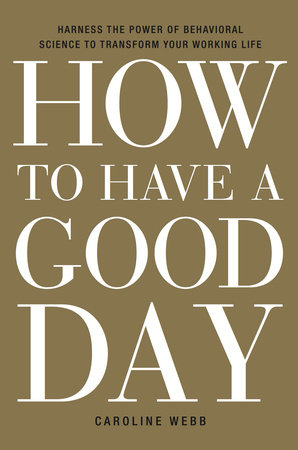
Writing Tips from Caroline Webb, author of How to Have a Good Day

We know readers tend to be writers too, so we feature writing tips from our authors. Who better to offer advice, insight, and inspiration than the authors you admire? They’ll answer several questions about their work, share their go-to techniques and more. Now, get writing!   After developing an idea, what is the first action you take when beginning to write? My writing generally weaves together three strands of content. There’s some nugget of scientific research that I think is interesting and useful – maybe a study that I’ve just read about, or something which I’ve been wanting to write about for a while. Then, I also want to be clear on the practical advice that’s implied by that scientific insight. But there’s also the story or example that illustrates the topic. And my route into a new article or chapter can be any of those three; I start with whichever piece feels easiest and most exciting to get down on paper. When it’s the anecdote, I usually focus first on scraps of vivid language that an interviewee or client has used to describe a difficult situation. For the science and the advice, I will usually write in bullet points first – what my consulting colleagues used to call a “dot-dash” – to check the flow of the argument and ideas before I start investing in the bounce and feel of the language. Is there something you do to get into a writing mood? Somewhere you go or something you do to get thinking? Absolutely. One thing that really helps me is to put on large noise-cancelling headphones. They dampen ambient noise and reduce distraction, allowing me to think more clearly. But they’ve also become something I associate with really getting into deep thinking mode. As a result, simply putting them on sends a clear signal to me that I’m about to focus on my work – making it easier to dive in. (I write about the science behind this in chapter 3 of my book, for those who are interested!) And I’ve had three writing soundtracks in recent years. There was a period where the only thing I listened to was Haydn string quartets. For a long while, I’ve worked with a playlist of rather sparse and instrumental “deep house” music. (I think the two genres have a lot in common, but that’s for a different type of interview.) But sometimes nothing but silence will do. Did you always want to write? How did you start your career as an author? I always loved writing as a kid – especially science fiction, which I imagine was a surprise for my English teachers in the 1970s – and I was editor of my college yearbook and newsletter. I drifted away from writing as I built a career in economics. But after a few years, I had a job which was as much about writing as thinking: authoring the Bank of England’s Inflation Report. This was a publication analyzing and describing the state of the economy, so the writing was dry – yet I still loved it. And I learned many things that have served me well as a non-fiction writer. For example, the publication was so influential that bad syntax in a key sentence might end up moving financial markets in the wrong direction – so I learned the value of precision and clarity, and I learned what made a sentence easy or hard to read. (We even had to put our writing through a computer program to test the reading age required to understand it.) After reconnecting with my love of writing, I took every opportunity to write in real sentences rather than relying on PowerPoint slides. And once I’d written a couple of articles for the McKinsey Quarterly, I realized that it was time to bring writing back into the center of my life. That’s when I started work on the book, writing a four-page outline of something I wouldn’t finish for another four years. What’s the best writing advice that you have received? Lynda Gratton (Professor of Management Practice at London Business School, and author of 8 successful books) told me early in the process of writing my book that I would eventually need to make it my full-time job – at least for a few months. She was right; there really does come a point where you simply have to stop doing absolutely everything else, and say “right now, I am a writer, and my job is to write.” And her advice helped me recognize when it was time to disappear into the writing bunker. Meanwhile, Matt Lieberman (neuroscience professor at UCLA and author of Social) told me to look after myself physically while writing, reminding me to see exercise as an investment in my mental and emotional sharpness. What are three or four books that influenced your writing, or had a profound affect on you? At least four books encouraged me toward writing How to Have a Good Day. Predictably Irrational, by Dan Ariely. To see such a book capture people’s imagination made me excited that behavioral economics was coming of age. Moreover, I saw that it was possible to make academically rigorous material fun and engaging. The Happiness Hypothesis by Jonathan Haidt. I loved the cross-disciplinary approach of this wise book, drawing from psychology and neuroscience and even ancient philosophy. Also, my husband wooed me with it – it was the first present he ever bought me. Your Brain at Work, by David Rock. This put neuroscience in the context of the workplace, and it was the first book that I’d seen do that. Thinking Fast and Slow, by Daniel Kahneman. It was inspiring to see that such deep scientific concepts could excite a broad general audience. It helped too that I had heard him say that he’d found it tough to write the book. Since he’s a brilliant Nobel Prize laureate, that made me feel that it was okay for me to experience the occasional rough patch! And of course, it was all worth it. (I’m sure he feels that too.) Learn about how to Have a Good Day here.

Writing Tips from Sparrow Beckett, author of To Have and To Master

We know readers tend to be writers too, so we feature writing tips from our authors. Who better to offer advice, insight, and inspiration than the authors you admire? They’ll answer several questions about their work, share their go-to techniques and more. Now, get writing!   Sparrow Beckett is the pen-name for two writers in two countries who combine forces and collaborate. Justice and Sorcha have both answered the questions below.  What writing techniques have you found most important or memorable? Justice: Someone once told me a good novel is made up of mostly strong, colorful nouns and verbs. As writers, we often hear the terms active writing versus passive writing. Filling a book with adverbs makes a story sound passive. So when I’m writing, I go for strong descriptive nouns and verbs. Is there something you do to get into a writing mood? Somewhere you go or something you do to get thinking? Sorcha: With an evil day job and a big family, I’m so busy that I’m exhilarated by every free moment to write. If I get stuck in one of my stories, I switch to one of my many others. Justice: I get inspired from all sorts of things. Sometimes a movie, another book, or even a song I hear on the radio. When I’m feeling low on inspiration, I’ll surround myself with different media and types of art. Usually something will jump out and the wheels will start turning.
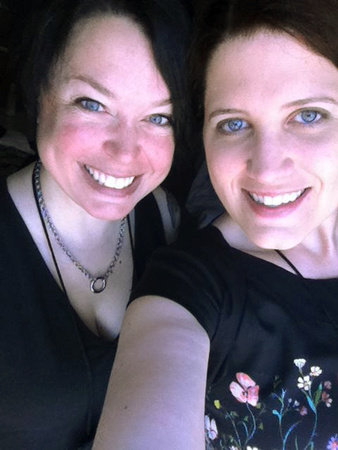
Sparrow Beckett
Sparrow Beckett
Did you always want to write? How did you start your career as an author? Sorcha: I started writing a Black Beauty fanfic when I was seven. For Grade Ten English class, I wrote a novella, and then a novel for Grade Thirteen Creative Writing. My novel was so bad, that the publisher I submitted it to sent me a rejection with a blank space where my name was supposed to go. I quit writing after that. About two decades later, I started writing for fun. That was when I met Justice in an online group, and she introduced me to the modern world of publishing. Justice: I was a writer before I was a writer, if that makes any sense. Writing is just in me. It’s been a part of everything I’ve ever done, before I even realized it. So finally getting the guts to officially try writing a fiction book didn’t surprise anyone. I started by self-publishing back when it was a budding development. I learned a lot and I think it better prepared me for the traditional publishing world. What’s the best piece of advice you have received? Sorcha: Quit making excuses and write. Justice: Find an amazing crit partner or group – the harsher the better. What clichés or bad habits would you tell aspiring writers to avoid? Do you still experience them yourself? Sorcha: I think stalling out of self-doubt is the biggest bad habit to avoid. Feeling like you’ll never be as talented as your favorite author isn’t a good enough excuse to give up. You owe it to yourself to work at it. Justice: I have to agree with Sorcha. Self-doubt can be crippling and, unfortunately, something many authors, including myself, suffer from regularly. It’s hard to stay positive among rejections and brutal reviews. I have to remind myself constantly that everyone has their own journey, comparing yourself to other authors is pointless, and that giving up just isn’t an option. What are three or four books that influenced your writing, or had a profound affect on you? Sorcha: The Deed of Paksenarrion by Elizabeth Moon – The main character has an arc that fills me with hope and a sense of personal responsibility. The Tiffany Aching series by Terry Pratchett – Like most of Pratchett’s work, it shows human nature in a humorous yet poignant light. These books explore themes of power, respect, and responsibility. The Jalav series by Sharon Green – Explores an interesting example of how a woman can still be strong while submitting to organic power exchange relationships. The Steamwork Chronicles by Cari Silverwood – This series taught me to be unapologetically sexual in my work. Justice: A Hunger Like No Other by Kresley Cole – This was the first romance I ever read. Oh the things it opened my mind to… Her mix of sexiness, humor, and adventure made reading fun for me again, and started my love of paranormal romance. Revolution by Jennifer Donnelly – Wow, this book made me cry, made me think, and made me take an active interest in history. The writing and depth of emotion is beautiful and something I aspire to. Forgive Me Leonard Peacock by Matthew Quick – This book gave me permission to write honestly. It is probably the most earnest, authentic book I’ve ever read. Learn more about To Have and to Master here.

VP and Editor in Chief, Andy Ward, on Shame and Wonder by David Searcy

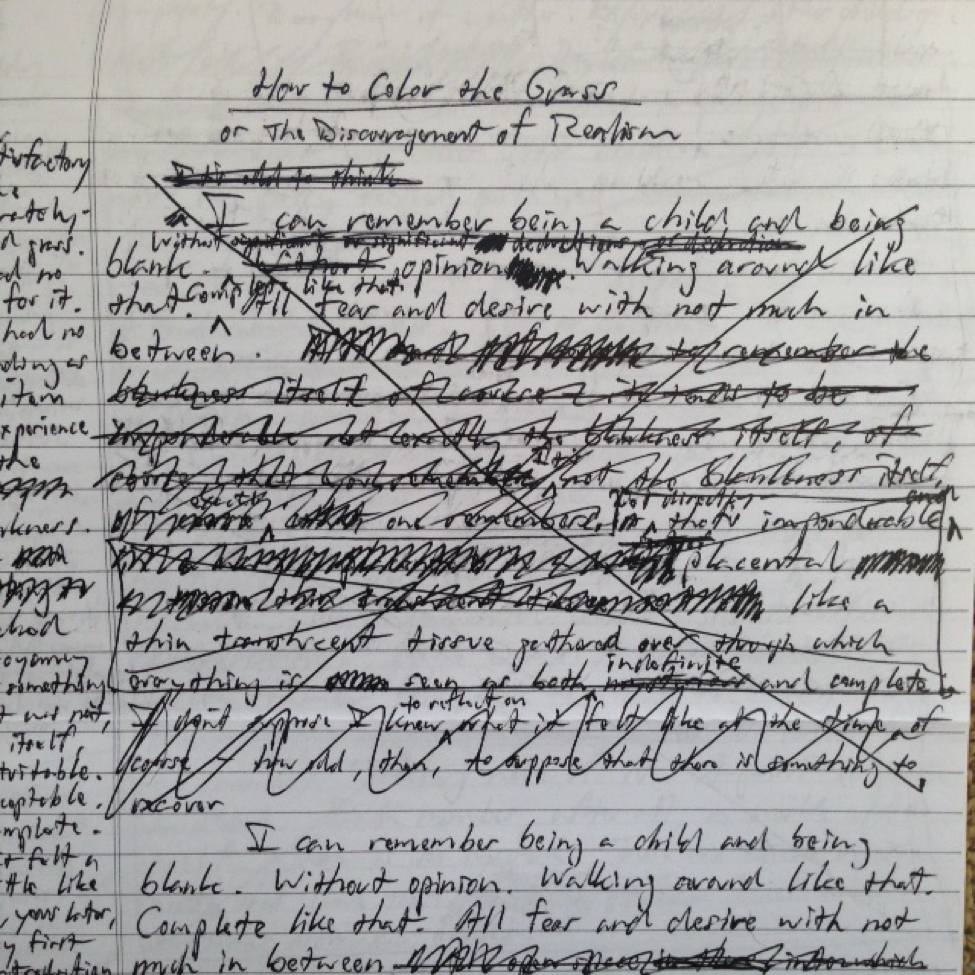
The origin story of Shame and Wonder, as brief as I can make it: I was sitting at my desk, four years ago, when my phone rang. It was the writer John Jeremiah Sullivan calling. “This is going to sound weird,” he said, “but I did a reading in Texas last night, and I met a guy there. He handed me a copy of an essay he’d written. I think it might be good. Can I send it to you?” This happens a lot, when you’re an editor, people sending you “good” things to read, and the track record isn’t great. But the essay John sent me that day – five typewritten, hand-corrected pages from a guy in Dallas named David Searcy, who’d only started writing nonfiction in his late sixties – was unlike anything I’d read before. An hour later, I was on the phone with David Searcy. A month later, we had a book deal. Four years later, we have Shame and Wonder. But my love for this book goes beyond its unusual beginnings. I love it for the beauty and strangeness of David’s sentences: “I can remember being a child and being blank. Without opinion. Walking around like that. Complete like that. All fear and desire with not much in between. I think of it now as an experimental setup. Like a cloud chamber – where you’ve got this otherwise empty vessel filled with a sort of mist through which events, the passage of subatomic particles, leave evanescent trails.” I love it because of the feelings of deep longing he is able to conjure in, say, a pair of initials (“little heart-shaped memories of love”) carved into the trunk of an old tree or, even, the prizes at the bottom of cereal boxes. I love it, too, because it is funny. But maybe most special of all, in the end, was being a witness to David’s process, which is not exactly typical, and to be honest, probably not advisable. Below, how a David Searcy essay – this one, titled “How to Color the Grass” — comes to be: David writes on yellow legal pads, in long hand, with a ball point pen. Here’s what his first draft looks like. (Two ways to look at this, as an editor: Fascinating or stressful.) Untitled Here’s what his second or third draft looks like, i.e. when clarity begins to assert itself: Untitled2 And here’s what happens when he puts his pen down and commits to a final draft, which he commemorates via a Swiss-made Hermes 3000 typewriter, circa l959, with standard serif pica font. As David says, “It’s like typing on a Steinway – just the right mechanical resistance to make you mean what you say.” Untitled3.   Finally, David also takes photos of the things he writes about, and several of these photos appear in the book. Think W.G. Sebald… if W.G. Sebald lived in Dallas… and drove a truck… and said things like “holy crap”… and spent a lot of time thinking about the venality of Scrooge McDuck. Though I love the title, the overall effect is: no shame, all wonder. Untitled4 Find out more about Shame and Wonder here:
Writing Tips from Renee Rosen, author of White Collar Girl

We know readers tend to be writers too, so we feature writing tips from our authors. Who better to offer advice, insight, and inspiration than the authors you admire? They’ll answer several questions about their work, share their go-to techniques and more. Now, get writing!  renee 2Renée Rosen’s newest historical fiction novel is called White Collar Girl, and takes place in 1950’s Chicago. What writing techniques have you found most important or memorable? For me the most important part of writing is editing. But within the world of editing I’ve come to truly value the importance of the paper edit. Before I turn my books in I always do a paper edits, and if time permits, I’ll do more than one. I’ve found that my work reads very differently on paper than it does on the screen. The paper edit stage is where I’ll catch things like word echoes, continuity errors, something like a three- page chapter following a thirty-page chapter and other problematic issues. Sometimes I’ll even print the manuscript out using a different font, which helps me see it with fresh eyes. How would you recommend creating and getting to know your characters? Creating characters that come to life on the page is really one of my greatest challenges. Just like with real people you meet, some characters come to you and you feel like you’ve known them all your life while others take time to reveal themselves. When I come across the latter type, I usually start by trying to find out as much about them as possible. For every one detail I use in the book, I’ll have ten or so others floating around in my head. I might begin with something as simple as their physical description and then I’ll drill all the way down to what the inside of their closet looks like. When all those little details come together the story generally starts to write itself. The characters take over and I become the vehicle that merely delivers their tale. What’s the best piece of advice you have received? I was fortunate enough to have studied with Carol Anshaw and I’ll never forget that she used to tell us that the first draft is you telling yourself the story. Don’t worry about how sloppy or full of holes it is, just get a beginning, middle and end down on paper. Once you have that foundation you might very well go back and change every word on every page but before you can do any fine tuning, you have to first tell yourself the story. What are three or four books that influenced your writing, or had a profound affect on you? Sister Carrie by Theodore Dreiser –I think my love of Chicago history started with my first reading of this book. It made me fall in love with the city. Spoon River Anthology by Edgar Lee Masters—totally original and filled with wisdom in ever monologue. Each time I read it, I discover something new. Simple Passion by Annie Ernaux—80 of the most powerful and brutally honest pages you’ll ever read. This slender book is one I treasure. Anywhere But Here by Mona Simpson. This is such an amazing character-driven novel and when I first read it, I realized what was possible to do on the page.   Check out Rosen’s book below.

Writing Tips from Thomas Mallon, author of Finale

We know readers tend to be writers too, so we feature writing tips from our authors. Who better to offer advice, insight, and inspiration than the authors you admire? They’ll answer several questions about their work, share their go-to techniques and more. Now, get writing!  After developing an idea, what is the first action you take when beginning to write? Given the nature of historical fiction, the first thing I do is a lot of research. And that usually begins with reading old newspapers. Thanks to digitization, that’s much easier to do than it once was. Alas, also thanks to digitization, we’re creating far fewer new newspapers than before. Did you always want to write? How did you start your career as an author? I started to write a political novel (about the impeachment of a president) when I was thirteen or fourteen. By the time I got halfway through college, writing had become my serious ambition, but my own timidity drew me toward teaching and, for a while, the publication of constrained little pieces in academic journals. The best thing that happened to me early on, at the beginning of the 1980s, was becoming a semi-regular contributor to William F. Buckley, Jr.’s National Review. The 800-word book reviews I wrote for the magazine usually earned me about $150 or $200; more importantly, they forced my writing toward a greater concision and liveliness, a more personal, honest voice. All of that helped me to write A Book of One’s Own: People and Their Diaries (1984), an unexpected success (my picture in Time magazine!) that gave me the real beginnings of my career. Describe your writing style in five words or less. Fact-filled, parenthetical; judgmental; amused. Do you ever base characters off people you know? Why or why not? A historical novelist really has to use real-life figures in his work. A couple of times I’ve included, under their own names, people I’ve actually known: E.   Howard Hunt in Watergate, and my late friend Christopher Hitchens in Finale. And yes, I’ve also refracted and disguised and renamed real people in some of my other novels. I mention Mary McCarthy below; she appears as    the writer Elizabeth Wheatley in my novel Aurora 7. And Bandbox (2004), my comedy about the magazine business, is really a roman à clef that sprang from my time at Condé Nast. A writer’s whole life and acquaintance are always a part of his material. In fact, I would go so far as to say that no character in a novel has ever been made from whole cloth. What are three or four books that influenced your writing, or had a profound effect on you? At about ten or eleven I was a great devotee of Howard Pyle’s novel about knighthood, Men of Iron, although my real pleasure-reading in elementary school came from one publisher’s American-biography series. Every one of these books was, I seem to remember, 192 pages long, whether the subject was George Washington or Molly Pitcher. During junior high school I got caught up in the great excitement over the publication of Truman Capote’s In Cold Blood. Buying hardback books was beyond my allowance, and I couldn’t wait for a public library copy, so I secured the book (was it for fifteen cents a day?) from the little “rental library” on the main street of my town. When my ninth-grade English teacher saw me with an early copy, she was jealous. Mary McCarthy’s volume of essays, On the Contrary: Articles of Belief, 1946-1961, is the book that really made me want to become a writer. I read it in 1971, at college, and the book’s combination of literary criticism, political essays, memoir and travel writing suggested the whole range of genres I might try myself. I read all of McCarthy’s fiction, too. She became the subject of my undergraduate thesis, then later a friend and mentor. To this day I aspire to the clarity and force of her style, even though my own is nothing like hers.

Tarcher Perigee Editorial Director Marian Lizzi on All the Words Are Yours by Tyler Knott Gregson

Editors get very passionate about books they work on – the Editor’s Desk series is his or her place to write in-depth about what makes a certain title special. Get the real inside-scoop on how books are shaped by the people who know them best. Like every editor, I learn a great deal from the books I work on. Over the past twenty-plus years, I’ve enjoyed the best continuing education course I can imagine – gleaning practical takeaways and new insights on everything from why we have eight senses, not five, and how our brains are literally wired for creativity, to how to escape a locked car trunk, the secret to translating The Simpsons into Finnish, and colorful details about the bon vivant who invented the cocktail. I can happily prattle on about research that’s found cheese to be more addictive than cigarettes, why cirrus clouds look wispy, and how algorithms actually work (ideally there won’t be any follow-up questions). But every once in a while, a book teaches me something different—something deeper. When I first learned that I would be inheriting a volume of heartfelt haiku paired with the author’s textured and intimate photographs, and editing it from the ground up, I knew that it too would be a learning experience. After all, I’d never edited a collection of poems, and with the exception of those posters in the subway, my regular exposure to poetry is more than a bit lacking. What I didn’t expect is that the author’s words and images, and the process of immersing myself in them, would touch me so deeply, and open a window onto a new way of seeing the world. It’s fair to say that Tyler Knott Gregson is a new breed of poet. Based in Montana, he’s a wedding photographer by day, a practicing Buddhist–oh, and an internet sensation. His first book, Chasers of the Light, was a national bestseller right out of the gate. His many loyal fans, hundreds of thousands in number and growing fast, follow him on Tumblr and Instagram for a daily fix of his poems composed on a vintage typewriter or hand-written on found scraps of paper. They’ve come to adore his beautifully honest, intimate words and his lush photographs that capture the fleeting moods and moments of everyday life. Reading Tyler’s poems is a disarming experience. Very quickly, you begin to feel your defenses soften. That filter of skepticism we all have begins to fade. Suddenly you’re in the hands of a writer who’s willing to lay himself bare, tuning in to his feelings of longing, passion, loss, and hope, and sharing them on the page. Before you’ve had a chance to resist, he’s pulled you into his world. From day one as Tyler’s editor, I was struck by his sincerity and purity of vision. This isn’t a flash-in-the-pan–a cynical internet celebrity making memes in his basement, or trading on his celebrity or good looks to rack up followers (did I mention he’s also incredibly handsome?). This is a generous and thoughtful writer who’s brave enough to reveal himself, in words and images, every single day. Working with Tyler on the selection and order of the poems, I had the pleasure of immersing myself in his work, experiencing up close his rare gift for observing the miraculous in the mundane, and his unique ability to put his emotions into words and images, without filtering or censoring—and without rushing past the moment in a mad dash to get more things done. While the experience moved me greatly, the editing process was also a bit unusual. Typically I connect with my authors’ words while sitting at a computer, communicating in tracked changes and comments in the margins. But not this time. Working with color print-outs of each photograph and poem, I spread them out on the biggest conference-room table I could find, and I began to physically move them around. All the Words Seeing the book laid out this way brought me even deeper into the material–and was a lot of fun. By the end of the process, I knew we had a book that effectively draws readers into Tyler’s world, one moment at a time. As the book hits stores, I’ll go back to my hurried ways, and my mad dash to collect facts and insights and cocktail party topics will continue apace. But I’ll try to hold on to that sense of wonder, and to find the courage to open my eyes just a little bit to the mystery and beauty all around us. And I’ll look forward to working with Tyler on his third collection, coming out a year from now—another chance to learn, grow, and be inspired by an author who has the courage to share his true voice on every page. Read more about All the Words Are Yours here