




Stephanie Moss: The interior design process is very collaborative and we work closely with the authors. When the manuscript is submitted to editorial, the authors also share art, design notes and reference material for the different types of pages throughout the book. Our first task is to then flesh out those ideas into the designs for the pages that appear most frequently. Afterward, we’ll focus on the more unique pages throughout the book. These pages often involve partnering with talented illustrators, like Marie Lu, Meinart and Stuart Wade, to create Hanna’s diary pages and the ship schematics and logos. Each set of designs is then shared with the editor and authors where we’ll discuss possible changes and finesse each idea until it best captures the vision for the book. After the main pages are approved, we’ll begin bringing all the different components together and lay out the entire book. This is also the time when we fine tune some of the one-off page designs.
Ray Shappell: Yes, indeed. The Illuminae Files are ultimately their brainchild, so our goal in designing the series was to enhance their unique storytelling with a one-of-a-kind package. This series is more technically complicated than any other, and requires a huge collaboration with everyone involved. Once editorial and design approve a cover, we share it with the authors and value their opinions through each step of the process.
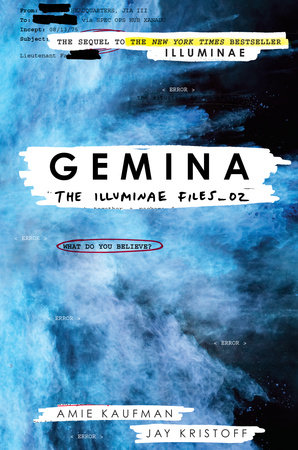
Creating the cover for Gemina was actually a breeze, compared to the process for Illuminae, because I already had an established series design. When I start a new series, I always think about how the current design would work for a second and third book. (Or more if we’re lucky.) So when we finally nailed down the concept for book 1 in The Illuminae Files—a brightly colored explosion interacting with the redacted documents from the story through acetate and a printed case—I also had a rough proposal for Gemina and the third book in the series. When Jay and Amie were in the offices celebrating Illuminae’s launch last November, I shared the proposed visuals for Gemina and they loved it!!! Coincidentally, the color of the blue explosion fits perfectly with the description of a black hole in Gemina. And the proposed image for book three is…XXXXXXXXX (redacted).
 What is your favorite part of your job?
Ray Shappell: My favorite part of the job is creative problem solving. After reading the manuscript, I have so many concepts and design ideas. I love sketching them all out—picking out typefaces, colors, textures, illustrations, hand lettering, or hiring an illustrator, photographer, or CG artists—all to match the tone of the story. But since I’m not the only one involved, there will be multiple moments throughout the cover design process that require finding a new solution that addresses the needs and concerns of everyone involved, while maintaining creative integrity of the original concept and design. This is extremely fun and rewarding when you are able to make a final piece of artwork that becomes the book jacket. The Illuminae Files is a great example of this working at it’s best – the end product is a much better version of the original concept.
Stephanie Moss: The best part of my job is collaborating with a lot of talented people. Particularly with Gemina, it was exciting to pull together everyone’s ideas then work with artists and a wonderful designer, Heather Kelly, and see those ideas get interpreted in really neat ways.
What would surprise a layman to know about your work?
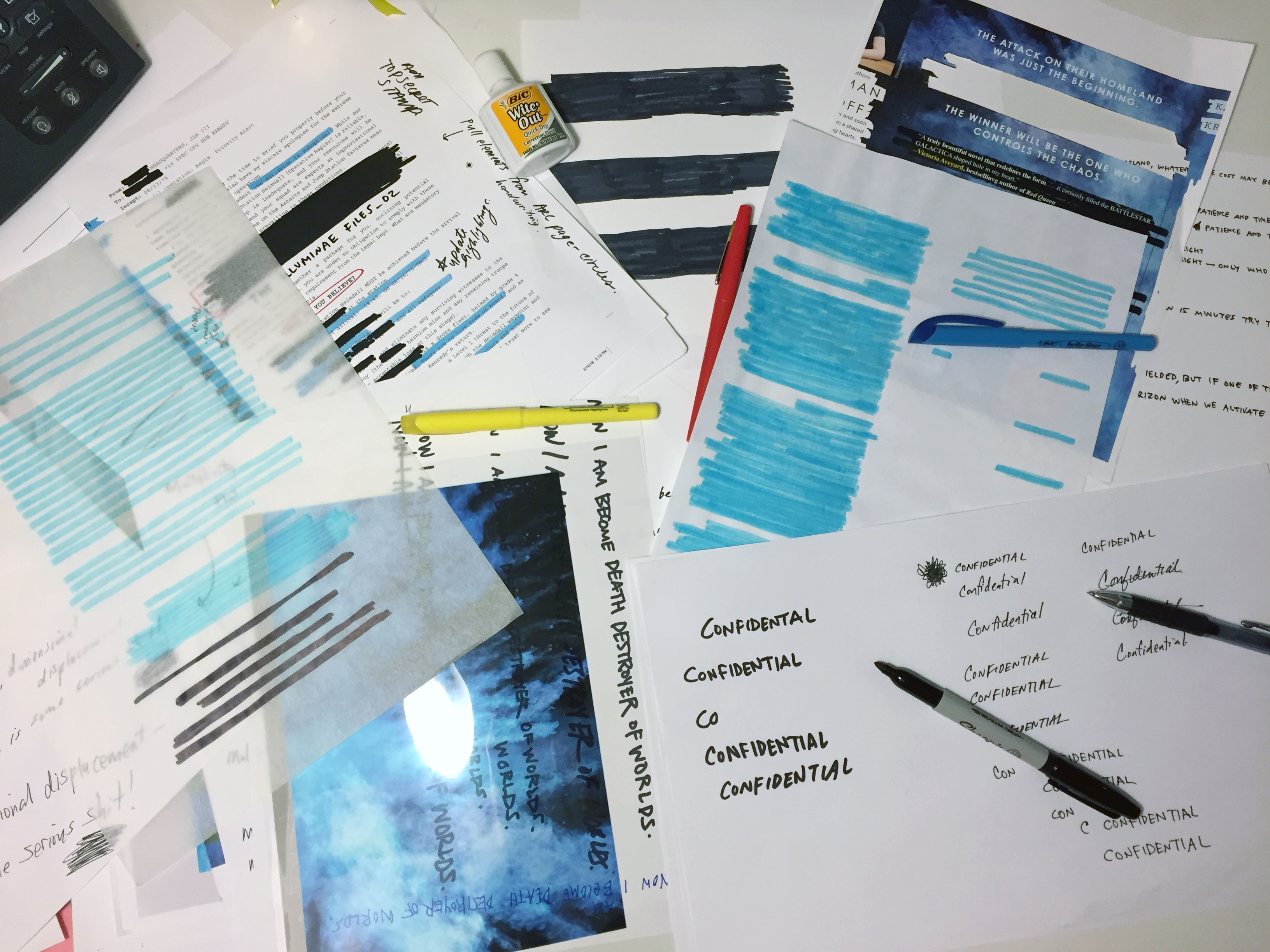
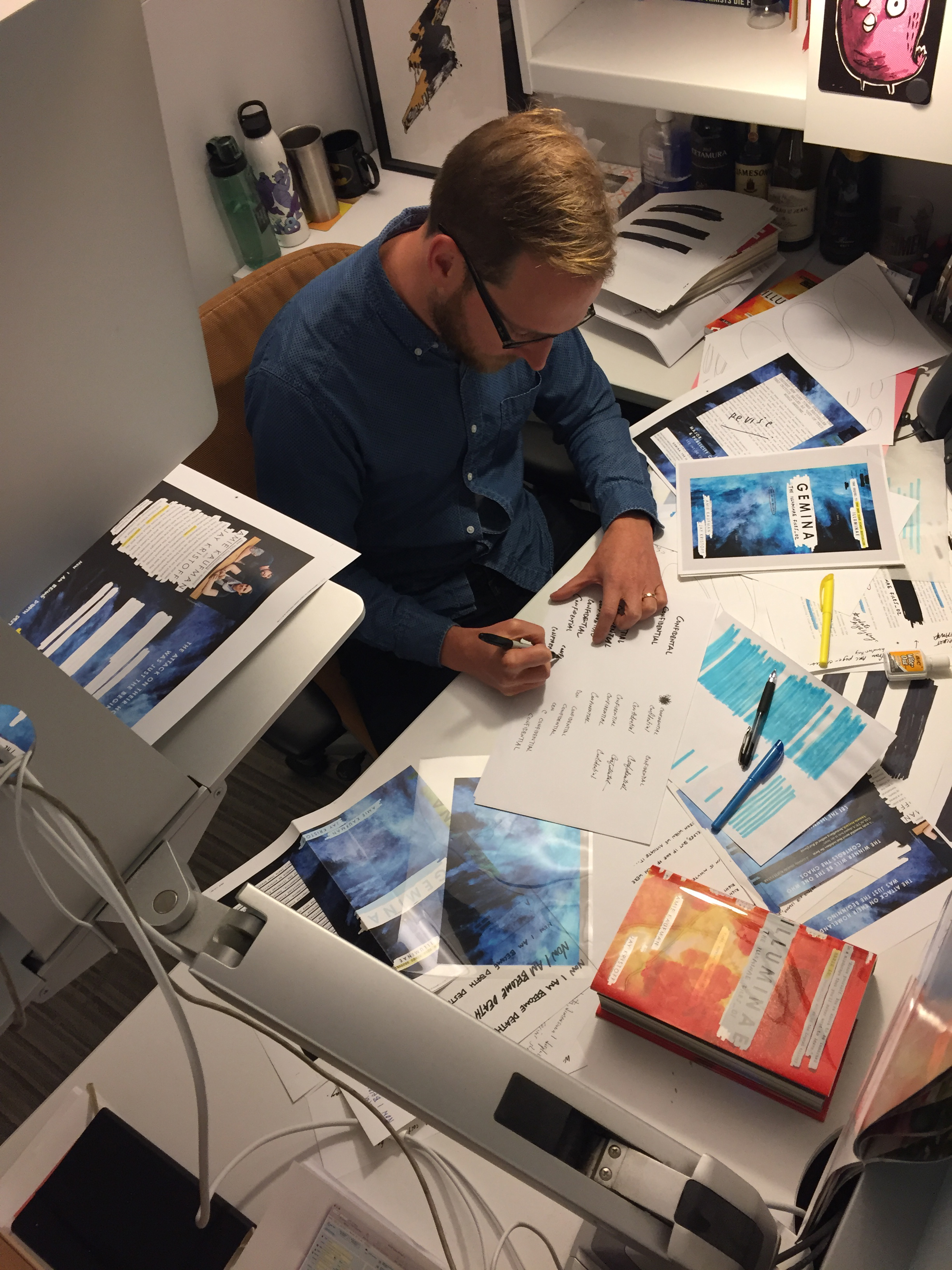
Ray Shappell: I love keeping physical authenticity of design over digital effects when possible. So in the case of Gemina, I actually set the files up clean on the computer first. However, once copy is approved, I then print out the covers and take a bunch of Sharpie markers, highlighters and tracing paper over to a light box. I cross out everything, scribble over the redacted areas, and make it messy. Then I scan it back into the computer and continue to line up all if the sharpie marks over the type on a different layer. I think it looks more realistic than if I used a digital marker.

What did you most want this one to convey?
Ray Shappell: I think that a successful jacket does a few things:
- It intrigues you and draws you in, making you pick it up and want to learn more about the story.
- It has great design (visual balance of graphic elements, typography, artwork, color, etc.)
- It stands out from the competition in a new and fresh way
- It informs you about the content from a very quick glance.
For The Illuminae series, our goal was to portray as much of the interior as we could on the cover, since it’s such a creative and unique story telling experience. Using the acetate to reveal and redact text from the case underneath was our solution for showing pieces of the story—with layers of actual text and phrases—in a new and exciting manner. I hope you enjoy the secret messages that are printed in the negative of the opaque white ink!
How has your approach to designing covers changed over time?
Ray Shappell: I’m hoping to push what’s possible in our YA market. I know how to make covers that will be liked and approved easily. But I prefer the challenge to create covers that push the limits of what we have seen before. Yes, they may require extra convincing and more energy, but the end result is a cover that really stands out from the rest.
I also have been incorporating more technology into my designs. I’ve created animated gif covers for Illuminae and Gemina, but I just finished working with a CG studio to create a fully animated cover for an upcoming series. Along with an augmented reality app, it brings the print book to life! It’s AMAZING and should be out shortly!!

Follow the authors on Twitter (@AmieKaufman, @misterkristoff) and Instagram (@amiekaufmanauthor, @misterkristoff)
Visit the website here: illuminaefiles.com






 What’s a book or a series that you’ve worked on that you think is more of your type or style?
I tend to be drawn to books that are girl-centric. I have a little boy at home who has opened my eyes to a much broader range of reading, but I’m always a thirteen, fourteen-year-old girl at heart. Mouse Scouts is one of my favorites; it’s about a troop of little girl scouts who happen to be mice, that’s kind of me in a nutshell. There are some editors who excel at really gritty things, edgy teen fiction, male-centric narratives—and that’s not really my core strength. But the Illuminae Files was so immediately accessible and the female characters were so well-drawn and felt like friends – it broke though and worked, even for a “girl” editor.
What was your favorite part about Gemina or something that surprised or interested you about this second book?
Well it’s a trilogy, and I knew the second book was going to introduce a new set of characters and situations as well as advance the larger story. I think what has surprised me is the way the authors continue to one-up themselves. There’s are a couple of big plot twists in Illuminae and there are three or four twists in Gemina. As a reader I didn’t see them coming, and even as an editor who went into the story with a sense of how events were going to play out, I still didn’t see those things coming. That’s a huge treat– to go into a book with a certain set of expectations and having them completely blown apart because what comes in is so much more entertaining. InIlluminae the protagonists are sort of like the hometown sweethearts: They are great kids, very engaging, very personable. InGemina the “heroes” aren’t set up the same way. The female lead isn’t particularly likable. She’s spoiled, she’s very pampered, she very me-centric. The male lead is kind of the lovable anti-hero. He’s a gang member, he’s covered in tattoos that allude to a violent history, he deals drugs, so on the surface he’s not necessarily someone you see emerging as the hero. But you’re so swept up in who they are and how they change and grow over the course of the story that it completely changes your perception.
People tend to think “editor” when they think of publishing, but many may not know the details of your job. So: when you get a manuscript what happens next? How do you start making a book?
It starts with a lot of dry administrative things; we sign the book up, we go to a contract, and then I start by working backward from when we anticipate that we want the book to come out. We work with our internal production and design groups to mastermind a schedule.
Because this is such a complex book visually, the design aspects require a lot more time than a typical book might, with its tidy lines of text on a page. For Illuminae and Gemina, literally every page is a different design. The authors were also heavily involved in the design inspiration for the book, so we had to factor them into the blueprint when we were setting up the schedules.
What’s a book or a series that you’ve worked on that you think is more of your type or style?
I tend to be drawn to books that are girl-centric. I have a little boy at home who has opened my eyes to a much broader range of reading, but I’m always a thirteen, fourteen-year-old girl at heart. Mouse Scouts is one of my favorites; it’s about a troop of little girl scouts who happen to be mice, that’s kind of me in a nutshell. There are some editors who excel at really gritty things, edgy teen fiction, male-centric narratives—and that’s not really my core strength. But the Illuminae Files was so immediately accessible and the female characters were so well-drawn and felt like friends – it broke though and worked, even for a “girl” editor.
What was your favorite part about Gemina or something that surprised or interested you about this second book?
Well it’s a trilogy, and I knew the second book was going to introduce a new set of characters and situations as well as advance the larger story. I think what has surprised me is the way the authors continue to one-up themselves. There’s are a couple of big plot twists in Illuminae and there are three or four twists in Gemina. As a reader I didn’t see them coming, and even as an editor who went into the story with a sense of how events were going to play out, I still didn’t see those things coming. That’s a huge treat– to go into a book with a certain set of expectations and having them completely blown apart because what comes in is so much more entertaining. InIlluminae the protagonists are sort of like the hometown sweethearts: They are great kids, very engaging, very personable. InGemina the “heroes” aren’t set up the same way. The female lead isn’t particularly likable. She’s spoiled, she’s very pampered, she very me-centric. The male lead is kind of the lovable anti-hero. He’s a gang member, he’s covered in tattoos that allude to a violent history, he deals drugs, so on the surface he’s not necessarily someone you see emerging as the hero. But you’re so swept up in who they are and how they change and grow over the course of the story that it completely changes your perception.
People tend to think “editor” when they think of publishing, but many may not know the details of your job. So: when you get a manuscript what happens next? How do you start making a book?
It starts with a lot of dry administrative things; we sign the book up, we go to a contract, and then I start by working backward from when we anticipate that we want the book to come out. We work with our internal production and design groups to mastermind a schedule.
Because this is such a complex book visually, the design aspects require a lot more time than a typical book might, with its tidy lines of text on a page. For Illuminae and Gemina, literally every page is a different design. The authors were also heavily involved in the design inspiration for the book, so we had to factor them into the blueprint when we were setting up the schedules.
 Once we had a schedule down, it was easier to address the more straightforward editorial things with the authors. We communicate primarily through email because they’re in Australia, which is a fourteen-hour time difference. I went through the book with big-picture things in mind, like what could be improved and what did we have questions about.
Once we feel like we’ve really gotten a story in the best possible shape, it goes over to the copy editor who knows how to do everything I don’t know how to do in terms of grammar and consistency. It’s really cleaning the text for things we might not have caught in the editorial process. Copyediting a book of this size takes about four to six weeks. The manuscript then goes back to the authors so they can address any queries that the copy editor has found. They generally have about a month with it and then we send it to our design group. And from there, the book needs a minimum of ten months to come together before finally going to the printer, with numerous passes and reviews by everybody in between.
These are two original concepts we tried for the jacket:
Once we had a schedule down, it was easier to address the more straightforward editorial things with the authors. We communicate primarily through email because they’re in Australia, which is a fourteen-hour time difference. I went through the book with big-picture things in mind, like what could be improved and what did we have questions about.
Once we feel like we’ve really gotten a story in the best possible shape, it goes over to the copy editor who knows how to do everything I don’t know how to do in terms of grammar and consistency. It’s really cleaning the text for things we might not have caught in the editorial process. Copyediting a book of this size takes about four to six weeks. The manuscript then goes back to the authors so they can address any queries that the copy editor has found. They generally have about a month with it and then we send it to our design group. And from there, the book needs a minimum of ten months to come together before finally going to the printer, with numerous passes and reviews by everybody in between.
These are two original concepts we tried for the jacket:

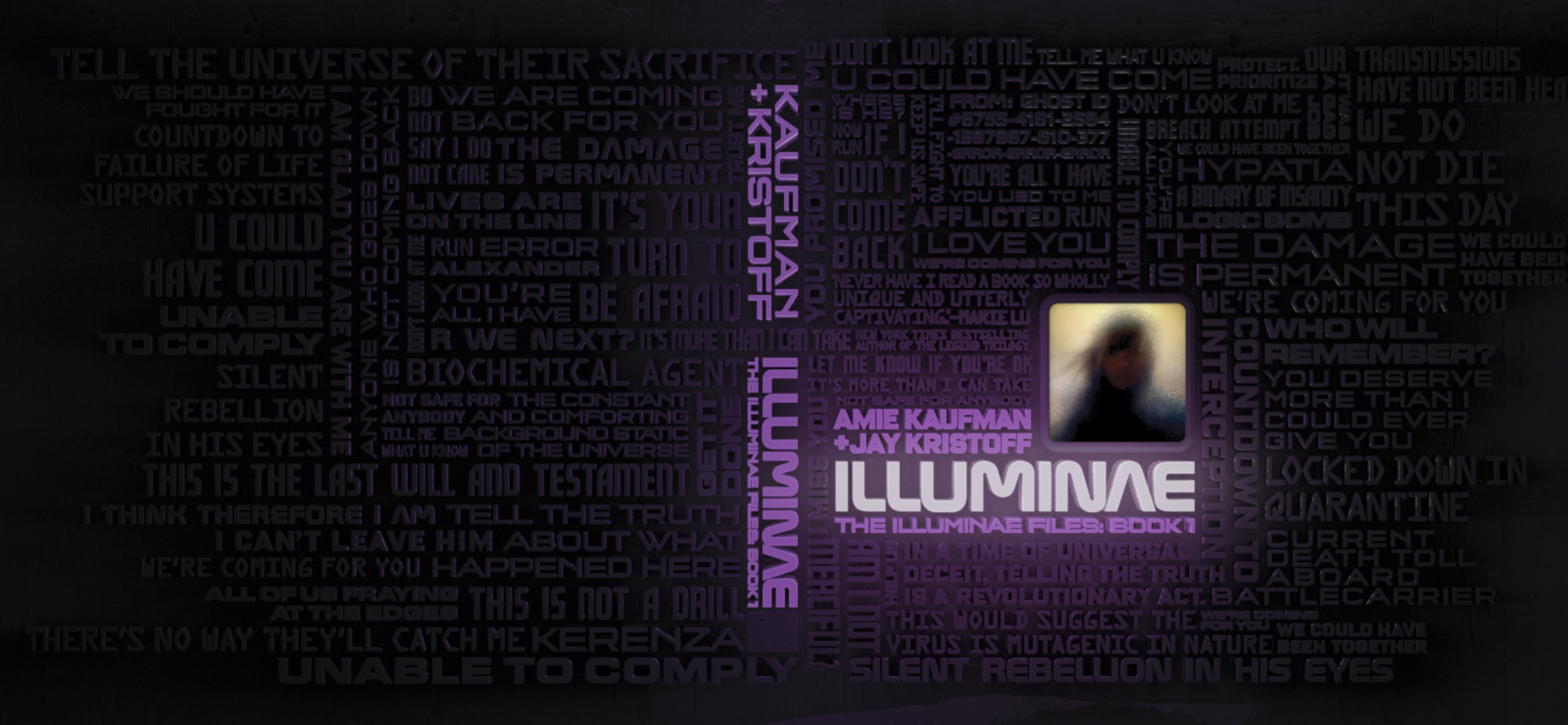 Given the non-traditional reading experience and the fact that the whole conceit of the book is based on documentation, we wanted to find a way to present all of those documents visually. These ideas got dismissed very early on, but they ended up inspiring the case cover design, where designer Ray Shapell was able to let loose with the whole idea of redaction, leaking classified lines, and showing hand-written communications from the characters. Although abandoning the original jacket designs felt like a setback initially, the process brought us directly to final packaging.
These cover concepts look a lot more like traditional sci-fi to me.
They do. At the time the first book, Illuminae, was coming together, we hadn’t really seen sci-fi break though on a young adult level, so we were trying to arrive at a cover look that wouldn’t scare off readers who aren’t traditional fans of the genre. But I think these books have really broken the mold.
I think a lot of people wouldn’t realize an editor not only deals with the content of the book, but that you have a say in the cover design and you’re a big part of those discussions. Is there anything else that would surprise someone outside of publishing about your job?
I don’t sit at my desk and edit. 99% of my editorial work takes place at my kitchen table or my couch on the weekends. Most of my editorial life in the office is spent at meetings or answering emails, and I need to disengage from the office in order to really get into a creative mind space.
Given the non-traditional reading experience and the fact that the whole conceit of the book is based on documentation, we wanted to find a way to present all of those documents visually. These ideas got dismissed very early on, but they ended up inspiring the case cover design, where designer Ray Shapell was able to let loose with the whole idea of redaction, leaking classified lines, and showing hand-written communications from the characters. Although abandoning the original jacket designs felt like a setback initially, the process brought us directly to final packaging.
These cover concepts look a lot more like traditional sci-fi to me.
They do. At the time the first book, Illuminae, was coming together, we hadn’t really seen sci-fi break though on a young adult level, so we were trying to arrive at a cover look that wouldn’t scare off readers who aren’t traditional fans of the genre. But I think these books have really broken the mold.
I think a lot of people wouldn’t realize an editor not only deals with the content of the book, but that you have a say in the cover design and you’re a big part of those discussions. Is there anything else that would surprise someone outside of publishing about your job?
I don’t sit at my desk and edit. 99% of my editorial work takes place at my kitchen table or my couch on the weekends. Most of my editorial life in the office is spent at meetings or answering emails, and I need to disengage from the office in order to really get into a creative mind space.
 Photo Credit: Christopher Tovo
Why do you think fans are responding so strongly to this series, outside of its non-traditional layout?
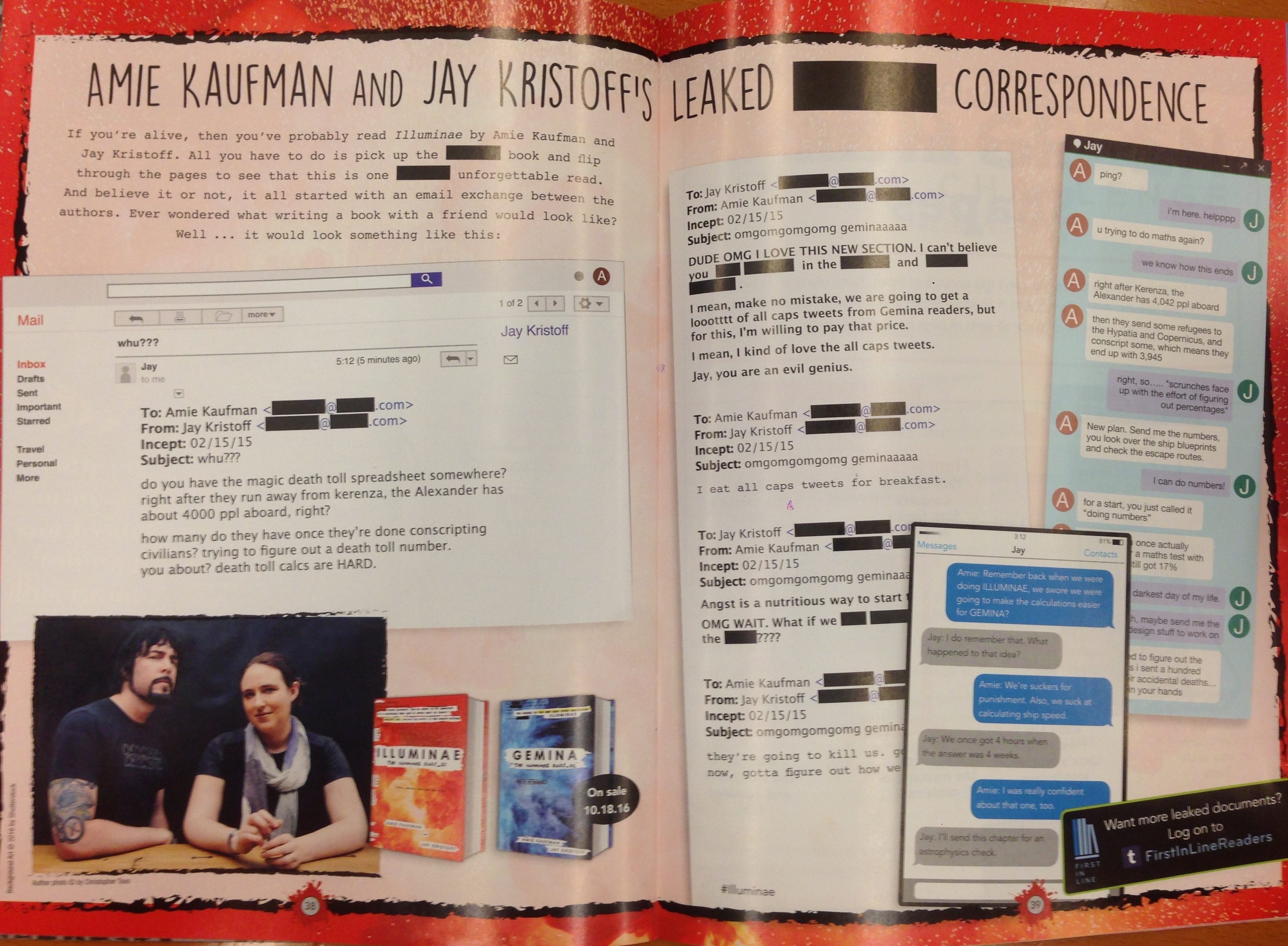
I think anybody who has met the authors in person feels like they’ve met characters from the book. Their personalities inform every single character in the story; they’re funny, they’re intense, their rapport together just makes you want to sit back and watch them talk to each other. Their writing process involved sending each other blind chapters, and they wrote some passages by text messaging each other rather than sitting side by side, nursing every line in a common voice. So their individual writing personas feel intact and their living, breathing process gets contained in the book. I think that’s something readers can sense when they read it – It’s just a very personal reading experience, and they make it super accessible. I remember saying to someone, “it may be 600 pages long, but you could easily give it to a reluctant reader,” because there are all these different visuals to break up the reading experience, and the humor and voices and the pace just sweep you along.
Is there anything else people might like to know about the book?
A slightly non-standard occurrence happened this summer when we sent the authors some pre-press pages to sign—4,000 pages, to be exact. UPS got the address wrong, and Jay was running around trying to locate the boxes. One thing you have to know about Jay is that he’s a big guy and he does a really amazing job of pulling off a badass author persona, but the truth is he’s a total sweetheart. So when he emailed to say that he had found the boxes and stole them off of someone’s porch, I just had to laugh. That’s the kind of stuff that happens working with these two: petty theft might be involved. There’s always something slightly unusual that comes together.
Read more about Gemina and Illuminae below, and be sure to check back soon for more behind-the-scenes interviews!
Follow along: #Gemina, #Illuminae, #IluminaeFiles
Follow the authors on Twitter (
Photo Credit: Christopher Tovo
Why do you think fans are responding so strongly to this series, outside of its non-traditional layout?
I think anybody who has met the authors in person feels like they’ve met characters from the book. Their personalities inform every single character in the story; they’re funny, they’re intense, their rapport together just makes you want to sit back and watch them talk to each other. Their writing process involved sending each other blind chapters, and they wrote some passages by text messaging each other rather than sitting side by side, nursing every line in a common voice. So their individual writing personas feel intact and their living, breathing process gets contained in the book. I think that’s something readers can sense when they read it – It’s just a very personal reading experience, and they make it super accessible. I remember saying to someone, “it may be 600 pages long, but you could easily give it to a reluctant reader,” because there are all these different visuals to break up the reading experience, and the humor and voices and the pace just sweep you along.
Is there anything else people might like to know about the book?
A slightly non-standard occurrence happened this summer when we sent the authors some pre-press pages to sign—4,000 pages, to be exact. UPS got the address wrong, and Jay was running around trying to locate the boxes. One thing you have to know about Jay is that he’s a big guy and he does a really amazing job of pulling off a badass author persona, but the truth is he’s a total sweetheart. So when he emailed to say that he had found the boxes and stole them off of someone’s porch, I just had to laugh. That’s the kind of stuff that happens working with these two: petty theft might be involved. There’s always something slightly unusual that comes together.
Read more about Gemina and Illuminae below, and be sure to check back soon for more behind-the-scenes interviews!
Follow along: #Gemina, #Illuminae, #IluminaeFiles
Follow the authors on Twitter ( What do you think is special or unique about this book? Why will readers want to get their hands on it?
Stephanie: The book is just so different in the way that it’s written. With all the art elements inside, it’s just a completely different reading experience than anything you’re used to.
Cayla: Of course, it’s the format- It’s just so wild, it’s so cool. But from a social media perspective, the most special part about this book is the authors. They are so engaging, they love their fans, and they’re kind, generous people. Their social presence is magnificent, and they’re so fun! You can’t help but fall in love with them and their book. For people who aren’t following them on Instagram and Twitter – you’ve got to. Their personalities just shine.
Kate: Well, It’s not like any other book I’ve seen, especially for this audience, and people are so hungry for the second book after reading Illuminae. I love how into the characters everyone is… they feel really connected to them. I love that the authors are willing to do anything and they understand social media… they really get it. Everyone in-house is saying it’s the book for people who don’t necessarily know they like sci-fi.
What are some of the steps you take when you first start working on a title?
Cayla: I start by reading the book. I find inspiration from between the pages. Then, I love looking at the fans and what they’re saying online. The fans give me that fire in the belly, they get me excited to work on a project: I love being able to see what they are talking about, what matters the most to them.
Kate: Our marketing process starts with list launch meetings, when the editorial group presents all their titles for that season. Later on, we have meetings with publicity, editorial, sales, and marketing groups. We talk about comparative books in the marketplace, and how we felt about our readings of the book.
Afterwards, we create slide presentations to flesh out ideas for a marketing campaign – at this stage, it’s still loose and flexible. The next round of big meetings is called pre-sales: that’s when we present our ideas to the field sales representatives and our president. They give us feedback, and we tweak our plans accordingly.
We also have author meetings to figure out challenges they’ve faced in the past, or things that have worked well for them before.
Next up is sales conference – at that point, everything need to be pretty finalized because editors have to send final concrete marketing/publicity/sales plans to the authors and agent. A big part of our team’s work is prioritizing tasks, because the digital landscape changes so quickly. Sometimes we may have a whole plan that we’re starting to execute, but will suddenly need to do finish is much faster than anticipated. We try to plan as much as possible, but we do have to react to things quickly.
Cayla: Social changes all the time – so we make plans, but there’s also so much shifting and changing so we have to stay very creative and nimble. But really it’s a matter of being able to do both: plan in advance and also work in real time.
Check back in the coming weeks for the inside scoop from the Gemina team!
Follow along: #Gemina, #Illuminae, #IluminaeFiles
Follow the authors on Twitter (
What do you think is special or unique about this book? Why will readers want to get their hands on it?
Stephanie: The book is just so different in the way that it’s written. With all the art elements inside, it’s just a completely different reading experience than anything you’re used to.
Cayla: Of course, it’s the format- It’s just so wild, it’s so cool. But from a social media perspective, the most special part about this book is the authors. They are so engaging, they love their fans, and they’re kind, generous people. Their social presence is magnificent, and they’re so fun! You can’t help but fall in love with them and their book. For people who aren’t following them on Instagram and Twitter – you’ve got to. Their personalities just shine.
Kate: Well, It’s not like any other book I’ve seen, especially for this audience, and people are so hungry for the second book after reading Illuminae. I love how into the characters everyone is… they feel really connected to them. I love that the authors are willing to do anything and they understand social media… they really get it. Everyone in-house is saying it’s the book for people who don’t necessarily know they like sci-fi.
What are some of the steps you take when you first start working on a title?
Cayla: I start by reading the book. I find inspiration from between the pages. Then, I love looking at the fans and what they’re saying online. The fans give me that fire in the belly, they get me excited to work on a project: I love being able to see what they are talking about, what matters the most to them.
Kate: Our marketing process starts with list launch meetings, when the editorial group presents all their titles for that season. Later on, we have meetings with publicity, editorial, sales, and marketing groups. We talk about comparative books in the marketplace, and how we felt about our readings of the book.
Afterwards, we create slide presentations to flesh out ideas for a marketing campaign – at this stage, it’s still loose and flexible. The next round of big meetings is called pre-sales: that’s when we present our ideas to the field sales representatives and our president. They give us feedback, and we tweak our plans accordingly.
We also have author meetings to figure out challenges they’ve faced in the past, or things that have worked well for them before.
Next up is sales conference – at that point, everything need to be pretty finalized because editors have to send final concrete marketing/publicity/sales plans to the authors and agent. A big part of our team’s work is prioritizing tasks, because the digital landscape changes so quickly. Sometimes we may have a whole plan that we’re starting to execute, but will suddenly need to do finish is much faster than anticipated. We try to plan as much as possible, but we do have to react to things quickly.
Cayla: Social changes all the time – so we make plans, but there’s also so much shifting and changing so we have to stay very creative and nimble. But really it’s a matter of being able to do both: plan in advance and also work in real time.
Check back in the coming weeks for the inside scoop from the Gemina team!
Follow along: #Gemina, #Illuminae, #IluminaeFiles
Follow the authors on Twitter (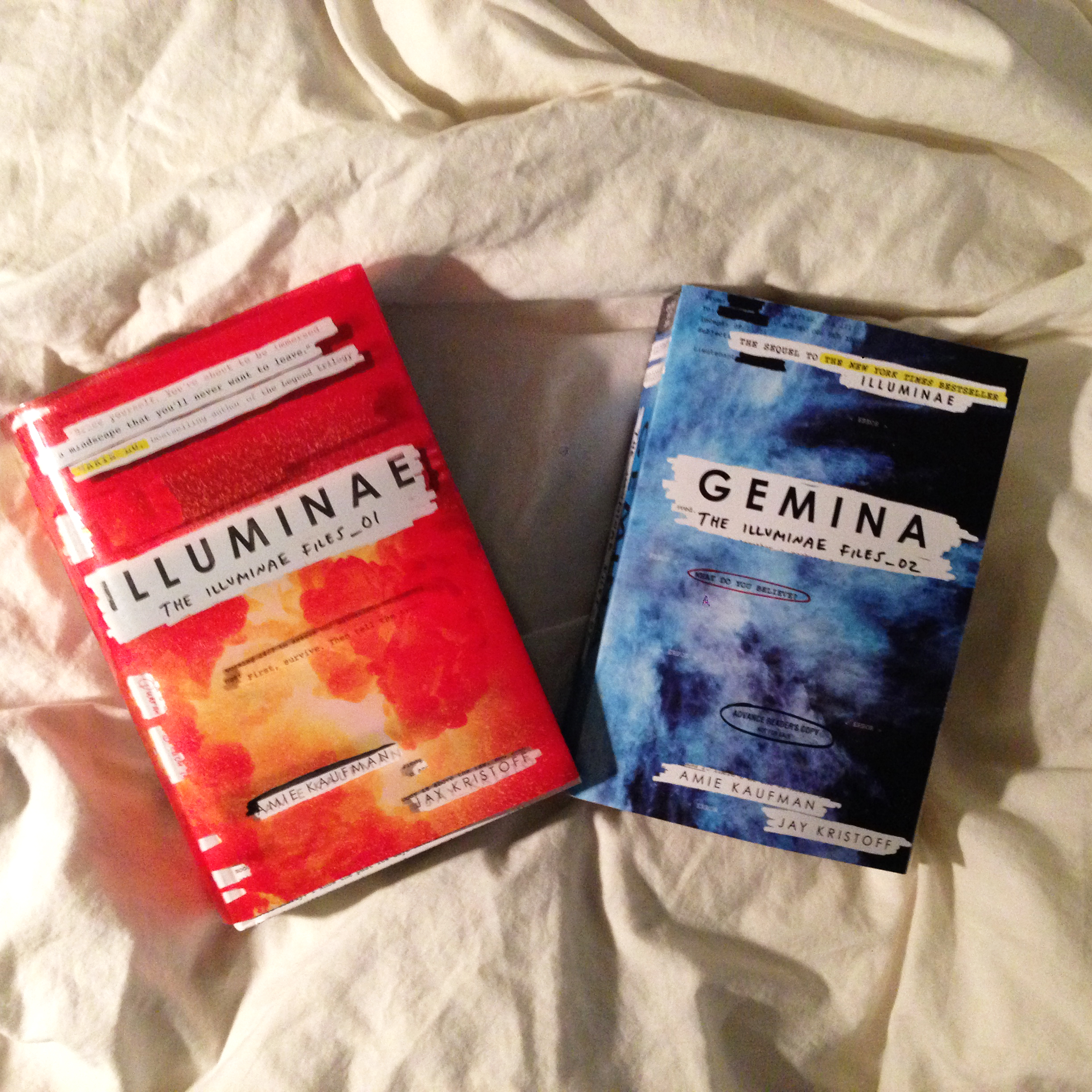

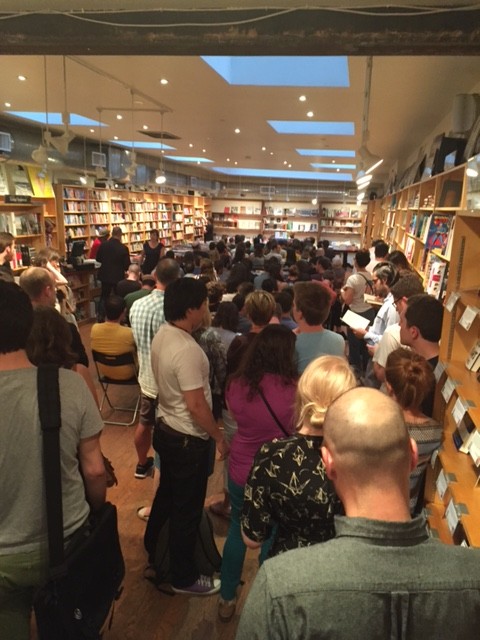
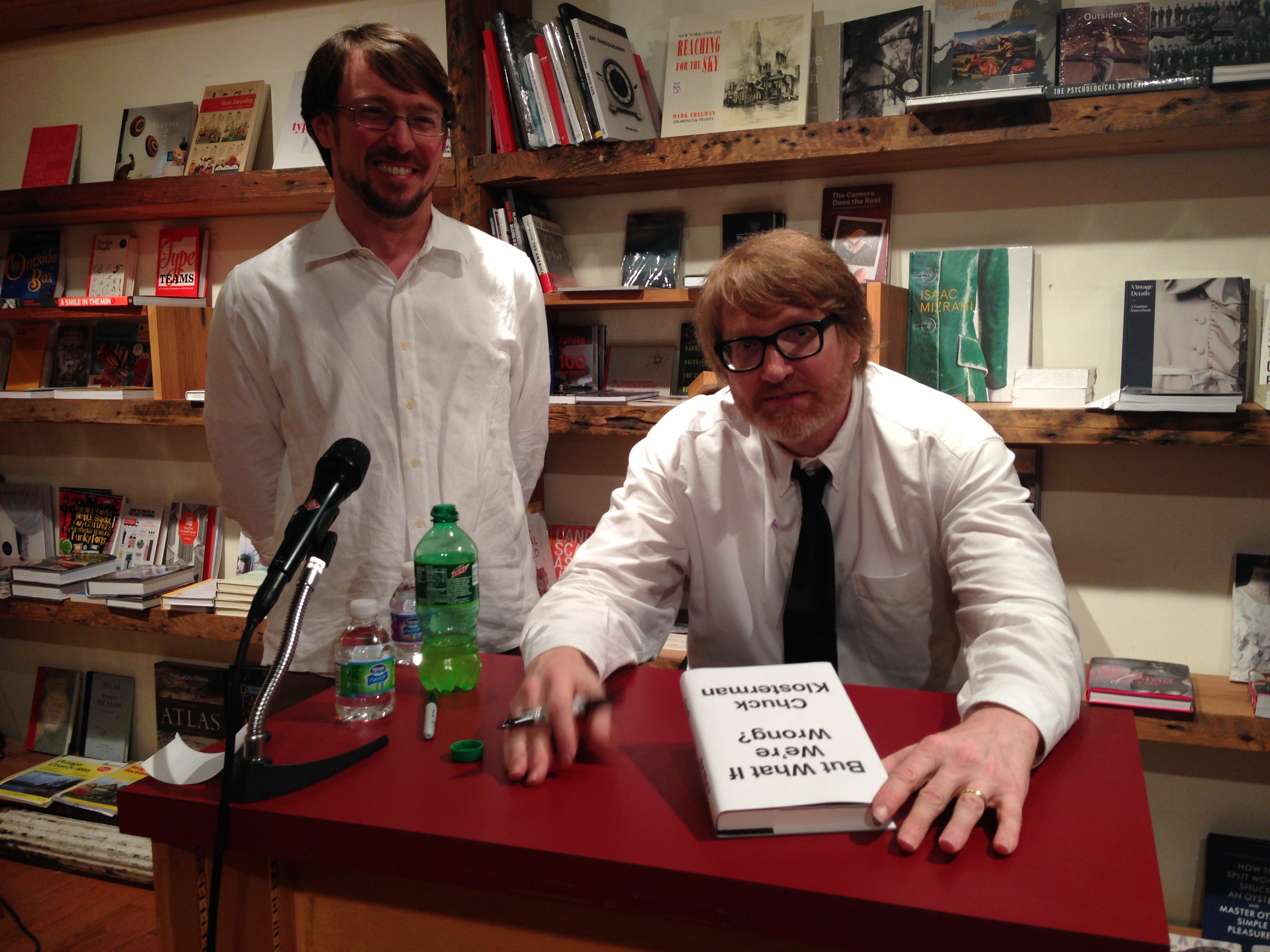
 Chuck read from his book and signed copies for fans… and it was a packed house!
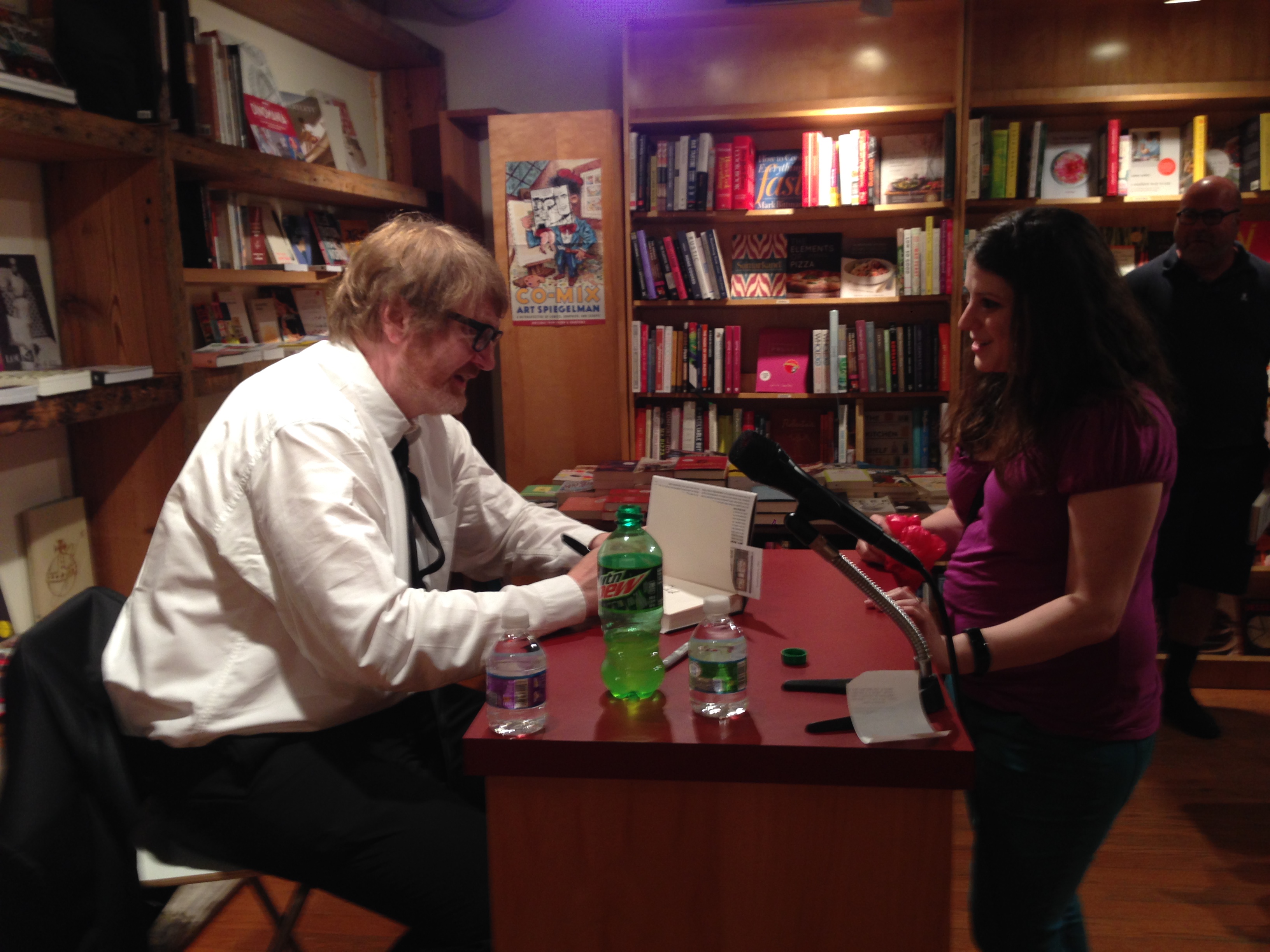 Today we’re featuring an interview with Andrew Unger, events and publicity manager of Brooklyn bookstore, BookCourt.
What is your job title, and what does that mean? What’s your day to day? What would surprise a layman to know?
I am the events and publicity manager. My daily schedule is varied and unpredictable, but focuses primarily on acting as the voice and public face of BookCourt. I manage our
Today we’re featuring an interview with Andrew Unger, events and publicity manager of Brooklyn bookstore, BookCourt.
What is your job title, and what does that mean? What’s your day to day? What would surprise a layman to know?
I am the events and publicity manager. My daily schedule is varied and unpredictable, but focuses primarily on acting as the voice and public face of BookCourt. I manage our 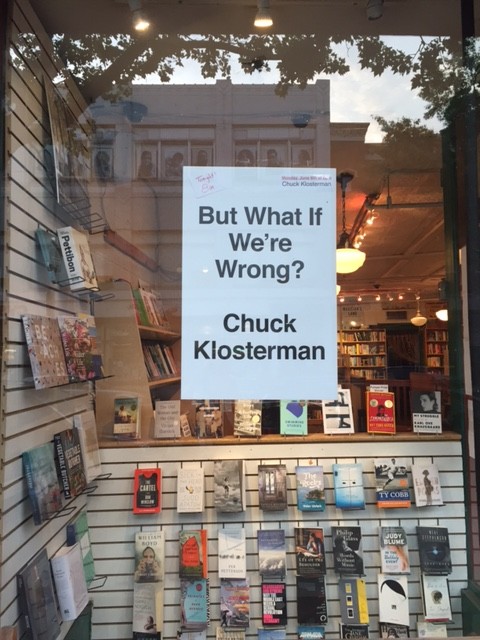 When you order books from a publishing company, what do you consider? What makes a book attractive to you and your customers?
We have store bestseller list at the front. This list features the bestselling books from the previous week. Consistently, these books reflect the same taste as reviewers for the New York Times, the New Yorker, and the New York Review of Books. Our customers prefer something sophisticated and intellectually stimulating. Proud as all of us are of our libraries, there’s just no escaping a good cover. Many bad books have been sold through good cover designs and, far and away, too many great books have been relegated to a dusty corner of the shelf because of an ill-advised cover. Occasionally, a truly great book will arrive in the store.
When you order books from a publishing company, what do you consider? What makes a book attractive to you and your customers?
We have store bestseller list at the front. This list features the bestselling books from the previous week. Consistently, these books reflect the same taste as reviewers for the New York Times, the New Yorker, and the New York Review of Books. Our customers prefer something sophisticated and intellectually stimulating. Proud as all of us are of our libraries, there’s just no escaping a good cover. Many bad books have been sold through good cover designs and, far and away, too many great books have been relegated to a dusty corner of the shelf because of an ill-advised cover. Occasionally, a truly great book will arrive in the store.