
Archives
Anna Bradley, author of A Season of Ruin on her favorite Scottish Romance novels
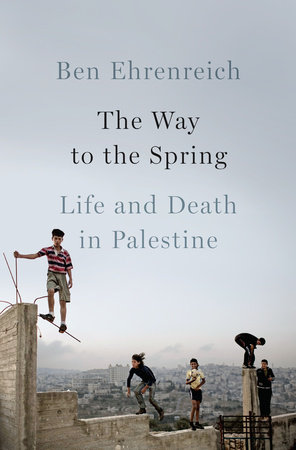
From the Editor’s Desk: Scott Moyer, VP & Publisher of the Penguin Press on The Way to the Spring by Ben Ehrenreich
To publish a book about Palestinian lives in the West Bank is to take part in a fiercely contested debate, whether you like it or not. It’s a debate that’s become a dialogue of the deaf, and it can seem too complicated and unpleasant to pay too much attention to. I didn’t come to this book out of some sense of advocacy, in particular, nor frankly would I have wanted to: there are enough shrilly partisan books out there, for the most part preaching to the choir. But what I did and do feel, stubbornly, is that nothing human should be alien to us, and that if a great journalist, which is to say a great observer and listener, someone with a great head and heart, really goes there and stays there, then we ought to pay attention. And Ben Ehrenreich is a great journalist. The contact high from his talent is exhilarating.
He’s also very brave. Show us the extreme challenges of life in a public housing project in the South Bronx, or in a Mumbai slum, and it’s all good; you get roses thrown at your feet. But the West Bank is under Israeli military occupation, of course, and has been for a very long time, and so if you write a clear and honest human account of life for ordinary Palestinians, then you can be accused of being “anti-Israel” , or worse, and you find yourself under assault, or at least greeted with uncomfortable silence. In fact, Ben Ehrenreich is no more anti-Israel than someone writing about life in Northern Ireland under British occupation was by definition anti-English. If you bring to light stories that depict inhumane situations, and thereby create pressure to improve them, are you “anti” the country in which the inhumane situations exist or “pro” that country?
Anyway, I am making this book sound shrill itself, which is precisely what it is not. Under the spell of the storytelling, we find ourselves in the shoes of a group of wonderfully vivid and disparate characters, united by the struggle to live decent lives. What I think was most shocking to me was how openly the enemies of the Palestinian presence in the West Bank – the far right-wing Israeli settlers – admit to having an eliminationism agenda: their stated goal is to drive all Palestinians out of the West Bank and take it over completely – ethnic cleansing on the installment plan. And their means of achieving that is to make life unbearable for the Palestinians.
Ben Ehrenreich is a powerful witness to all this; he spent several years in the West Bank, all told, and came to know these communities intimately. There’s sadness and heartbreak in this book, but there’s also laughter and affirmation. But there’s no escaping the fact that this shows us a situation that has become very extreme, even almost unimaginable, and so I think however uncomfortable it makes us, it’s worth our whole-hearted support. This isn’t a dogged or prescriptive polemic, it is a work of art; by immersing us in these lives, these stories, it places us as readers right on the horns of the dilemma. There’s no easy way out, for anyone, but the more we bring this world into our consciousness, the more human we will be – and the more honest we will be with each other about the consequences of our own inaction.
Learn more about The Way to the Spring below:
Writing Tips from Deena Goldstone, author of Surprise Me
Penguin Random House Creative Writing Awards Honor NYC Students
Since 1994, more than two million dollars have been awarded to students and their schools by Random House, and now Penguin Random House, through this awards competition.Congratulations to this year’s first place winners:
- Katelyn Sasson of Edward R. Murrow High School for Poetry;
- Jason Lallijee of Townsend Harris High School for Fiction & Drama;
- Roberta Nin Feliz of Manhattan Center for Sciences and Mathematics forMemoir;
- David Ortiz of Marta Valle High School for Graphic Novel;
- and Devin Johnson of Thomas A. Edison Career Technical High School, the recipient of the $10,000 Maya Angelou Scholarship Award for Spoken Word Poetry.
The Life of a Book: An interview with Andrew Unger, events and publicity manager of the BookCourt bookstore
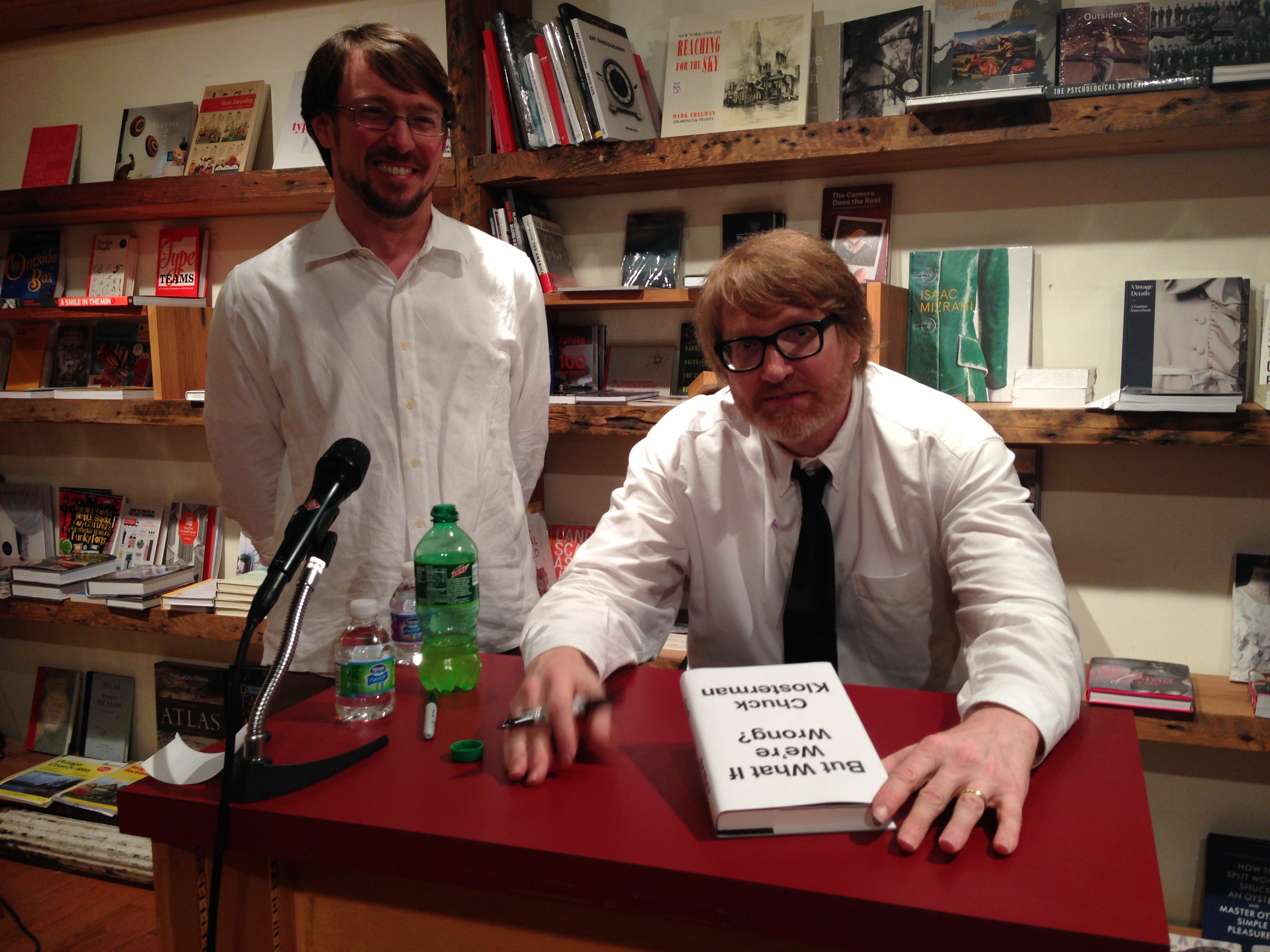
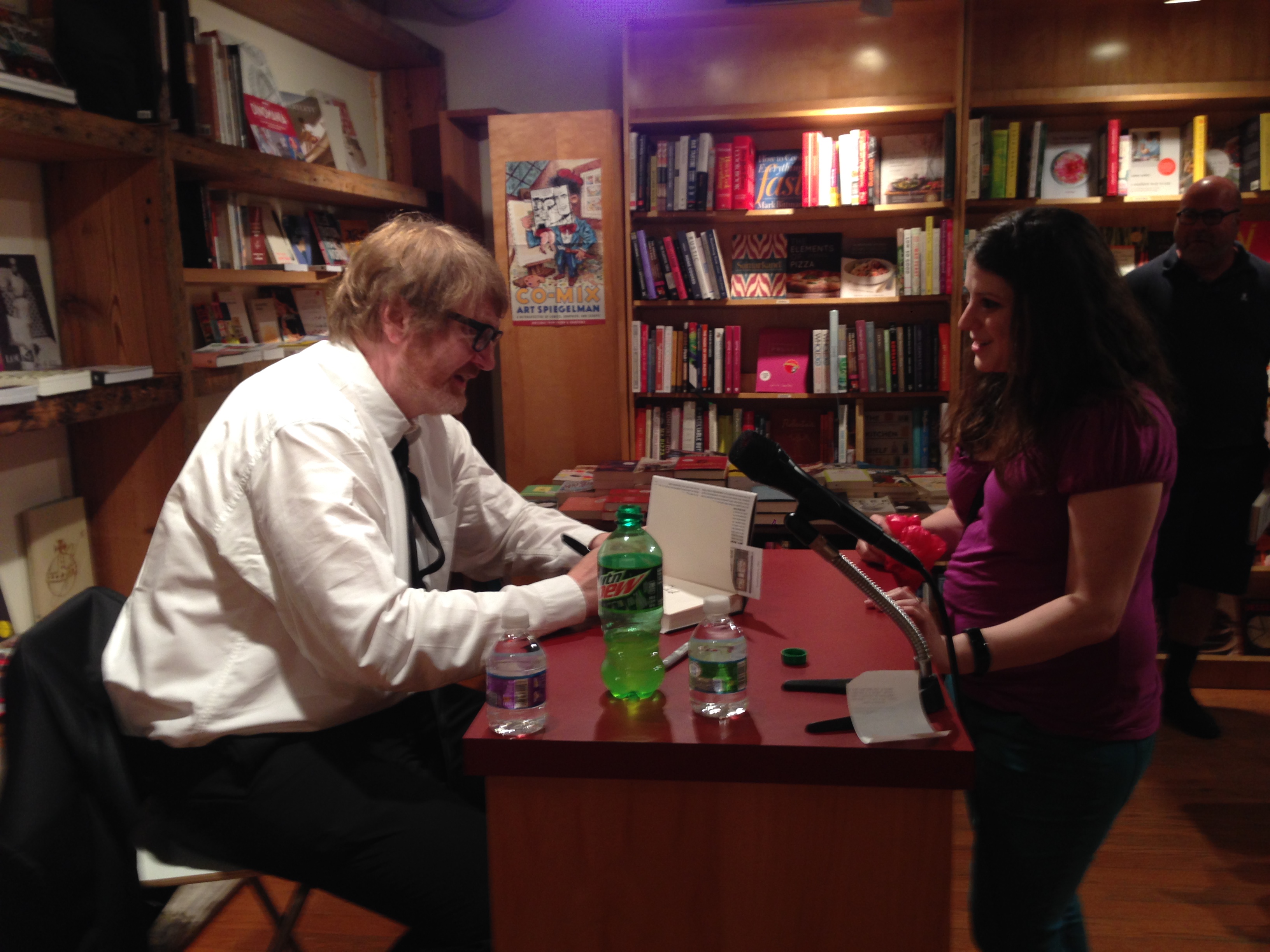
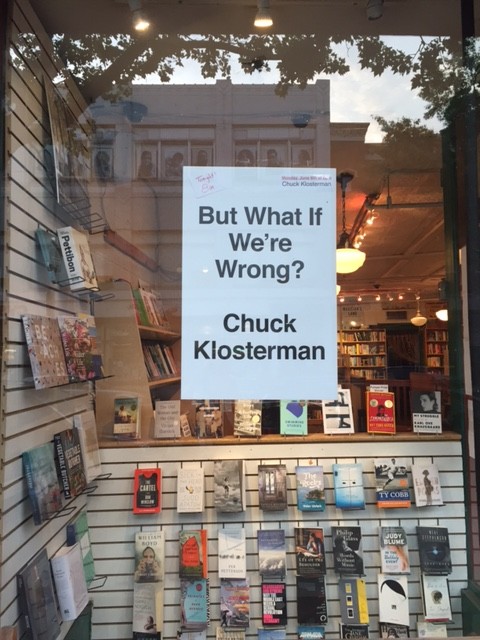
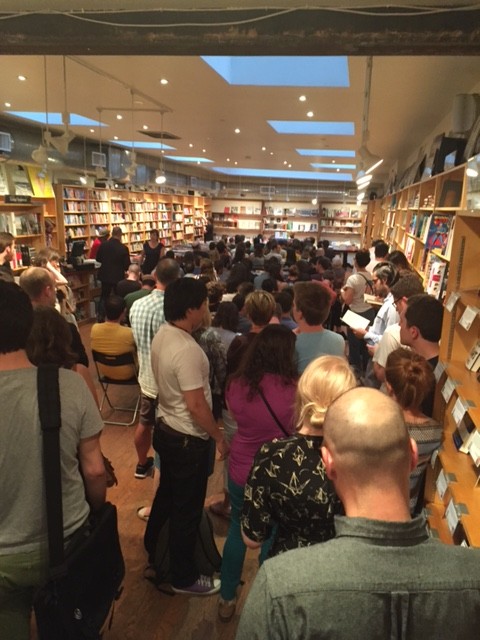
Chuck read from his book and signed copies for fans… and it was a packed house!
Today we’re featuring an interview with Andrew Unger, events and publicity manager of Brooklyn bookstore, BookCourt.
What is your job title, and what does that mean? What’s your day to day? What would surprise a layman to know?
I am the events and publicity manager. My daily schedule is varied and unpredictable, but focuses primarily on acting as the voice and public face of BookCourt. I manage our Twitter, Facebook, Instagram, and the back-end of the BookCourt website. I do all of this in addition to coordinating events for the store. We have one of the most robust calendars of any bookstore in the city, supporting over 300 authors every year. I think everyone, layman and professionals, are surprised to find out just how genuinely moved I am by the opportunity I have to work at one of the premier independent bookstores in the country.
What’s it like working at BookCourt vs. any other bookstore?
Jonathan Lethem has this wonderful quote he gave us once where he said that BookCourt was a university and a party in slow motion. I’ve always loved that way of talking about the store. As usual, Jonathan Lethem was able to put it so much better than me. On the weekends, we see a vast array of people. Old, young, local, tourist … it’s hard to not get a little whimsical about the “scene.” When you’re here and you’re the one that people look to for a recommendation or for a friendly conversation about one of your favorite books, it always feels almost too good to be true. I’ve only ever worked at BookCourt, but I don’t know that this particular blend of magic could be found anywhere else.
When you order books from a publishing company, what do you consider? What makes a book attractive to you and your customers?
We have store bestseller list at the front. This list features the bestselling books from the previous week. Consistently, these books reflect the same taste as reviewers for the New York Times, the New Yorker, and the New York Review of Books. Our customers prefer something sophisticated and intellectually stimulating. Proud as all of us are of our libraries, there’s just no escaping a good cover. Many bad books have been sold through good cover designs and, far and away, too many great books have been relegated to a dusty corner of the shelf because of an ill-advised cover. Occasionally, a truly great book will arrive in the store. Gone Girl or Building Stories. These are anomalous and rise to the top with a momentum born from nowhere else except the compelling narrative itself.
Tell me about some of the events and community-building at BookCourt.
In the early-aughts a Barnes & Noble opened up just a few blocks away from the store. It’s presence was intimidating and unwelcoming. The communities of Cobble Hill and Carroll Gardens rallied behind us in an impressive way. There are many great neighborhoods in New York, but these two have helped curate and foster one of the most impressive booms in Brooklyn. Today Court Street, as it runs from Atlantic Avenue into Red Hook, is ripe with local, family-owned businesses. In an age when small business is struggling for air, the residents of Cobble Hill and Carroll Gardens have created something truly special. Because of their dedication to us, we’ve dedicated ourselves to serving them. Our events are free and open to the public and through these events we are able to feature internationally celebrated authors as well as local and debut authors.
What’s interesting to you about But What if We’re Wrong? How would you describe it to a reader? Why would they want to read it?
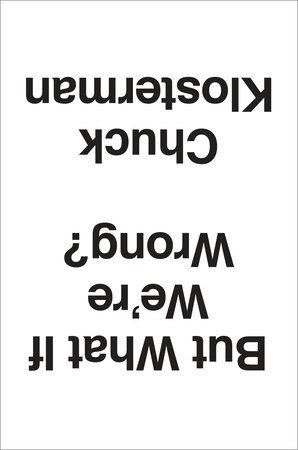
But What If We’re Wrong? was so engaging to me because it highlighted the best qualities of Chuck Klosterman’s personality. He is a friend of the store an often in and out. The writing is reflective of Chuck’s cadence and temperament. Thoroughly researched, he delivers prescient wisdom with a light-touch and a flare for the unexpected. The cover design, its simple, understated message of turning something on its head was ingenious and wonderful. I was the most surprised by how the footnotes at the bottom of the page operated as an aside to the reader in a way that looked at quick glance like a moniker of sophistication but read like a nudge and a wink. In almost every way, the book asked over and over again, the question of its title. Not often is a reading experience so cohesive and stream-lined.
Which books are your go-to books to sell? Any old standbys?
People expect a booksellers to possess an intimate knowledge of not only all of their favorite books, but also of all the books they haven’t yet read. Great booksellers are up for the challenge. We all spend a lot of time pouring over reviews and ripping through as many books as we can. I don’t want to take the magic out of bookselling, but here are some pointers.
—Don’t recommend Bolano. Don’t be that guy. When you’re asked about it, gush appropriately because he’s amazing. Other writers that fall into this category are Don DeLillo, Thomas Pynchon, Dostoyevsky, J.D. Salinger, and Phillip Roth. (There’s a pattern)
—Listen, listen, listen. What did they do that day? What movies do they like? Are they quiet, nervous, excited, busy, jaded? Most of the time, people know what book they want, you just have to listen to them describe it and pull it off the shelf.
—Here is what you recommend in a pinch:
- Where’d You Go Bernadette?
- Self Help
- Bobcat
- The Vacationers
Congratulations to the Tony Award Winners! Read the books that inspired the plays
Another literary win was A View from the Bridge, for best revival of a play. Immerse yourself in reading Arthur Miller’s intense, devastating play.
The Life of a Book: Publication day! An interview with Chuck Klosterman and editor Brant Rumble
From the Editor’s Desk: Peter Gethers, President, Random House Studio and Senior Vice President, Editor at Large Penguin Random House on Sweetbitter by Stephanie Danler
Writing Tips from Richard Cohen, author of How to Write Like Tolstoy
What writing techniques have you found most important or memorable?
In a memorable cri du coeur, the wonderful Turkish-American essayist Elif Batuman declared:
‘I would greatly prefer to think of literature as a profession, an art, a science, or pretty much anything else, rather than a craft. What did craft ever try to say about the world, the human condition, or the search for meaning? All it had were its negative dictates: “Show, don’t tell”; “Murder your darlings”; “Omit needless words.” As if writing were a matter of overcoming bad habits—of omitting needless words.’
One other piece of advice, though: if an editor, or friend, makes a comment about something you have written and you strongly disagree, don’t dismiss the fact that something in what you have written disturbed them. Their suggestion may not be helpful, or the right one, but look again at the passage in question, just in case there is something there you can improve.
How would you recommend creating and getting to know your characters?
Start with the name. Many novelists can’t imagine their characters until they feel they have named them in a way that chimes in with their personalities. Anne Lamott’s Bird by Bird has the following general advice:
‘You may only know your characters’ externals instead of their essences. Don’t worry about it. More will be revealed over time. In the meantime, can you see what your people look like? What sort of first impression do they make? What does each one care most about, want more than anything in the world? What are their secrets? How do they move, how do they smell? Everyone is walking around as an advertisement for who he or she is—so who is this person? Show us. . . .
‘You also want to ask yourself how they stand, what they carry in their pockets or purses, what happens in their faces and to their posture when they are thinking, or bored, or afraid. Whom would they have voted for last time? Why should we care about them anyway? What would be the first thing they stopped doing if they found out they had six months to live? Would they start smoking again? Would they keep flossing?’
After developing an idea, what is the first action you take when beginning to write?
Well, in truth I try the idea out on my wife. She’s also my literary agent and best friend, and will always find the best way of letting me down if my idea is a truly bad one. But what is meant by ‘developing an idea’? It’s too broad a phrase. If one means a whole notion for a book, I advise writing the story down in the manner of a book blurb, no more than 250 words (about the amount of words a book salesman has to interest a customer). If a book project is still unclear, or doesn’t compel attraction within that wordage, something is amiss.
Is there something you do to get into a writing mood? Somewhere you go or something you do to get thinking?
Hemingway is meant to have said, ‘I write drunk and revise sober,’ although some people say it was the other way round. Woody Allen takes lots of showers to get his creative juices going. Scott Fitzgerald used to strip off his clothes — completely — before writing. Gertrude Stein would get her companion to drive her into the countryside so she could gaze on the cows there before going back to her writing table.
Did you always want to write? How did you start your career as an author?
I produced a school magazine whenI was twelve; and continued as the main schoolboy editor when I was at high school. But for years I though I was an editor of other peoples’ work, not someone who could produce his own books. In 1999 I left my job in British publishing; left Britain; and settled down in a new marriage, in New York. I tried to get a job as an editor at Knopf, but its MD, Sonny Mehta, said I should write a book about my main hobby of 45 years, fencing — so I went off and produced a 520-page book on swordplay over 3,000 years, and suddenly I was a writer.
What’s the best piece of advice you have received?
I have no idea. I always forget advice. Maybe, remember to turn the lights off. Say Yes rather than No. Or, for writers, One can always revise more.
What clichés or bad habits would you tell aspiring writers to avoid? Do you still experience them yourself?
We all fall into hackneyed ways of writing. My current bugbear is people saying ‘incredible,’ when all they mean is ‘very.’ I recall revising a chapter so often that only on a last read-through did I realise I’d started seven consecutive paragraphs with the word ‘Then.’
Describe your writing style in 5 words or less.
Anecdotal, story-led, humorous, inquiring, addictive.
Do you ever base characters off people you know? Why or why not?
So far I have published only non-fiction. I have started a novel, set in France in 1946, but my wife (see above) says I’m not allowed to write any more into it until I have finished my current commissioned book, titled ‘The History of Historians.’ But I think about the novel every single day.
What are three or four books that influenced your writing, or had a profound affect on you?
Shakespeare (sorry, but it’s true), Tolstoy’s main novels, Samuel Johnson‘s works, Alice in Wonderland
Learn more about the book below: