
Listen: Dave Hill Talks Writing, Comedy, Music, and more
Dave Hill, author of DAVE HILL DOESN’T LIVE HERE ANYMORE, talks to Lindsay and Amy about writing, comedy, music, and family.
Learn about the book here:



 Christine in online marketing is reading Ember in the Ashes by Sabaa Tahir.
Find out more about the book here:
Christine in online marketing is reading Ember in the Ashes by Sabaa Tahir.
Find out more about the book here:
 Lauren in Doubleday marketing is reading China Rich Girlfriend by Kevin Kwan.
Find out more about the book here:
Lauren in Doubleday marketing is reading China Rich Girlfriend by Kevin Kwan.
Find out more about the book here:
 Jessica in Crown production is reading An Ember in the Ashes by Sabaa Tahir.
Find out more about the book here:
Jessica in Crown production is reading An Ember in the Ashes by Sabaa Tahir.
Find out more about the book here:
I have the great fortune of being a Sales Manager for Penguin Adult books! In this role, I present all of the upcoming titles from Penguin Books to independent bookstores in the New York metropolitan area. In other words, I’m a bookseller to booksellers! During the course of a year, I meet with various book buyers to discuss and select the titles that will eventually be on their shelves for readers to purchase. The part about these meetings that I love so much is that I get to be involved in curating the store along with the buyer. Every independent bookstore is unique, and it is my responsibility to learn as much as I can about the stores so that the books I sell them will reflect their personalities.
I also work extensively with the other departments in publishing like editorial and publicity. Editors will often let sales people read manuscripts so that we can offer feedback or let them know about a store that will be particularly excited about the book. And then there is publicity! Publicists are dear friends to Sales Managers because we work together to setup author readings and signings at different bookstores across the whole country. In my opinion, there is no better way to spend a weekday evening than to attend a reading at your local bookshop.

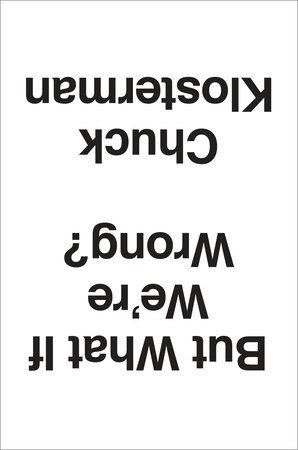
When you describe But What if We’re Wrong? to bookbuyers, what is your hook? What is memorable or unique about the book? Why would they want it in their store?
You would probably laugh at how little of a hook I need for Chuck Klosterman a lot of the time! His reputation precedes him, and I often sell the book well by simply saying, “Look, it’s the new Chuck Klosterman!” But there is so much more that I get to tell my booksellers about. When it comes to But What If We’re Wrong?, I feel like Klosterman has explored a question that covers an impressive number of topics. From a conversation with Neil deGrasse Tyson about the multiverse to reasons why the NFL could potentially fail, But What If We’re Wrong? is genius in its breadth, and that is going to bring an entirely new audience to Klosterman.
There are so many different reasons for why independent bookstores love Chuck Klosterman! One thing I’ve heard that cracked me up is that many view Chuck Klosterman as a hipper Malcolm Gladwell. Now while I personally think that Gladwell is plenty hip, I also feel like I understand the deeper sentiment underneath that opinion. There is a level of access that every Klosterman book achieves, and it results in a sincere investigation about a topic. Reading Klosterman doesn’t feel like reading an author who is analyzing something from the outside; it feels like reading the carefully considered meditations of someone who is intimately involved with what they write about. That sincerity can’t be faked in a reading experience because it is simply the result of skillful writing.
What’s your favorite thing about your job? What would surprise a layman to know?
What continues to strike me about my job is that I get to connect people who all love books. My publishing house considers me a specialist on the bookstores I work with, and in turn, my bookstores view me as a specialist about the publishers and all of the different titles we bring out. It is a singular role, and I love the opportunity to continue learning from the books and the people that participate in the world of literature.
You’re a fan of Chuck Klosterman – what do you like about his writing? What do you like about this new book? Do you have a favorite moment or line?
I love that Klosterman always feels like he is writing directly to me. It creates an experience that not many authors can bring to the page. Sometimes this occurs through those passages that directly address the reader, but more often I feel addressed by a line of thought. It’s as if a good friend of mine is laying out an issue before me with perfect pacing and allowing me to fully grasp his point of view.
My favorite part of But What If We’re Wrong? is this amazing section about television’s ability to capture and portray a time period. The quick take away from the chapter is that while everyone might love Mad Men and think of it as crowning accomplishment that captured the 1960s, many historians of the future would probably disagree. The perceptions that created Mad Men came from people living in the early 2000s instead of the actual 1960s. Everything about Mad Men is too perfectly considered and too meticulously constructed with hindsight to be genuinely natural. Instead, a show like Roseanne offers a much more realistic portrayal of its time period. Like many families living in the 1990s, Roseanne showed a chubby American family trying to get by with okay jobs while living in a kind of messy house. For many, that is an accurate picture of life in the 1990s, and Roseanne was able to capture all of this unknowingly. The show was just created in the very same time period its characters lived in!
Read the first post in this series here, and part one and part two of the Q&A with Klosterman’s editor.
 Q: Do you have a favorite part of the editorial and publishing process?
A: I have a few. First, there’s the moment when you realize that you want to work on a book. It’s not unlike the beginning of a romance, minus all of the untoward activities, of course. Then there’s the editing. It’s definitely work, and sometimes it’s more work than anticipated, but, when you can shut out the world and really interact with what someone has written—ask them more questions, challenge them a bit, and just enjoy it like any reader would—that’s entertaining. It’s a heightened form of reading. And, last but not least, there are moments when you can tell that a reader (other than yourself) has genuinely loved a book. Whether it’s a rave review or a crowd of people at an author’s event who are obviously enjoying themselves, or someone on the subway reading one of your books with an intent (but not displeased) look on his or her face. I have a cynical side, like anyone else, but those are the things that have a way of eroding it, at least until the next moment of pain and disappointment comes along.
Q: Do you have a favorite part of the editorial and publishing process?
A: I have a few. First, there’s the moment when you realize that you want to work on a book. It’s not unlike the beginning of a romance, minus all of the untoward activities, of course. Then there’s the editing. It’s definitely work, and sometimes it’s more work than anticipated, but, when you can shut out the world and really interact with what someone has written—ask them more questions, challenge them a bit, and just enjoy it like any reader would—that’s entertaining. It’s a heightened form of reading. And, last but not least, there are moments when you can tell that a reader (other than yourself) has genuinely loved a book. Whether it’s a rave review or a crowd of people at an author’s event who are obviously enjoying themselves, or someone on the subway reading one of your books with an intent (but not displeased) look on his or her face. I have a cynical side, like anyone else, but those are the things that have a way of eroding it, at least until the next moment of pain and disappointment comes along.
 Q: Do you have a favorite section or quote from But What if We’re Wrong?
A: More than any of the other nonfiction books that Chuck has written, this one is all of a piece. I think Chuck’s reader have gotten used to reading his books like collections, reading some essays, but not others, and sometimes not in sequential order. Which is fine. But not for this book. It builds. The chapter on music is the first chapter I read because it was the first chapter draft Chuck shared with me. I enjoyed it, but I know now that I didn’t fully get it, and that’s because I wasn’t reading it in the context of the book. (The chapter begins on page 59.) My early impression became problematic when I expressed some vague concerns about the piece, which I think alarmed Chuck, because—for anyone who knows me—music is my primary preoccupation, and, if I don’t love reading something that a writer I enjoy reading has written about music, then there might actually be something amiss. But the only issue was that I wasn’t reading the material within the flow of the book. Now the music chapter is definitely among my favorites, and, having said all of this, I’m sure the chapter will be excerpted somewhere, and therefore read in isolation. I’m not too worried. I look forward to seeing how readers react to it. The chapter about TV is a challenging one. Chuck makes an argument that I have a hard time understanding, or “buying” as some people like to put it. But that’s why I like it. I don’t just read books to agree with them. Towards the end of the book, there’s a significant riff on the phrase “you’re doing it wrong” that sums up quite a lot about the problem of our collective experience at this point in human history.

 Q: How would you describe this book to someone who’s never read Chuck?
A: Imagine you’re about to meet up at a bar (or any other kind of location where you can relax and enjoy yourself) with several of your best friends. You’re going to discuss both important and completely unimportant subjects. You’re going to play some songs on the jukebox, which might lead you to ponder the career of Gerry Rafferty. You’re going to casually watch whatever games are on. You’ll argue, you’ll laugh—both with and at each other—and you might be surprised by a good friend’s revelation or news. And, unless someone loses a tooth or a credit card, you’ll have a good time, living in a world where not all times are good.
Reading Chuck is the literary equivalent of that night out. There’s part of me that hesitates to characterize his work in that way because I fear it implies, to some people, a lack of quality, which is not what I’m trying to convey at all. In fact, if that’s what you think it implies, then maybe you need some new best friends.
This book, specifically, asks—in every which way—what we, as individuals and as a society, might be wrong about. We look back in history and it’s obvious to us that people have always been wrong about major facts or issues at any given time, yet it’s difficult to apply that same scrutiny to the present. Chuck tries. He looks at art, science, politics, sports, dreaming, the fabric of reality, and just about everything else. He consults experts in each field, and he draws some fascinating conclusions about how we think about what we know, or don’t know.
Q: How would you describe this book to someone who’s never read Chuck?
A: Imagine you’re about to meet up at a bar (or any other kind of location where you can relax and enjoy yourself) with several of your best friends. You’re going to discuss both important and completely unimportant subjects. You’re going to play some songs on the jukebox, which might lead you to ponder the career of Gerry Rafferty. You’re going to casually watch whatever games are on. You’ll argue, you’ll laugh—both with and at each other—and you might be surprised by a good friend’s revelation or news. And, unless someone loses a tooth or a credit card, you’ll have a good time, living in a world where not all times are good.
Reading Chuck is the literary equivalent of that night out. There’s part of me that hesitates to characterize his work in that way because I fear it implies, to some people, a lack of quality, which is not what I’m trying to convey at all. In fact, if that’s what you think it implies, then maybe you need some new best friends.
This book, specifically, asks—in every which way—what we, as individuals and as a society, might be wrong about. We look back in history and it’s obvious to us that people have always been wrong about major facts or issues at any given time, yet it’s difficult to apply that same scrutiny to the present. Chuck tries. He looks at art, science, politics, sports, dreaming, the fabric of reality, and just about everything else. He consults experts in each field, and he draws some fascinating conclusions about how we think about what we know, or don’t know.
 Q: What would surprise a layman about the editing and publishing process?
A: People who are unfamiliar with the publishing industry probably don’t realize the extent to which editors are involved in a book at every step from signing it up to editing it (they probably can guess about that part) to publishing it to finding ways to promote it years later. Editors depend on countless colleagues in production, design, sales, publicity, marketing, rights, and legal—not to mention booksellers and media and partners outside of the publishing house—but an editor is generally involved throughout the entire process. An editor is the author’s primary connection to the publishing house. Maybe a layman knows all of this. Sometimes that guy is smarter than we think.
Q: What do you look for when you acquire a book? How does that apply to But What if We’re Wrong?
A: It’s relatively simple: I look for books I love to read. Of course, I have particular interests in music, pop culture, sports, counterculture, and quirky/weird/wild subjects, so most of the books I look for relate to one or more of those realms, but I also love a writer who can pull me into a subject I was never expecting to want to read about. That takes a distinct voice and command of language, and usually some sense of levity, which can range from subtle to outlandish.
As for Chuck, I’ve been working with him since the beginning of his literary career, which was essentially the beginning of my career as an editor. In 1999, I was a novice editor, but I’d been trained to look for writers and books, applying the aforementioned principles, and I’m extremely fortunate to have been in the right place at the right time to start working with Chuck. The way in which he typifies the kind of writer I enjoy reading cannot be overstated.
Q: What would surprise a layman about the editing and publishing process?
A: People who are unfamiliar with the publishing industry probably don’t realize the extent to which editors are involved in a book at every step from signing it up to editing it (they probably can guess about that part) to publishing it to finding ways to promote it years later. Editors depend on countless colleagues in production, design, sales, publicity, marketing, rights, and legal—not to mention booksellers and media and partners outside of the publishing house—but an editor is generally involved throughout the entire process. An editor is the author’s primary connection to the publishing house. Maybe a layman knows all of this. Sometimes that guy is smarter than we think.
Q: What do you look for when you acquire a book? How does that apply to But What if We’re Wrong?
A: It’s relatively simple: I look for books I love to read. Of course, I have particular interests in music, pop culture, sports, counterculture, and quirky/weird/wild subjects, so most of the books I look for relate to one or more of those realms, but I also love a writer who can pull me into a subject I was never expecting to want to read about. That takes a distinct voice and command of language, and usually some sense of levity, which can range from subtle to outlandish.
As for Chuck, I’ve been working with him since the beginning of his literary career, which was essentially the beginning of my career as an editor. In 1999, I was a novice editor, but I’d been trained to look for writers and books, applying the aforementioned principles, and I’m extremely fortunate to have been in the right place at the right time to start working with Chuck. The way in which he typifies the kind of writer I enjoy reading cannot be overstated.
 Q: What’s the first thing you do after acquiring a book? How do you start the editing process? How do you collaborate with Chuck? How has it changed since his first book?
A: Usually, in the process of acquiring a book, an editor has had some kind of conversation with the author. So, the first step is usually an extension of that conversation, and just getting to know each other a little bit. If the writer is in New York, I take him or her to lunch. We talk about logistics of the project and the general approach the writer is going to take with the book.
With Chuck, this is the eighth book we’ve worked on together, and we know each other well. We’re pals who’ve watched approximately fifty college football games while sitting in the same room. But I still take him to lunch sometimes. We usually have three big conversations about a given book—one before he starts writing, one after he’s been writing for a while, and one before he delivers the first complete draft. Then we have lots of little conversations and email exchanges until the book is ready to go to the printer. That hasn’t changed a lot over the years.
Check back soon for Part 2., in which Rumble describes his favorite parts of the editorial process and the most striking chapters of But What If We’re Wrong?.
Read the first post in this series here.
Q: What’s the first thing you do after acquiring a book? How do you start the editing process? How do you collaborate with Chuck? How has it changed since his first book?
A: Usually, in the process of acquiring a book, an editor has had some kind of conversation with the author. So, the first step is usually an extension of that conversation, and just getting to know each other a little bit. If the writer is in New York, I take him or her to lunch. We talk about logistics of the project and the general approach the writer is going to take with the book.
With Chuck, this is the eighth book we’ve worked on together, and we know each other well. We’re pals who’ve watched approximately fifty college football games while sitting in the same room. But I still take him to lunch sometimes. We usually have three big conversations about a given book—one before he starts writing, one after he’s been writing for a while, and one before he delivers the first complete draft. Then we have lots of little conversations and email exchanges until the book is ready to go to the printer. That hasn’t changed a lot over the years.
Check back soon for Part 2., in which Rumble describes his favorite parts of the editorial process and the most striking chapters of But What If We’re Wrong?.
Read the first post in this series here. 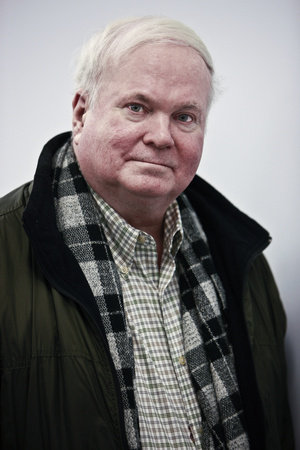
New York Times bestselling author Pat Conroy died Friday, March 4, at the age of 70. Conroy passed away at his home in Beaufort, SC, surrounded by family and loved ones. “The water is wide and he has now passed over,” said his wife, novelist Cassandra Conroy. Funeral arrangements are currently being made at this time.
Read the New York Times obituary here.
“Pat has been my beloved friend and author for 35 years, spanning his career from The Prince of Tides to today,” said his longtime editor and publisher, Nan A. Talese of Doubleday. “He will be cherished as one of America’s favorite and bestselling writers, and I will miss him terribly,” Talese said.
Listen to an interview with Nan about Pat Conroy’s life here.
Conroy is the author of eleven previous books, including The Boo, The Water is Wide, The Great Santini, The Lords of Discipline, The Prince of Tides, Beach Music, My Losing Season, The Pat Conroy Cookbook: Recipes of My Life, South of Broad, My Reading Life and The Death of Santini. His novels have sold over 20 million copies worldwide.


Editors get very passionate about books they work on – the Editor’s Desk series is his or her place to write in-depth about what makes a certain title special. Get the real inside-scoop on how books are shaped by the people who know them best.
The manuscript of Try Not To Breathe came in to me at about 9:30 one night and due to some happy intersection of title and description and still being too awake to go to bed, I made a cup of tea at about 10 and decided to glance at a page or two before turning in. At about 1 a.m. I forced myself away from the book for the night but could barely fall asleep – so full was my head and my heart of the story of the two young women Holly Seddon had created. When I was in the world on her pages I had that magical and delicious feeling every lifelong reader knows when your actual surroundings melt away and all you can see are the streets and houses the characters are seeing. I finished reading the manuscript the next night and for days after I couldn’t stop thinking about Amy and Alex and what both joined and separated them.
Hopefully without giving too much away, the novel is about two women, Alex and Amy, both 30 years old and from the same area of England, where they grew up going to neighboring schools. Told in alternating points of view, their lives intersect in a way that will change everything for both of them. Alex is a journalist whose life has spiraled completely out of control. She had seen tremendous success as a writer very early in her twenties when she beautifully and movingly documented the last year of her mother’s struggle with terminal illness. During this time she became incredibly sought after in London magazine circles and also married the love of her life. But when her mother dies, Alex loses her moorings and plummets into alcohol and reckless behavior, finally moving back to the house she had grown up in.
When Alex is at her local hospital one day working on a small, routine story (the only kind of writing work she can now get)about vegetative cases – she finds herself staring at a young woman, a patient, asleep. The girl looks familiar to her, and suddenly she realizes that this is Amy Stevenson, a girl who had disappeared when both she and Alex were 15, only to be found near death in the woods. Amy has been in a coma ever since, and the police were never able to discover who had assaulted this girl. Amy’s family and the whole town were left mystified and damaged.
Alex finds herself haunted by her own memories of that time and cannot stop herself from beginning to investigate the story. She realizes that in the fifteen years since the attack, Amy has gone from being at the center of notoriety to having been nearly completely forgotten.
Of the many themes explored by Holly in the novel, two are favorites of mine. One is the phenomenon of locked in syndrome, which Holly researched and uses so brilliantly for the character of Amy, showing us the heartbreak of a young girl trapped mutely within her body. My other favorite is the music of the novel. From its title on, Holly has imbued her book with a perfect soundtrack as iconic song after song from the early to mid-90s seems to play in the background. And by the end one can see that Try Not To Breathe isn’t just an R.E.M. song title but helps introduce one of the most compelling facets of the novel – the false promise of control, and the beauty and wonder of watching Alex measure out just enough courage each day to fight her demons one more time.
Listen to an excerpt from the book here:
Read more about Try Not To Breathe below.


