Tag Archives: writing tips

NaNoWriMo 2016: Writing Tips and Techniques from our authors

Ready to tackle your novel? We’ve got your back – browse through all the practical, encouraging, and personal advice from Penguin Random House authors here. For a concrete guide featuring tried and true methods, Signature has compiled a truly wonderful Writing Guide. Check out these excellent books to inspire and instruct. National Novel Writing Month is almost here! Happy writing!

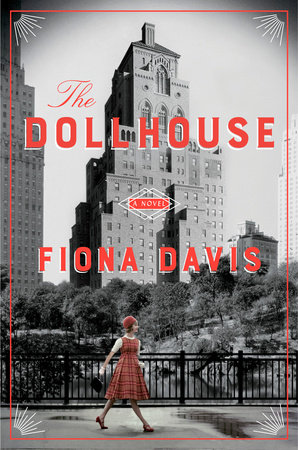
Writing Tips from Fiona Davis, author of The Dollhouse

We know readers tend to be writers too, so we feature writing tips from our authors. Who better to offer advice, insight, and inspiration than the authors you admire? They’ll answer several questions about their work, share their go-to techniques and more. Now, get writing! How would you recommend creating and getting to know your characters?  The most important task is to figure out what your characters’ goals, history and personality quirks are – what they most want from life, and why. And for characters who live in an earlier time period, there’s the additional task of conveying what life was like back then. Since part of my book takes place in the early 1950s, I headed to the library and read old newspapers and magazines, scrutinizing the advertisements as well as the articles. I also listened to the music of the time period, from bebop to Rosemary Clooney, to get a sense of popular trends. Is there something you do to get into a writing mood? Somewhere you go or something you do to get thinking? The Met Museum in New York City is a great place to be inspired. I was lucky enough to catch the designer Charles James’s exhibit while working on The Dollhouse, and the fabrics and styles perfectly captured the essence of 1950s fashion. A run around the reservoir in Central Park can be helpful when I’m trying to solve a plotting problem or visualize an upcoming scene. I find I procrastinate for a good hour before getting down to the actual business of writing. This can include doing laundry, checking email, and reading the paper, until the guilt becomes inescapable. But once I start, I fall into that state of flow and become unaware of time passing. I love that feeling. Did you always want to write? How did you start your career as an author? I got a master’s degree in journalism from Columbia University, which taught me how to research and do interviews and write on deadline, and all those skills transferred over to writing fiction. When you’re used to writing every day, it’s easy to power through the painful moments of the first draft, knowing you can clean it up later. The process isn’t precious, it’s just work. What clichés or bad habits would you tell aspiring writers to avoid? Do you still experience them yourself? I have a Post-it on the bulletin board above my desk with the heading “Bad Words” written on it: these include “realized, wondered, felt, saw, thought, and heard.” Once I’m done with the first draft, I search for each bad word and instead use deep point of view. (For example, replacing “She heard the cat meow,” with “The cat meowed.”) Makes the writing simpler and more powerful. Luckily, I’ve gotten to the point where I usually catch myself before using them, but you can never be too sure. What are three or four books that influenced your writing, or had a profound effect on you? The Perfume Collector by Kathleen Tessaro is set in two decades, the 1950s and the 1920s, and her attention to detail and descriptions are breathtaking. The Lottery by Shirley Jackson, published in 1948, is eerily timeless, as is People of the Book by Geraldine Brooks. I swear Brooks traveled back in time to write that one, it’s so rich in setting and character. In high school, I had a teacher who instilled an early love of Shakespeare, and the musicality of Macbeth definitely stuck with me. Learn more about the book below:

Writing Tips from Jillian Cantor, author of The Hours Count

We know readers tend to be writers too, so we feature writing tips from our authors. Who better to offer advice, insight, and inspiration than the authors you admire? They’ll answer several questions about their work, share their go-to techniques and more. Now, get writing! 

How would you recommend creating and getting to know your characters? The absolute first thing I do is decide my main characters’ names. I feel like I need to know someone’s name before I can start to know him or her. My favorite place to figure out first names is the Social Security popular baby names website, where you can view name popularity by birth year (back to 1879) to see what common and (uncommon) names were in the year your character was born. After I decide names, I’ll start to make notes of other things, like birthdays/age or relationships to other characters, quirks, where a character lives, or things he/she likes or dislikes. But I start drafting pretty soon into this process. I mostly learn and get to really know my characters as I’m writing the first draft, thinking about what they do and how they react and speak when I put them in different situations. So I think the best way I get to know my characters is to write them. By the time I get to the end of the first draft, they’re often different than what I started with (and I know them much better). But then I go back and revise. After developing an idea, what is the first action you take when beginning to write? The first line of novel is really important. It sets the tone for the entire book. I want it to show what the book is ultimately about, but also to be interesting and hook the reader. When I first start thinking about and developing an idea I always start thinking about first lines. I jot down ideas, often for weeks or months. But, I don’t wait for the perfect first line before I start drafting a book. I begin with the first one that comes to me and then I keep writing from there to get my first draft going. So just the act of getting words and ideas down on the page is the most important action I take in order to actually start writing. I set a goal for myself – usually 3-5 pages a day – and I make myself sit down and write something, make some progress in the draft, even if it’s ultimately terrible and will all be changed in revision. Most of the time the first line that appears in the final draft of the book is not at all what I started with. I keep thinking on that first line, even as I keep writing the first draft. Usually I don’t understand enough about the story myself until I finish or get most of the way through a first draft. So I start writing at the beginning, but 9 times out of 10 that beginning changes by the time I make it to the end! Is there something you do to get into a writing mood? Somewhere you go or something you do to get thinking? I always write at home, and I need quiet to write. I negotiate my writing schedule around my kids’ schedules so I usually write while my kids are at school during weekdays, or very early in the mornings on the weekends or during the summer when my kids are home – really, whenever I can find uninterrupted quiet each day. I have an office in my house where I can shut the door, and I do write there, but when no one else is home I also write at my kitchen table. I like to drink coffee while I write, and that always helps to get me thinking. Or when I get stuck, I’ll exercise. Taking a long walk, run, or hike, often helps me work through a plot a point I was stuck on or figure out a problem in my story. What’s the best piece of advice you have received? The best advice, and I got this from a writing professor in grad school, is simply, “butt in chair.” As in, just sit down and force yourself to write something, no matter what it is or how terrible you think it is. The hardest part is making yourself sit down to do it. So I don’t let myself make excuses – I put my butt in the chair every morning and write something. What are three or four books that influenced your writing, or had a profound effect on you? I read Bird By Bird by Anne Lamott in the first fiction writing class I took, and I still have a copy on the shelf in my office. I love what she writes about first drafts and I feel like it’s still important to give myself permission to write something terrible the first time around as long as I write something. I’m a big believer in the importance of revision! Black and Blue by Anna Quindlen is one of my favorite novels, and the first I read by her. I come back to it, and her novels, again and again, because I feel like I learn so much about sympathetic character development from her. The Handmaid’s Tale by Margaret Atwood, which I first read in college, always makes me think about writing characters in a world different from our own today (which is applicable for writing historical fiction as well) and the fact that characters still need to first be inherently human and relatable, no matter how different their world is from the one we know.

Learn more about the book below!

Writing Tips from Alice Mattison, author of The Kite and the String

We know readers tend to be writers too, so we feature writing tips from our authors. Who better to offer advice, insight, and inspiration than the authors you admire? They’ll answer several questions about their work, share their go-to techniques and more. Now, get writing! What writing techniques have you found most important or memorable? What matters most, I think, is not technique but feeling—the emotions with which we write. Writing an early draft, we have to let go, forget caution and embarrassment, confront trouble. Much of my writing time is spent getting into the frame of mind in which that’s possible. We all have different ways. To revise, we need to ask the kind of obvious questions we ask in the rest of life. “This thing I wrote—does it make sense? Is it clear? Does it get boring?” There are no rules. Some pages and paragraphs and sentences will be good, some won’t. Much of the technique consists of not treating writing as something with a special technique, treating it more like other things we manage to do, though we may not look very professional doing them—cooking a meal or getting ready to have people over. Writing is like that: sloppy, haphazard, but manageable if we work hard but don’t take it too seriously. Do you ever base characters off people you know? Why or why not? I wish I could say that I never base characters on real people! I believe in the imagination! And generally I don’t start with someone real. I think of a situation—maybe “a woman on a wooden pier waiting to be picked up by a boat.” I try to glean what’s happening, and who she is. It’s a wobbly old pier, so she can’t pace comfortably, and she’s new to this kind of place. . . . She’s barefoot, and just got a splinter, and somehow that suggests her job teaching kindergarten and her cousin the cop. . . and is he the person coming in the boat? And who’s with him? I make up characters and stories the way we bring back lost memories, detail by detail. But Grace Paley says somewhere that all her characters are invented except the father, who is her father. And I’ve found myself putting pieces of my father into a couple of novels. Not all of him, and the characters also have traits he didn’t have. Aspects of my father. I don’t know why. After developing an idea, what is the first action you take when beginning to write? I envy the courage of writers who put random thoughts on pages for months without an idea. They trust that their unconscious minds will eventually disgorge one, when the act of writing or typing lulls them into saying what’s most important to them. These writers suffer more than the rest of us, and have false starts, but eventually their work may be more authentic. I have been known to begin a story that way, but for a novel, I wait for an idea, and make notes. But then I go someplace where I can be my uncensored self (not my desk, where business occurs) and write nothing until a word I don’t expect comes out of nowhere. After all, what’s hardest about starting anything new is to keep from writing what you expected to write. I too believe in letting the unconscious mind give us new thoughts when we’re drowsy and irresponsible—but I make it a little easier by having some notion of where I’m going. What are three or four books that influenced your writing, or had a profound effect on you? The short stories in Tillie Olsen’s Tell Me a Riddle and Grace Paley’s The Little Disturbances of Man and Enormous Changes at the Last Minute made me think I could try writing short stories: they were about ordinary people, people in messy cities like those I knew, people from immigrant families, as I am. Jane Austen’s Emma is about a young woman with many flaws whom we like anyway, and E.M. Forster’s Howards End is about a personal connection between two women—sisters—that is so nuanced and strong that it enables them to fix their lives when the world of “telegrams and anger” has made trouble for them. That’s what I want to write about: ordinary people, flawed people, people with intense inner lives for whom emotional connection can make a practical difference—who can do what they need to do because they understand each other. Learn more about the book below:

Lisa Cron, author of Story Genius, on what makes a good story… and what doesn’t!

Writers frequently ask, “What makes a good story?” But there’s a much more important question to ask first: What is a story? The reason no one asks that question is because, let’s face it, it sounds kind of crazy. I mean, we all know what a story is — haven’t we been mesmerized by them since we were three? Sheesh, there’s never been a society on earth that didn’t have storytelling.  So how could we not know? Ah, but there’s a bit of fine print. Sure, we wired to recognize a good story right off the bat, but creating a story? That’s another matter. It’s probably what prompted the great Southern writer Flannery O’Connor to quip, “I find that most people know what a story is until they sit down to write one.” One of the things that makes writing a story difficult is that, even as readers, we tend to be woefully wrong about what’s hooked us when we’re lost in a story. Let’s set the record straight. First, here’s what we tend to think has us hooked:
  • A great voice.
  • A dramatic plot.
  • Gorgeous writing.
Makes total sense! Except it’s not true. Those are just the things we can see on the surface – we see the great writing, and we can visualize the plot. So it’s no surprise we’d assume that they’re what we’re responding to. But while those things are often in a good story, they are not what make a good story.  In fact, they don’t make a story at all. Instead, at best, they simply convey – albeit in luscious language — a bunch of surface things that happen. Such well-written, story-less prose is known in the trade as a beautifully written “who cares?”
So what is a story? In a nutshell: A story is a single, unavoidable problem that grows, escalates and complicates, forcing the protagonist to make an internal change.
The secret of story is that it’s about internal change, not an external plot-based one. Everything that happens in a story gets its meaning and emotional weight based on one thing: the internal conflict it spurs within the protagonist as she struggles with what the hell to do next in order to solve the plot problem. This is as true of a quiet literary novel as it is of a heart-pounding thriller. The drama doesn’t come from the events themselves, it comes from how those events intensify the protagonist’s internal struggle. That’s what makes us care. That’s what triggers the intoxicating sense of urgency that catapults readers out of their own lives into the protagonist’s. Here’s the bonus for writers: The deeper you dig into this struggle, the more meaningful – and thus beautiful — your prose becomes. Great writing comes from great stories, not the other way around. Learn more about the book below:

Writing Tips from Donald Ray Pollock, author of The Heavenly Table

We know readers tend to be writers too, so we feature writing tips from our authors. Who better to offer advice, insight, and inspiration than the authors you admire? They’ll answer several questions about their work, share their go-to techniques and more. Now, get writing!  Is there something you do to get into a writing mood? Somewhere you go or something you do? Yes, I go to my “office” in the backyard, a former garden shed that I fixed up when we bought the house we’re living in now (unfortunately, I have a difficult time blocking out the world, so writing in a “public” place is impossible for me). There is no phone or internet, just a table and chair and some reference books along with a laptop and a typewriter. The first thing I do to get started is pour a cup of coffee from a thermos and light a cigarette. Believe me, I’ve tried, but I can’t do it any other way. What’s the best piece of advice you ever received? Learn to sit in the chair for a designated period of time, regardless of whether anything is “happening” or not. I think this is the main thing that defeats many aspiring writers, and it’s easy for me to see why.   There have been many, many days when I’d rather be doing anything else (it’s the only time when washing windows seems like a fantastic idea). But I almost always force myself to stay put because nothing will ever happen unless I’m sitting there to help make it happen.   It might be a little easier for me because I’m the type of person who does better at writing and everything else if I’m living on a schedule, but it’s still hard sometimes.  What writing techniques have you found most important? When I decided to learn how to write short stories, I didn’t know anything and I struggled for quite a while without making much progress. Then I read an interview with a writer who said she learned to write by copying out other people’s stuff. For some reason, that made sense to me, and I began typing out short stories by Hemingway, Cheever, Yates, Johnson, O’Connor, on and on. I did approximately one story a week for maybe 18 months and it got me so much “closer” to seeing how they did things like writing dialogue, making transitions, etc. It could be that it worked for me because I’m not a very good reader, but it definitely helped me start figuring some things out. On occasion, when I’m having a bad day, I will still type out a paragraph or two from somebody else. What are three or four books that influenced your writing, or had a profound effect on you? Blood Meridian by Cormac McCarthy is the best novel I’ve ever read. Unfortunately, reading it also makes me realize how worthless my own work is. Denis Johnson’s Jesus’ Son. I copied every story out of that book when I was starting out, and it helped push me toward the idea of developing, for lack of a better term, my own “voice.”   Also, Earl Thompson’s A Garden of Sand, which I came across when I was maybe sixteen and have never forgotten. I’ve mentioned it before in interviews as being the first book I ever read that contained characters similar to some of the people I grew up around.   Of course, you have to understand, my reading was somewhat limited in those days and I probably hadn’t even heard of people like Faulkner and O’Connor yet. Learn more about the book below:

Writing Tips from Beth Lewis, author of The Wolf Road

We know readers tend to be writers too, so we feature writing tips from our authors. Who better to offer advice, insight, and inspiration than the authors you admire? They’ll answer several questions about their work, share their go-to techniques and more. Now, get writing!  How would you recommend creating and getting to know your characters? Stop thinking of your characters as characters and start thinking of them as people. Let them evolve and grow naturally on the page and have them react to situations believably. I believe it’s the writer’s job to figure out what the character wants and then do everything you can possibly imagine to stop them from getting it. Nothing should come to them easily, where’s the fun in that? Conflict creates character and I’ve found the best way to get to know them is to put them in difficult situations, whether emotionally or physically. It’s how we act when pushed to our limits that show who we really are. After developing an idea, what is the first action you take when beginning to write? I tend to get new ideas around the 70,000-word mark of the previous idea, which is really distracting. I usually get a picture in my head of the opening scene, like the very first frame of a movie, or I might get the opening line. Then a vague sense of the story, and that’s about it. I make a note of it all in my phone for when I’m ready. When I’m able to start the new project I grab my laptop, go to a cafe and stare at the blank page for while. I’ll go on Twitter, read the news, go on Twitter some more and then, once the double espresso kicks in, I’m off. What’s the best piece of advice you have received? Don’t be boring. Of all the writing advice out there – and there’s a lot – this is the only one I see as a firm rule. You can do anything you want with your story as long as it isn’t boring. Do you ever base characters off people you know? Why or why not? Not consciously but I have read back over my work sometimes and thought, huh, that sounds just like my mother, better change it! For me, the best part of writing is creating new characters that don’t exist anywhere else. Sure they may have the odd trait in common with someone just as a child shares traits with their parents, but for me, I want my characters as a whole to be fully original. What are three or four books that influenced your writing, or had a profound affect on you? Cloud Atlas by David Mitchell Such a wonderful, far-reaching book and a masterclass on voice and setting. Wuthering Heights by Emily Bronte Wild, beautiful, and heart-rending. It drags you through all the emotions twice. Weaveworld by Clive Barker All five senses are taken to the max in this book, you get drunk on it.   Learn more about the book below:

Writing Tips from Deena Goldstone, author of Surprise Me

We know readers tend to be writers too, so we feature writing tips from our authors. Who better to offer advice, insight, and inspiration than the authors you admire? They’ll answer several questions about their work, share their go-to techniques and more. Now, get writing!  What writing techniques have you found most important or memorable? The most important thing I tell beginning writers (and myself whenever I’m struggling which is often) is to put one’s bottom on the chair every day and dedicate whatever hours you can to work. The daily commitment is more important than the amount of time you spend at it. For me, writing is a process that needs to be attended to, fed, and kept alive every day no matter how difficult or non-productive the time may seem. The struggle to write is part of the process, and often as you take a walk or a shower or fold laundry or drive to a meeting or any of the other mundane tasks we all do during a day, your creative brain will gift you with some insight or bit of dialog or the very answer to the problem you couldn’t solve that morning. But only if you keep the process alive by working every day. How would you recommend creating and getting to your know your characters? Write notes to yourself about your characters before you begin your work. Sit in front of the empty screen and write down whatever comes to mind – facts like how old they are, what the look like, but also random thoughts like whether they have nightmares or like physical exercise or what their favorite food is or whether they’re a dog person. Whatever comes to mind, whether it is germane to the story you’re telling or not. You have to know your characters (even the secondary ones) as well as you know the members of your own family. That knowledge will inform what they say and how they behave. It will make your characters particular and interesting and ultimately, if you know them well enough, THEY will tell you what they want to say and do. What’s the best piece of advice you have received? Surprise yourself when you’re writing. Describe your writing style in 5 words or less. Emotional and character driven. What are three of four books that influenced your writing, or a had profound effect on you? Well before I even contemplated becoming a writer, I read Doris Lessing’s novel, The Golden Notebook, and was astonished to realize that one could write a whole book about the intimate, mundane lives of women. I think it was the first time I realized that this territory was important enough to explore. Amy Bloom taught me how to write about grief – the theme which unites the stories in my collection, Tell Me One Thing. In her story, Sleepwalking, from her collection, Where The God of Love Hangs Out, she writes about how the family members left behind deal with the death of their husband and father without ever mentioning grief or having people break down into emotional messes. It’s all in the behavior of the characters and is amazingly moving and restrained and powerful. I was astonished when I read Elizabeth Strout’s novel, Olive Kitteridge, that it was possible to write a truly prickly, often unlikeable character and still create understanding and sympathy and connection to her. Strout helped me be bolder in writing my characters and certainly gave me permission to create Daniel, in Surprise Me, with all his idiosyncrasies and edges and flaws. Learn more about the book below:

Writing Tips from Richard Cohen, author of How to Write Like Tolstoy

We know readers tend to be writers too, so we feature writing tips from our authors. Who better to offer advice, insight, and inspiration than the authors you admire? They’ll answer several questions about their work, share their go-to techniques and more. Now, get writing! 

What writing techniques have you found most important or memorable?

In a memorable cri du coeur, the wonderful Turkish-American essayist Elif Batuman declared:

‘I would greatly prefer to think of literature as a profession, an art, a science, or pretty much anything else, rather than a craft. What did craft ever try to say about the world, the human condition, or the search for meaning? All it had were its negative dictates: “Show, don’t tell”; “Murder your darlings”; “Omit needless words.” As if writing were a matter of overcoming bad habits—of omitting needless words.’ 

One other piece of advice, though: if an editor, or friend, makes a comment about something you have written and you strongly disagree, don’t dismiss the fact that something in what you have written disturbed them. Their suggestion may not be helpful, or the right one, but look again at the passage in question, just in case there is something there you can improve.

How would you recommend creating and getting to know your characters?

Start with the name. Many novelists can’t imagine their characters until they feel they have named them in a way that chimes in with their personalities. Anne Lamott’s Bird by Bird has the following general advice:

‘You may only know your characters’ externals instead of their essences. Don’t worry about it. More will be revealed over time. In the meantime, can you see what your people look like? What sort of first impression do they make? What does each one care most about, want more than anything in the world? What are their secrets? How do they move, how do they smell? Everyone is walking around as an advertisement for who he or she is—so who is this person? Show us. . . .

‘You also want to ask yourself how they stand, what they carry in their pockets or purses, what happens in their faces and to their posture when they are thinking, or bored, or afraid. Whom would they have voted for last time? Why should we care about them anyway? What would be the first thing they stopped doing if they found out they had six months to live? Would they start smoking again? Would they keep flossing?’

After developing an idea, what is the first action you take when beginning to write?

Well, in truth I try the idea out on my wife. She’s also my literary agent and best friend, and will always find the best way of letting me down if my idea is a truly bad one. But what is meant by ‘developing an idea’? It’s too broad a phrase. If one means a whole notion for a book, I advise writing the story down in the manner of a book blurb, no more than 250 words (about the amount of words a book salesman has to interest a customer). If a book project is still unclear, or doesn’t compel attraction within that wordage, something is amiss. 

Is there something you do to get into a writing mood? Somewhere you go or something you do to get thinking?

Hemingway is meant to have said, ‘I write drunk and revise sober,’ although some people say it was the other way round. Woody Allen takes lots of showers to get his creative juices going. Scott Fitzgerald used to strip off his clothes — completely — before writing. Gertrude Stein would get her companion to drive her into the countryside so she could gaze on the cows there before going back to her writing table.

Did you always want to write? How did you start your career as an author?

I produced a school magazine whenI was twelve; and continued as the main schoolboy editor when I was at high school. But for years I though I was an editor of other peoples’ work, not someone who could produce his own books. In 1999 I left my job in British publishing; left Britain; and settled down in a new marriage, in New York. I tried to get a job as an editor at Knopf, but its MD, Sonny Mehta, said I should write a book about my main hobby of 45 years, fencing — so I went off and produced a 520-page book on swordplay over 3,000 years, and suddenly I was a writer. 

What’s the best piece of advice you have received?

I have no idea. I always forget advice. Maybe, remember to turn the lights off. Say Yes rather than No. Or, for writers, One can always revise more. 

What clichés or bad habits would you tell aspiring writers to avoid? Do you still experience them yourself?

We all fall into hackneyed ways of writing. My current bugbear is people saying ‘incredible,’ when all they mean is ‘very.’ I recall revising a chapter so often that only on a last read-through did I realise I’d started seven consecutive paragraphs with the word ‘Then.’ 

Describe your writing style in 5 words or less.

Anecdotal, story-led, humorous, inquiring, addictive.

Do you ever base characters off people you know? Why or why not?

So far I have published only non-fiction. I have started a novel, set in France in 1946, but my wife (see above) says I’m not allowed to write any more into it until I have finished my current commissioned book, titled ‘The History of Historians.’ But I think about the novel every single day.

What are three or four books that influenced your writing, or had a profound affect on you?

Shakespeare (sorry, but it’s true), Tolstoy’s main novels, Samuel Johnson‘s works, Alice in Wonderland

Learn more about the book below:
Writing Tips from Allison Amend, author of Enchanted Islands

We know readers tend to be writers too, so we feature writing tips from our authors. Who better to offer advice, insight, and inspiration than the authors you admire? They’ll answer several questions about their work, share their go-to techniques and more. Now, get writing! 

What’s the best piece of advice you have received?

My graduate professor Frank Conroy said that we only get three exclamations points in our whole career! And I just used one. He meant, of course, that the prose itself should convey emphasis. He also stressed that habit is a writer’s best weapon. I’m still working on that one.

What clichés or bad habits would you tell aspiring writers to avoid? Do you still experience them yourself?

I am terribly guilty of what I call “three adjective syndrome” wherein I describe something with no fewer than three adjectives. Usually, that means the third adjective is the one I want, and the first two are just approximations until I get there, but I still have to go back and cull the first two adjectives from the pack. Relatedly, my first drafts have so many clichés it’s like they are going out of style (get it?). I think that’s fine for a first draft. They’re just marking places where I need to go back and think of better comparisons, so I try not to judge myself too harshly.

 Do you ever base characters off people you know? Why or why not?

 All characters and no characters are based on people I know. If fiction comes from imagination, then all people contribute to the pool from which I draw.  I like to borrow traits and sayings from everyone, but I have never attempted to reproduce on the page a person I know in real life. Even when I do “heavily borrow” from a person, quoting something he or she actually said, he/she never recognizes herself. That said, my father thinks he’s every character in my books.

What are three or four books that influenced your writing, or had a profound affect on you?

One Hundred Years of Solitude

Madame Bovary

A Visit From the Goon Squad

The Handmaid’s Tale

Learn more about the book below: