



Writing Tips from Caroline Zancan, author of Local Girls
We know readers tend to be writers too, so we feature writing tips from our authors. Who better to offer advice, insight, and inspiration than the authors you admire? They’ll answer several questions about their work, share their go-to techniques and more. Now, get writing!
What writing techniques have you found most important or memorable?
The trick that probably has served me more than any other is to always stop and write down a promising idea or line when I think of it no matter what else I’m doing. If I’m on my way out the door or even falling asleep and something good pops into my head—some missing piece of information or crucial development in the story I’m working on, or perhaps an idea for a new story—I’ll stop and take the time to write it down even if it makes me late or means I’ll be tired in the morning. So many times in the past I’ve thought, Oh, I’ll remember that, or, Oh, I’ll sleep on it and write it down in the morning, but then when I return to it it’s gone. So now I always make a note of any idea, even if it’s just an indirect reference or a half-baked thought. So many projects that I’ve gone on to develop or see all the way through came from a scribble in a margin of a book or a text I sent myself at two in the morning.
Is there something you do to get into a writing mood? Somewhere you go or something you do to get thinking?
Reading great books always inspires me. There’s nothing like turning the last page of an incredibly satisfying story and just kind of letting the feeling it left you with soak in. Once I’m done processing that feeling, I’m almost always, like, I want to do that. I want to leave someone feeling that way. Even if the book is very different than my own work.
What’s the best piece of advice you have received?
At Bennington College, where I studied for my MFA, professors often encouraged us to focus not on publishing our work but on getting it as good as it could possibly be. To focus on what was on the page and not who was going to read it or in what format. At the time, I was frustrated by that. I thought, I didn’t come here to journal—I want to write for readers, but now I see the wisdom in that advice. Once something is published, it’s out there forever and your name will always be attached to it. I look back at stories I wrote in college, and even in my twenties, and I thank God no one is going to read them. There’s no rush to get published. And the reading public has no expiration date. Just write, and polish what you have written until it’s as good as it can be, and then worry about everything else.
What clichés or bad habits would you tell aspiring writers to avoid? Do you still experience them yourself?
I have a list of things I try to avoid, but clichés, verbs of utterance, and exclamation points are right up there. A few of each inevitably sneak into my work, especially in the first draft, but I do try to troll for them in the revisions that follow. I’ll give myself a few exclamation points for every hundred pages or so, but verbs of utterance I try to keep out altogether. As one professor at Bennington told me, “‘F*** you!’ he shouted angrily,” is redundant. It’s clear from what the speaker is saying that he’s angry. Let the words speak for themselves. If the line is really strong, “he said” should suffice.
Do you ever base characters off people you know? Why or why not?
I definitely pull individual characteristics—sayings, speech patterns, mannerisms, quirks—from people I know, but it’s rare that any given person is the perfect complex combination of factors for the story I want to tell. And there just aren’t that many people I know as well as I know my characters. To write convincing characters, you need to know things about them that aren’t even on the page. You need to be keyed into how they would react to a given situation, what motivates them in that context, and the gap between what they say about it and how they actually feel—even if they’re not aware of the disparity. You need to get inside their heads in a way I don’t think we often do with people in our own lives. We approach people we know from our own perspectives, not theirs. Of course, by borrowing an isolated characteristic from someone you know and endowing your character with it, there’s the danger that the person you borrowed it from thinking the entire character is based on her. It’s, like, yes, you both wear yellow nail polish, but, no, I don’t think you secretly hate your mother!
Read more about Local Girls here.

 In many ways the book itself depended on Reid’s unique take on what makes a bourbon good, and how to cut through the marketing hype and tales long made up about a lone man (it’s always a man) toiling on a single still, with a single barrel, to bring you an exemplary bottle of whiskey. Every chapter we worked on became a lesson in reality versus myth. There’s a reason we don’t know the name Lewis Rosensthiel but we know Jack Daniels, or Evan Williams. Rosenthiel is the man responsible for the legislation that cemented bourbon as an American-made whiskey. He was also Jewish, and as savvy a businessman as you’re likely to encounter in the annals of American lobbying. He had a surplus stock of whiskey to sell—a surplus that would, quite literally, evaporate into thin air—and how better to get bottles moving than to limit your competition from overseas. Only Americans could make and sell bourbon, and this definition has stuck.
Of course getting to the heart of Reid’s nuanced portrait of American booze—a ride that includes stops at the National Museum of Health and Medicine, to peer at the whiskey-soaked bones of dead Civil War soldiers; at the Kentucky Derby, to sample the world’s finest mint julep; and at the Jim Beam laboratory for the future bourbon flavors—required careful research on my part, too. By which I mean: more bourbon tasting. Memorial Day weekend, 2014, in the thick of pouring over pages of Reid’s first draft, I did my patriotic duty as Method editor and went to the liquor store. There’s a wonderful chapter on the creative genius behind Maker’s Mark—and I sipped on Maker’s Mark. Reid’s brilliant final chapters look at the boom of craft distilleries, and I tried my first rye whiskey, from Tuthilltown Spirits, based in upstate New York.
As a reader I love the context for my drink choices. And Bourbon Empire delivers on this and so many others levels. You’ll never look at a liquor store shelf—or bar menu—the same again.
Read more about Bourbon Empire
In many ways the book itself depended on Reid’s unique take on what makes a bourbon good, and how to cut through the marketing hype and tales long made up about a lone man (it’s always a man) toiling on a single still, with a single barrel, to bring you an exemplary bottle of whiskey. Every chapter we worked on became a lesson in reality versus myth. There’s a reason we don’t know the name Lewis Rosensthiel but we know Jack Daniels, or Evan Williams. Rosenthiel is the man responsible for the legislation that cemented bourbon as an American-made whiskey. He was also Jewish, and as savvy a businessman as you’re likely to encounter in the annals of American lobbying. He had a surplus stock of whiskey to sell—a surplus that would, quite literally, evaporate into thin air—and how better to get bottles moving than to limit your competition from overseas. Only Americans could make and sell bourbon, and this definition has stuck.
Of course getting to the heart of Reid’s nuanced portrait of American booze—a ride that includes stops at the National Museum of Health and Medicine, to peer at the whiskey-soaked bones of dead Civil War soldiers; at the Kentucky Derby, to sample the world’s finest mint julep; and at the Jim Beam laboratory for the future bourbon flavors—required careful research on my part, too. By which I mean: more bourbon tasting. Memorial Day weekend, 2014, in the thick of pouring over pages of Reid’s first draft, I did my patriotic duty as Method editor and went to the liquor store. There’s a wonderful chapter on the creative genius behind Maker’s Mark—and I sipped on Maker’s Mark. Reid’s brilliant final chapters look at the boom of craft distilleries, and I tried my first rye whiskey, from Tuthilltown Spirits, based in upstate New York.
As a reader I love the context for my drink choices. And Bourbon Empire delivers on this and so many others levels. You’ll never look at a liquor store shelf—or bar menu—the same again.
Read more about Bourbon Empire 


 We love working with our authors to explore digital platforms and help readers connect with the books they love. Fashion maven


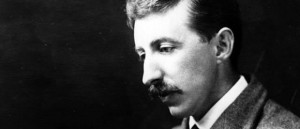 From E.M. Forster: “It isn’t possible to love and part. You will wish that it was. You can transmute love, ignore it, muddle it, but you can never pull it out of you. I know by experience that the poets are right: love is eternal.” (