
Writing Tips from Kristopher Jansma, author of Why We Came to the City

We know readers tend to be writers too, so we feature writing tips from our authors. Who better to offer advice, insight, and inspiration than the authors you admire? They’ll answer several questions about their work, share their go-to techniques and more. Now, get writing!   How would you recommend creating and getting to know your characters? More often than not I start by trying to capture an inner voice or set of actions. As an exercise, I picture characters either sitting down or standing up, and spend a full page describing them. It gives me a chance to zoom in on small but significant details of their bodies and movements; before long I’m peering into their thoughts and feelings and imagining them moving around. You don’t want to introduce a character in a static way, like a model posed for a photograph. You want a reader to meet characters who appear busy going about their lives, which have gone on long before the story began and he or she arrived to observe them. Did you always want to write? How did you start your career as an author? I wrote even before I wanted to be a writer. In early grade school my class had to write in one of those black-and-white-marbled journals every day after recess, and I would often write down things about the make-believe games that my friends and I had played outside—time spent becoming superheroes, slaying dragons, that sort of thing. One day in the fourth grade we were assigned a long-term substitute teacher because our first one had gotten sick, and this new teacher didn’t like that we were using journal time to write about “made-up stuff.” I didn’t even know what she meant by that. It was all perfectly real to me. Somehow I got nominated to take our side of the fight to the principal, and she completely surprised me by agreeing that it was important to write down the kinds of stories I loved. She compromised, giving us new journals with red covers and allowing us to write in them after we had written in the marble notebooks for five minutes. So that was that. My first schism between nonfiction and fiction, and my first moment of fighting for my art. Even then it wasn’t until I think the seventh grade that it really dawned on me that writing could be a job, that all these books I loved to read had been written by real people—and that I could someday write my own. What’s the best piece of advice you have received?  About writing? A few years ago I went to Princeton for the afternoon to read through some old unpublished stories and letters belonging to J. D. Salinger, the famous recluse. One of the letters, to his editor, was sent from either basic Army training or the Western Front. And Salinger said, of his own early stories, “I’m beginning to feel that no writer has the right to tear his characters apart if he doesn’t know how, or feel that he knows how (poor sucker) to put them together again. I’m tired . . . my God, so tired . . . of leaving them all broken on the page with just ‘The End’ written underneath.” And reading that just set something off in me. I realized that was all I knew how to do with fiction, and I immediately resolved to learn how to put them back together again. It changed everything for me. Do you ever base characters off people you know? Why or why not? I think we all do that, whether consciously or unconsciously. Often a character may emerge as a thinly veiled version of someone I know, and then through the writing process that veil grows more and more substantial until the original person is nowhere to be found anymore. The funny thing about it is that I might borrow a few details about a character from the life of a friend, and often that friend is fine—and sometimes even flattered—if he or she ever notices. But I’ll also face situations when friends come up to me and say, “Oh, this character here is totally based on X, right?” and X will be a completely different friend, someone I had never thought about consciously. And yet I can see what they mean. . . . Learn more about Why We Came to the City below.
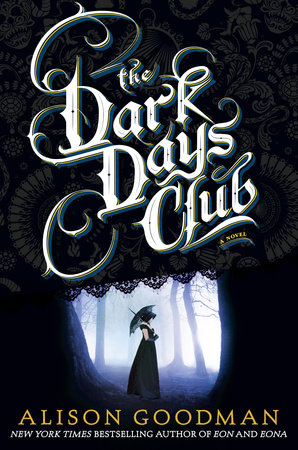
Writing Tips from Alison Goodman, author of The Dark Days Club

We know readers tend to be writers too, so we feature writing tips from our authors. Who better to offer advice, insight, and inspiration than the authors you admire? They’ll answer several questions about their work, share their go-to techniques and more. Now, get writing!   How would you recommend creating and getting to know your characters? I have a particular method that I have used for a very long time now. I call it the portal method. The first step is to think of at least three important events that have happened in your character’s past. They can be good or bad, but they have to be significant. These are the portals through which you look when you are planning a particular scene. For instance, in The Dark Days Club, my main character, Lady Helen, lost both her parents when she was ten. They drowned on a yachting trip and their bodies were never found. So out of that comes a whole slew of character traits and information, all based on what I imagine would be the psychological consequences of that event. For example, the loss makes Helen feel a sense of abandonment, it has made the idea of family very important to her, she does not like doubt, and she has grown up to be quite cautious. When it comes time to writing a scene that has a link to family – perhaps between Helen and her brother – then some of those traits would come into play. I focus the scene through that “Family/Loss” portal. It provides a base line from which to build the character’s responses, and because these are fixed events in the character’s life they provide cohesiveness to the overall characterization. After developing an idea, what is the first action you take when beginning to write? I always start by researching – many, many months of reading books about my era and searching out primary resources. As I’m doing that, I’m also creating a storyboard and scene breakdown of the plot. Then, when I get to a certain stage in that process, I start writing the first chapter to test out the voice and tone. I keep rewriting that first chapter until I have the voice and tone in place, and I have worked out most of the main plot points on the storyboard. Then off I go, writing the novel. However, that does not mean the research or the storyboarding stops; they continue throughout the whole writing process. There are always delicious new facts to discover and blend into the narrative, and, as I move forward through the manuscript, the interaction between character and plot can sometimes create shifts in the storyline that require a rethink of action sequences or scene placement. What’s the best piece of advice you have received? Every writer rewrites. The first thing that comes out of your mind may be good, but it is not finished. One of my bugbears is the notion that if something is going to be good, then it should arrive perfectly formed. That is absolute 19th century Romantic nonsense. That initial, wonderful rush of ideas is a great start, but the real work is in crafting all that excitement and energy into a meaningful emotional journey for the reader. Describe your writing style in 5 words or less. Fluid, suspenseful and slyly humorous. What are three or four books that influenced your writing, or had a profound affect on you?
  1. The Outsiders by S.E. Hinton. I was about thirteen and had been dragged along to a dinner party by my parents. While the adults ate prawn cocktails, beef stroganoff and talked politics, I took refuge in the living room to finish The Outsiders. I ended up sobbing my eyes out in my borrowed bean-bag, partly because of the sad ending but mainly due to the realization that a good deal of my devastation had been created by the terrible beauty of the book’s circular structure. That’s when I truly wanted to become a writer.
  2. These Old Shades by Georgette Heyer. Again, I was twelve or thirteen years old. My mother always gave me a book for Christmas and this one came at exactly the right moment—I was ready for well-researched history and dashing romance. I was besotted by the exciting blend of adventure, humor, and buttoned-up characters coming undone by love.       This was the beginning of my love affair with the 18th and 19th centuries, which has now come into full bloom with The Dark Days Club!
  3. If On A Winters Night A Traveller by Italo Calvino. This was one of the texts I read in college. It is a postmodern masterpiece, and has everything you’d ever want to know about creating poignant relationship triangles in fiction, all explored in beautiful prose.
Learn more about The Dark Days Club below.

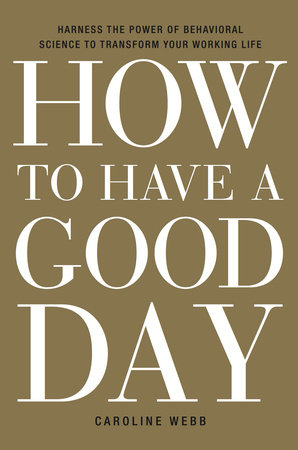
Writing Tips from Caroline Webb, author of How to Have a Good Day

We know readers tend to be writers too, so we feature writing tips from our authors. Who better to offer advice, insight, and inspiration than the authors you admire? They’ll answer several questions about their work, share their go-to techniques and more. Now, get writing!   After developing an idea, what is the first action you take when beginning to write? My writing generally weaves together three strands of content. There’s some nugget of scientific research that I think is interesting and useful – maybe a study that I’ve just read about, or something which I’ve been wanting to write about for a while. Then, I also want to be clear on the practical advice that’s implied by that scientific insight. But there’s also the story or example that illustrates the topic. And my route into a new article or chapter can be any of those three; I start with whichever piece feels easiest and most exciting to get down on paper. When it’s the anecdote, I usually focus first on scraps of vivid language that an interviewee or client has used to describe a difficult situation. For the science and the advice, I will usually write in bullet points first – what my consulting colleagues used to call a “dot-dash” – to check the flow of the argument and ideas before I start investing in the bounce and feel of the language. Is there something you do to get into a writing mood? Somewhere you go or something you do to get thinking? Absolutely. One thing that really helps me is to put on large noise-cancelling headphones. They dampen ambient noise and reduce distraction, allowing me to think more clearly. But they’ve also become something I associate with really getting into deep thinking mode. As a result, simply putting them on sends a clear signal to me that I’m about to focus on my work – making it easier to dive in. (I write about the science behind this in chapter 3 of my book, for those who are interested!) And I’ve had three writing soundtracks in recent years. There was a period where the only thing I listened to was Haydn string quartets. For a long while, I’ve worked with a playlist of rather sparse and instrumental “deep house” music. (I think the two genres have a lot in common, but that’s for a different type of interview.) But sometimes nothing but silence will do. Did you always want to write? How did you start your career as an author? I always loved writing as a kid – especially science fiction, which I imagine was a surprise for my English teachers in the 1970s – and I was editor of my college yearbook and newsletter. I drifted away from writing as I built a career in economics. But after a few years, I had a job which was as much about writing as thinking: authoring the Bank of England’s Inflation Report. This was a publication analyzing and describing the state of the economy, so the writing was dry – yet I still loved it. And I learned many things that have served me well as a non-fiction writer. For example, the publication was so influential that bad syntax in a key sentence might end up moving financial markets in the wrong direction – so I learned the value of precision and clarity, and I learned what made a sentence easy or hard to read. (We even had to put our writing through a computer program to test the reading age required to understand it.) After reconnecting with my love of writing, I took every opportunity to write in real sentences rather than relying on PowerPoint slides. And once I’d written a couple of articles for the McKinsey Quarterly, I realized that it was time to bring writing back into the center of my life. That’s when I started work on the book, writing a four-page outline of something I wouldn’t finish for another four years. What’s the best writing advice that you have received? Lynda Gratton (Professor of Management Practice at London Business School, and author of 8 successful books) told me early in the process of writing my book that I would eventually need to make it my full-time job – at least for a few months. She was right; there really does come a point where you simply have to stop doing absolutely everything else, and say “right now, I am a writer, and my job is to write.” And her advice helped me recognize when it was time to disappear into the writing bunker. Meanwhile, Matt Lieberman (neuroscience professor at UCLA and author of Social) told me to look after myself physically while writing, reminding me to see exercise as an investment in my mental and emotional sharpness. What are three or four books that influenced your writing, or had a profound affect on you? At least four books encouraged me toward writing How to Have a Good Day. Predictably Irrational, by Dan Ariely. To see such a book capture people’s imagination made me excited that behavioral economics was coming of age. Moreover, I saw that it was possible to make academically rigorous material fun and engaging. The Happiness Hypothesis by Jonathan Haidt. I loved the cross-disciplinary approach of this wise book, drawing from psychology and neuroscience and even ancient philosophy. Also, my husband wooed me with it – it was the first present he ever bought me. Your Brain at Work, by David Rock. This put neuroscience in the context of the workplace, and it was the first book that I’d seen do that. Thinking Fast and Slow, by Daniel Kahneman. It was inspiring to see that such deep scientific concepts could excite a broad general audience. It helped too that I had heard him say that he’d found it tough to write the book. Since he’s a brilliant Nobel Prize laureate, that made me feel that it was okay for me to experience the occasional rough patch! And of course, it was all worth it. (I’m sure he feels that too.) Learn about how to Have a Good Day here.

Writing Tips from Sparrow Beckett, author of To Have and To Master

We know readers tend to be writers too, so we feature writing tips from our authors. Who better to offer advice, insight, and inspiration than the authors you admire? They’ll answer several questions about their work, share their go-to techniques and more. Now, get writing!   Sparrow Beckett is the pen-name for two writers in two countries who combine forces and collaborate. Justice and Sorcha have both answered the questions below.  What writing techniques have you found most important or memorable? Justice: Someone once told me a good novel is made up of mostly strong, colorful nouns and verbs. As writers, we often hear the terms active writing versus passive writing. Filling a book with adverbs makes a story sound passive. So when I’m writing, I go for strong descriptive nouns and verbs. Is there something you do to get into a writing mood? Somewhere you go or something you do to get thinking? Sorcha: With an evil day job and a big family, I’m so busy that I’m exhilarated by every free moment to write. If I get stuck in one of my stories, I switch to one of my many others. Justice: I get inspired from all sorts of things. Sometimes a movie, another book, or even a song I hear on the radio. When I’m feeling low on inspiration, I’ll surround myself with different media and types of art. Usually something will jump out and the wheels will start turning.
Sparrow Beckett
Sparrow Beckett
Did you always want to write? How did you start your career as an author? Sorcha: I started writing a Black Beauty fanfic when I was seven. For Grade Ten English class, I wrote a novella, and then a novel for Grade Thirteen Creative Writing. My novel was so bad, that the publisher I submitted it to sent me a rejection with a blank space where my name was supposed to go. I quit writing after that. About two decades later, I started writing for fun. That was when I met Justice in an online group, and she introduced me to the modern world of publishing. Justice: I was a writer before I was a writer, if that makes any sense. Writing is just in me. It’s been a part of everything I’ve ever done, before I even realized it. So finally getting the guts to officially try writing a fiction book didn’t surprise anyone. I started by self-publishing back when it was a budding development. I learned a lot and I think it better prepared me for the traditional publishing world. What’s the best piece of advice you have received? Sorcha: Quit making excuses and write. Justice: Find an amazing crit partner or group – the harsher the better. What clichés or bad habits would you tell aspiring writers to avoid? Do you still experience them yourself? Sorcha: I think stalling out of self-doubt is the biggest bad habit to avoid. Feeling like you’ll never be as talented as your favorite author isn’t a good enough excuse to give up. You owe it to yourself to work at it. Justice: I have to agree with Sorcha. Self-doubt can be crippling and, unfortunately, something many authors, including myself, suffer from regularly. It’s hard to stay positive among rejections and brutal reviews. I have to remind myself constantly that everyone has their own journey, comparing yourself to other authors is pointless, and that giving up just isn’t an option. What are three or four books that influenced your writing, or had a profound affect on you? Sorcha: The Deed of Paksenarrion by Elizabeth Moon – The main character has an arc that fills me with hope and a sense of personal responsibility. The Tiffany Aching series by Terry Pratchett – Like most of Pratchett’s work, it shows human nature in a humorous yet poignant light. These books explore themes of power, respect, and responsibility. The Jalav series by Sharon Green – Explores an interesting example of how a woman can still be strong while submitting to organic power exchange relationships. The Steamwork Chronicles by Cari Silverwood – This series taught me to be unapologetically sexual in my work. Justice: A Hunger Like No Other by Kresley Cole – This was the first romance I ever read. Oh the things it opened my mind to… Her mix of sexiness, humor, and adventure made reading fun for me again, and started my love of paranormal romance. Revolution by Jennifer Donnelly – Wow, this book made me cry, made me think, and made me take an active interest in history. The writing and depth of emotion is beautiful and something I aspire to. Forgive Me Leonard Peacock by Matthew Quick – This book gave me permission to write honestly. It is probably the most earnest, authentic book I’ve ever read. Learn more about To Have and to Master here.

Writing Tips from Renee Rosen, author of White Collar Girl

We know readers tend to be writers too, so we feature writing tips from our authors. Who better to offer advice, insight, and inspiration than the authors you admire? They’ll answer several questions about their work, share their go-to techniques and more. Now, get writing!  renee 2Renée Rosen’s newest historical fiction novel is called White Collar Girl, and takes place in 1950’s Chicago. What writing techniques have you found most important or memorable? For me the most important part of writing is editing. But within the world of editing I’ve come to truly value the importance of the paper edit. Before I turn my books in I always do a paper edits, and if time permits, I’ll do more than one. I’ve found that my work reads very differently on paper than it does on the screen. The paper edit stage is where I’ll catch things like word echoes, continuity errors, something like a three- page chapter following a thirty-page chapter and other problematic issues. Sometimes I’ll even print the manuscript out using a different font, which helps me see it with fresh eyes. How would you recommend creating and getting to know your characters? Creating characters that come to life on the page is really one of my greatest challenges. Just like with real people you meet, some characters come to you and you feel like you’ve known them all your life while others take time to reveal themselves. When I come across the latter type, I usually start by trying to find out as much about them as possible. For every one detail I use in the book, I’ll have ten or so others floating around in my head. I might begin with something as simple as their physical description and then I’ll drill all the way down to what the inside of their closet looks like. When all those little details come together the story generally starts to write itself. The characters take over and I become the vehicle that merely delivers their tale. What’s the best piece of advice you have received? I was fortunate enough to have studied with Carol Anshaw and I’ll never forget that she used to tell us that the first draft is you telling yourself the story. Don’t worry about how sloppy or full of holes it is, just get a beginning, middle and end down on paper. Once you have that foundation you might very well go back and change every word on every page but before you can do any fine tuning, you have to first tell yourself the story. What are three or four books that influenced your writing, or had a profound affect on you? Sister Carrie by Theodore Dreiser –I think my love of Chicago history started with my first reading of this book. It made me fall in love with the city. Spoon River Anthology by Edgar Lee Masters—totally original and filled with wisdom in ever monologue. Each time I read it, I discover something new. Simple Passion by Annie Ernaux—80 of the most powerful and brutally honest pages you’ll ever read. This slender book is one I treasure. Anywhere But Here by Mona Simpson. This is such an amazing character-driven novel and when I first read it, I realized what was possible to do on the page.   Check out Rosen’s book below.

Writing Tips from Thomas Mallon, author of Finale

We know readers tend to be writers too, so we feature writing tips from our authors. Who better to offer advice, insight, and inspiration than the authors you admire? They’ll answer several questions about their work, share their go-to techniques and more. Now, get writing!  After developing an idea, what is the first action you take when beginning to write? Given the nature of historical fiction, the first thing I do is a lot of research. And that usually begins with reading old newspapers. Thanks to digitization, that’s much easier to do than it once was. Alas, also thanks to digitization, we’re creating far fewer new newspapers than before. Did you always want to write? How did you start your career as an author? I started to write a political novel (about the impeachment of a president) when I was thirteen or fourteen. By the time I got halfway through college, writing had become my serious ambition, but my own timidity drew me toward teaching and, for a while, the publication of constrained little pieces in academic journals. The best thing that happened to me early on, at the beginning of the 1980s, was becoming a semi-regular contributor to William F. Buckley, Jr.’s National Review. The 800-word book reviews I wrote for the magazine usually earned me about $150 or $200; more importantly, they forced my writing toward a greater concision and liveliness, a more personal, honest voice. All of that helped me to write A Book of One’s Own: People and Their Diaries (1984), an unexpected success (my picture in Time magazine!) that gave me the real beginnings of my career. Describe your writing style in five words or less. Fact-filled, parenthetical; judgmental; amused. Do you ever base characters off people you know? Why or why not? A historical novelist really has to use real-life figures in his work. A couple of times I’ve included, under their own names, people I’ve actually known: E.   Howard Hunt in Watergate, and my late friend Christopher Hitchens in Finale. And yes, I’ve also refracted and disguised and renamed real people in some of my other novels. I mention Mary McCarthy below; she appears as    the writer Elizabeth Wheatley in my novel Aurora 7. And Bandbox (2004), my comedy about the magazine business, is really a roman à clef that sprang from my time at Condé Nast. A writer’s whole life and acquaintance are always a part of his material. In fact, I would go so far as to say that no character in a novel has ever been made from whole cloth. What are three or four books that influenced your writing, or had a profound effect on you? At about ten or eleven I was a great devotee of Howard Pyle’s novel about knighthood, Men of Iron, although my real pleasure-reading in elementary school came from one publisher’s American-biography series. Every one of these books was, I seem to remember, 192 pages long, whether the subject was George Washington or Molly Pitcher. During junior high school I got caught up in the great excitement over the publication of Truman Capote’s In Cold Blood. Buying hardback books was beyond my allowance, and I couldn’t wait for a public library copy, so I secured the book (was it for fifteen cents a day?) from the little “rental library” on the main street of my town. When my ninth-grade English teacher saw me with an early copy, she was jealous. Mary McCarthy’s volume of essays, On the Contrary: Articles of Belief, 1946-1961, is the book that really made me want to become a writer. I read it in 1971, at college, and the book’s combination of literary criticism, political essays, memoir and travel writing suggested the whole range of genres I might try myself. I read all of McCarthy’s fiction, too. She became the subject of my undergraduate thesis, then later a friend and mentor. To this day I aspire to the clarity and force of her style, even though my own is nothing like hers.

Writing Tips from David Jaher, author of “The Witch of Lime Street”

We know readers tend to be writers too, so we feature writing tips from our authors. Who better to offer advice, insight, and inspiration than the authors you admire? They’ll answer several questions about their work, share their go-to techniques and more. Now, get writing!  After developing an idea, what is the first action you take when beginning to write? Research everything. I’m a nonfiction writer so after conceiving a chapter, I like to have every pertinent date and quote at hand so that there is no distraction—no source material to obtain— from staying in the flow. Is there something you do to get into a writing mood? Somewhere you go or something you do to get thinking? Many of my favorite authors were alcoholics, but I’ve always thrived on healthier forms of prewriting stimulation—bike riding, running, yoga. Having a clear head and listening to music puts me in the writing mood as does being just a little tired. Maybe it was because I was writing about ghosts and magic, but I always felt most imaginative at night. And I usually do my best work at home. Did you always want to write? How did you start your career as an author? I attended Graduate Film School at NYU and anticipated a career in film production. Later I did have a book idea and queried a literary agent, Tina Bennett, on a proposal related to astrology, which I was practicing professionally while trying to get my film projects off the ground. In the course of our communication, I also mentioned a screenplay I was developing about Houdini’s rivalry with a controversial Jazz age medium. She was thrilled with that story, which became the basis for The Witch of Lime Street, my first book. What’s the best piece of advice you have received? “Every word should mean something.” What clichés or bad habits would you tell aspiring writers to avoid? Do you still experience them yourself? Any serious writer should read everything, particularly by those authors with whom you identify, but William Faulkner once said of Shelby Foote that he only became a successful writer when he stopped trying to be Faulkner and started being Foote. Read more about The Witch of Lime Street here.

Writing Tips from Miranda Beverly-Whittemore, author of Bittersweet

We know readers tend to be writers too, in this feature, we’ll share writing tips from our authors. Who better to offer advice, insight, and inspiration than the authors you admire? They’ll answer several questions about their work, share their go-to techniques and more. Now, get writing! How would you recommend creating and getting to know your characters? I believe that story comes from character; I have to know my characters inside and out in order to write a novel that’s halfway worth reading. That said, I’m also a big fan of trusting my gut. When I was starting my novel Bittersweet, Mabel Dagmar began speaking to me very early in the game, long before I knew how untrustworthy she is or exactly what had happened over the course of the summer in which the book takes place. I took dictation for about fifty pages, until I knew she had a hold on me; then I went back to the drawing board and really got to know her by thinking about her all the time, filling out a character sheet on her, and imagining who and what she would come in contact with that would challenge her. Once I know a character well, I’m able to ask what she wants, deep down, in her core. Everyone wants something. A novelist’s trick is to write a story that aligns many wants to support a thematic idea, without it looking like that’s what I’m doing. As plot grows, it’s valuable to understand whether a character’s desires align with that central idea; if they don’t, out she goes. Bittersweet is the story of Mabel getting what she wants, plain and simple, but it took me a long time to understand what that was and how the book would tell that story. I’m also a big believer in casting (in my mind) a real actor (preferably someone I’ve seen on screen in a number of different roles) to play each of my main characters. That way, when I’m stumped about how a character would drink a cup of coffee or walk down the street, it’s easy to see her with my own eyes (plus, then I get to call watching a movie “research,” which is just one of the thousand reasons I love my job). And revision is my best friend, because I can stretch the limits of my characters and then pull back in the next draft after I’ve learned how they would or wouldn’t react. After developing an idea, what is the first action you take when beginning to write? I need to write about fifty pages in order to understand whether the story I’ve imagined actually has legs; if I can’t make fifty pages work, then there’s no way I’ll be able to compose four hundred. In these first fifty I’m looking for moments that crack me up, that make me afraid, that feel risky, that open my up to questions about the book I didn’t know I had when I first started it. If I don’t discover something new in those early weeks of work, then I know I haven’t found my next book. Is there something you do to get into a writing mood? Somewhere you go or something you do to get thinking? I used to be much more precious about my writing rituals; becoming a mother definitely cured me of that! But strangely (or maybe not so strangely) my most productive two years of creative work to date came right after giving birth: I wrote a novel and two screenplays, and produced a short film. I think the secret lies in the preciousness of childcare; if I only have two hours to work in a day, I’m not going to squander it, whereas in the unscheduled days before my son was born, it was easy to while away the hours. I’m lucky to have both a home office and a great local café (where I wrote most of Bittersweet). But if I’m alone at home, I’m just as likely to spread out on the dining room table as I am on my son’s bottom bunk. I’m currently in the final push on a novel called June. I’m writing from a pretty strict chapter outline that I’ve developed over the course of the past year. When I sit down to write on a given day, I use this outline as a roadmap. Its signposts and landmarks are the actions and beats I know need to be accomplished in the scene at hand, even if I don’t know exactly how I’ll get from A to B. The fun lies in discovering. Did you always want to write? How did you start your career as an author? As a kid I loved theater. In my childhood out in Oregon, I went to this amazing camp where we did Shakespeare every summer. As a result, without trying to ingrain the five-act structure inside myself, it is. Also, I grew up advocating for the characters I was inhabiting, as actors are wont to do. Both traits have served me well as a writer. Of course, I thought I wanted to be an actor, but in college I realized I’d have a lot more power (and probably be just as poor) in the writing life. I wrote a creative thesis in college. It was the first time I’d written anything longer than twenty pages, and I just fell in love. I realized I had it in me to create whole worlds. But I didn’t know if this could actually be my job until I was working at the Unterberg Poetry Center at the 92nd Street Y and met people like Joyce Carol Oates and Philip Roth and José Saramago and Saul Bellow, and saw a more direct connection between the books I loved and the people who made them. While I was at the Y, I wrote The Effects of Light, which was to become my first published novel; got an agent; and then revised it for her for a year before we sold it. What’s the best piece of advice you have received? My parents were great believers in my sister and me pursuing creative fields. What they gave us wasn’t advice as much as it was philosophy. In my sister’s forthcoming documentary, my mom says “You know who you are by what you make,” and this idea still very much drives who I am. I’ve learned that I’m a lot happier when I’m working on a novel than when I’m not, mainly because when I’m writing a novel, I’m my most “me”—I recognize myself. I see this in my six-year-old too; he’s a lot happier when he’s engaged in a big, sweeping art project. Maybe that’s just him/us? Maybe that’s a trait many of us have as children, and we’re taught not to value it (because it’s not quantifiable or easily applied to a business model), so when we grow up, we leave it behind? A few months ago I was with my family up in the cabin in Vermont that inspired Bittersweet, and I looked around the main room: my father was transcribing his field notes from West Africa for use in the book he’s writing; my mother was working on her book series; my sister was working on her screenplay; my son was meticulously decorating a tall stack of valentines; and I was writing June. I often meet fellow parents who tell me they’re concerned because their child wants to become a writer or an artist. Yes, it can be a bumpy path, but it’s incredibly rewarding in some pretty fundamental ways that we don’t always honor culturally. I wish for the children of those parents to get to be given the gift I was, of belief and support. For all its hardship, I wouldn’t give up my career for anything! Read more about Miranda Beverly-Whittemore’s book, Bittersweet.

Writing Tips from Jules Moulin, author of Ally Hughes Has Sex Sometimes

We know readers tend to be writers too, so we feature writing tips from our authors. Who better to offer advice, insight, and inspiration than the authors you admire? They’ll answer several questions about their work, share their go-to techniques and more. Now, get writing!  What writing techniques have you found most important or memorable? For me, learning different ways to structure a story was crucial, and still is! I’m always on the lookout for great structuring tips. While outlining, in order to ensure causal plotting, I use the phrase “WHICH CAUSED” between scenes. For example: “The queen caught a cold. The queen died. The king died.” This isn’t causal plotting. But “The queen caught a cold.” WHICH CAUSED “The queen to die of that cold.” WHICH CAUSED “The king to die of heartbreak.” This helps me to make sure that one moment causes the next moment. How would you recommend creating and getting to know your characters? I have a background in journalism, so I recommend reporting — even for fiction. For Ally Hughes Has Sex Sometimes, I called a slew of Sex and Gender professors (not unlike my main character Ally) and interviewed them, asking questions about anything and everything including their jobs, daily schedules, likes and dislikes, opinions on current events, etc. After developing an idea, what is the first action you take when beginning to write? I actually do everything at once: I start writing scenes that I’m 90 percent sure will end up in the story, I start researching, and I start outlining. And most importantly, I start imagining the ending so that I can start planning the beginning. My outline is fluid and evolving — I go back and make changes to my outline throughout the writing process so that I complete the outline only a short while before I finish the book. Is there something you do to get into a writing mood? Somewhere you go or something you do to get thinking? Yes! I work in cafes mostly, where I have endless access to coffee and WiFi, and if I have serious, important writing to do, I plug into my earphones and listen to the Dave Matthews Band! Did you always want to write? How did you start your career as an author? No. I wanted to be an actress. I actually still do, but I’m too chicken. But everything I know about writing came from years and years of studying acting. I studied everywhere, with everyone; learned how to break down a scene, how to create and motivate character, how to write dialogue, etc. What’s the best piece of advice you have received? That you should try to write every day, even if it’s just for ten or twenty minutes. I don’t do this — but every writer I admire gives this advice and says they heed it! What clichés or bad habits would you tell aspiring writers to avoid? Do you still experience them yourself? My worst habit is not writing daily, for sure. I’m pretty good about not using adverbs. Adverbs are deadly, unless you’re J.K. Rowling, who uses them all the time, so go figure… Read more about Ally Hughes Has Sex Sometimes here.

Writing Tips From Dinty W. Moore, author of Dear Mister Essay Writer Guy

We know readers tend to be writers too, so we feature writing tips from our authors. Who better to offer advice, insight, and inspiration than the authors you admire? They’ll answer several questions about their work, share their go-to techniques and more. Now, get writing!  What writing techniques have you found most important or memorable? There is no secret to my technique beyond revising again and again and again, both for meaning and for the rhythm and sound. As many other writes have confessed, my early drafts are sloppy, flat, confused, and disappointing. Four or five drafts into a project, and maybe I begin to see what is there. The difference, in my mind, between writers who are successful in finding an audience and those who struggle, is when and where in the revision process a writer gives up and settles for “good enough.” Learn to be just a bit tougher on your own work than the toughest editor you have worked with and you’ll find that editors suddenly love your work. How would you recommend creating and getting to know your characters? Though I started as a fiction writer, for the last fifteen years I’ve focused on what is called creative nonfiction, or literary nonfiction. But I’m glad this question is here, because it gives me the chance to point out that even in memoir, even in a piece of literary journalism, the people on the page function as “characters.” They are real people, not imagined, but the reader has never met them, so you have to build these individuals up just as a novelists builds up an imaginary character: let us see them cross the room, let us see them fidget, let us hear the peculiarities of their speech, let us in on what seems important to them. People are contradictory and enormously complex. Try to show a glint of that. After developing an idea, what is the first action you take when beginning to write? I check my e-mail, look out the window, get up for more coffee, linger near the refrigerator, jump up onto the internet to find news of Donald Trump’s latest insanity, and then berate myself for being such a procrastinator. Is there something you do to get into a writing mood? Somewhere you go or something you do to get thinking? No. It is a job. The way I get into writing is to say, “time to get to work.” Did you always want to write? I always wanted to write, and penned silly plays and stories even in second grade, but I grew up lower middle class, my dad was a car mechanic, and I barely knew people who read books much less people who wrote them, so it wasn’t until I neared the age of 30, having washed out of four or five other career pursuits, that I finally decided, let’s try to do this. Let’s try to write a book. What’s the best piece of advice you have received? The novelist Vance Bourjaily once told me that he doesn’t even try to write the first chapter of a novel until he has written a complete draft from somewhere in the second chapter to the end. Only then does he know what has to go at the start. Now this may or may not be a useful technique, but it made clear to me that writing a book – or an essay, or a story, or a poem – is an act of discovery. You don’t sit down and say what you want to say. You sit down with questions, see where they lead you, follow them into unexpected territory, and then many drafts later go back and fix the writing so it all points in the same direction. Describe your writing style in 5 words or less. Sentences are fascinating puzzles. Read more about Dear Mister Essay Writer Guy here.