Tag Archives: historical fiction

Writing Tips from Donald Ray Pollock, author of The Heavenly Table

We know readers tend to be writers too, so we feature writing tips from our authors. Who better to offer advice, insight, and inspiration than the authors you admire? They’ll answer several questions about their work, share their go-to techniques and more. Now, get writing!  Is there something you do to get into a writing mood? Somewhere you go or something you do? Yes, I go to my “office” in the backyard, a former garden shed that I fixed up when we bought the house we’re living in now (unfortunately, I have a difficult time blocking out the world, so writing in a “public” place is impossible for me). There is no phone or internet, just a table and chair and some reference books along with a laptop and a typewriter. The first thing I do to get started is pour a cup of coffee from a thermos and light a cigarette. Believe me, I’ve tried, but I can’t do it any other way. What’s the best piece of advice you ever received? Learn to sit in the chair for a designated period of time, regardless of whether anything is “happening” or not. I think this is the main thing that defeats many aspiring writers, and it’s easy for me to see why.   There have been many, many days when I’d rather be doing anything else (it’s the only time when washing windows seems like a fantastic idea). But I almost always force myself to stay put because nothing will ever happen unless I’m sitting there to help make it happen.   It might be a little easier for me because I’m the type of person who does better at writing and everything else if I’m living on a schedule, but it’s still hard sometimes.  What writing techniques have you found most important? When I decided to learn how to write short stories, I didn’t know anything and I struggled for quite a while without making much progress. Then I read an interview with a writer who said she learned to write by copying out other people’s stuff. For some reason, that made sense to me, and I began typing out short stories by Hemingway, Cheever, Yates, Johnson, O’Connor, on and on. I did approximately one story a week for maybe 18 months and it got me so much “closer” to seeing how they did things like writing dialogue, making transitions, etc. It could be that it worked for me because I’m not a very good reader, but it definitely helped me start figuring some things out. On occasion, when I’m having a bad day, I will still type out a paragraph or two from somebody else. What are three or four books that influenced your writing, or had a profound effect on you? Blood Meridian by Cormac McCarthy is the best novel I’ve ever read. Unfortunately, reading it also makes me realize how worthless my own work is. Denis Johnson’s Jesus’ Son. I copied every story out of that book when I was starting out, and it helped push me toward the idea of developing, for lack of a better term, my own “voice.”   Also, Earl Thompson’s A Garden of Sand, which I came across when I was maybe sixteen and have never forgotten. I’ve mentioned it before in interviews as being the first book I ever read that contained characters similar to some of the people I grew up around.   Of course, you have to understand, my reading was somewhat limited in those days and I probably hadn’t even heard of people like Faulkner and O’Connor yet. Learn more about the book below:

Anna Bradley, author of A Season of Ruin on her favorite Scottish Romance novels

One Hot Scot, Please What do you get when you take a wicked smolder, a sexy Scottish burr, and an unruly mass of tousled red curls and roll it up in a kilt? This is not a trick question. Every romance-lover with a kilt fetish knows Jamie Fraser is the hottest thing to roam the Highlands since Mel Gibson’s William Wallace. But even though he may have seduced us all with that muscled chest and the adorable way he says Sassenach, we were all onto the sexy Scot well before Jamie swept us off our feet. Readers have been clamoring for Celts for years, and romance writers have obliged with a clans’ worth of kilted heroes, from Rowan Keats’ brawny Bran MacLean in What a Lass Wants to Julie Garwood’s sexy Alec Kincaid in The Bride. And that’s just the tip of the crag. There’s a hot Scot out there for every reader. How about a mad chase across the moors with Tracy Ann Warren’s Daniel MacKinnon, the devastating laird in Her Highness and the Highlander? If you fancy some espionage, there’s Teri Brisbin’s fearless William de Brus, the daring knight who takes on the forces of good and evil and earns the everlasting love of his fire-magic heroine in Rising Fire. Is time-travelling romance your thing? Take it old school with Lynn Kurland’s hero Jake Kilchurn in Dreams of Stardust. My personal weakness is mad, decadent Scots with dark scandals in their past. Jennifer Ashley’s Lord Ian from The Madness of Lord Ian Mackenzie is one of my all-time favorite Scottish heroes, but all of the Mackenzie brothers make ruination look enticing. Now that’s my idea of a clan! Lovers and Fighters Whether they’re mad earls, spies, ghost-hunters or a princess’s bodyguard, the Scottish hero is a man of action. He doesn’t just wear that sword because it looks great with his kilt. He’s a lover and a fighter, and that’s a hero we can get behind. And let’s be honest—who doesn’t want to get behind a man wearing a kilt? But if it takes a real man to pull off a skirt, it also takes a real heroine to pull a skirt off her Scot. Every romance novel needs an unforgettable hero, but it also needs a remarkable heroine to keep him in line, even if it means she has to blacken his eye, as Hannah Howard does in Kimberly Bell’s A Convenient Engagement (if you haven’t read this one yet, a hint: he deserves it!). It takes a strong-willed lass to tame these pirates of the Highlands, but the Scottish romance heroine can handle her man. Don’t Mess with Scotland But the hot heroes are only part of the recipe for a sizzling Scottish historical. These epic love stories are set against a backdrop of sweeping moors, rugged crags and crumbling stone castles. In other words, Scotland herself is as untamed as her heroes. The wildly romantic settings are a perfect fit for tales of enduring love, and our warrior rebels give their country the same fierce love they give their heroines. Scotland may have a few downsides (damp weather and mashed turnips and haggis come to mind), but it’s difficult to focus on her shortcomings when there’s a plaid-clad hero waiting to share sips of whiskey from his flask and give you a peek up his kilt. Celts in Kilts Who could have imagined a few yards of thick wool could be so sexy? But though the kilt may be to women what black lace lingerie is to men, it isn’t the only thing at the heart of our fascination with Scottish heroes. Of course, it doesn’t hurt that a blessedly bare-assed Jamie Fraser proved once and for all in Season 1 of Outlander that a true Scot really does go commando, but our lust for Celts goes deeper than that. The Scottish clans are the ultimate alpha male group, and the Scottish romance novel hero is the wicked London rake, the arrogant CEO, and the ferocious Navy Seal all rolled into one tempting package. And if that package happens to be wrapped in a kilt? Well, so much the better. Anna Bradley writes sexy, steamy Regency romance. Her book A Season of Ruin, the second book in the Sutherland Scandals series, is out from Berkley on August 2, 2016.  

Writing Tips from Allison Amend, author of Enchanted Islands

We know readers tend to be writers too, so we feature writing tips from our authors. Who better to offer advice, insight, and inspiration than the authors you admire? They’ll answer several questions about their work, share their go-to techniques and more. Now, get writing! 

What’s the best piece of advice you have received?

My graduate professor Frank Conroy said that we only get three exclamations points in our whole career! And I just used one. He meant, of course, that the prose itself should convey emphasis. He also stressed that habit is a writer’s best weapon. I’m still working on that one.

What clichés or bad habits would you tell aspiring writers to avoid? Do you still experience them yourself?

I am terribly guilty of what I call “three adjective syndrome” wherein I describe something with no fewer than three adjectives. Usually, that means the third adjective is the one I want, and the first two are just approximations until I get there, but I still have to go back and cull the first two adjectives from the pack. Relatedly, my first drafts have so many clichés it’s like they are going out of style (get it?). I think that’s fine for a first draft. They’re just marking places where I need to go back and think of better comparisons, so I try not to judge myself too harshly.

 Do you ever base characters off people you know? Why or why not?

 All characters and no characters are based on people I know. If fiction comes from imagination, then all people contribute to the pool from which I draw.  I like to borrow traits and sayings from everyone, but I have never attempted to reproduce on the page a person I know in real life. Even when I do “heavily borrow” from a person, quoting something he or she actually said, he/she never recognizes herself. That said, my father thinks he’s every character in my books.

What are three or four books that influenced your writing, or had a profound affect on you?

One Hundred Years of Solitude

Madame Bovary

A Visit From the Goon Squad

The Handmaid’s Tale

Learn more about the book below:

From the Editor’s Desk: Jake Morrissey, Executive Editor, on Three-Martini Lunch by Suzanne Rindell

Editors get very passionate about books they work on – the Editor’s Desk series is his or her place to write in-depth about what makes a certain title special. Get the real inside-scoop on how books are shaped by the people who know them best. The best present an author can give an editor is the gift of surprise. Editors spend their days reading a lot of manuscripts that don’t tell them anything new. So reading a story about a world you thought you understood framed in an unexpected way that prompts you to think differently about it, that’s hitting the publishing jackpot. Which is what I did when Three-Martini Lunch came across my desk. In this terrific novel, Suzanne Rindell delves into a world I knew something about – book publishing – but sets her story in the late 1950s, which was when big changes were about to take place. I thought I had a decent grasp of the era. I’m familiar with two other iconic New York stories from around that time: Rona Jaffe’s classic novel (and eventual movie) The Best of Everything and the television show Mad Men. In both of those, New York City is portrayed as one of the places to be in the mid-20th century. If you know anything about either The Best of Everything or Mad Men – or even Alfred Hitchcock’s 1959 movie North by Northwest – you see a New York that’s sleeker, cleaner, less crowded than it is today. And the roles of men and women were as clearly defined then as their ambitions: Success for men meant career and advancement; success for women marriage and family. In Three-Martini Lunch, Suzanne Rindell peers beyond that mid-century mindset and explores the lives and worlds of Miles, Cliff and Eden, three young people struggling to gain a toehold in New York and hoping that publishing is the way to do that. The lives they lead are a far cry from the expense-account lunches and pristine suburban enclaves of the publishing elite. These young people are drawn to Greenwich Village and its emerging beatnik culture, with its dark and smoke-filled bars, jazz clubs, and poetry readings. And they struggle to stretch their meager bank balances by living in cramped, ramshackle apartments and having just enough money for food and beer but not always both. Suzanne gives her characters fascinating opportunities to pursue their individual ambitions and indulge their temptations. Even more compelling, she shows readers how the choices they make to achieve their goals changes them. I’m not giving anything away when I say that what you think of Miles, Cliff, and Eden at the beginning of Three-Martini Lunch will not be what you think of them at the end. As I followed the characters’ journeys through successive drafts of the novel, I found myself reassessing my own ideas about what was possible in publishing, in New York, and in America during that time. It was an era on the cusp of upheaval and turmoil, and it’s that change that Suzanne Rindell explores so effectively – and so surprisingly – in Three-Martini Lunch. Which is one of the highest compliments I can pay. Learn more about Three-Martini Lunch below!

Deb Garrison, Senior Editor at Pantheon, on The Stargazer’s Sister by Carrie Brown

The Stargazer’s Sister, Carrie Brown’s novel based on the life of Caroline (Lina) Herschel, the sister of the great 19th century astronomer William Herschel, and a noted astronomer herself, is my third project with Carrie and the first time we’ve worked on a historical novel together. In many respects this felt different, because of Carrie’s desire to be loyal to a life about which there is much on record—Lina Herschel has been the subject of biographies, alongside her brother—and to the actual stargazing they conducted. Carrie’s acknowledgments include a professor of physics and graduate students in the field, who helped her understand the mathematics of the brother-sister duo and the skies they observed with revolutionary results. Their success was due to, among other factors, William’s single-minded passion to build a telescope bigger than seemed possible—a wonderful episode in the novel where we see how truly remarkable it is when science is in the making: there are people who think of things that no one has thought of before and find ways to carry out their vision, despite the skepticism that surrounds them. I was awed by the world Carrie made vivid to me and at the same time, a good litmus test for the casual reader who may not have any particular interest in chasing comets but who cares deeply about women’s lives. Carrie’s job was to be historically accurate but to also help us understand the wonder of who Lina was—to invent a voice for her, and to create living episodes for this budding feminist. Lina was a career woman so much before her time that it seems ludicrous to use the term; she had a vocation, and made major sacrifices for it. She also sacrificed much to be by her brother’s side, to run his household in Bath, cooking and cleaning and keeping accounts for a thriving scientific enterprise that took place quite literally in the siblings’ backyard. As Carrie shows us, Lina had an unwavering if complex loyalty to William, who saved her from a life of misery at the hands of her aging and unhappy mother in Hanover, Germany. Because Lina was scarred and her growth stunted by typhus in her youth, she was not suitable to be married off; William recognized Lina’s superior intellectual gifts, paying for the ongoing care of his mother in order to free Lina from imprisonment as her caretaker and drudge-mate forever. What ensues is that she became his own caretaker and drudge-mate, yet also the necessary enabler of his genius—one mathematically gifted enough to work out the calculations needed to record what he sees in the skies during their obsessive and sometimes bone-chilling nightly observations. In The Stargazer’s Sister, Carrie moves the reader with a grace and insight similar to that of her previous Pantheon titles, The Rope Walk, about a ten-year-old girl losing innocence and discovering adult fallibility, and The Last First Day, about the wife of a beloved prep school headmaster. Whether historical or not, her novels expose the tenderness and uncertainty of female strength as it comes into being. Her interest in the female psyche and how it develops, is revealed to its bearer, and is bodied forth in true acts in the world, hovers between the lines throughout her work. Without caring especially for what shines in the sky (though Carrie does beautifully with the vastness of heaven, its treasures suddenly near to the eye for the first time in history), a reader can be fully riveted by Lina’s story – that of a girl with a curious and potent brain becoming a woman by following her entirely unique path. I am delighted to read the excellent reviews so far for this winning novel! Learn more about the book below!

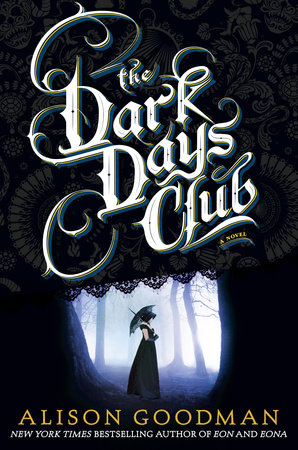
Writing Tips from Alison Goodman, author of The Dark Days Club

We know readers tend to be writers too, so we feature writing tips from our authors. Who better to offer advice, insight, and inspiration than the authors you admire? They’ll answer several questions about their work, share their go-to techniques and more. Now, get writing!   How would you recommend creating and getting to know your characters? I have a particular method that I have used for a very long time now. I call it the portal method. The first step is to think of at least three important events that have happened in your character’s past. They can be good or bad, but they have to be significant. These are the portals through which you look when you are planning a particular scene. For instance, in The Dark Days Club, my main character, Lady Helen, lost both her parents when she was ten. They drowned on a yachting trip and their bodies were never found. So out of that comes a whole slew of character traits and information, all based on what I imagine would be the psychological consequences of that event. For example, the loss makes Helen feel a sense of abandonment, it has made the idea of family very important to her, she does not like doubt, and she has grown up to be quite cautious. When it comes time to writing a scene that has a link to family – perhaps between Helen and her brother – then some of those traits would come into play. I focus the scene through that “Family/Loss” portal. It provides a base line from which to build the character’s responses, and because these are fixed events in the character’s life they provide cohesiveness to the overall characterization. After developing an idea, what is the first action you take when beginning to write? I always start by researching – many, many months of reading books about my era and searching out primary resources. As I’m doing that, I’m also creating a storyboard and scene breakdown of the plot. Then, when I get to a certain stage in that process, I start writing the first chapter to test out the voice and tone. I keep rewriting that first chapter until I have the voice and tone in place, and I have worked out most of the main plot points on the storyboard. Then off I go, writing the novel. However, that does not mean the research or the storyboarding stops; they continue throughout the whole writing process. There are always delicious new facts to discover and blend into the narrative, and, as I move forward through the manuscript, the interaction between character and plot can sometimes create shifts in the storyline that require a rethink of action sequences or scene placement. What’s the best piece of advice you have received? Every writer rewrites. The first thing that comes out of your mind may be good, but it is not finished. One of my bugbears is the notion that if something is going to be good, then it should arrive perfectly formed. That is absolute 19th century Romantic nonsense. That initial, wonderful rush of ideas is a great start, but the real work is in crafting all that excitement and energy into a meaningful emotional journey for the reader. Describe your writing style in 5 words or less. Fluid, suspenseful and slyly humorous. What are three or four books that influenced your writing, or had a profound affect on you?
  1. The Outsiders by S.E. Hinton. I was about thirteen and had been dragged along to a dinner party by my parents. While the adults ate prawn cocktails, beef stroganoff and talked politics, I took refuge in the living room to finish The Outsiders. I ended up sobbing my eyes out in my borrowed bean-bag, partly because of the sad ending but mainly due to the realization that a good deal of my devastation had been created by the terrible beauty of the book’s circular structure. That’s when I truly wanted to become a writer.
  2. These Old Shades by Georgette Heyer. Again, I was twelve or thirteen years old. My mother always gave me a book for Christmas and this one came at exactly the right moment—I was ready for well-researched history and dashing romance. I was besotted by the exciting blend of adventure, humor, and buttoned-up characters coming undone by love.       This was the beginning of my love affair with the 18th and 19th centuries, which has now come into full bloom with The Dark Days Club!
  3. If On A Winters Night A Traveller by Italo Calvino. This was one of the texts I read in college. It is a postmodern masterpiece, and has everything you’d ever want to know about creating poignant relationship triangles in fiction, all explored in beautiful prose.
Learn more about The Dark Days Club below.