
Tag Archives: nyc

Writing Tips from Jillian Cantor, author of The Hours Count

We know readers tend to be writers too, so we feature writing tips from our authors. Who better to offer advice, insight, and inspiration than the authors you admire? They’ll answer several questions about their work, share their go-to techniques and more. Now, get writing! 

How would you recommend creating and getting to know your characters? The absolute first thing I do is decide my main characters’ names. I feel like I need to know someone’s name before I can start to know him or her. My favorite place to figure out first names is the Social Security popular baby names website, where you can view name popularity by birth year (back to 1879) to see what common and (uncommon) names were in the year your character was born. After I decide names, I’ll start to make notes of other things, like birthdays/age or relationships to other characters, quirks, where a character lives, or things he/she likes or dislikes. But I start drafting pretty soon into this process. I mostly learn and get to really know my characters as I’m writing the first draft, thinking about what they do and how they react and speak when I put them in different situations. So I think the best way I get to know my characters is to write them. By the time I get to the end of the first draft, they’re often different than what I started with (and I know them much better). But then I go back and revise. After developing an idea, what is the first action you take when beginning to write? The first line of novel is really important. It sets the tone for the entire book. I want it to show what the book is ultimately about, but also to be interesting and hook the reader. When I first start thinking about and developing an idea I always start thinking about first lines. I jot down ideas, often for weeks or months. But, I don’t wait for the perfect first line before I start drafting a book. I begin with the first one that comes to me and then I keep writing from there to get my first draft going. So just the act of getting words and ideas down on the page is the most important action I take in order to actually start writing. I set a goal for myself – usually 3-5 pages a day – and I make myself sit down and write something, make some progress in the draft, even if it’s ultimately terrible and will all be changed in revision. Most of the time the first line that appears in the final draft of the book is not at all what I started with. I keep thinking on that first line, even as I keep writing the first draft. Usually I don’t understand enough about the story myself until I finish or get most of the way through a first draft. So I start writing at the beginning, but 9 times out of 10 that beginning changes by the time I make it to the end! Is there something you do to get into a writing mood? Somewhere you go or something you do to get thinking? I always write at home, and I need quiet to write. I negotiate my writing schedule around my kids’ schedules so I usually write while my kids are at school during weekdays, or very early in the mornings on the weekends or during the summer when my kids are home – really, whenever I can find uninterrupted quiet each day. I have an office in my house where I can shut the door, and I do write there, but when no one else is home I also write at my kitchen table. I like to drink coffee while I write, and that always helps to get me thinking. Or when I get stuck, I’ll exercise. Taking a long walk, run, or hike, often helps me work through a plot a point I was stuck on or figure out a problem in my story. What’s the best piece of advice you have received? The best advice, and I got this from a writing professor in grad school, is simply, “butt in chair.” As in, just sit down and force yourself to write something, no matter what it is or how terrible you think it is. The hardest part is making yourself sit down to do it. So I don’t let myself make excuses – I put my butt in the chair every morning and write something. What are three or four books that influenced your writing, or had a profound effect on you? I read Bird By Bird by Anne Lamott in the first fiction writing class I took, and I still have a copy on the shelf in my office. I love what she writes about first drafts and I feel like it’s still important to give myself permission to write something terrible the first time around as long as I write something. I’m a big believer in the importance of revision! Black and Blue by Anna Quindlen is one of my favorite novels, and the first I read by her. I come back to it, and her novels, again and again, because I feel like I learn so much about sympathetic character development from her. The Handmaid’s Tale by Margaret Atwood, which I first read in college, always makes me think about writing characters in a world different from our own today (which is applicable for writing historical fiction as well) and the fact that characters still need to first be inherently human and relatable, no matter how different their world is from the one we know.

Learn more about the book below!

From the Editor’s Desk: Scott Moyer, VP & Publisher of the Penguin Press on The Way to the Spring by Ben Ehrenreich

Editors get very passionate about books they work on – the Editor’s Desk series is his or her place to write in-depth about what makes a certain title special. Get the real inside-scoop on how books are shaped by the people who know them best.

To publish a book about Palestinian lives in the West Bank is to take part in a fiercely contested debate, whether you like it or not.  It’s a debate that’s become a dialogue of the deaf, and it can seem too complicated and unpleasant to pay too much attention to.  I didn’t come to this book out of some sense of advocacy, in particular, nor frankly would I have wanted to: there are enough shrilly partisan books out there, for the most part preaching to the choir.  But what I did and do feel, stubbornly, is that nothing human should be alien to us, and that if a great journalist, which is to say a great observer and listener, someone with a great head and heart, really goes there and stays there, then we ought to pay attention.  And Ben Ehrenreich is a great journalist.  The contact high from his talent is exhilarating. 

He’s also very brave. Show us the extreme challenges of life in a public housing project in the South Bronx, or in a Mumbai slum, and it’s all good; you get roses thrown at your feet.  But the West Bank is under Israeli military occupation, of course, and has been for a very long time, and so if you write a clear and honest human account of life for ordinary Palestinians, then you can be accused of being “anti-Israel” , or worse, and you find yourself under assault, or at least greeted with uncomfortable silence.  In fact, Ben Ehrenreich is no more anti-Israel than someone writing about life in Northern Ireland under British occupation was by definition anti-English.  If you bring to light stories that depict inhumane situations, and thereby create pressure to improve them, are you “anti” the country in which the inhumane situations exist or “pro” that country? 

Anyway, I am making this book sound shrill itself, which is precisely what it is not.  Under the spell of the storytelling, we find ourselves in the shoes of a group of wonderfully vivid and disparate characters, united by the struggle to live decent lives.  What I think was most shocking to me was how openly the enemies of the Palestinian presence in the West Bank – the far right-wing Israeli settlers – admit to having an eliminationism agenda: their stated goal is to drive all Palestinians out of the West Bank and take it over completely – ethnic cleansing on the installment plan. And their means of achieving that is to make life unbearable for the Palestinians. 

Ben Ehrenreich is a powerful witness to all this; he spent several years in the West Bank, all told, and came to know these communities intimately.  There’s sadness and heartbreak in this book, but there’s also laughter and affirmation.  But there’s no escaping the fact that this shows us a situation that has become very extreme, even almost unimaginable, and so I think however uncomfortable it makes us, it’s worth our whole-hearted support.  This isn’t a dogged or prescriptive polemic, it is a work of art; by immersing us in these lives, these stories, it places us as readers right on the horns of the dilemma.  There’s no easy way out, for anyone, but the more we bring this world into our consciousness, the more human we will be – and the more honest we will be with each other about the consequences of our own inaction.

Learn more about The Way to the Spring below:

From the Editor’s Desk: Peter Gethers, President, Random House Studio and Senior Vice President, Editor at Large Penguin Random House on Sweetbitter by Stephanie Danler

Editors get very passionate about books they work on – the Editor’s Desk series is his or her place to write in-depth about what makes a certain title special. Get the real inside-scoop on how books are shaped by the people who know them best. There are several things that are most thrilling to a book editor. First and foremost is the discovery of true talent. Everything else extends from that. Next on the list is when other people throughout the company respond to that talent positively and excitedly. When strong enough, that response not only becomes electric, it becomes unstoppable. At its most exciting it becomes a tidal wave of appreciation for a book or a writer. Next, of course, is the validation that comes from a wider audience – The bookstore buyers, managers and sales people and then, finally, actual real people who make the final judgment on the book. Over the course of my lengthy career, I have brought in a lot of great talent and some major stars. That is satisfying in its own right. But it does not compare to the discovery of a writer who is fresh, unknown, who is to be revealed. I have never seen a response to an unknown talent like the one I have seen for Stephanie Danler’s Sweetbitter. It started with my read where, after only 20 pages, I realized I was not just reading a well-written novel, I was reading something special, spectacular. Claudia Herr, who became the line editor and helped shape and refine the novel with Stephanie, was the next reader and the first person to come into my office. She was, literally, trembling and said she had never been so excited after reading a submission. We went about trying to build a consensus but we did not have to try very hard. The manuscript swept through Knopf, through all the layers and every department. Never before had I gotten emails or phone calls saying things such as, “You must buy this book,” or “We have to publish this!” We met with the author and Ms. Danler was at least as impressive as her wonderful prose. Although there are obvious autobiographical elements in her first novel it was immediately clear that she had many more books in her ­ she was an author, not just someone who had written a terrific first novel. The thrill has continued every step of the way. The wild enthusiasm within the Knopf group turned into equally strong support from reviewers and bookstores and consumers. Right from the beginning, we thought that Stephanie Danler had written a novel that had a chance to become iconic, to really be that over-used clichĂ©: “the voice of a generation.” It is starting to look as if we all might be right. What did we see in this book from the moment the manuscript was submitted? We saw an elegant and eloquent use of language; the author’s descriptions of food made us hungry; her descriptions of sensual cravings stirred us; writing about the turmoil of being young brought us all back to our youth, or for those who were still young, it was like having their own lives being thrown back at them at the speed of light. The book made us all see ourselves in different ways, no matter our age or our sex. It also made us see outside of ourselves. It made us see the narrator’s very specific world as well as the world at large in new and startling ways. This is what talent does. This is what Sweetbitter is about to do to readers all over the world. Learn more about the book below!

The Life of a Book: An interview with Sales Manager Justin Goodfellow

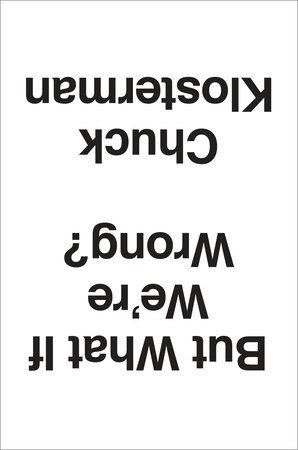
We’re going deep inside the making of a book, with interviews from Penguin Random House employees in editorial, marketing, sales, and more.  If you’ve ever wondered about all the behind-the-scenes work that goes into making your favorite books, this is the series for you.   Today we’re featuring our interview with Justin Goodfellow, who sells But What if We’re Wrong? to bookstores, and is here to give us a sales perspective.  What does your job entail? 

I have the great fortune of being a Sales Manager for Penguin Adult books! In this role, I present all of the upcoming titles from Penguin Books to independent bookstores in the New York metropolitan area. In other words, I’m a bookseller to booksellers! During the course of a year, I meet with various book buyers to discuss and select the titles that will eventually be on their shelves for readers to purchase. The part about these meetings that I love so much is that I get to be involved in curating the store along with the buyer. Every independent bookstore is unique, and it is my responsibility to learn as much as I can about the stores so that the books I sell them will reflect their personalities. 

I also work extensively with the other departments in publishing like editorial and publicity. Editors will often let sales people read manuscripts so that we can offer feedback or let them know about a store that will be particularly excited about the book. And then there is publicity! Publicists are dear friends to Sales Managers because we work together to setup author readings and signings at different bookstores across the whole country. In my opinion, there is no better way to spend a weekday evening than to attend a reading at your local bookshop.

When you describe But What if We’re Wrong? to bookbuyers, what is your hook? What is memorable or unique about the book? Why would they want it in their store?

You would probably laugh at how little of a hook I need for Chuck Klosterman a lot of the time! His reputation precedes him, and I often sell the book well by simply saying, “Look, it’s the new Chuck Klosterman!” But there is so much more that I get to tell my booksellers about. When it comes to But What If We’re Wrong?, I feel like Klosterman has explored a question that covers an impressive number of topics. From a conversation with Neil deGrasse Tyson about the multiverse to reasons why the NFL could potentially fail, But What If We’re Wrong? is genius in its breadth, and that is going to bring an entirely new audience to Klosterman.

There are so many different reasons for why independent bookstores love Chuck Klosterman! One thing I’ve heard that cracked me up is that many view Chuck Klosterman as a hipper Malcolm Gladwell. Now while I personally think that Gladwell is plenty hip, I also feel like I understand the deeper sentiment underneath that opinion. There is a level of access that every Klosterman book achieves, and it results in a sincere investigation about a topic. Reading Klosterman doesn’t feel like reading an author who is analyzing something from the outside; it feels like reading the carefully considered meditations of someone who is intimately involved with what they write about. That sincerity can’t be faked in a reading experience because it is simply the result of skillful writing.  

What’s your favorite thing about your job? What would surprise a layman to know?

What continues to strike me about my job is that I get to connect people who all love books. My publishing house considers me a specialist on the bookstores I work with, and in turn, my bookstores view me as a specialist about the publishers and all of the different titles we bring out. It is a singular role, and I love the opportunity to continue learning from the books and the people that participate in the world of literature.

You’re a fan of Chuck Klosterman – what do you like about his writing? What do you like about this new book? Do you have a favorite moment or line?

I love that Klosterman always feels like he is writing directly to me. It creates an experience that not many authors can bring to the page. Sometimes this occurs through those passages that directly address the reader, but more often I feel addressed by a line of thought. It’s as if a good friend of mine is laying out an issue before me with perfect pacing and allowing me to fully grasp his point of view. 

My favorite part of But What If We’re Wrong? is this amazing section about television’s ability to capture and portray a time period. The quick take away from the chapter is that while everyone might love Mad Men and think of it as crowning accomplishment that captured the 1960s, many historians of the future would probably disagree. The perceptions that created Mad Men came from people living in the early 2000s instead of the actual 1960s. Everything about Mad Men is too perfectly considered and too meticulously constructed with hindsight to be genuinely natural. Instead, a show like Roseanne offers a much more realistic portrayal of its time period. Like many families living in the 1990s, Roseanne showed a chubby American family trying to get by with okay jobs while living in a kind of messy house. For many, that is an accurate picture of life in the 1990s, and Roseanne was able to capture all of this unknowingly. The show was just created in the very same time period its characters lived in!

Read the first post in this series here, and part one and part two of the Q&A with Klosterman’s editor.

From the Editor’s Desk: Jake Morrissey, Executive Editor, on Three-Martini Lunch by Suzanne Rindell

Editors get very passionate about books they work on – the Editor’s Desk series is his or her place to write in-depth about what makes a certain title special. Get the real inside-scoop on how books are shaped by the people who know them best. The best present an author can give an editor is the gift of surprise. Editors spend their days reading a lot of manuscripts that don’t tell them anything new. So reading a story about a world you thought you understood framed in an unexpected way that prompts you to think differently about it, that’s hitting the publishing jackpot. Which is what I did when Three-Martini Lunch came across my desk. In this terrific novel, Suzanne Rindell delves into a world I knew something about – book publishing – but sets her story in the late 1950s, which was when big changes were about to take place. I thought I had a decent grasp of the era. I’m familiar with two other iconic New York stories from around that time: Rona Jaffe’s classic novel (and eventual movie) The Best of Everything and the television show Mad Men. In both of those, New York City is portrayed as one of the places to be in the mid-20th century. If you know anything about either The Best of Everything or Mad Men – or even Alfred Hitchcock’s 1959 movie North by Northwest – you see a New York that’s sleeker, cleaner, less crowded than it is today. And the roles of men and women were as clearly defined then as their ambitions: Success for men meant career and advancement; success for women marriage and family. In Three-Martini Lunch, Suzanne Rindell peers beyond that mid-century mindset and explores the lives and worlds of Miles, Cliff and Eden, three young people struggling to gain a toehold in New York and hoping that publishing is the way to do that. The lives they lead are a far cry from the expense-account lunches and pristine suburban enclaves of the publishing elite. These young people are drawn to Greenwich Village and its emerging beatnik culture, with its dark and smoke-filled bars, jazz clubs, and poetry readings. And they struggle to stretch their meager bank balances by living in cramped, ramshackle apartments and having just enough money for food and beer but not always both. Suzanne gives her characters fascinating opportunities to pursue their individual ambitions and indulge their temptations. Even more compelling, she shows readers how the choices they make to achieve their goals changes them. I’m not giving anything away when I say that what you think of Miles, Cliff, and Eden at the beginning of Three-Martini Lunch will not be what you think of them at the end. As I followed the characters’ journeys through successive drafts of the novel, I found myself reassessing my own ideas about what was possible in publishing, in New York, and in America during that time. It was an era on the cusp of upheaval and turmoil, and it’s that change that Suzanne Rindell explores so effectively – and so surprisingly – in Three-Martini Lunch. Which is one of the highest compliments I can pay. Learn more about Three-Martini Lunch below!

Senior Editor at The Penguin Press, Virginia Smith Younce, on The Star Side of Bird Hill, by Naomi Jackson

Editors get very passionate about books they work on – the Editor’s Desk series is his or her place to write in-depth about what makes a certain title special. Get the real inside-scoop on how books are shaped by the people who know them best. I fell in love with Naomi Jackson’s debut novel about a matriarchal family in Barbados, The Star Side of Bird Hill, from the opening page. In short order, Jackson indelibly captures Barbados’ Bird Hill neighborhood and the two young Braithwaite sisters who have left Brooklyn to come and live there with their grandmother. From its very first line, Star Side plunges us in this very specific, very beautiful community: The people on the hill liked to say that God’s smile was the sun shining down on them. Jackson’s first descriptions of the girls at the heart of this novel are also stunning. Dionne, the elder sister, is “sixteen going on a bitter, if beautiful, forty-five.” Phaedra, age ten, saw “her skin had darkened to a deep cacao from running in the sun all day in spite of her grandmother’s protests… Glimpses of Phaedra’s future beauty peeked out from behind her pink heart-shaped glasses, which were held together with scotch tape.” Before I turned to the second page, I was fully immersed in this place, and I felt I had known these girls for years. Author Naomi Jackson grew up in a predominantly West Indian neighborhood in Brooklyn and spent summers in Barbados with her family. There is a strong autobiographical element to Star Side, which explores themes of immigration and identity, motherhood and family, sexual awakening and coming of age, and mental illness and belonging. After their mother’s breakdown in New York forces them into exile in Barbados, Dionne spends the summer in search of love, while Phaedra explores Bird Hill, where her family has lived for generations. The girls’ grandmother, Hyacinth, is a midwife and practitioner of the local spiritual practice of obeah. Hyacinth is a magical character, and the novel beautifully explores parenthood through her loves and losses. Her daughter Avril left Barbados for good when she fell for the girls’ father Errol. When Errol arrives to reclaim the sisters, the girls must choose between two worlds, as their mother once did. It has been so gratifying to see in-house readers, booksellers, and reviewers connect with this lyrical narrative. Jackson’s Barbados captured our imagination, and her characters are unforgettable, especially the heartbreaking young Phaedra.The Star Side of Bird Hill is an Indies Introduce selection, and many of our independent bookselling partners told me at BEA how excited they were to get this novel into the hands of their more advanced YA readers, as well as their adult readers who love transporting, literary fiction. I look forward to seeing many more readers fall for Star Side and the very talented Naomi Jackson. Read more about The Star Side of Bird Hill here.

Attention, New Yorkers: Pick up Widow Basquiat before you see the Basquiat exhibit at the Brooklyn Museum

If you’re in the New York City area, don’t miss the Brooklyn Museum exhibit, Basquiat: The Unknown Notebooks.  The show is on view until August 23, 2015. From their site:
Brooklyn-born artist Jean-Michel Basquiat filled numerous notebooks with poetry fragments, wordplay, sketches, and personal observations ranging from street life and popular culture to themes of race, class, and world history. The first major exhibition of the artist’s notebooks, Basquiat: The Unknown Notebooks features 160 pages of these rarely seen documents, along with related works on paper and large-scale paintings. Source: Wikimedia
To dive a little deeper, learn the story of Jean-Michel Basquiat’s partner, Suzanne Mallouk. In Widow Basquiat by Jennifer Clement, the reader is plunged into 1980’s New York City where the lovers meet for the first time. All about art, underground culture, passion and creative energy, this biography is gripping and transportive.  See below for an excerpt from the book.

“Sublime, poetic…A harrowing, beautifully told love story about two seekers colliding in a pivotal moment in history, and setting everything, including themselves, on fire.”—Rebecca Walker for NPR

“Stunningly lyrical . . . Original, insightful, and engrossing. . . . While filled with pop culture anecdotes art fans might seek—Andy Warhol and Rene Ricard both make appearances, for instance—Clement’s account is an honest love story above all else.”—Publishers Weekly

This excerpt is from Jennifer Clement‘s  Widow Basquiat, the story of the short-lived, obsessive love affair between Suzanne Mallouk and Jean-Michel Basquiat. Clement is former president of PEN Mexico and is the author of three novels and several books of poetry. THE CROSBY STREET LOFT MADNESS She irons the clothes, folds his clothes, places them in the same order on the shelf—the red sweater is folded this way and placed above the red shirt. She places the soap at an angle on the sink and always places the towels in the same order 1-2-3. She irons one shirt five times. She makes the bed three times and irons the sheets. If a sweater fades in the wash she cries. She never speaks and only answers questions or speaks in a panicky monologue: “My mother was a spy in the war. They took her to see a woman with transparent skin. They could see her heart beating in there and her lungs and blood. They could see her eyeballs turning. This was a military secret. Nobody knows about this. And they would give the woman food— turnips, oranges, bread—and watch it all go down into her. This was a military secret. I heard about her when I was five and I thought she must have been very beautiful like a larva, but very scared. I kept looking at my own stomach and wondering what was in there. I chewed care- fully. My mother said she was a kind of Venus or virgin.” At first Jean-Michel thinks this is funny and puts some of her words in his paintings. Then he tells her to shut up. He paints Self-portrait with Suzanne. He paints her speaking her chicken-chatter, “PTFME E a a a R M R M O AAAAAAAA.” They do coke six or seven times a day. He tells Suzanne she can only wear one dress. It is a gray shift with white checks. He tells her she can only wear one pair of very large men’s shoes. He does another line of coke. Suzanne walks clunk- clunk-clunk, her feet wading in the shoes, around the loft. He tells her she can’t wear lipstick anymore. He says she can only buy groceries and detergents. Then he says no, he will buy them. He does another line of coke and paints Big Shoes, a portrait of Suzanne in big shoes. He calls her Venus. He says, “Hey, Venus, come and kiss me.” He says, “Venus, go get us some coke.” He writes “Venus” into his paintings and says Suzanne is only with him for his money. Jean-Michel sticks black paper over all the windows so that they won’t know if it is day or night. “The day is too light,” he says. Soon Suzanne stops cleaning and Jean-Michel stays at home all day. Suzanne finds a place to live under a small table, like a small cat that finds a hiding place. From here she watches Jean- Michel paint, sleep and do drugs. He picks up books, cereal boxes, the newspaper or whatever is around. He finds a word or phrase and paints it on his board or canvas. A few times a day he crawls under the table with Suzanne and gives her a kiss on the forehead. Sometimes he pulls her out, has sex with her, and then puts her back under the table and continues to paint. Sometimes Suzanne weeps a little and Jean-Michel says, “Shut up, Venus. I know what it is like to be tied up and fed, with a bowl of rice on the floor, like an animal. I once counted my bruises and I had thirty-two.” Suzanne moves from under the table into a closet in the bedroom. In here there is a green trench coat, a pair of moccasins, black and pink pumps, a tin frying pan, a super­market plastic bag full of bills, two large boxes of chalk. Under one moccasin Suzanne finds a small box of birthday candles. THEY DO NOT KNOW HOW TO DRIVE A CAR Shortly after Suzanne moves into the Crosby Street loft Jean-Michel takes her to Italy. He is having a show at the Emilio Mazzoli Gallery in Modena. Neither Jean-Michel nor Suzanne knows how to drive a car so Jean-Michel pays to bring Kai Eric along to drive them around. In the airplane Jean-Michel continuously gets up to do some coke in the bathroom. He says he has to finish it up before he goes through customs in Europe. He says he wants to open up the emergency door exit and jump on the clouds. Suzanne has hepatitis. She cannot lift up her arms. Jean-Michel sits beside her; he kisses and licks one of her arms. “Beautiful arms,” he says. “Venus, I have to paint your arms.” He takes a blue marker out of his pocket and paints on Suzanne’s arm. He paints her humerus, ulna, radius and carpus. He writes “animal cell” on the inside of her wrist. He draws a ring around her finger. “Now you are my wife,” he says.   Read more about Widow Basquiat here.  Learn about the Basquiat exhibit at the Brooklyn Museum here. 

Writing Tips from Brenda Bowen, author of Enchanted August

We know readers tend to be writers too, so twice a month, we’ll feature writing tips from our authors. Who better to offer advice, insight, and inspiration than the authors you admire? They’ll answer several questions about their work, share their go-to techniques and more. Now, get writing!  How would you recommend creating and getting to know your characters? As an editor, I always asked writers (of novels and even of picture books): “Who is this character in your head? Is he/she based on someone you know? Can you see that person doing what you have your character do?” As an author, I ask myself the same thing. Of course, all of one’s characters have a little bit of oneself in them, but I do find that having a specific image—of a friend, an acquaintance, a child, a person glimpsed on the subway—really helps me focus and be specific. Specificity is the skeleton key that unlocks the doors of good writing. When a character speaks, the language must be specific to her; she must not be able to speak any other way. When a character makes a choice of beer or shaving cream, he must own those choices; they must come from everything else I know about the character. I think hard about what a character would reach for in the fridge, and why. None of that reasoning, of course, should show on the page (unless it’s a plot point). But as a writer you need to know if it’s boxers or briefs, sports bra or push-up, for every character. You have to know where the hidden tattoos are, and the scars. After developing an idea, what is the first action you take when beginning to write? I write copy! That’s the first thing I do. I write what you would find on a jacket flap, or the back cover of a paperback. When I was an editor, and especially an assistant, writing copy was always the most enjoyable part of the job. The better written the book, the easier it is to write copy, even when the book has a challenging structure or tackles difficult ideas. I write copy to see where the story is going. Usually I can eke out a whole first “act” for a book by pretending I’m writing the flap for the finished draft. If a first act emerges and I’m interested in seeing where the story goes, I’ll give it a try as a book. Is there something you do to get into a writing mood? Somewhere you go or something you do to get thinking? While writing Enchanted August, I almost always wore headphones and played birdsong or “nature sounds.” Those soundtracks let me believe that I was in Maine. I would go to YouTube and find videos with hours of recorded sounds of the outdoors. You have to be careful not to play the same one too many times or you get to know what nuthatch is going to start calling out after which rumble of thunder, but other than that, it’s a great way (for me) to escape city sounds or household sounds or sounds at the café where I usually write. And a shout-out to that café: It’s The Hungarian Pastry Shop on Manhattan’s Upper West Side. I started going there when I first came to New York in 1981 and basically never stopped. The Pastry Shop is located just a few blocks from Columbia University, so it’s filled with people studying or reading or writing. It’s almost like a library. There’s no internet service and there are no electrical outlets, so you can only write as long as your computer charge lasts and you can’t get distracted by going online. If you go to the Pastry Shop for a visit, don’t be disappointed that the coffee isn’t great, but do order an ishler. Two hazelnut cookies filled with chocolate mousse and covered in dark chocolate. A sumptuous reward for a good afternoon’s writing. Did you always want to write? How did you start your career as an author? I never thought I wanted to write but I have been writing since I was very young. I used to write Regency romances when I was about eleven or twelve, about characters named Charles and Caroline who bore a marked resemblance to Mr. Darcy and Elizabeth Bennet. (I read Pride and Prejudice in one sitting when I was eleven years old. My mother thought I had been out at the neighbor’s all day, when actually I was upstairs reading through lunch and dinner. I came down to the kitchen in a daze and have essentially never recovered.) I began working as an editorial assistant at a publishing company right after college. I wanted nothing more than to be an editor, and I was, for many years. After a while, editors, especially of children’s books, tend to take on the writing mantle. I helped artists write their picture books. I turned out quickie celebrity bios. I wrote a couple of Pokemon chapter books. (“I choose you!”) Then in 2004 or so, I wrote two early readers under a pen name, Margaret McNamara. Too Many Valentines and 100 Days (Plus One) were set at Robin Hill School, and over ten years the stories stretched into a thirty-book series. Then, I began to write more picture books about things like pumpkins, apples, George Washington, poetry, and a heavenly library. (If you’re interested, you can find out more on my website.) Just a few years ago, I so wanted an author of mine to write a book from Tinker Bell’s point of view that I stole my own idea and wrote a six-book series called the Fairy Bell Sisters, about Tinker Bell’s little sisters, who live on an island in what many would recognize to be Maine. Their success (and I mean the fact that I finished them all, on time, and they were beautifully published) led me to be emboldened enough to write Enchanted August. Describe your writing style in five words or less. If you mean how I write in terms of process: Must. Not. Edit. While. Writing. Read more about Enchanted August here.