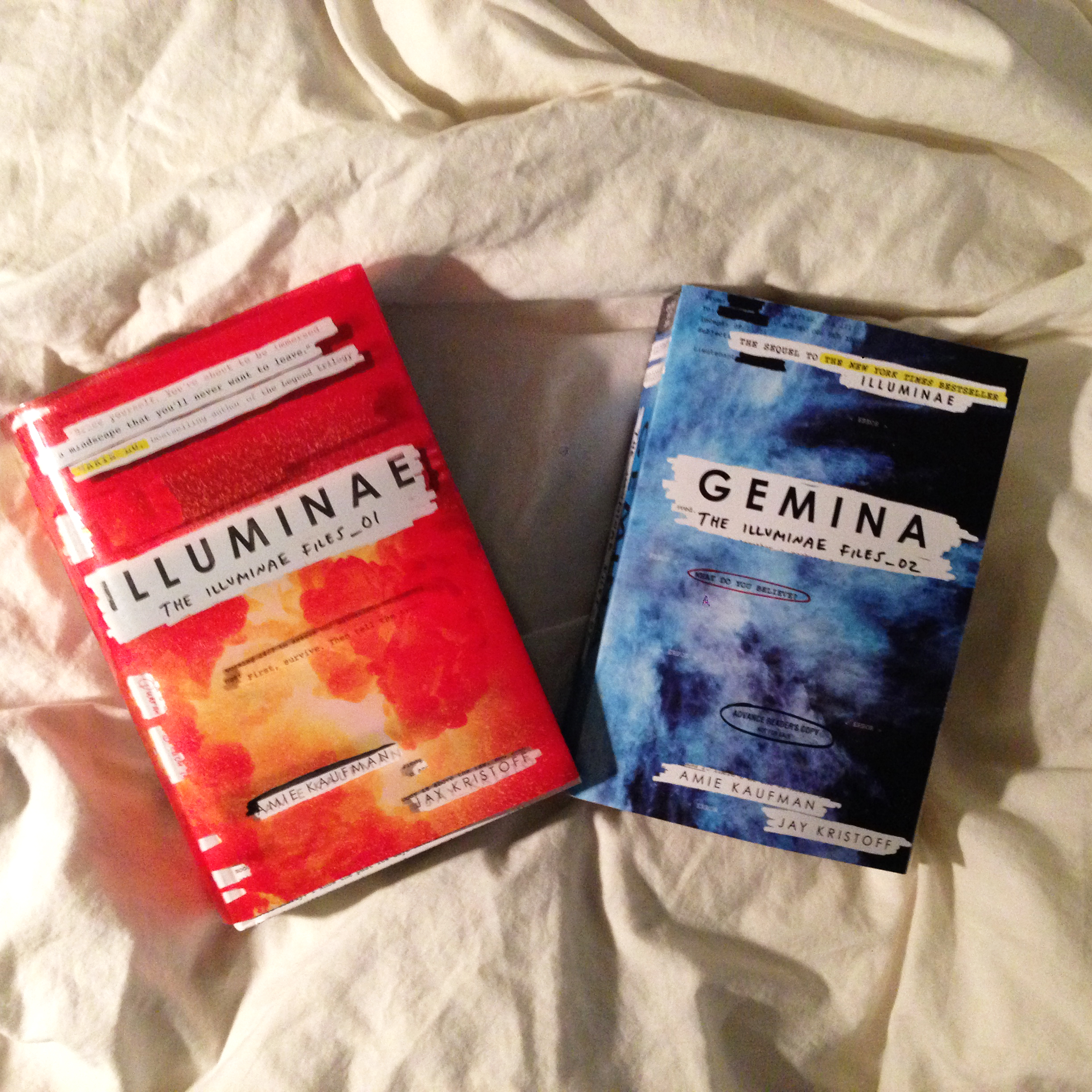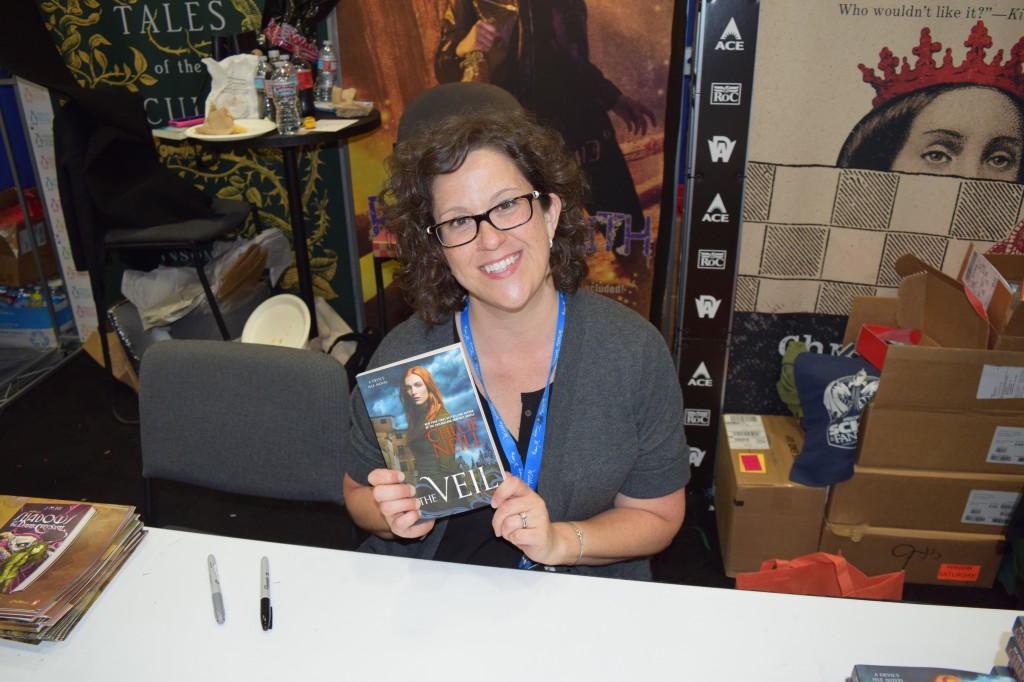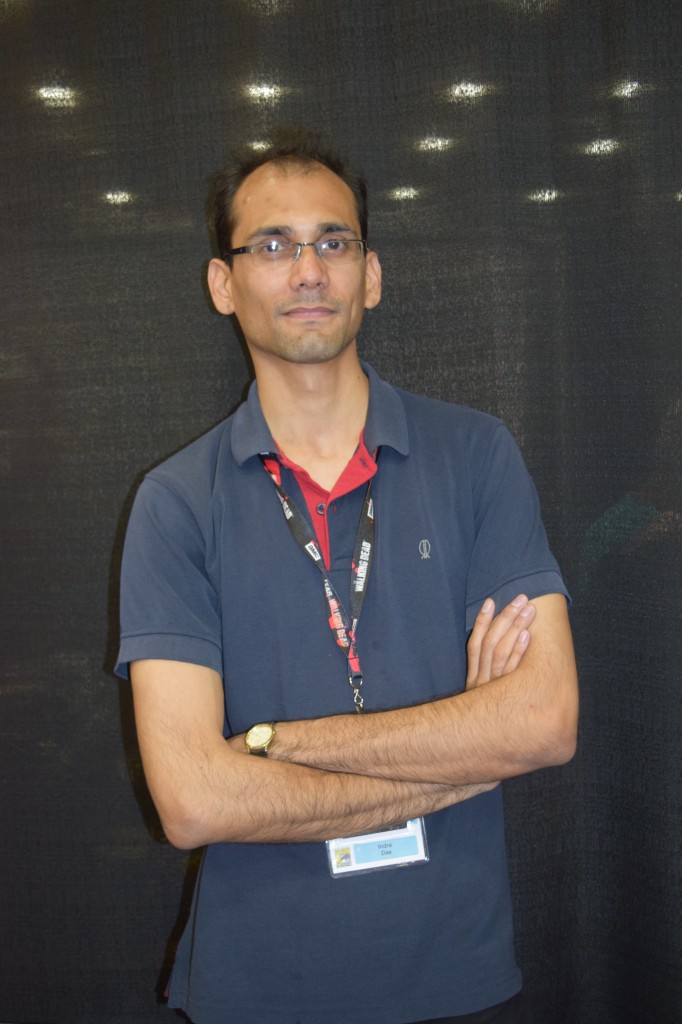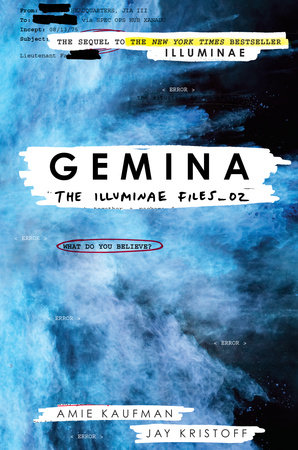
Janet Stark: It’s funny, many people I meet in daily life don’t understand what an audiobook producer does. Senior Producer is on my business card. We producers are a bit like casting directors working in collaboration with authors. Hiring actors, scheduling recording studios, basically managing a group of contributors (directors, sound editors, sound design people), all the way to QC notes and delivering the final audio. The production process always begins with reaching out to the author or authors to get a sense of ideas or expectations for the audio, and take it from there.
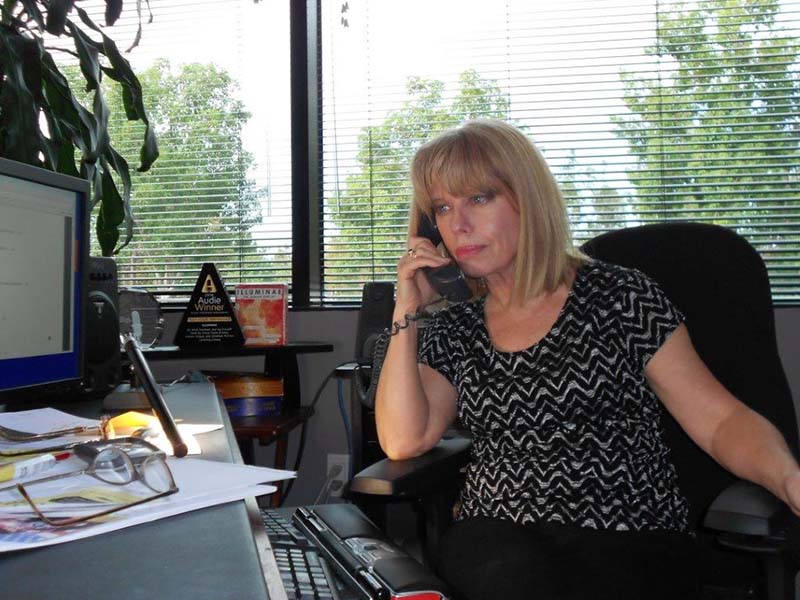
Patrick Billard: I’m the Audio Engineer here at Penguin Random House studios in Los Angeles. Our facility is made up of 10 recording studios designed for the purpose of recording audio books. I setup recording sessions and make sure our actors have good recording levels that match our specs, I assist the directors with any issues they may be having during the recording process, I maintain the studios to make sure they are clean and in working order and I book actors to come back to the studios after recording is finish to do pick-up sessions to fix any outstanding issues that remain after the books have been edited and proofed.

How did Gemina sessions compare to the usual audiobook session setups?
Patrick Billard: The Gemina session was quite different from our typical session here at PRH Studios where most books have one to two readers at most. Gemina was a large project with many actors so our setup was tweaked to have 3 microphones ready to record in our largest booth. Working with Ok Hee Kolwitz, Assistant Director of Technology and Post Production, we spent a couple days setting up the studio to accommodate the 3 mic setup, which required pulling backup gear from our storage closets and arranging the mics, chairs and music stands for optimal audio quality and sight lines for the actors. Erin Spencer, the director for Gemina, was amazing and did so much prep work to make the session run smoothly. We had to work on the fly as actors were going in and out of the studio to do their lines and we had to keep the levels consistent so we always had a good match
How long did it take to cast this book?
Janet Stark: The best way to describe Gemina: a casting marathon. Amie & Jay provided character descriptions for the primary characters. Secondary voices, maybe ten more, were cast as the book was taken apart page by page. Erin Spencer was project director, and she and I spent long meetings with the pages to nail down the session strategy. Separating out individual page sets for each role, using Gemina’s chat style format of multiple characters per page, we more or less dissected the book to make the most of each actor’s time. Then came the many minor voices with only a few lines each. People in the studio’s vicinity were being asked to get behind the mic for a line or two, resulting in a long list of uncredited voices. Being in the moment during sessions, ready for the unexpected, was basic to this production.
What was your favorite part of this project?
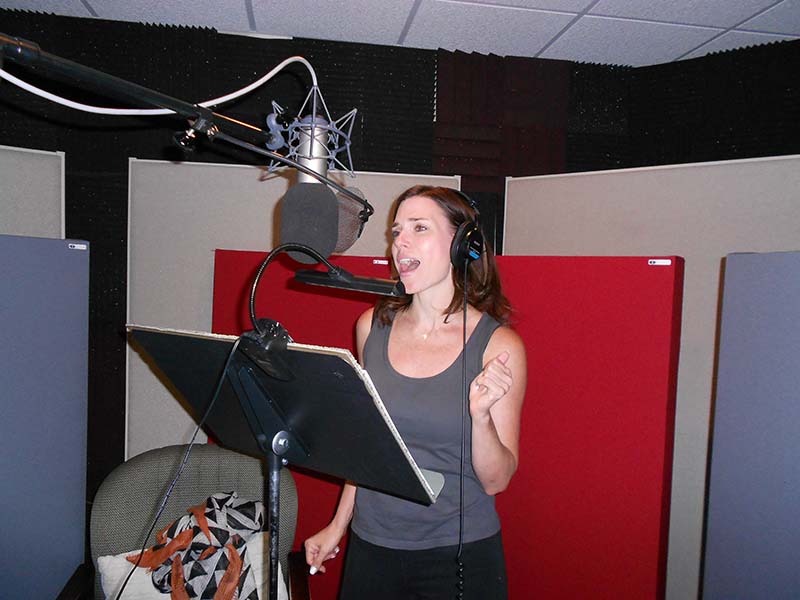
Janet Stark: Recording the pop song snippets! Amie & Jay put the lyrics in the text, then the music actually found me as I listened to a blast of new selections. The melody sung by Erin, well, I can’t imagine a session more fun than that.
Patrick Billard: Engineering the pop song part of the session was fun for me since my background is as a recording engineer at music studios in Manhattan for the past 10 years before moving to Los Angeles and starting to work here at PRH studios. Janet Stark, the producer for Gemina, also has a background in music studio engineering so we worked together during the session. I used my extensive experience tracking vocals for pop songs to coach Erin to get good takes and to help hone the parts as the song was being tweaked during the recording process, which is quite typical for most vocal tracking sessions for pop songs. We all had a lot of fun recording the pop song.

How long does an audiobook of this complex take to produce? Is that similar to a standard audiobook production?
Janet Stark: Comparing the complexity of Gemina to a standard audiobook, I’d have to say it was more like producing a film on audio. So many voices, evolving characters, sound effects, it all adds up to an experience I hope people enjoy.
Were you comfortable contributing voices here & there? Had you done something like that before?
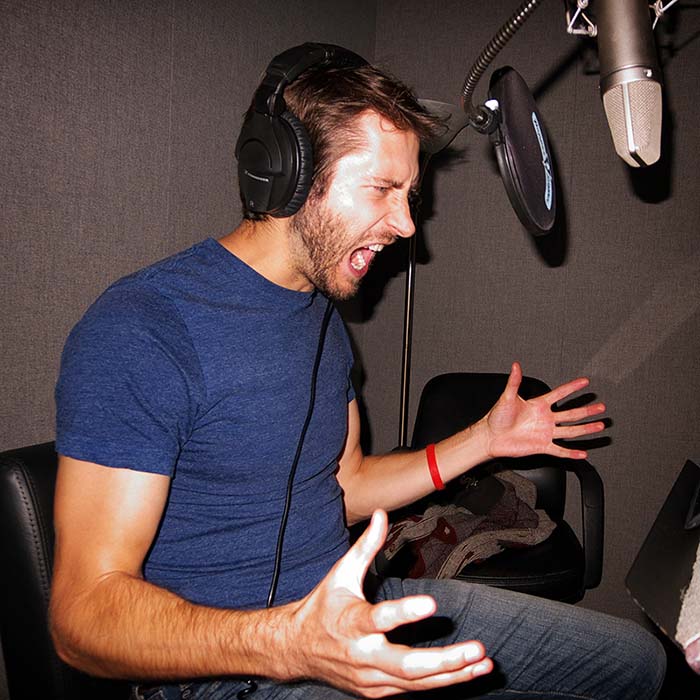
Patrick Billard: Yes, Erin and Janet recruited most of the staff here at PRH to do wild lines and it was a lot of fun. For me it was a good experience being on the other side of the glass, as it makes me realize what it’s like to be a voice actor and that it’s not nearly as easy as it may look or sound. It also made me appreciate Erin’s skill as a director- she really knew what she was going for with my lines and did her part coaching me through the process. My particular lines were rather loud and vulgar which made me step out of my comfort zone which was exciting.
Project Director Erin Spencer’s take on the process:
Erin Spencer: Working on Gemina was a truly unique experience and unlike any other audiobook that I have directed. To begin, I read the entire book to get an overall sense of storyline and character arc. From there, it’s a matter of going over each page individually to see what is happening in each ‘scene’, which characters are speaking and how the art work and graphics can be adapted into an audio format.
We needed upwards of 20 actors for Gemina – with only a handful recurring from Illuminae, so it was up to Janet Stark and me to find the right actors for the roles we had available. Casting is very important and it’s a lot of fun to have so many actors on one title!
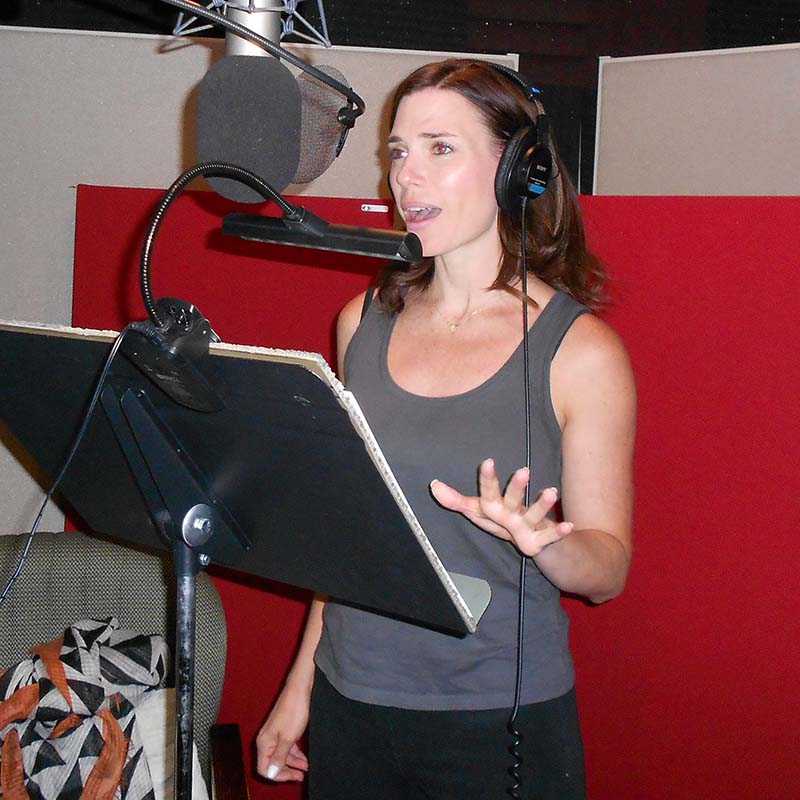
Studio time is really the most fun but equally the most stressful time for me, the project director. We had up to three actors in the recording studio at one time because Gemina was recorded as if we were doing scenes in a movie. The actors are able to engage and play off of one another, which really brings a sense of realism and keeps the tone very organic. As the director, I ran a very tight schedule each day. I may have had 15 actors coming in to read in a single day and the organization and scheduling had to be precise. My mantra on those days is TRUST! Trust that I did all the prep work needed to ensure we have every page covered, that all the actors are prepared with their pages, and that I have done everything I can do to make the process smooth and that the end product will be amazing! We don’t read this book like you would do with other books – in order, page by page. It’s read completely out of order based on which actors I have scheduled together that day. So, I have to trust that it’s all there. And honestly, when it’s all over, it’s simultaneously a relief and a little grief at the same time!
After Illuminae came out, I received the CDs so I could listen to it on my commute to the studio. I literally cried when I heard it. Cried out of sheer pride for all the actors who worked so hard, for the editor who did such a phenomenal job and in my mind has one of the toughest jobs of all, cried for the post-production team, and especially for Janet Stark who pulled it all together. I can’t wait to cry over Gemina, too.
Follow the authors on Twitter (@AmieKaufman, @misterkristoff) and Instagram (@amiekaufmanauthor, @misterkristoff) Visit the website here: illuminaefiles.com


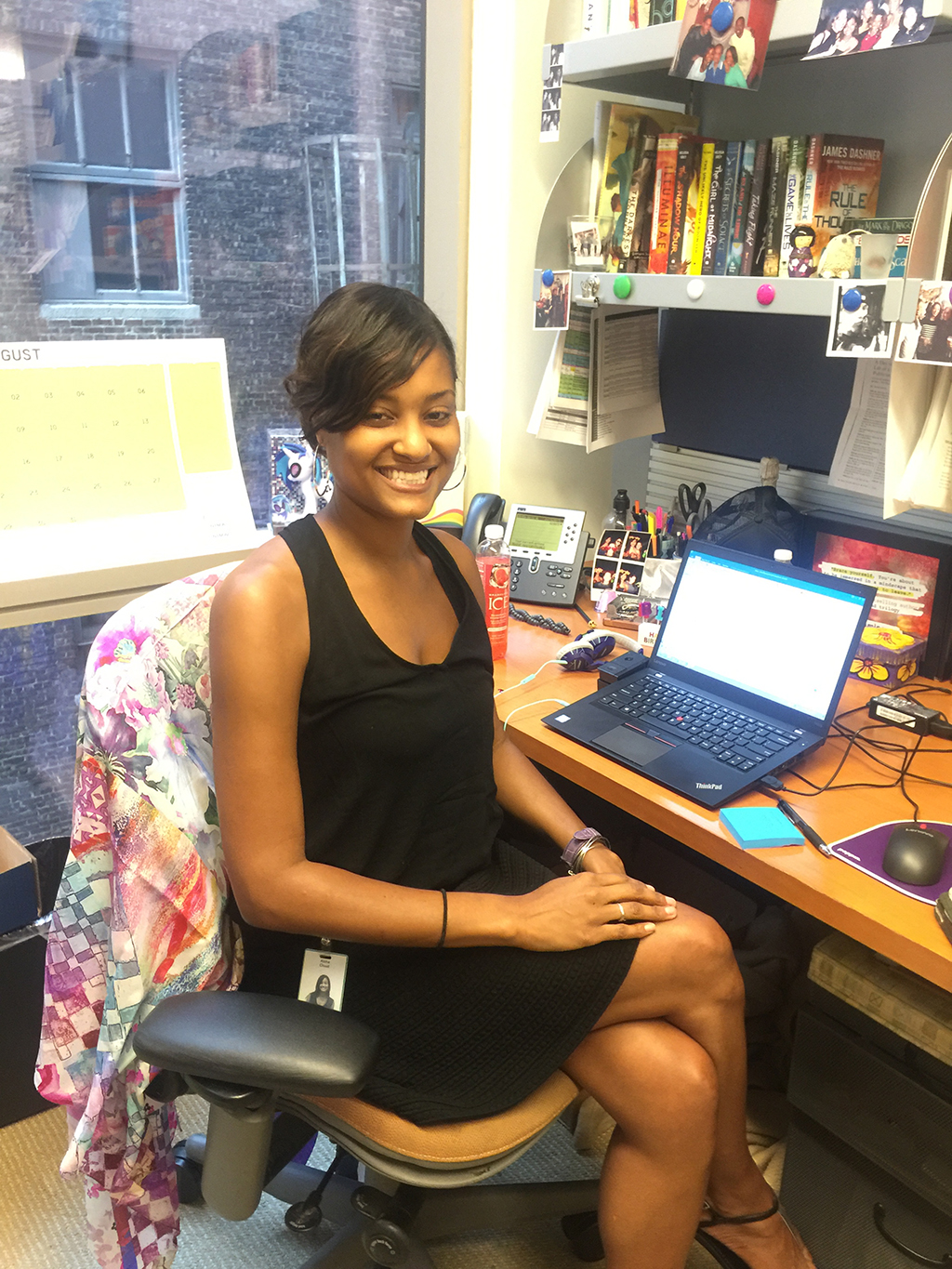


 What’s a book or a series that you’ve worked on that you think is more of your type or style?
I tend to be drawn to books that are girl-centric. I have a little boy at home who has opened my eyes to a much broader range of reading, but I’m always a thirteen, fourteen-year-old girl at heart. Mouse Scouts is one of my favorites; it’s about a troop of little girl scouts who happen to be mice, that’s kind of me in a nutshell. There are some editors who excel at really gritty things, edgy teen fiction, male-centric narratives—and that’s not really my core strength. But the Illuminae Files was so immediately accessible and the female characters were so well-drawn and felt like friends – it broke though and worked, even for a “girl” editor.
What was your favorite part about Gemina or something that surprised or interested you about this second book?
Well it’s a trilogy, and I knew the second book was going to introduce a new set of characters and situations as well as advance the larger story. I think what has surprised me is the way the authors continue to one-up themselves. There’s are a couple of big plot twists in Illuminae and there are three or four twists in Gemina. As a reader I didn’t see them coming, and even as an editor who went into the story with a sense of how events were going to play out, I still didn’t see those things coming. That’s a huge treat– to go into a book with a certain set of expectations and having them completely blown apart because what comes in is so much more entertaining. InIlluminae the protagonists are sort of like the hometown sweethearts: They are great kids, very engaging, very personable. InGemina the “heroes” aren’t set up the same way. The female lead isn’t particularly likable. She’s spoiled, she’s very pampered, she very me-centric. The male lead is kind of the lovable anti-hero. He’s a gang member, he’s covered in tattoos that allude to a violent history, he deals drugs, so on the surface he’s not necessarily someone you see emerging as the hero. But you’re so swept up in who they are and how they change and grow over the course of the story that it completely changes your perception.
People tend to think “editor” when they think of publishing, but many may not know the details of your job. So: when you get a manuscript what happens next? How do you start making a book?
It starts with a lot of dry administrative things; we sign the book up, we go to a contract, and then I start by working backward from when we anticipate that we want the book to come out. We work with our internal production and design groups to mastermind a schedule.
Because this is such a complex book visually, the design aspects require a lot more time than a typical book might, with its tidy lines of text on a page. For Illuminae and Gemina, literally every page is a different design. The authors were also heavily involved in the design inspiration for the book, so we had to factor them into the blueprint when we were setting up the schedules.
What’s a book or a series that you’ve worked on that you think is more of your type or style?
I tend to be drawn to books that are girl-centric. I have a little boy at home who has opened my eyes to a much broader range of reading, but I’m always a thirteen, fourteen-year-old girl at heart. Mouse Scouts is one of my favorites; it’s about a troop of little girl scouts who happen to be mice, that’s kind of me in a nutshell. There are some editors who excel at really gritty things, edgy teen fiction, male-centric narratives—and that’s not really my core strength. But the Illuminae Files was so immediately accessible and the female characters were so well-drawn and felt like friends – it broke though and worked, even for a “girl” editor.
What was your favorite part about Gemina or something that surprised or interested you about this second book?
Well it’s a trilogy, and I knew the second book was going to introduce a new set of characters and situations as well as advance the larger story. I think what has surprised me is the way the authors continue to one-up themselves. There’s are a couple of big plot twists in Illuminae and there are three or four twists in Gemina. As a reader I didn’t see them coming, and even as an editor who went into the story with a sense of how events were going to play out, I still didn’t see those things coming. That’s a huge treat– to go into a book with a certain set of expectations and having them completely blown apart because what comes in is so much more entertaining. InIlluminae the protagonists are sort of like the hometown sweethearts: They are great kids, very engaging, very personable. InGemina the “heroes” aren’t set up the same way. The female lead isn’t particularly likable. She’s spoiled, she’s very pampered, she very me-centric. The male lead is kind of the lovable anti-hero. He’s a gang member, he’s covered in tattoos that allude to a violent history, he deals drugs, so on the surface he’s not necessarily someone you see emerging as the hero. But you’re so swept up in who they are and how they change and grow over the course of the story that it completely changes your perception.
People tend to think “editor” when they think of publishing, but many may not know the details of your job. So: when you get a manuscript what happens next? How do you start making a book?
It starts with a lot of dry administrative things; we sign the book up, we go to a contract, and then I start by working backward from when we anticipate that we want the book to come out. We work with our internal production and design groups to mastermind a schedule.
Because this is such a complex book visually, the design aspects require a lot more time than a typical book might, with its tidy lines of text on a page. For Illuminae and Gemina, literally every page is a different design. The authors were also heavily involved in the design inspiration for the book, so we had to factor them into the blueprint when we were setting up the schedules.
 Once we had a schedule down, it was easier to address the more straightforward editorial things with the authors. We communicate primarily through email because they’re in Australia, which is a fourteen-hour time difference. I went through the book with big-picture things in mind, like what could be improved and what did we have questions about.
Once we feel like we’ve really gotten a story in the best possible shape, it goes over to the copy editor who knows how to do everything I don’t know how to do in terms of grammar and consistency. It’s really cleaning the text for things we might not have caught in the editorial process. Copyediting a book of this size takes about four to six weeks. The manuscript then goes back to the authors so they can address any queries that the copy editor has found. They generally have about a month with it and then we send it to our design group. And from there, the book needs a minimum of ten months to come together before finally going to the printer, with numerous passes and reviews by everybody in between.
These are two original concepts we tried for the jacket:
Once we had a schedule down, it was easier to address the more straightforward editorial things with the authors. We communicate primarily through email because they’re in Australia, which is a fourteen-hour time difference. I went through the book with big-picture things in mind, like what could be improved and what did we have questions about.
Once we feel like we’ve really gotten a story in the best possible shape, it goes over to the copy editor who knows how to do everything I don’t know how to do in terms of grammar and consistency. It’s really cleaning the text for things we might not have caught in the editorial process. Copyediting a book of this size takes about four to six weeks. The manuscript then goes back to the authors so they can address any queries that the copy editor has found. They generally have about a month with it and then we send it to our design group. And from there, the book needs a minimum of ten months to come together before finally going to the printer, with numerous passes and reviews by everybody in between.
These are two original concepts we tried for the jacket:

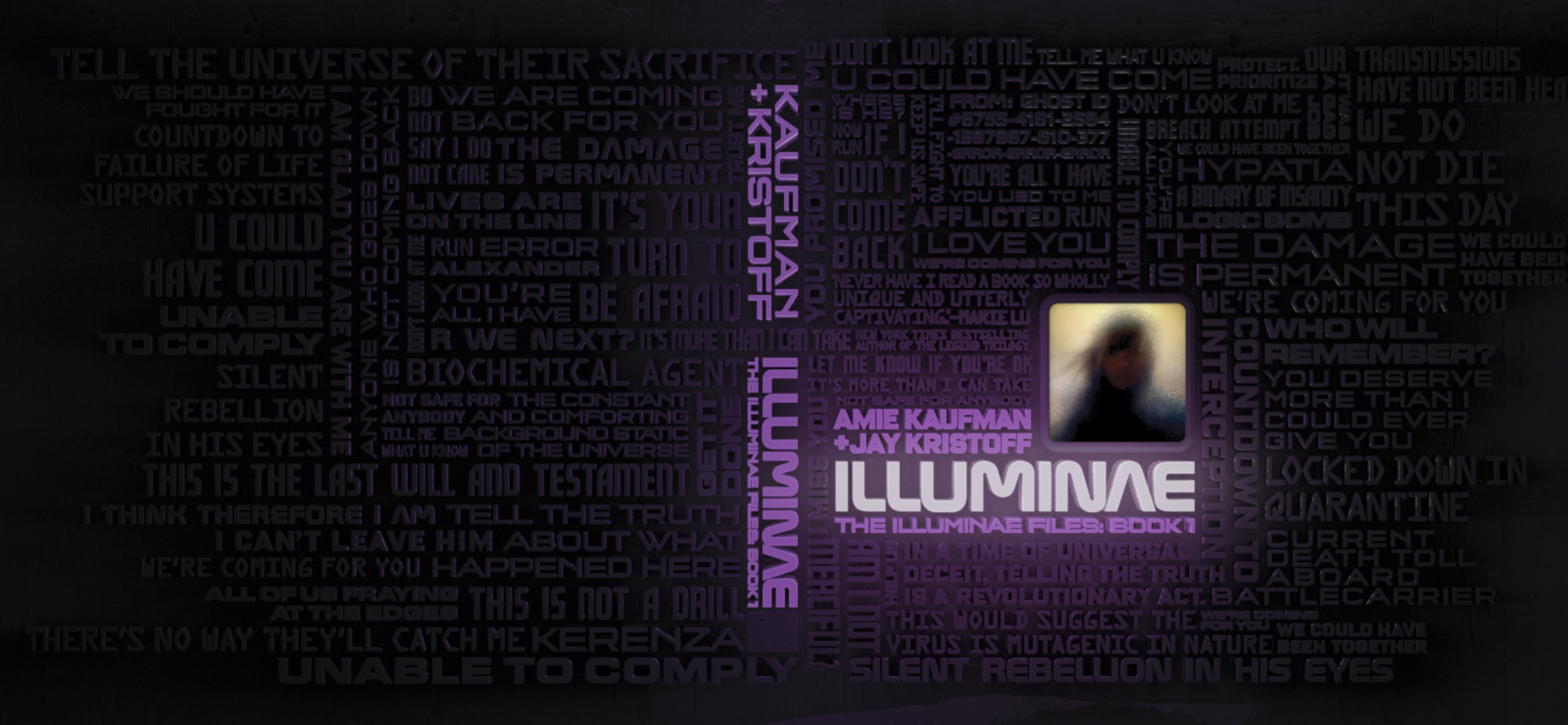 Given the non-traditional reading experience and the fact that the whole conceit of the book is based on documentation, we wanted to find a way to present all of those documents visually. These ideas got dismissed very early on, but they ended up inspiring the case cover design, where designer Ray Shapell was able to let loose with the whole idea of redaction, leaking classified lines, and showing hand-written communications from the characters. Although abandoning the original jacket designs felt like a setback initially, the process brought us directly to final packaging.
These cover concepts look a lot more like traditional sci-fi to me.
They do. At the time the first book, Illuminae, was coming together, we hadn’t really seen sci-fi break though on a young adult level, so we were trying to arrive at a cover look that wouldn’t scare off readers who aren’t traditional fans of the genre. But I think these books have really broken the mold.
I think a lot of people wouldn’t realize an editor not only deals with the content of the book, but that you have a say in the cover design and you’re a big part of those discussions. Is there anything else that would surprise someone outside of publishing about your job?
I don’t sit at my desk and edit. 99% of my editorial work takes place at my kitchen table or my couch on the weekends. Most of my editorial life in the office is spent at meetings or answering emails, and I need to disengage from the office in order to really get into a creative mind space.
Given the non-traditional reading experience and the fact that the whole conceit of the book is based on documentation, we wanted to find a way to present all of those documents visually. These ideas got dismissed very early on, but they ended up inspiring the case cover design, where designer Ray Shapell was able to let loose with the whole idea of redaction, leaking classified lines, and showing hand-written communications from the characters. Although abandoning the original jacket designs felt like a setback initially, the process brought us directly to final packaging.
These cover concepts look a lot more like traditional sci-fi to me.
They do. At the time the first book, Illuminae, was coming together, we hadn’t really seen sci-fi break though on a young adult level, so we were trying to arrive at a cover look that wouldn’t scare off readers who aren’t traditional fans of the genre. But I think these books have really broken the mold.
I think a lot of people wouldn’t realize an editor not only deals with the content of the book, but that you have a say in the cover design and you’re a big part of those discussions. Is there anything else that would surprise someone outside of publishing about your job?
I don’t sit at my desk and edit. 99% of my editorial work takes place at my kitchen table or my couch on the weekends. Most of my editorial life in the office is spent at meetings or answering emails, and I need to disengage from the office in order to really get into a creative mind space.
 Photo Credit: Christopher Tovo
Why do you think fans are responding so strongly to this series, outside of its non-traditional layout?
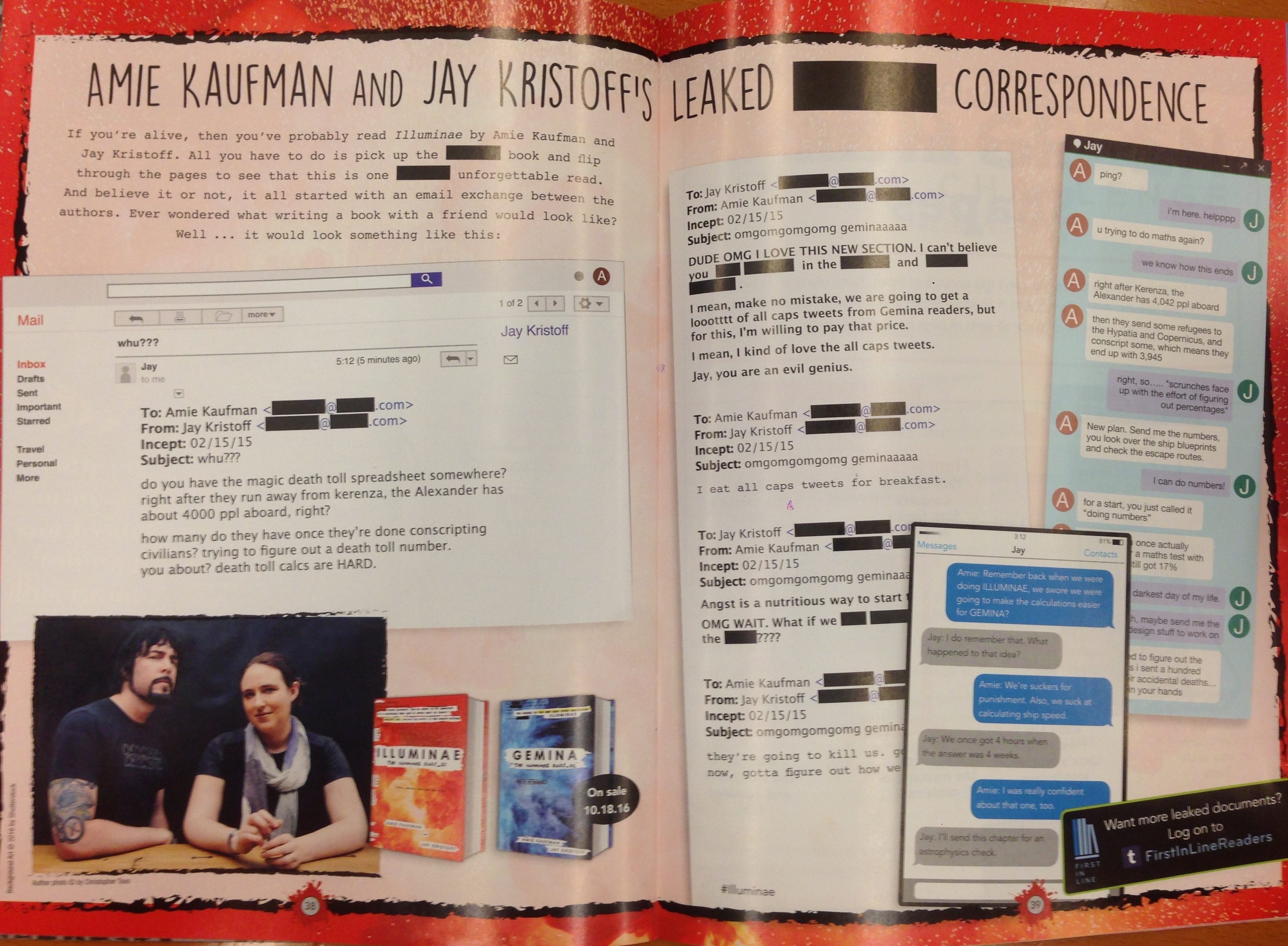
I think anybody who has met the authors in person feels like they’ve met characters from the book. Their personalities inform every single character in the story; they’re funny, they’re intense, their rapport together just makes you want to sit back and watch them talk to each other. Their writing process involved sending each other blind chapters, and they wrote some passages by text messaging each other rather than sitting side by side, nursing every line in a common voice. So their individual writing personas feel intact and their living, breathing process gets contained in the book. I think that’s something readers can sense when they read it – It’s just a very personal reading experience, and they make it super accessible. I remember saying to someone, “it may be 600 pages long, but you could easily give it to a reluctant reader,” because there are all these different visuals to break up the reading experience, and the humor and voices and the pace just sweep you along.
Is there anything else people might like to know about the book?
A slightly non-standard occurrence happened this summer when we sent the authors some pre-press pages to sign—4,000 pages, to be exact. UPS got the address wrong, and Jay was running around trying to locate the boxes. One thing you have to know about Jay is that he’s a big guy and he does a really amazing job of pulling off a badass author persona, but the truth is he’s a total sweetheart. So when he emailed to say that he had found the boxes and stole them off of someone’s porch, I just had to laugh. That’s the kind of stuff that happens working with these two: petty theft might be involved. There’s always something slightly unusual that comes together.
Read more about Gemina and Illuminae below, and be sure to check back soon for more behind-the-scenes interviews!
Follow along: #Gemina, #Illuminae, #IluminaeFiles
Follow the authors on Twitter (
Photo Credit: Christopher Tovo
Why do you think fans are responding so strongly to this series, outside of its non-traditional layout?
I think anybody who has met the authors in person feels like they’ve met characters from the book. Their personalities inform every single character in the story; they’re funny, they’re intense, their rapport together just makes you want to sit back and watch them talk to each other. Their writing process involved sending each other blind chapters, and they wrote some passages by text messaging each other rather than sitting side by side, nursing every line in a common voice. So their individual writing personas feel intact and their living, breathing process gets contained in the book. I think that’s something readers can sense when they read it – It’s just a very personal reading experience, and they make it super accessible. I remember saying to someone, “it may be 600 pages long, but you could easily give it to a reluctant reader,” because there are all these different visuals to break up the reading experience, and the humor and voices and the pace just sweep you along.
Is there anything else people might like to know about the book?
A slightly non-standard occurrence happened this summer when we sent the authors some pre-press pages to sign—4,000 pages, to be exact. UPS got the address wrong, and Jay was running around trying to locate the boxes. One thing you have to know about Jay is that he’s a big guy and he does a really amazing job of pulling off a badass author persona, but the truth is he’s a total sweetheart. So when he emailed to say that he had found the boxes and stole them off of someone’s porch, I just had to laugh. That’s the kind of stuff that happens working with these two: petty theft might be involved. There’s always something slightly unusual that comes together.
Read more about Gemina and Illuminae below, and be sure to check back soon for more behind-the-scenes interviews!
Follow along: #Gemina, #Illuminae, #IluminaeFiles
Follow the authors on Twitter ( What do you think is special or unique about this book? Why will readers want to get their hands on it?
Stephanie: The book is just so different in the way that it’s written. With all the art elements inside, it’s just a completely different reading experience than anything you’re used to.
Cayla: Of course, it’s the format- It’s just so wild, it’s so cool. But from a social media perspective, the most special part about this book is the authors. They are so engaging, they love their fans, and they’re kind, generous people. Their social presence is magnificent, and they’re so fun! You can’t help but fall in love with them and their book. For people who aren’t following them on Instagram and Twitter – you’ve got to. Their personalities just shine.
Kate: Well, It’s not like any other book I’ve seen, especially for this audience, and people are so hungry for the second book after reading Illuminae. I love how into the characters everyone is… they feel really connected to them. I love that the authors are willing to do anything and they understand social media… they really get it. Everyone in-house is saying it’s the book for people who don’t necessarily know they like sci-fi.
What are some of the steps you take when you first start working on a title?
Cayla: I start by reading the book. I find inspiration from between the pages. Then, I love looking at the fans and what they’re saying online. The fans give me that fire in the belly, they get me excited to work on a project: I love being able to see what they are talking about, what matters the most to them.
Kate: Our marketing process starts with list launch meetings, when the editorial group presents all their titles for that season. Later on, we have meetings with publicity, editorial, sales, and marketing groups. We talk about comparative books in the marketplace, and how we felt about our readings of the book.
Afterwards, we create slide presentations to flesh out ideas for a marketing campaign – at this stage, it’s still loose and flexible. The next round of big meetings is called pre-sales: that’s when we present our ideas to the field sales representatives and our president. They give us feedback, and we tweak our plans accordingly.
We also have author meetings to figure out challenges they’ve faced in the past, or things that have worked well for them before.
Next up is sales conference – at that point, everything need to be pretty finalized because editors have to send final concrete marketing/publicity/sales plans to the authors and agent. A big part of our team’s work is prioritizing tasks, because the digital landscape changes so quickly. Sometimes we may have a whole plan that we’re starting to execute, but will suddenly need to do finish is much faster than anticipated. We try to plan as much as possible, but we do have to react to things quickly.
Cayla: Social changes all the time – so we make plans, but there’s also so much shifting and changing so we have to stay very creative and nimble. But really it’s a matter of being able to do both: plan in advance and also work in real time.
Check back in the coming weeks for the inside scoop from the Gemina team!
Follow along: #Gemina, #Illuminae, #IluminaeFiles
Follow the authors on Twitter (
What do you think is special or unique about this book? Why will readers want to get their hands on it?
Stephanie: The book is just so different in the way that it’s written. With all the art elements inside, it’s just a completely different reading experience than anything you’re used to.
Cayla: Of course, it’s the format- It’s just so wild, it’s so cool. But from a social media perspective, the most special part about this book is the authors. They are so engaging, they love their fans, and they’re kind, generous people. Their social presence is magnificent, and they’re so fun! You can’t help but fall in love with them and their book. For people who aren’t following them on Instagram and Twitter – you’ve got to. Their personalities just shine.
Kate: Well, It’s not like any other book I’ve seen, especially for this audience, and people are so hungry for the second book after reading Illuminae. I love how into the characters everyone is… they feel really connected to them. I love that the authors are willing to do anything and they understand social media… they really get it. Everyone in-house is saying it’s the book for people who don’t necessarily know they like sci-fi.
What are some of the steps you take when you first start working on a title?
Cayla: I start by reading the book. I find inspiration from between the pages. Then, I love looking at the fans and what they’re saying online. The fans give me that fire in the belly, they get me excited to work on a project: I love being able to see what they are talking about, what matters the most to them.
Kate: Our marketing process starts with list launch meetings, when the editorial group presents all their titles for that season. Later on, we have meetings with publicity, editorial, sales, and marketing groups. We talk about comparative books in the marketplace, and how we felt about our readings of the book.
Afterwards, we create slide presentations to flesh out ideas for a marketing campaign – at this stage, it’s still loose and flexible. The next round of big meetings is called pre-sales: that’s when we present our ideas to the field sales representatives and our president. They give us feedback, and we tweak our plans accordingly.
We also have author meetings to figure out challenges they’ve faced in the past, or things that have worked well for them before.
Next up is sales conference – at that point, everything need to be pretty finalized because editors have to send final concrete marketing/publicity/sales plans to the authors and agent. A big part of our team’s work is prioritizing tasks, because the digital landscape changes so quickly. Sometimes we may have a whole plan that we’re starting to execute, but will suddenly need to do finish is much faster than anticipated. We try to plan as much as possible, but we do have to react to things quickly.
Cayla: Social changes all the time – so we make plans, but there’s also so much shifting and changing so we have to stay very creative and nimble. But really it’s a matter of being able to do both: plan in advance and also work in real time.
Check back in the coming weeks for the inside scoop from the Gemina team!
Follow along: #Gemina, #Illuminae, #IluminaeFiles
Follow the authors on Twitter (