
Tag Archives: writing advice

Writing Tips from Brenda Bowen, author of Enchanted August

We know readers tend to be writers too, so twice a month, we’ll feature writing tips from our authors. Who better to offer advice, insight, and inspiration than the authors you admire? They’ll answer several questions about their work, share their go-to techniques and more. Now, get writing!  How would you recommend creating and getting to know your characters? As an editor, I always asked writers (of novels and even of picture books): “Who is this character in your head? Is he/she based on someone you know? Can you see that person doing what you have your character do?” As an author, I ask myself the same thing. Of course, all of one’s characters have a little bit of oneself in them, but I do find that having a specific image—of a friend, an acquaintance, a child, a person glimpsed on the subway—really helps me focus and be specific. Specificity is the skeleton key that unlocks the doors of good writing. When a character speaks, the language must be specific to her; she must not be able to speak any other way. When a character makes a choice of beer or shaving cream, he must own those choices; they must come from everything else I know about the character. I think hard about what a character would reach for in the fridge, and why. None of that reasoning, of course, should show on the page (unless it’s a plot point). But as a writer you need to know if it’s boxers or briefs, sports bra or push-up, for every character. You have to know where the hidden tattoos are, and the scars. After developing an idea, what is the first action you take when beginning to write? I write copy! That’s the first thing I do. I write what you would find on a jacket flap, or the back cover of a paperback. When I was an editor, and especially an assistant, writing copy was always the most enjoyable part of the job. The better written the book, the easier it is to write copy, even when the book has a challenging structure or tackles difficult ideas. I write copy to see where the story is going. Usually I can eke out a whole first “act” for a book by pretending I’m writing the flap for the finished draft. If a first act emerges and I’m interested in seeing where the story goes, I’ll give it a try as a book. Is there something you do to get into a writing mood? Somewhere you go or something you do to get thinking? While writing Enchanted August, I almost always wore headphones and played birdsong or “nature sounds.” Those soundtracks let me believe that I was in Maine. I would go to YouTube and find videos with hours of recorded sounds of the outdoors. You have to be careful not to play the same one too many times or you get to know what nuthatch is going to start calling out after which rumble of thunder, but other than that, it’s a great way (for me) to escape city sounds or household sounds or sounds at the cafĂ© where I usually write. And a shout-out to that cafĂ©: It’s The Hungarian Pastry Shop on Manhattan’s Upper West Side. I started going there when I first came to New York in 1981 and basically never stopped. The Pastry Shop is located just a few blocks from Columbia University, so it’s filled with people studying or reading or writing. It’s almost like a library. There’s no internet service and there are no electrical outlets, so you can only write as long as your computer charge lasts and you can’t get distracted by going online. If you go to the Pastry Shop for a visit, don’t be disappointed that the coffee isn’t great, but do order an ishler. Two hazelnut cookies filled with chocolate mousse and covered in dark chocolate. A sumptuous reward for a good afternoon’s writing. Did you always want to write? How did you start your career as an author? I never thought I wanted to write but I have been writing since I was very young. I used to write Regency romances when I was about eleven or twelve, about characters named Charles and Caroline who bore a marked resemblance to Mr. Darcy and Elizabeth Bennet. (I read Pride and Prejudice in one sitting when I was eleven years old. My mother thought I had been out at the neighbor’s all day, when actually I was upstairs reading through lunch and dinner. I came down to the kitchen in a daze and have essentially never recovered.) I began working as an editorial assistant at a publishing company right after college. I wanted nothing more than to be an editor, and I was, for many years. After a while, editors, especially of children’s books, tend to take on the writing mantle. I helped artists write their picture books. I turned out quickie celebrity bios. I wrote a couple of Pokemon chapter books. (“I choose you!”) Then in 2004 or so, I wrote two early readers under a pen name, Margaret McNamara. Too Many Valentines and 100 Days (Plus One) were set at Robin Hill School, and over ten years the stories stretched into a thirty-book series. Then, I began to write more picture books about things like pumpkins, apples, George Washington, poetry, and a heavenly library. (If you’re interested, you can find out more on my website.) Just a few years ago, I so wanted an author of mine to write a book from Tinker Bell’s point of view that I stole my own idea and wrote a six-book series called the Fairy Bell Sisters, about Tinker Bell’s little sisters, who live on an island in what many would recognize to be Maine. Their success (and I mean the fact that I finished them all, on time, and they were beautifully published) led me to be emboldened enough to write Enchanted August. Describe your writing style in five words or less. If you mean how I write in terms of process: Must. Not. Edit. While. Writing. Read more about Enchanted August here.

Writing Tips from Caroline Zancan, author of Local Girls

We know readers tend to be writers too, so we feature writing tips from our authors. Who better to offer advice, insight, and inspiration than the authors you admire? They’ll answer several questions about their work, share their go-to techniques and more. Now, get writing!  What writing techniques have you found most important or memorable? The trick that probably has served me more than any other is to always stop and write down a promising idea or line when I think of it no matter what else I’m doing. If I’m on my way out the door or even falling asleep and something good pops into my head—some missing piece of information or crucial development in the story I’m working on, or perhaps an idea for a new story—I’ll stop and take the time to write it down even if it makes me late or means I’ll be tired in the morning. So many times in the past I’ve thought, Oh, I’ll remember that, or, Oh, I’ll sleep on it and write it down in the morning, but then when I return to it it’s gone. So now I always make a note of any idea, even if it’s just an indirect reference or a half-baked thought. So many projects that I’ve gone on to develop or see all the way through came from a scribble in a margin of a book or a text I sent myself at two in the morning. Is there something you do to get into a writing mood? Somewhere you go or something you do to get thinking? Reading great books always inspires me. There’s nothing like turning the last page of an incredibly satisfying story and just kind of letting the feeling it left you with soak in. Once I’m done processing that feeling, I’m almost always, like, I want to do that. I want to leave someone feeling that way. Even if the book is very different than my own work. What’s the best piece of advice you have received? At Bennington College, where I studied for my MFA, professors often encouraged us to focus not on publishing our work but on getting it as good as it could possibly be. To focus on what was on the page and not who was going to read it or in what format. At the time, I was frustrated by that. I thought, I didn’t come here to journal—I want to write for readers, but now I see the wisdom in that advice. Once something is published, it’s out there forever and your name will always be attached to it. I look back at stories I wrote in college, and even in my twenties, and I thank God no one is going to read them. There’s no rush to get published. And the reading public has no expiration date. Just write, and polish what you have written until it’s as good as it can be, and then worry about everything else. What clichĂ©s or bad habits would you tell aspiring writers to avoid? Do you still experience them yourself? I have a list of things I try to avoid, but clichĂ©s, verbs of utterance, and exclamation points are right up there. A few of each inevitably sneak into my work, especially in the first draft, but I do try to troll for them in the revisions that follow. I’ll give myself a few exclamation points for every hundred pages or so, but verbs of utterance I try to keep out altogether. As one professor at Bennington told me, “‘F*** you!’ he shouted angrily,” is redundant. It’s clear from what the speaker is saying that he’s angry. Let the words speak for themselves. If the line is really strong, “he said” should suffice. Do you ever base characters off people you know? Why or why not? I definitely pull individual characteristics—sayings, speech patterns, mannerisms, quirks—from people I know, but it’s rare that any given person is the perfect complex combination of factors for the story I want to tell. And there just aren’t that many people I know as well as I know my characters. To write convincing characters, you need to know things about them that aren’t even on the page. You need to be keyed into how they would react to a given situation, what motivates them in that context, and the gap between what they say about it and how they actually feel—even if they’re not aware of the disparity. You need to get inside their heads in a way I don’t think we often do with people in our own lives. We approach people we know from our own perspectives, not theirs. Of course, by borrowing an isolated characteristic from someone you know and endowing your character with it, there’s the danger that the person you borrowed it from thinking the entire character is based on her. It’s, like, yes, you both wear yellow nail polish, but, no, I don’t think you secretly hate your mother! Read more about Local Girls here.

Writing Tips from Jude Deveraux, author of Ever After

We know readers tend to be writers too, so we feature writing tips from our authors. Who better to offer advice, insight, and inspiration than the authors you admire? They’ll answer several questions about their work, share their go-to techniques and more. Now, get writing!  What writing techniques have you found most important or memorable? I write everything by hand, then type it all. I can’t think with a keyboard. I stop to make corrections, the cursor flies around, idiot things pop up. All of these break my concentration. With a pen, I just let my mind go. I see and hear the characters and record what’s there. How would you recommend creating and getting to know your characters? For every page that is published I have as many pages in outlines and charts about people, places, plot. I try to get photos of the major characters so I can look at them when I’m writing. I also use a lot of floorplans. I go to Savills UK website and find houses and use them. With everything I do beforehand, I’m thinking about the characters and the plot. After developing an idea, what is the first action you take when beginning to write? The first sentence is important to me so I work on that. Mainly, I want to set the tone with the first chapter, so I do a lot of pre-work on that. And no matter how much work I do beforehand, until I actually hear the characters talking, I don’t know what I have. Is there something you do to get into a writing mood? Somewhere you go or something you do to get thinking? I spend my life trying to get out of things other than writing. Errands, appointments, emails, calls, etc, make me crazy. In the last few years I have done two around-the-world cruises. I have four wonderful months of internet so bad it might as well not exist. I get to tell people I can’t do whatever because I’m on a ship docked outside Tahiti. It is glorious! I write and write, then write some more. On my last cruise I wrote 102,000 words and outlined my next novel — and I saw some great places. Heaven! Did you always want to write? How did you start your career as an author? I never in my life thought about being a writer. I thought they were people who lived on pink clouds, not real. But I had a story in my head that wouldn’t go away, so I thought maybe if I wrote it down it would stop pestering me. When it was done, I paid my next door neighbor’s daughter to type it and sent it to a publishing house that had pretty covers. They wrote back asking if they could send me a bunch of money and would I please write some more books. I haven’t stopped since then. What’s the best piece of advice you have received? After I turned in my second book, I spent three months waiting for my editor to read it. During that time I was eaten up with stories I wanted to write, but I thought I had to wait to get the okay to go ahead. I vowed to never again wait for a publishing person for anything. I go ahead and write at my pace and let them move at theirs. It’s a decision that has helped me stay sane. What clichés or bad habits would you tell aspiring writers to avoid? Do you still experience them yourself? Not to fall in love with your own writing. Over my many years in publishing, what I’ve seen kill more careers than anything else is ego. “How dare they do that to my work?!” That attitude has no place in publishing. In this business you need to have a thick skin and be ready to take criticism that would cripple most people. Describe your writing style in 5 words or less. Good stories. Do you ever base characters off people you know? Why or why not? Yes and no. Fiction characters are never as complex as real people. In real life, you might have a mild mannered friend and one day receive a call saying he/she killed someone. But you canNOT do that in a novel. You have to lead up to it, hint at it. Sometimes I see a character trait in a person and I blow that up to be one entire person. As for villains, I have relatives. ’Nuff said. Read about Jude Deveraux’s newest book, Ever After.

Writing Tips from Patricia Park, author of Re Jane

We know readers tend to be writers too, so twice a month, we’ll feature writing tips from our authors. Who better to offer advice, insight, and inspiration than the authors you admire? They’ll answer several questions about their work, share their go-to techniques and more. Now, get writing!  How would you recommend creating and getting to know your characters? I start by keeping a “dossier” on each character: the usual basics like their age, hometown, birth order, the contents of their fridge. I snoop around—showing up at their tenth birthday parties (then their sixteenth and their fortieth). I write diary entries in their voice. Later in the process I’ll write the same scene from each character’s point of view—a tip I learned from hearing an interview with Jonathan Lethem. Is there something you do to get into a writing mood? Somewhere you go or something you do to get thinking? Running helps my writing—both require a lot of endurance. My favorite runs cross both bridges and bodies of water. I find that after a long run, I’m just too physically exhausted to be overly self-critical when I sit down to work, which then makes the writing flow more easily.
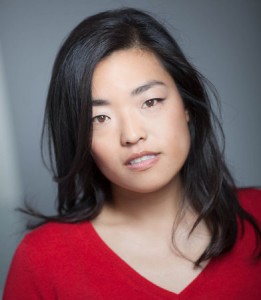
park
Patricia Park – Photo: © Allana Taranto
  Did you always want to write? How did you start your career as an author? I’ve known pretty much since I first learned to write. My first (unpublished) manuscript was called Messy Bessy—an illustrated series about an unkempt schoolgirl who grows up and has twenty kids. In elementary school I wanted to be a writer slash nun, but I was afraid the church would make me censor my writing. What’s the best piece of advice you have received? Daydream about your characters. That way, you’re still doing work on your novel even when you’re waiting for the subway, at the gym, on line at the grocery store
. What clichĂ©s or bad habits would you tell aspiring writers to avoid? Do you still experience them yourself? I try not to write about an experience until after I’ve been away from it for a few days (or years). Otherwise you gain no perspective on it because it’s so immediate. Also, you tend to sound whiny. So I’ll write down the facts of what happened immediately in my diary, but then I file them away, and later—much later—I can reflect on that experience in the context of a larger narrative. Describe your writing style in five words or less. A chocolate-covered broccoli. (Wait, what?) Read more about Re Jane here.

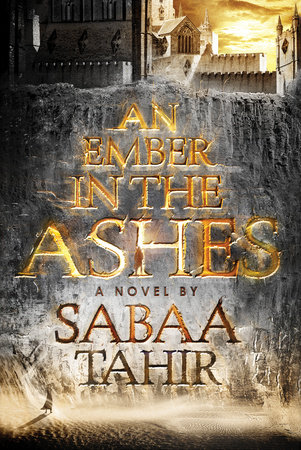
Writing Tips from Sabaa Tahir, author of An Ember in the Ashes

We know readers tend to be writers too, so twice a month, we’ll feature writing tips from our authors. Who better to offer advice, insight, and inspiration than the authors you admire? They’ll answer several questions about their work, share their go-to techniques and more. Now, get writing!  What writing techniques have you found most important or memorable? I don’t have any specific techniques I employ on a daily basis. But there are some tips I’ve found useful over the years. In particular, an article that Zadie Smith wrote back in 2010 is one I think every writer should emblazon on the inside of his/her brain. The entire list is here. My two favorite rules from it, No. 7 and No. 8, are:
  • “Work on a computer that is disconnected from the ­internet.”
  •  “Protect the time and space in which you write. Keep everybody away from it, even the people who are most important to you.”
How would you recommend creating and getting to know your characters? I find character summaries useful—a few pages where I write out character history, likes, dislikes and personality quirks. But I learned the most about my characters when I “interviewed” them. I got a friend to ask me questions, and took on the personalities of my characters as I attempted to answer those questions. The interviews made me really consider who these characters were and what they wanted. It was weird, but it was also a revelation. After developing an idea, what is the first action you take when beginning to write? I stare at a blank laptop screen thinking, “Oh no, what now?” Kidding! It depends on what I’m writing, but when working with a book idea, I try to sketch out a few paragraphs worth of action—just to see if the idea has legs or if it falls apart. Once all my thoughts are down—and if I feel like the idea is still solid—I try to organize what I’ve got into a few coherent chapters
Sabaa Tahir
Sabaa Tahir
Is there something you do to get into a writing mood? Somewhere you go or something you do to get thinking? Music and coffee. Without either of those, I’m no good. The coffee wakes me up, and the music gets my brain moving—it’s basically the fastest way into whatever scene I’m working on that day. Did you always want to write? How did you start your career as an author? I always wanted to write, but never admitted it to myself. I’ve told stories since I was a little girl, and began writing them down as soon as I figured out how. But for my parents, who are South Asian and were quite traditional, writing wasn’t a legitimate career because it offered no security. I spent years assuming I’d become a doctor. Eventually, I went into journalism and used that as a springboard into fiction. What’s the best piece of advice you have heard? “If you’re going through hell, keep going.” —Winston Churchill. What clichĂ©s or bad habits would you tell aspiring writers to avoid? Do you still experience them yourself? Off the top of my head, I can think of three.
  1. Don’t waste inordinate amounts of time polishing small sections of your writing. Figure out your story first. Polish later.
  2. Show your work to people. Recently, I fell into an old (bad) pattern. I’d written 50 pages of something and was certain it was horrible, but hadn’t actually shown pages to anyone. Don’t do that! Find trusted readers amongst writer friends, and get feedback.
  3. Don’t make excuses for yourself. You can waste years that way. If you find yourself repeatedly saying you haven’t written because you’re too tired/busy/blocked etc., then rethink how badly you want to be a writer.
Describe your writing style in 5 words or less. Tell it like it is. Do you ever base characters off people you know? Why or why not? I sometimes borrow certain quirks or characteristics from people I know, but no, I never wholly base characters off of people I know. It’s way more fun to make them up. Read more about An Ember in the Ashes here.

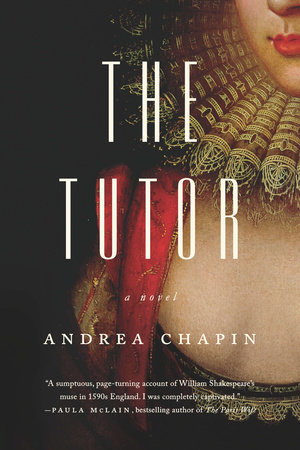
Writing Tips from Andrea Chapin, author of The Tutor

How would you recommend creating and getting to know your characters? I write historical fiction—some of my characters are based on real-life people, while others are invented. But the process of developing who they are is very similar for both the fact-based and the fictional characters. When I began The Tutor, I did a minimal amount of research because I didn’t want the history, the facts, to get in the way of the story. As the novel progressed I did a tremendous amount of research, but at the start I was interested in developing the dynamics between my main characters, how they reacted to each other—so I hurled them into situations where their dialogue and their actions began to convey their personalities, their likes and dislikes, their anxieties and obsessions. I wrote the first fifty pages this way, so that I got to know my characters before I started soaking them with the actual history of the times. For all my characters, I bring traits of people I know, including myself. But sometimes, and this is the alchemy of the art, I don’t even realize who I’ve brought in, what ghosts from my past I’ve conjured in creating these characters, until I’ve finished writing. Is there something you do to get into a writing mood? Somewhere you go or something you do to get thinking? Over the years I’ve learned that for me there are no special places I go and no special things I do to get into the mood to write: I just sit down and make myself do it. Sometimes it’s easy and sometimes it’s very hard. There is a wonderful magic that often comes with the process of writing—the sentences or moments that seem to come out of nowhere and light up the page—but I don’t think there’s any magic to the act of sitting down to do it. You have to stay at it and feel as though you are stuck to that chair with Velcro. I guess I’m afraid that if I have to go to a special place or do a special thing in order to write then the process will become precious, even fetishized, and that I will lose the natural, organic impulse. I can work with kids running around me, dogs barking, piles of laundry undone, dinner waiting to be made, bills waiting to be paid, or I can work while I’m alone and there is peace and quiet. Did you always want to write? How did you start your career as an author? My first “novel” was a mystery called, well, The Mystery of the Green Glass. I wrote it in third grade, longhand, on thick yellow paper with a thick pencil. I wish I had that copy now! My third-grade teacher launched a literary magazine for her students to publish poems, short stories, and art. This was way back before computers were ever used in schools or were ever used at all. We painstakingly wrote and drew everything on mimeograph paper and then printed out copies on the mimeograph machine in the school office. I started my mystery “novel” for that magazine, and then I just kept on going. I remember the satisfaction I felt as the stack of yellow paper grew on my desk. A few years later, my stories became more personal: I’d sit on the basement stairs of our house, in the dark, and in my head I’d write very autobiographical accounts of all the dysfunctional things that were going on with my family. Decades later, after I’d published journalism and a few short stories, it was returning to my autobiographical voice and then publishing memoir pieces and personal essays that truly enabled me to find my voice and to launch my career as a writer. What’s the best piece of advice you have received? Stop talking about how you’re going to write—sit down and do it! Because the real learning starts when you commit yourself to putting the words down on the page. What clichĂ©s or bad habits would you tell aspiring writers to avoid? Do you still experience them yourself? For writing novels: I think it’s very important to get through the first draft before you start extensive rewriting and revising. It’s hard to know what that first chapter or those first several chapters need to be until you’ve gotten to the end of your story. I remember I wrote a novel in graduate school, and years later I looked at all the drafts of the first chapter that I’d labored over–draft after draft after draft where I tried to incorporate all the comments from my workshops and all my neurotic insecurities about a word or a sentence or tense (past or past perfect, etc.). I think I wrote at least twenty drafts of that first chapter. When I looked at them again, years later, I realized they were all pretty much the same and that I’d been like a cat licking the same patch of fur over and over again. I could have written a draft of the whole book in the time that it took me to rewrite that first chapter so many times. Learn more about The Tutor here.

Three Questions for Putnam Editor Sara Minnich on David Joy’s debut novel Where All Light Tends to Go

Editors get very passionate about books they work on – the Editor’s Desk series is his or her place to write in-depth about what makes a certain title special. Get the real inside-scoop on how books are shaped by the people who know them best. Putnam Editor Sara Minnich answers “Three Questions for an Editor” about her work on David Joy’s Where All Light Tends to Go.  This highly praised debut novel is a savage and beautiful story of a young man seeking redemption. In the meth-dealing family at the center of the book, killing a man is considered a rite of passage, but when eighteen-year-old Jacob McNeely botches a murder, he is torn between appeasing his kingpin father and leaving the mountains with the girl he loves. The world that Jacob inhabits is bleak and unrelenting in its violence and disregard for human life, and having known nothing more, he wonders if he can muster the strength to rise above it. For a debut novelist, David Joy has a writing style that feels so natural and remarkably assured as he creates an off-the-grid world populated by authentic characters that are bound to cause readers to feel a wide range of emotions.  What were your thoughts and impressions as you read the initial manuscript for the first time? I was hooked within the first few pages of Where All Light Tends to Go. Both the writing style and the voice of the young protagonist were raw and gritty, utterly real.  After promising opening pages, I was crossing my fingers in hope that the rest of the book would hold up – and it absolutely did.  Shortly into the story things take a shocking and violent turn, and the pace only escalates from there.  Mostly I remember being unable to put it down.  The manuscript needed some work, but I knew from the first read that I loved it and that David was the real deal. How would you describe the scope of the editor/author process as Where All Light Tends to Go evolved into a finished book? The first draft that I read was in fairly solid shape in terms of the plot, pacing, and writing.  The element David and I spent the most time revising over the course of three drafts was the relationship between the hero, Jacob McNeely, and his love interest Maggie.  Maggie’s character needed to be fleshed out, and David did a lot of work to find her voice and to help the reader understand the magnetism between her and Jacob.  Their relationship was fundamentally transformed from the first draft to the final book, in a way that brought a lot of heart and hope to a story that is ultimately quite dark. This novel is not your traditional “book club” book, given the gritty nature of a lot of the stories that unfold in its pages, but it feels like a book that will spark a lot of discussions.  What kinds of readers do you think will be most attracted to Where All Light Tends to Go and why? The novel falls firmly in the category of country noir, so would be perfect for readers of Daniel Woodrell and Larry Brown.  Fans of shows like “Breaking Bad” or “Justified” would also find much to enjoy – a strong sense of place, characters that leap off the page, a grim and intense story, and a relentless pace. where-all-light-tends-to-go-by-david-joy Read more about Where All Light Tends to Go by David Joy here.