Tag Archives: writing tips

Writing Tips from Jax Miller, author of Freedom’s Child

We know readers tend to be writers too, so we feature writing tips from our authors. Who better to offer advice, insight, and inspiration than the authors you admire? They’ll answer several questions about their work, share their go-to techniques and more. Now, get writing!  What writing techniques have you found most important or memorable? Reading out loud. As soon as I finish a chapter, I read it to my victim … ahem … husband. As a writer, I find when I read/write a chapter a few times over, my brain begins to to skim it. And reading out loud helps me to catch any mistakes I might have made. See? I used the word “to” twice in this question. It also helps with the rhythm. Writing should have rhythm. After developing an idea, what is the first action you take when beginning to write? The very first thing I do is write the ending. If I start right at the beginning, I tend to veer off course and before I know it, I’m writing a completely different story (I have too many ideas and a short attention span). Writing the last scene first helps me have something to aim for, so I can get from point A to point B without hitting too many traffic cones. Is there something you do to get into a writing mood? Somewhere you go or something you do to get thinking? I have “a zone.” When the headphones are on, I’m in the zone and should not be bothered, lest I throw the closest object on my desk across the room. I spend about half an hour to an hour (depending on the intensity of the narrative) with music blasting in my head, one that usually matches the scene. I always have to see it like a movie in my head before it reaches paper, so a soundtrack is pivotal. Then I do my damned best to think like that person, completely immerse myself (which can be hard, especially when writing a dark narrative). Then I need a proper half hour with music to ease myself out, I can’t be ripped away; it messes me up. That’s a lot of my creative process … some just call it madness. Oh, and caffeine. Lots and lots of caffeine. Did you always want to write? How did you start your career as an author? No, I didn’t. Writing came to me when I was at a period in my life of trying to save myself and clean up my life. It started for me while I was seeing a counselor. I’d go in, guns blazing, F this and F that and F this again. The therapist was a very conservative man who’d cringe every time I cursed or told a colorful story from my past. So he told me to write (I believe he said it hoping he wouldn’t have to hear me anymore). It was supposed to be a journal kind of thing, but I hated journaling. Writing about things I wanted to forget never helped me—it just ticked me off. So I wrote something fake (it’s still an existing chapter in my unpublished/first novel, The Assassin’s Keeper). He read it in silence and I waited, wondering if there were men outside with butterfly nets. When finished, he looked me right in my eyes and said, “That was the best ****ing thing I ever read.” After that, I wrote more and more, writing a good chunk of my first novel in his office. I haven’t stopped since. What clichés or bad habits would you tell aspiring writers to avoid? Do you still experience them yourself? Ellipses … I put them everywhere. The truth is, I don’t even know how to properly use them. I just put them in when the page looks a little sad … What’s the best piece of advice you have received? I’m a girl who goes to the beat of her own drum. A lot of the advice from the greats just don’t work for me: I can’t write every day, I DO wait until I’m in the mood, I don’t read while writing … To quote Lillian Hellman: “If I had to give young writers advice, I would say don’t listen to writers talking about writing or themselves.” Read more about Freedom’s Child here.

Writing Tips from Brenda Bowen, author of Enchanted August

We know readers tend to be writers too, so twice a month, we’ll feature writing tips from our authors. Who better to offer advice, insight, and inspiration than the authors you admire? They’ll answer several questions about their work, share their go-to techniques and more. Now, get writing!  How would you recommend creating and getting to know your characters? As an editor, I always asked writers (of novels and even of picture books): “Who is this character in your head? Is he/she based on someone you know? Can you see that person doing what you have your character do?” As an author, I ask myself the same thing. Of course, all of one’s characters have a little bit of oneself in them, but I do find that having a specific image—of a friend, an acquaintance, a child, a person glimpsed on the subway—really helps me focus and be specific. Specificity is the skeleton key that unlocks the doors of good writing. When a character speaks, the language must be specific to her; she must not be able to speak any other way. When a character makes a choice of beer or shaving cream, he must own those choices; they must come from everything else I know about the character. I think hard about what a character would reach for in the fridge, and why. None of that reasoning, of course, should show on the page (unless it’s a plot point). But as a writer you need to know if it’s boxers or briefs, sports bra or push-up, for every character. You have to know where the hidden tattoos are, and the scars. After developing an idea, what is the first action you take when beginning to write? I write copy! That’s the first thing I do. I write what you would find on a jacket flap, or the back cover of a paperback. When I was an editor, and especially an assistant, writing copy was always the most enjoyable part of the job. The better written the book, the easier it is to write copy, even when the book has a challenging structure or tackles difficult ideas. I write copy to see where the story is going. Usually I can eke out a whole first “act” for a book by pretending I’m writing the flap for the finished draft. If a first act emerges and I’m interested in seeing where the story goes, I’ll give it a try as a book. Is there something you do to get into a writing mood? Somewhere you go or something you do to get thinking? While writing Enchanted August, I almost always wore headphones and played birdsong or “nature sounds.” Those soundtracks let me believe that I was in Maine. I would go to YouTube and find videos with hours of recorded sounds of the outdoors. You have to be careful not to play the same one too many times or you get to know what nuthatch is going to start calling out after which rumble of thunder, but other than that, it’s a great way (for me) to escape city sounds or household sounds or sounds at the café where I usually write. And a shout-out to that café: It’s The Hungarian Pastry Shop on Manhattan’s Upper West Side. I started going there when I first came to New York in 1981 and basically never stopped. The Pastry Shop is located just a few blocks from Columbia University, so it’s filled with people studying or reading or writing. It’s almost like a library. There’s no internet service and there are no electrical outlets, so you can only write as long as your computer charge lasts and you can’t get distracted by going online. If you go to the Pastry Shop for a visit, don’t be disappointed that the coffee isn’t great, but do order an ishler. Two hazelnut cookies filled with chocolate mousse and covered in dark chocolate. A sumptuous reward for a good afternoon’s writing. Did you always want to write? How did you start your career as an author? I never thought I wanted to write but I have been writing since I was very young. I used to write Regency romances when I was about eleven or twelve, about characters named Charles and Caroline who bore a marked resemblance to Mr. Darcy and Elizabeth Bennet. (I read Pride and Prejudice in one sitting when I was eleven years old. My mother thought I had been out at the neighbor’s all day, when actually I was upstairs reading through lunch and dinner. I came down to the kitchen in a daze and have essentially never recovered.) I began working as an editorial assistant at a publishing company right after college. I wanted nothing more than to be an editor, and I was, for many years. After a while, editors, especially of children’s books, tend to take on the writing mantle. I helped artists write their picture books. I turned out quickie celebrity bios. I wrote a couple of Pokemon chapter books. (“I choose you!”) Then in 2004 or so, I wrote two early readers under a pen name, Margaret McNamara. Too Many Valentines and 100 Days (Plus One) were set at Robin Hill School, and over ten years the stories stretched into a thirty-book series. Then, I began to write more picture books about things like pumpkins, apples, George Washington, poetry, and a heavenly library. (If you’re interested, you can find out more on my website.) Just a few years ago, I so wanted an author of mine to write a book from Tinker Bell’s point of view that I stole my own idea and wrote a six-book series called the Fairy Bell Sisters, about Tinker Bell’s little sisters, who live on an island in what many would recognize to be Maine. Their success (and I mean the fact that I finished them all, on time, and they were beautifully published) led me to be emboldened enough to write Enchanted August. Describe your writing style in five words or less. If you mean how I write in terms of process: Must. Not. Edit. While. Writing. Read more about Enchanted August here.

Writing Tips from Caroline Zancan, author of Local Girls

We know readers tend to be writers too, so we feature writing tips from our authors. Who better to offer advice, insight, and inspiration than the authors you admire? They’ll answer several questions about their work, share their go-to techniques and more. Now, get writing!  What writing techniques have you found most important or memorable? The trick that probably has served me more than any other is to always stop and write down a promising idea or line when I think of it no matter what else I’m doing. If I’m on my way out the door or even falling asleep and something good pops into my head—some missing piece of information or crucial development in the story I’m working on, or perhaps an idea for a new story—I’ll stop and take the time to write it down even if it makes me late or means I’ll be tired in the morning. So many times in the past I’ve thought, Oh, I’ll remember that, or, Oh, I’ll sleep on it and write it down in the morning, but then when I return to it it’s gone. So now I always make a note of any idea, even if it’s just an indirect reference or a half-baked thought. So many projects that I’ve gone on to develop or see all the way through came from a scribble in a margin of a book or a text I sent myself at two in the morning. Is there something you do to get into a writing mood? Somewhere you go or something you do to get thinking? Reading great books always inspires me. There’s nothing like turning the last page of an incredibly satisfying story and just kind of letting the feeling it left you with soak in. Once I’m done processing that feeling, I’m almost always, like, I want to do that. I want to leave someone feeling that way. Even if the book is very different than my own work. What’s the best piece of advice you have received? At Bennington College, where I studied for my MFA, professors often encouraged us to focus not on publishing our work but on getting it as good as it could possibly be. To focus on what was on the page and not who was going to read it or in what format. At the time, I was frustrated by that. I thought, I didn’t come here to journal—I want to write for readers, but now I see the wisdom in that advice. Once something is published, it’s out there forever and your name will always be attached to it. I look back at stories I wrote in college, and even in my twenties, and I thank God no one is going to read them. There’s no rush to get published. And the reading public has no expiration date. Just write, and polish what you have written until it’s as good as it can be, and then worry about everything else. What clichés or bad habits would you tell aspiring writers to avoid? Do you still experience them yourself? I have a list of things I try to avoid, but clichés, verbs of utterance, and exclamation points are right up there. A few of each inevitably sneak into my work, especially in the first draft, but I do try to troll for them in the revisions that follow. I’ll give myself a few exclamation points for every hundred pages or so, but verbs of utterance I try to keep out altogether. As one professor at Bennington told me, “‘F*** you!’ he shouted angrily,” is redundant. It’s clear from what the speaker is saying that he’s angry. Let the words speak for themselves. If the line is really strong, “he said” should suffice. Do you ever base characters off people you know? Why or why not? I definitely pull individual characteristics—sayings, speech patterns, mannerisms, quirks—from people I know, but it’s rare that any given person is the perfect complex combination of factors for the story I want to tell. And there just aren’t that many people I know as well as I know my characters. To write convincing characters, you need to know things about them that aren’t even on the page. You need to be keyed into how they would react to a given situation, what motivates them in that context, and the gap between what they say about it and how they actually feel—even if they’re not aware of the disparity. You need to get inside their heads in a way I don’t think we often do with people in our own lives. We approach people we know from our own perspectives, not theirs. Of course, by borrowing an isolated characteristic from someone you know and endowing your character with it, there’s the danger that the person you borrowed it from thinking the entire character is based on her. It’s, like, yes, you both wear yellow nail polish, but, no, I don’t think you secretly hate your mother! Read more about Local Girls here.

Writing Tips from Jude Deveraux, author of Ever After

We know readers tend to be writers too, so we feature writing tips from our authors. Who better to offer advice, insight, and inspiration than the authors you admire? They’ll answer several questions about their work, share their go-to techniques and more. Now, get writing!  What writing techniques have you found most important or memorable? I write everything by hand, then type it all. I can’t think with a keyboard. I stop to make corrections, the cursor flies around, idiot things pop up. All of these break my concentration. With a pen, I just let my mind go. I see and hear the characters and record what’s there. How would you recommend creating and getting to know your characters? For every page that is published I have as many pages in outlines and charts about people, places, plot. I try to get photos of the major characters so I can look at them when I’m writing. I also use a lot of floorplans. I go to Savills UK website and find houses and use them. With everything I do beforehand, I’m thinking about the characters and the plot. After developing an idea, what is the first action you take when beginning to write? The first sentence is important to me so I work on that. Mainly, I want to set the tone with the first chapter, so I do a lot of pre-work on that. And no matter how much work I do beforehand, until I actually hear the characters talking, I don’t know what I have. Is there something you do to get into a writing mood? Somewhere you go or something you do to get thinking? I spend my life trying to get out of things other than writing. Errands, appointments, emails, calls, etc, make me crazy. In the last few years I have done two around-the-world cruises. I have four wonderful months of internet so bad it might as well not exist. I get to tell people I can’t do whatever because I’m on a ship docked outside Tahiti. It is glorious! I write and write, then write some more. On my last cruise I wrote 102,000 words and outlined my next novel — and I saw some great places. Heaven! Did you always want to write? How did you start your career as an author? I never in my life thought about being a writer. I thought they were people who lived on pink clouds, not real. But I had a story in my head that wouldn’t go away, so I thought maybe if I wrote it down it would stop pestering me. When it was done, I paid my next door neighbor’s daughter to type it and sent it to a publishing house that had pretty covers. They wrote back asking if they could send me a bunch of money and would I please write some more books. I haven’t stopped since then. What’s the best piece of advice you have received? After I turned in my second book, I spent three months waiting for my editor to read it. During that time I was eaten up with stories I wanted to write, but I thought I had to wait to get the okay to go ahead. I vowed to never again wait for a publishing person for anything. I go ahead and write at my pace and let them move at theirs. It’s a decision that has helped me stay sane. What clichés or bad habits would you tell aspiring writers to avoid? Do you still experience them yourself? Not to fall in love with your own writing. Over my many years in publishing, what I’ve seen kill more careers than anything else is ego. “How dare they do that to my work?!” That attitude has no place in publishing. In this business you need to have a thick skin and be ready to take criticism that would cripple most people. Describe your writing style in 5 words or less. Good stories. Do you ever base characters off people you know? Why or why not? Yes and no. Fiction characters are never as complex as real people. In real life, you might have a mild mannered friend and one day receive a call saying he/she killed someone. But you canNOT do that in a novel. You have to lead up to it, hint at it. Sometimes I see a character trait in a person and I blow that up to be one entire person. As for villains, I have relatives. ’Nuff said. Read about Jude Deveraux’s newest book, Ever After.

Writing Tips from Patricia Park, author of Re Jane

We know readers tend to be writers too, so twice a month, we’ll feature writing tips from our authors. Who better to offer advice, insight, and inspiration than the authors you admire? They’ll answer several questions about their work, share their go-to techniques and more. Now, get writing!  How would you recommend creating and getting to know your characters? I start by keeping a “dossier” on each character: the usual basics like their age, hometown, birth order, the contents of their fridge. I snoop around—showing up at their tenth birthday parties (then their sixteenth and their fortieth). I write diary entries in their voice. Later in the process I’ll write the same scene from each character’s point of view—a tip I learned from hearing an interview with Jonathan Lethem. Is there something you do to get into a writing mood? Somewhere you go or something you do to get thinking? Running helps my writing—both require a lot of endurance. My favorite runs cross both bridges and bodies of water. I find that after a long run, I’m just too physically exhausted to be overly self-critical when I sit down to work, which then makes the writing flow more easily.
park
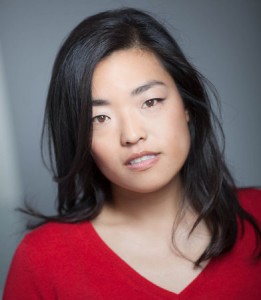
Patricia Park – Photo: © Allana Taranto
  Did you always want to write? How did you start your career as an author? I’ve known pretty much since I first learned to write. My first (unpublished) manuscript was called Messy Bessy—an illustrated series about an unkempt schoolgirl who grows up and has twenty kids. In elementary school I wanted to be a writer slash nun, but I was afraid the church would make me censor my writing. What’s the best piece of advice you have received? Daydream about your characters. That way, you’re still doing work on your novel even when you’re waiting for the subway, at the gym, on line at the grocery store…. What clichés or bad habits would you tell aspiring writers to avoid? Do you still experience them yourself? I try not to write about an experience until after I’ve been away from it for a few days (or years). Otherwise you gain no perspective on it because it’s so immediate. Also, you tend to sound whiny. So I’ll write down the facts of what happened immediately in my diary, but then I file them away, and later—much later—I can reflect on that experience in the context of a larger narrative. Describe your writing style in five words or less. A chocolate-covered broccoli. (Wait, what?) Read more about Re Jane here.

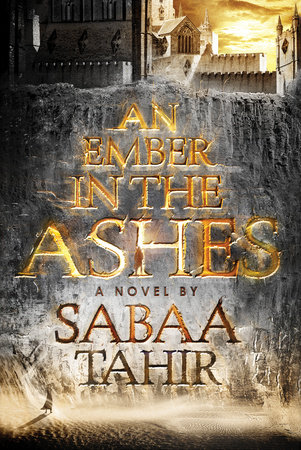
Writing Tips from Sabaa Tahir, author of An Ember in the Ashes

We know readers tend to be writers too, so twice a month, we’ll feature writing tips from our authors. Who better to offer advice, insight, and inspiration than the authors you admire? They’ll answer several questions about their work, share their go-to techniques and more. Now, get writing!  What writing techniques have you found most important or memorable? I don’t have any specific techniques I employ on a daily basis. But there are some tips I’ve found useful over the years. In particular, an article that Zadie Smith wrote back in 2010 is one I think every writer should emblazon on the inside of his/her brain. The entire list is here. My two favorite rules from it, No. 7 and No. 8, are:
  • “Work on a computer that is disconnected from the ­internet.”
  •  “Protect the time and space in which you write. Keep everybody away from it, even the people who are most important to you.”
How would you recommend creating and getting to know your characters? I find character summaries useful—a few pages where I write out character history, likes, dislikes and personality quirks. But I learned the most about my characters when I “interviewed” them. I got a friend to ask me questions, and took on the personalities of my characters as I attempted to answer those questions. The interviews made me really consider who these characters were and what they wanted. It was weird, but it was also a revelation. After developing an idea, what is the first action you take when beginning to write? I stare at a blank laptop screen thinking, “Oh no, what now?” Kidding! It depends on what I’m writing, but when working with a book idea, I try to sketch out a few paragraphs worth of action—just to see if the idea has legs or if it falls apart. Once all my thoughts are down—and if I feel like the idea is still solid—I try to organize what I’ve got into a few coherent chapters
Sabaa Tahir
Sabaa Tahir
Is there something you do to get into a writing mood? Somewhere you go or something you do to get thinking? Music and coffee. Without either of those, I’m no good. The coffee wakes me up, and the music gets my brain moving—it’s basically the fastest way into whatever scene I’m working on that day. Did you always want to write? How did you start your career as an author? I always wanted to write, but never admitted it to myself. I’ve told stories since I was a little girl, and began writing them down as soon as I figured out how. But for my parents, who are South Asian and were quite traditional, writing wasn’t a legitimate career because it offered no security. I spent years assuming I’d become a doctor. Eventually, I went into journalism and used that as a springboard into fiction. What’s the best piece of advice you have heard? “If you’re going through hell, keep going.” —Winston Churchill. What clichés or bad habits would you tell aspiring writers to avoid? Do you still experience them yourself? Off the top of my head, I can think of three.
  1. Don’t waste inordinate amounts of time polishing small sections of your writing. Figure out your story first. Polish later.
  2. Show your work to people. Recently, I fell into an old (bad) pattern. I’d written 50 pages of something and was certain it was horrible, but hadn’t actually shown pages to anyone. Don’t do that! Find trusted readers amongst writer friends, and get feedback.
  3. Don’t make excuses for yourself. You can waste years that way. If you find yourself repeatedly saying you haven’t written because you’re too tired/busy/blocked etc., then rethink how badly you want to be a writer.
Describe your writing style in 5 words or less. Tell it like it is. Do you ever base characters off people you know? Why or why not? I sometimes borrow certain quirks or characteristics from people I know, but no, I never wholly base characters off of people I know. It’s way more fun to make them up. Read more about An Ember in the Ashes here.

Writing Tips from Jen Doll, author of Save the Date

Is there something you do to get into a writing mood? Somewhere you go or something you do to get thinking? I am one of those people who just loves working in my own quiet little apartment, with all my stuff around me. (I live alone, so things are calm enough to do this!) I don’t like writing in coffeeshops or public places generally because I get distracted and want to watch everyone. On the best mornings, I get up, I make coffee, maybe I poke around a little online, and then, still wearing pj’s, I start writing. But I also balance book writing with freelance writing work for websites and magazines and editorial work, so deadlines can pop up that I need to deal with first. My goal is to write something creative daily, to fit it in when I can, even if it’s just ten minutes (which usually turns into something longer). There are days that doesn’t happen, though. I try not to be too guilty about it, and to consider not-writing-but-thinking time an important part of the process, too. Did you always want to write? How did you start your career as an author? I always wanted to write. I told my dad I wanted to be a writer when I was little and he said something along the lines of “Well, it might be hard to make money doing that,” and so I said, “OK, I’ll be a librarian then.” Clearly, I loved (and love) books. My path to writing a book was a little bit circuitous, but after a few jobs that didn’t take—in advertising, for example—I started working in magazine publishing, and later I became a writer for the Village Voice and The Atlantic, which led to me getting my agent’s attention and ultimately selling my first book. What’s the best piece of advice you have received? A friend told me once, “Just open the Word document.” You can’t write until you do! And even though I can procrastinate and psych myself out of writing for hours—because the longer you go without writing, the more the mind spirals into thinking whatever you’ve accomplished up to this point is just terrible—once you’re staring at an open document, you start to reread what you’ve written, and you start to edit, and soon enough, you’re writing again. And that’s the part that’s really fun, even though when the document is closed it can feel impossibly scary. What clichés or bad habits would you tell aspiring writers to avoid? Do you still experience them yourself? Don’t spend more time asking people for advice about writing than you actually spend time writing. The only way to ever write a book is to actually just write it. And it’s a slow process, but you chip away at it and eventually, it happens. I have many bad habits, and finding ways not to write—tweeting and Instagramming and reading random websites and cleaning my apartment—is definitely one of them. (Speaking of which, I should probably clean my apartment now.) Do you ever base characters off people you know? Why or why not? Save the Date is a memoir, so yes—the “characters” are actually people I know, though most names are changed to protect the innocent and even the less innocent. There is definitely some existential angst involved in writing about real people. It’s nerve-wracking to think someone won’t like the portrayal; after all, I’m talking about humans who actually exist and have feelings and have the right to their own feelings about being in a book! (Just as I have the right to write it, and to feel my own feelings about it.) I’m working on fiction now, though, and it’s really fun to create characters out of thinish air. Of course, I can’t help but bring my own experiences and perspectives to them, and there are probably elements of people I know in all of them. But no one will know if I do it right. Read more about Save the Date here.

Writing Tips from Lily Brooks-Dalton, author of Motorcycles I’ve Loved

What writing techniques have you found most important or memorable? When it comes to revising something, I’ve gotten into the habit of retyping my pages. It sounds pretty time-consuming—and it is—but it’s so worth it. I don’t know how else to get that kind of fresh perspective on a sentence-by-sentence level unless you force yourself to literally rewrite every single line. After developing an idea, what is the first action you take when beginning to write? I’ll probably do an outline. Sometimes I just dive straight into the prose, but at a certain point I need to step back and organize my thoughts. Particularly if it’s going to be a book, I’ll end up laying it out chapter by chapter pretty early on. That outline will change radically as I get further in, but it’s good to have a road map. I’m a big fan of lists—I might make a list of all the scenes I already have in mind, or elements that I want to include, just to get it down on paper. If I’m stuck, a list like that is a great resource to look back at. Is there something you do to get into a writing mood? Somewhere you go or something you do to get thinking? I need a quiet room and a big, uninterrupted chunk of time. I’m at my most productive when I know that I can devote an entire day to a project—wake up with it and go to sleep with it. But if all else fails… candy. Did you always want to write? How did you start your career as an author? I’ve always written, but it wasn’t always clear to me that I could be a writer (whatever that means). When I was a kid, I really believed that I could do anything, but as I got older, it seemed impossible, like I was being foolish if I didn’t have a plan B lined up. I think the first time I really gave myself permission to at least try to be a writer was when I was an undergrad, working on the opening chapters of Motorcycles I’ve Loved, and my writing professor told me it could be a book. I’m not sure I would have allowed myself to entertain that fantasy if someone hadn’t given me the go-ahead. It’s an amazing gift to give someone—to give them permission to go for it. I wish it was easier to give it to ourselves! What clichés or bad habits would you tell aspiring writers to avoid? Do you still experience them yourself? Don’t use three words when one will do. I am totally guilty of that, I always have a whole list of adjectives that I cannot part with. What’s the best piece of advice you have received? Finish things. I forget where I first heard that, but it’s the most important thing I know about writing. It doesn’t matter how good your ideas or your opening pages are if you don’t finish your project. Read more about Motorcycles I’ve Loved here

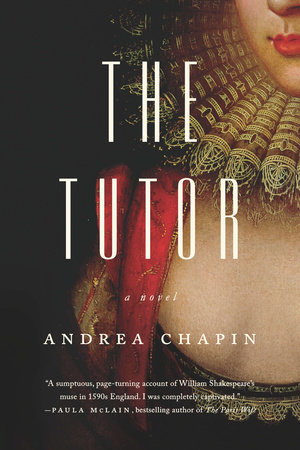
Writing Tips from Andrea Chapin, author of The Tutor

How would you recommend creating and getting to know your characters? I write historical fiction—some of my characters are based on real-life people, while others are invented. But the process of developing who they are is very similar for both the fact-based and the fictional characters. When I began The Tutor, I did a minimal amount of research because I didn’t want the history, the facts, to get in the way of the story. As the novel progressed I did a tremendous amount of research, but at the start I was interested in developing the dynamics between my main characters, how they reacted to each other—so I hurled them into situations where their dialogue and their actions began to convey their personalities, their likes and dislikes, their anxieties and obsessions. I wrote the first fifty pages this way, so that I got to know my characters before I started soaking them with the actual history of the times. For all my characters, I bring traits of people I know, including myself. But sometimes, and this is the alchemy of the art, I don’t even realize who I’ve brought in, what ghosts from my past I’ve conjured in creating these characters, until I’ve finished writing. Is there something you do to get into a writing mood? Somewhere you go or something you do to get thinking? Over the years I’ve learned that for me there are no special places I go and no special things I do to get into the mood to write: I just sit down and make myself do it. Sometimes it’s easy and sometimes it’s very hard. There is a wonderful magic that often comes with the process of writing—the sentences or moments that seem to come out of nowhere and light up the page—but I don’t think there’s any magic to the act of sitting down to do it. You have to stay at it and feel as though you are stuck to that chair with Velcro. I guess I’m afraid that if I have to go to a special place or do a special thing in order to write then the process will become precious, even fetishized, and that I will lose the natural, organic impulse. I can work with kids running around me, dogs barking, piles of laundry undone, dinner waiting to be made, bills waiting to be paid, or I can work while I’m alone and there is peace and quiet. Did you always want to write? How did you start your career as an author? My first “novel” was a mystery called, well, The Mystery of the Green Glass. I wrote it in third grade, longhand, on thick yellow paper with a thick pencil. I wish I had that copy now! My third-grade teacher launched a literary magazine for her students to publish poems, short stories, and art. This was way back before computers were ever used in schools or were ever used at all. We painstakingly wrote and drew everything on mimeograph paper and then printed out copies on the mimeograph machine in the school office. I started my mystery “novel” for that magazine, and then I just kept on going. I remember the satisfaction I felt as the stack of yellow paper grew on my desk. A few years later, my stories became more personal: I’d sit on the basement stairs of our house, in the dark, and in my head I’d write very autobiographical accounts of all the dysfunctional things that were going on with my family. Decades later, after I’d published journalism and a few short stories, it was returning to my autobiographical voice and then publishing memoir pieces and personal essays that truly enabled me to find my voice and to launch my career as a writer. What’s the best piece of advice you have received? Stop talking about how you’re going to write—sit down and do it! Because the real learning starts when you commit yourself to putting the words down on the page. What clichés or bad habits would you tell aspiring writers to avoid? Do you still experience them yourself? For writing novels: I think it’s very important to get through the first draft before you start extensive rewriting and revising. It’s hard to know what that first chapter or those first several chapters need to be until you’ve gotten to the end of your story. I remember I wrote a novel in graduate school, and years later I looked at all the drafts of the first chapter that I’d labored over–draft after draft after draft where I tried to incorporate all the comments from my workshops and all my neurotic insecurities about a word or a sentence or tense (past or past perfect, etc.). I think I wrote at least twenty drafts of that first chapter. When I looked at them again, years later, I realized they were all pretty much the same and that I’d been like a cat licking the same patch of fur over and over again. I could have written a draft of the whole book in the time that it took me to rewrite that first chapter so many times. Learn more about The Tutor here.
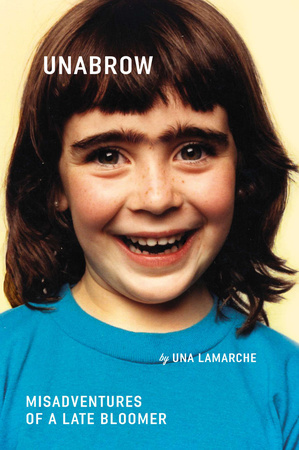
Unabrow by Una Lamarche

Writing Tips from Una LaMarche, author of Unabrow

We know readers tend to be writers too, so twice a month, we’ll feature writing tips from our authors. Who better to offer advice, insight, and inspiration than the authors you admire? They’ll answer several questions about their work, share their go-to techniques and more. Now, get writing! What writing techniques have you found most important or memorable? Probably “Outline, Cross Fingers, Stress-Eat Thai Food.” It’s my own invention. Basically you just try to create a loose structure for your story, essay, or book and then hope for the best as you eat—past the point of satiation, this is crucial—directly from plastic delivery containers. How would you recommend creating and getting to know your characters? I think it’s hard to create a great character in a very calculated way, like in “Weird Science” when Anthony Michael Hall and Ilan Mitchell-Smith enter all of their specifications into their ancient computer and then Kelly LeBrock manifests in a turtleneck crop-top. In my experience, characters start out fuzzy and one-dimensional, and then you have to sort of coax them into focus. Often I’ll get the germ of an idea from something I hear on a podcast, or someone I see on the subway (pro tip: the New York City subway, in addition to being a magical underworld of many nefarious smells and diverse crazy people, is basically a free vault of endless characters!). My high school art teacher once asked my class to sketch the shoes of a stranger we saw on the street and then make up a story about where they were going, and that’s a pretty good metaphor for what I do when I’m writing fiction. I’ll start with some detail, like shoes or an expression or a quirky personality trait, and then build from there. In terms of getting to know them, you can do a lot of prep work if you want (for example, one playwriting book I read—and by way of disclaimer I am not a playwright, so clearly I missed the point—suggested interviewing each character, on paper, in their own voice, about his or her life story before beginning), but I think it’s OK to start without it. The detail work—what makes each character interesting and idiosyncratic—often happens for me as I’m writing. However, it bears mentioning that in my nonfiction essay collection Unabrow, I am my own main character, so to get to know her I actually lived inside my body, endlessly picking apart my every waking thought twenty-four hours a day for 34 years. It’s very Daniel Day-Lewis and not for the faint of heart. After developing an idea, what is the first action you take when beginning to write?  If there is anything in my life that I can turn into a list or outline, I will do it. It is a fact that I once TO DO-ed my shower regimen (wash face; shampoo; rinse; body wash; rinse; condition; shave legs; rinse conditioner; stop being such a sociopath; towel dry), so it follows that I like to summarize and outline my work to within an inch of its life. Usually I’ll start by writing a one-page summary of the idea and then developing that into a longer outline. With Unabrow, since it’s comprised of 20 shorter essays, I made a big chart on two pieces of poster board with boxes for each essay and the life event or theme it would tackle. Then I covered it in color-coded Post-Its and impulsive scrawls of illegible handwriting so that the finished product looked like something a serial killer might make after finally reading through her backlog of Real Simple magazines. Is there something you do to get into a writing mood? Somewhere you go or something you do to get thinking?  I have to trick myself into getting inspired, since actively trying to think of what to write about tends to make my brain short-circuit, open up a Netflix window, and stream old episodes of 90s sitcoms until the thinking subsides. Just taking a walk and running some errands usually helps, the more boring the better. The only downside to this practice is that I tend to like to talk out loud to myself when I’m generating ideas, so I look insane. About half the time I realize, much too late, that I can use my cell phone as a cover. Did you always want to write? How did you start your career as an author?  I have this file my parents collected for me of a bunch of stories and poems I did starting around age six and going through high school. They’re almost all either insanely short or unfinished, and largely terrible, but they were clearly labors of love. So I like to believe that I was always a writer in my soul of souls, but was just scared to try to do it in any serious way until my late twenties. I remember not wanting to major in English in college because so many people majored in English—I tried to play it like it was such a cliché, but really I think I was afraid of the competition. So instead, I majored in film studies, because I liked movies. Then, because at the time I was under the incredibly misguided impression that your undergraduate liberal arts major should determine what you do with your entire life, I started working in film—mostly doing archival research for the kinds of documentary television specials that involve slo-mo reenactments of people riding horses and brandishing muskets. While I was doing that I started a blog, which became, almost a decade later, the springboard for Unabrow. But, if I’m being honest, the main reason I’m writing professionally right now is that I got unceremoniously fired from my job in 2006. I was just sort of blindly continuing on a path I didn’t really like—archival research was neither my strength nor my jam—but I never would have quit, so really I’m lucky that I sucked enough to warrant getting the boot. After that, I made a conscious decision to try to become a writer. What that meant to me, at the time, was applying for an office manager job at a magazine, ingratiating myself with the editorial staff, and then pestering them with my writing until they published something (for free, of course). Amazingly, it worked. I moved up from office manager to managing editor and bounced around New York-based magazines and newspapers writing celebrity profiles and pithy headlines about purses until 2011, when I went on maternity leave. After I realized how little I made as an editor and how much full-time childcare would cost, I decided to try to freelance and stay home with my kid. I can’t in good conscience recommend this as a general strategy, but for me, becoming broke and desperate while simultaneously completely sleep-deprived led me to take risks that I would never previously have dared. On the suggestion of a friend who worked in publishing, I decided to try my hand at young adult novels, which resulted in a two-book deal with Razorbill (Five Summers, 2013; Like No Other, 2014). Then, in the frigid winter of 2012, I auditioned for a live reading in New York called Listen to Your Mother. I got in, performed an original comic piece on all of the mistakes I had made that I wanted my future children to avoid, and received an email the next day from Brettne Bloom—now my amazing literary agent—who had been in the audience and who would go on to shepherd Unabrow to a sale at auction in the summer of 2013. Either Seneca the Younger or Oprah Winfrey (you’re no help, Google) said, “luck is when preparedness meets opportunity,” but I think my story proves that luck can also be made from a murky mixture of professional misjudgments, procrastination, hope, fear, and many, many hours of television. What’s the best piece of advice you have received?  Once, during a film class in college, my brilliant professor Jeanine Basinger said that all movies share the same dozen or so plots when you get down to it, and that what makes a story really unique is how the filmmaker tells it. I have applied this to writing and taken it to mean that coming up with a story that no one else has ever thought of before (“Twilight, but with centaurs! And one of them has MS!”) is near-impossible, but that it doesn’t matter. The thing that will make your story one of a kind is your voice. If your dream is to create the next insane dystopian franchise, have at it. But if it’s not, don’t be afraid that your story’s already out there; it can’t be. No one can tell it the way you can. What clichés or bad habits would you tell aspiring writers to avoid? Do you still experience them yourself?  My downfall will be my ability to procrastinate and avoid writing. I do it so much that I had to install software on my computer to block the Internet and shame me when I inevitably attempt to check email or Twitter every nine to eleven seconds. I don’t believe you have to write every day, or at a set time for a set duration, to be a good and successful writer, but I do think you have to muster enough willpower to do it at least a few times a week in a focused way. In terms of clichés and bad habits in the writing itself, it’s hard to give specific examples. Sometimes clichés work, and one person’s bad habit is someone else’s favorite thing. But here are a few things I do that I’m trying to stop doing:
  • Sticking unnecessary adverbs in after lines of dialogue. Like, “I don’t seem to trust my readers to infer tone from what’s being said,” she said worriedly.
  • I like to cram as many words/jokes into a sentence as humanly possible—often including asides within dashes (or parentheses!)—and while my aim is to amp up the humor with verbosity, I realize that it often has the opposite effect. If a line is poignant or funny, it’ll usually have more impact if it’s pared down to its most essential words.
  • Having characters live too much in their own heads. It’s always better to show how someone feels through action and dialogue than to tell it to readers directly through the person’s inner monologue.
  • Dropping too many pop culture references that will date the writing. I live for pop culture. I love it. It’s an essential part of who I am and how I see the world. But as fun as it is to weave current events into fictional scenes, remember that (hopefully) your book will still be kicking around decades from now, and that it will interrupt the narrative flow for our future cyborg relatives to have to pause to do a GoogleBrain™ scan for “Kimye.”
Describe your writing style in 5 words or less. Clever conversation with tipsy friend. Do you ever base characters off people you know? Why or why not? I don’t base an entire character’s personality on anyone specific, but I absolutely borrow traits and quirks. Part of it is just that it makes developing characters easier if you can pick details out of real life experience, but also I love leaving Easter eggs for my family and friends to recognize. I’ll only use something if it’s flattering or if it’s funny enough that it won’t be taken seriously (for example, a good friend of mine is really into Eastern medicine—specifically colonic therapy—and so I had a camper in Five Summers with her same first name reading a book about it. She took it in stride.) Obviously in my nonfiction I write about my husband, my parents, and other assorted real people whom I love and don’t want to hate and/or divorce me, so I tread very carefully with how I depict them. I’m willing to poke fun at some of their personality traits, but again, only if I’m reasonably sure they won’t be offended. Even just describing someone I know in real life can be frightening, because what if they read it and think, “Is that how she sees me?” I keep telling my friends that there’s almost nothing about them in Unabrow but that it’s because I love them too much to risk it. (For the record, I love my husband, my parents, and my sister, too, but since they’re the closest people to me in the world they’ve already accepted that there’s no escape. Sad trombone for them.) Read more about Una LaMarche‘s book, Unabrow, here